
Mayukh Sen
Author of Taste Makers: Seven Immigrant Women Who Revolutionized Food in America
About the Author
Image credit: Uncredited image from author's website
Works by Mayukh Sen
Associated Works
Tagged
Common Knowledge
- Gender
- male
Members
Reviews

I was so excited to read the first 'modern' biography of Merle Oberon, with all the 'secret' background information intact, that I paid full price for the Kindle edition on publication day! Was the digital book worth £12.99? For just over 200 pages (the rest is notes and sources), one photograph per chapter (there might be more in the printed edition), and a slightly amateur yet earnest 'In this essay, I will ...' presentation of the author's research, maybe not - but I'm still glad I gave show more into temptation!
Merle Oberon - or Estelle Merle 'Queenie' Thompson, to give her birth name - lived more drama than she acted. Born to a teenage mother who was raped by her stepfather, Queenie was unofficially adopted by her grandmother, and never knew the truth about her birth. Born in India, she did know that she was half South Asian (Sri Lankan, in fact), and battled her whole life to hide the truth, even when the racist immigration laws and puritanical film codes of America were lifted in later years. Studios put out a fake biography that placed her birth in Tasmania and Merle even paid a fraught visit to the island in the 1970s as an honoured 'daughter'! She fell for co-stars, married powerful men who flattered her vanity, and was paranoid about her looks and talent, but there will never be another Merle Oberon. For me, she is forever Lady Blakeney in The Scarlet Pimpernel (1934), playing opposite her one-time married lover, Leslie Howard. I have to admit that I haven't even seen her in Wuthering Heights but hope to correct that omission soon!
Mayukh Sen pulls no punches in listing Merle's attractions and failings, her hits and flops, and I was left feeling slightly depressed at the downward spiral her life seemed to take. Critically, though, she never gave up and that's the strength I think I admire in her performances. She lived a double life, terrified that she would be judged for her background of poverty and illegitimacy in India - and she probably would have been - until she barely knew herself who she was anymore. I wish she could have done more than just wear the occasional sari and make curry her specialty dish, however, because her heritage gave her a unique beauty and fired her ambition to succeed. show less
Merle Oberon - or Estelle Merle 'Queenie' Thompson, to give her birth name - lived more drama than she acted. Born to a teenage mother who was raped by her stepfather, Queenie was unofficially adopted by her grandmother, and never knew the truth about her birth. Born in India, she did know that she was half South Asian (Sri Lankan, in fact), and battled her whole life to hide the truth, even when the racist immigration laws and puritanical film codes of America were lifted in later years. Studios put out a fake biography that placed her birth in Tasmania and Merle even paid a fraught visit to the island in the 1970s as an honoured 'daughter'! She fell for co-stars, married powerful men who flattered her vanity, and was paranoid about her looks and talent, but there will never be another Merle Oberon. For me, she is forever Lady Blakeney in The Scarlet Pimpernel (1934), playing opposite her one-time married lover, Leslie Howard. I have to admit that I haven't even seen her in Wuthering Heights but hope to correct that omission soon!
Mayukh Sen pulls no punches in listing Merle's attractions and failings, her hits and flops, and I was left feeling slightly depressed at the downward spiral her life seemed to take. Critically, though, she never gave up and that's the strength I think I admire in her performances. She lived a double life, terrified that she would be judged for her background of poverty and illegitimacy in India - and she probably would have been - until she barely knew herself who she was anymore. I wish she could have done more than just wear the occasional sari and make curry her specialty dish, however, because her heritage gave her a unique beauty and fired her ambition to succeed. show less
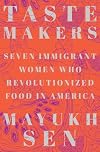
Food journalist Mayukh Sen attempts to raise the profile of seven immigrant women (below) who contributed to the food landscape in the United States through their restaurants, cookbooks, TV shows, and newspaper interviews. They received different levels of praise and attention (and none quite as much as Julia Child, who had the privilege of being a white American), but each moved the needle, bringing a "foreign" food closer to mainstream acceptance from the food industry, food media, and show more white American consumers.
Chao Yang Buwei (Chinese)
Elena Zelayeta (Mexican)
Madeleine Kamman (French)
Marcella Hazan (Italian)
Julie Sahni (Indian)
Najmieh Batmanglij (Iranian/Persian)
Norma Shirley (Jamaican)
Quotes/notes
"When you try to teach a cuisine that is not your own, there is always one dimension missing." (Madeleine Kamman, 77)
"America has a tendency toward stardom....I never wanted to be a star, and I resisted it very strongly by saying what I thought all the time. I'm not a very popular person. But you know what? So what!" (Madeleine Kamman, 82)
"Long, long ago I learned it was not only important to excel, but also to be content." (Marcella Hazan, 120)
"In exile, you become so much more conscious of your culture, and ours is so beautiful." (Najmieh Batmanglij, 123) show less
Chao Yang Buwei (Chinese)
Elena Zelayeta (Mexican)
Madeleine Kamman (French)
Marcella Hazan (Italian)
Julie Sahni (Indian)
Najmieh Batmanglij (Iranian/Persian)
Norma Shirley (Jamaican)
Quotes/notes
"When you try to teach a cuisine that is not your own, there is always one dimension missing." (Madeleine Kamman, 77)
"America has a tendency toward stardom....I never wanted to be a star, and I resisted it very strongly by saying what I thought all the time. I'm not a very popular person. But you know what? So what!" (Madeleine Kamman, 82)
"Long, long ago I learned it was not only important to excel, but also to be content." (Marcella Hazan, 120)
"In exile, you become so much more conscious of your culture, and ours is so beautiful." (Najmieh Batmanglij, 123) show less
This book is seven mini-biographies of immigrant women in the US who wrote cookbooks and/or ran restaurants that had an influence on American views of their native cuisines.
I rarely find biography interesting, so perhaps it was a bad choice for me to read seven biographies. I was hoping for some more analysis here: more exploration of how these women changed American attitudes about food, how the food I eat today has been influenced by these women, and how the food industry works. We get a show more little bit of that analysis in the introduction, but the author doesn't follow through with it in the rest of the book. show less
I rarely find biography interesting, so perhaps it was a bad choice for me to read seven biographies. I was hoping for some more analysis here: more exploration of how these women changed American attitudes about food, how the food I eat today has been influenced by these women, and how the food industry works. We get a show more little bit of that analysis in the introduction, but the author doesn't follow through with it in the rest of the book. show less
Short biographies of women who wrote ethnic cookbooks for Americans. Interesting because of the obstacles that they had to overcome, and how the field/genre developed over time.
Awards


You May Also Like
Associated Authors
Statistics
- Works
- 2
- Also by
- 4
- Members
- 230
- Popularity
- #97,993
- Rating
- 3.9
- Reviews
- 5
- ISBNs
- 8