

Amy Butler Greenfield
Author of A Perfect Red: Empire, Espionage, and the Quest for the Color of Desire
About the Author
Disambiguation Notice:
According to note in LC authority record for Amy Butler Greenfield " E-mail from author, Feb. 8, 2005 (worried about marketing and mis-shelving issues my publishers had concerns about using the same name for adult nonfiction books (like "A Perfect Red") & fiction for young children (like "Virginia Bound"); so we went with "Amy Butler" for the childrens’ novels and "Amy Butler Greenfield" for the nonfiction adult books)"
Image credit: Amy Butler Greenfield
Works by Amy Butler Greenfield
A Perfect Red: Empire, Espionage, and the Quest for the Color of Desire (2005) 817 copies, 15 reviews
The Woman All Spies Fear: Code Breaker Elizebeth Smith Friedman and Her Hidden Life (2021) 118 copies, 7 reviews
Tagged
Common Knowledge
- Legal name
- Butler, Amy
- Birthdate
- 1968-12-21
- Gender
- female
- Education
- Williams College
Marshall Scholar at Oxford
University of Wisconsin-Madison - Occupations
- author
- Awards and honors
- Beacon of Freedom Award Winner (2008)
Virginia Reader’s Choice Finalist (2006-2007)
Young Hoosier Book Award Finalist (2005-2006)
Julia Ward Howe Prize Finalist (2004)
Best Children's Books of the Year Selection, Bank Street College of Education (2003) - Short biography
- Amy Butler Greenfield was born in Philadelphia, she grew up in the Adirondacks, and she studied imperial Spain, the ancient Americas, and Renaissance Europe as a Marshall Scholar at Oxford. She now lives with her husband near Boston, where she writes award-winning books about history and adventure for both children and adults.
- Nationality
- USA
- Birthplace
- Philadelphia, Pennsylvania, USA
- Places of residence
- Boston, Massachusetts, USA
England, UK - Disambiguation notice
- According to note in LC authority record for Amy Butler Greenfield " E-mail from author, Feb. 8, 2005 (worried about marketing and mis-shelving issues my publishers had concerns about using the same name for adult nonfiction books (like "A Perfect Red") & fiction for young children (like "Virginia Bound"); so we went with "Amy Butler" for the childrens’ novels and "Amy Butler Greenfield" for the nonfiction adult books)"
- Associated Place (for map)
- USA
Members
Reviews
The Woman All Spies Fear: Code Breaker Elizebeth Smith Friedman and Her Hidden Life by Amy Butler Greenfield
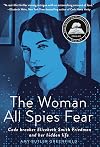
Another woman buried in history by the patriarchy, now resurrected for our edification. Elizebeth Smith Friedman was not simply the wife of cryptologist William Friedman, but was a formidable code breaker herself. While she was apparently well known in the 1930s because she was a woman codebreaker, she went "dark" to protect her work, and after death, poof, gone from history.
But what I loved most about her story was the humanity of it. Elizebeth did not lead a glamorous life. Most of it she show more toiled away for the government and had her work claimed by others, like the FBI.
She had a loving relationship with her husband, who supported her working and loved her brilliance, but it was made difficult by his bouts of severe depression, severe enough that he underwent electroshock therapy.
Elizebeth grew up on a farm in Indiana, the youngest of many children, and began her career in 1917, after finishing college, when she was hired by an odd millionaire named George Fabyan. She was hired to help find the secret codes embedded in Shakespeare's work! (Well, she concluded there weren't any.) Here she met her future husband, William.
Eventually they escaped the clutches of this odd man, and went to work for various branches of the armed forces. During her working life, Elizabeth served as a cryptologist during World War I, Prohibition, and World War II. Her work made a real difference in each of these events.
And here we were, growing up in the 50s and 60s, thinking all women who came before us stayed home and tended house, well, maybe except for Rosie the Riveter during WWII.
History (even the name History implies a "him") really is written by those in power. But things really are changing for women in the 21st century.
One thing I do wonder: why was this book marketed as Young Adult? Much of the content, especially about her married life, would not appeal to teens. show less
But what I loved most about her story was the humanity of it. Elizebeth did not lead a glamorous life. Most of it she show more toiled away for the government and had her work claimed by others, like the FBI.
She had a loving relationship with her husband, who supported her working and loved her brilliance, but it was made difficult by his bouts of severe depression, severe enough that he underwent electroshock therapy.
Elizebeth grew up on a farm in Indiana, the youngest of many children, and began her career in 1917, after finishing college, when she was hired by an odd millionaire named George Fabyan. She was hired to help find the secret codes embedded in Shakespeare's work! (Well, she concluded there weren't any.) Here she met her future husband, William.
Eventually they escaped the clutches of this odd man, and went to work for various branches of the armed forces. During her working life, Elizabeth served as a cryptologist during World War I, Prohibition, and World War II. Her work made a real difference in each of these events.
And here we were, growing up in the 50s and 60s, thinking all women who came before us stayed home and tended house, well, maybe except for Rosie the Riveter during WWII.
History (even the name History implies a "him") really is written by those in power. But things really are changing for women in the 21st century.
One thing I do wonder: why was this book marketed as Young Adult? Much of the content, especially about her married life, would not appeal to teens. show less
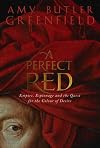
This book reminds me of an optical illusion that looks like one thing when you look at it one way, but looks like something totally different when viewed another way – think of the ubiquitous Escher posters... Viewed from one perspective, A Perfect Red is a quirky and witty, albeit highly selective, history of Western Civilization from 1500 to the present, with a special emphasis on the Spanish Empire. From another perspective, it is a 261-page history of the trade in a particular show more commodity that has no economic significance today but was marginally important 200 to 400 years ago.
The commodity in question is cochineal (Dactylopius coccus), a red dye prepared from the bodies of a kind of insect that attacks and lives in and on prickly pear cacti pads that grow in Mexico and the American Southwest. The Spanish conquistadors discovered that native Mexicans could dye clothing a brighter, more vivid red than any available in Europe. The dye was prepared by a painstaking labor-intensive process of scraping the bodies of the insects off the cacti. Cochineal became a valuable export for the Spanish Empire because other Europeans could not duplicate the intense red color it produced.
The insect that produces the dye is so small that in the days before good microscopes, Europeans (including the Spaniards) had no idea of the nature of the dye. Most of them thought it was a form of inorganic matter. The finished product was quite valuable and easy to transport, so it attracted many pirates. However, it was extremely difficult to produce anywhere but Mexico because the prickly pear cacti did not thrive in many other places and the live insects were very sensitive to cold. The Spanish maintained tight security on the production of the product and enforced severe penalties on anyone who attempted to break the crown’s monopoly.
The story of how the Spanish maintained their monopoly and how other Europeans tried to discover the secret of the dye is an interesting one that stretches from the 16th to the 18th centuries. In the process of telling a little story (the dye trade), the author's “back story” account encompasses the reigns and characters of Charles V and Phillip II, the Hapsburg Empire, the conquests of Mexico and Peru, and the continuing rivalries of Spain, England, Holland, and France. In this respect, the dye trade acts as a microcosm of a much broader European history, a conceit that Greenfield handles deftly.
However, the author’s technique of filtering the history of Western Europe through the lens of the red dye trade breaks down in the 19th century. Spain’s monopoly in cochineal persisted, but by then the country had declined significantly as it gradually lost its overseas empire and faced bankruptcy. Moreover, the German chemical industry developed synthetic dyes of comparable quality. I think Greenfield overstates her case when she attributes the rise of the whole German chemical industry to efforts to find a substitute for cochineal. And when she traces those efforts to the development of poisonous gas for World War I, the chain of causation is too diffuse to be credible.
So back to the optical illusion. When the book is viewed as political history seen as a partial function of the cochineal trade, it works pretty well from 1500 to about 1830, but then has nothing worthwhile to say. If viewed as merely a history of the trade in a particular red dye, it is no more significant than a history of the trade in copra or jute.
Evaluation: This is a good book for those who like niche knowledge, or who prefer history in more entertaining forms.
(JAB) show less
The commodity in question is cochineal (Dactylopius coccus), a red dye prepared from the bodies of a kind of insect that attacks and lives in and on prickly pear cacti pads that grow in Mexico and the American Southwest. The Spanish conquistadors discovered that native Mexicans could dye clothing a brighter, more vivid red than any available in Europe. The dye was prepared by a painstaking labor-intensive process of scraping the bodies of the insects off the cacti. Cochineal became a valuable export for the Spanish Empire because other Europeans could not duplicate the intense red color it produced.
The insect that produces the dye is so small that in the days before good microscopes, Europeans (including the Spaniards) had no idea of the nature of the dye. Most of them thought it was a form of inorganic matter. The finished product was quite valuable and easy to transport, so it attracted many pirates. However, it was extremely difficult to produce anywhere but Mexico because the prickly pear cacti did not thrive in many other places and the live insects were very sensitive to cold. The Spanish maintained tight security on the production of the product and enforced severe penalties on anyone who attempted to break the crown’s monopoly.
The story of how the Spanish maintained their monopoly and how other Europeans tried to discover the secret of the dye is an interesting one that stretches from the 16th to the 18th centuries. In the process of telling a little story (the dye trade), the author's “back story” account encompasses the reigns and characters of Charles V and Phillip II, the Hapsburg Empire, the conquests of Mexico and Peru, and the continuing rivalries of Spain, England, Holland, and France. In this respect, the dye trade acts as a microcosm of a much broader European history, a conceit that Greenfield handles deftly.
However, the author’s technique of filtering the history of Western Europe through the lens of the red dye trade breaks down in the 19th century. Spain’s monopoly in cochineal persisted, but by then the country had declined significantly as it gradually lost its overseas empire and faced bankruptcy. Moreover, the German chemical industry developed synthetic dyes of comparable quality. I think Greenfield overstates her case when she attributes the rise of the whole German chemical industry to efforts to find a substitute for cochineal. And when she traces those efforts to the development of poisonous gas for World War I, the chain of causation is too diffuse to be credible.
So back to the optical illusion. When the book is viewed as political history seen as a partial function of the cochineal trade, it works pretty well from 1500 to about 1830, but then has nothing worthwhile to say. If viewed as merely a history of the trade in a particular red dye, it is no more significant than a history of the trade in copra or jute.
Evaluation: This is a good book for those who like niche knowledge, or who prefer history in more entertaining forms.
(JAB) show less
The woman all spies fear : code breaker Elizebeth Smith Friedman and her hidden life by Amy Butler Greenfield
This biography tells the incredible true story of Elizebeth Smith Friedman, a cryptanalyst during both World Wars, who worked to crack codes and ciphers used to mask military and spy messages.
Keep bringing on the stories of overlooked folks who made a big difference! Elizebeth (and no, that's not a typo, apparently her mother really didn't want her nickname to be "Eliza") is a fascinating woman, and I loved the story of both her and her husband William who both worked for the U.S. government show more in various capacities. In a time where women seldom went to college and ended their careers when they had babies, Elizebeth bucked the norm with the full support of her husband. The prose sometimes made me want to pull out an editor's pen, and maybe cross out one or two of those sentences that compared researching a part of Elizebeth's life to decoding. But this YA biography will have a lot of appeal beyond that age group. show less
Keep bringing on the stories of overlooked folks who made a big difference! Elizebeth (and no, that's not a typo, apparently her mother really didn't want her nickname to be "Eliza") is a fascinating woman, and I loved the story of both her and her husband William who both worked for the U.S. government show more in various capacities. In a time where women seldom went to college and ended their careers when they had babies, Elizebeth bucked the norm with the full support of her husband. The prose sometimes made me want to pull out an editor's pen, and maybe cross out one or two of those sentences that compared researching a part of Elizebeth's life to decoding. But this YA biography will have a lot of appeal beyond that age group. show less
The woman all spies fear : code breaker Elizebeth Smith Friedman and her hidden life by Amy Butler Greenfield
I really appreciate the increasing visibility women are getting in the annals of history, and "The Woman All Spies Fear" is a fantastic addition to that. Movies such as "Hidden Figures" have really brought to life aspects of history warranting more attention, especially regarding women, and I do believe books like this will continue the trend.
The great thing about biographies written for younger audiences is that I find them less dense, more easily approachable, and still highly informative. show more This read proved all of that and more.
I was unfamiliar with Elizebeth Smith Friedman's name (let alone her story!) before picking this up, and am very glad I did!
One reference to "Christian mobs" felt out of place - I wish more context around this had been given. A lot has been done in the name of religion, and to inject this without more commentary rubbed me the wrong way.
That aside, an informative and insightful read.
I received an eARC of the book from the publisher via NetGalley. All opinions are my own. show less
The great thing about biographies written for younger audiences is that I find them less dense, more easily approachable, and still highly informative. show more This read proved all of that and more.
I was unfamiliar with Elizebeth Smith Friedman's name (let alone her story!) before picking this up, and am very glad I did!
One reference to "Christian mobs" felt out of place - I wish more context around this had been given. A lot has been done in the name of religion, and to inject this without more commentary rubbed me the wrong way.
That aside, an informative and insightful read.
I received an eARC of the book from the publisher via NetGalley. All opinions are my own. show less
Lists
Awards


You May Also Like


Associated Authors
Statistics
- Works
- 7
- Members
- 1,271
- Popularity
- #20,173
- Rating
- 3.7
- Reviews
- 36
- ISBNs
- 28
- Languages
- 3
- Favorited
- 1