

Ben Wickey
Author of More Weight: A Salem Story
About the Author
Image credit: Photo Credit: Joe Linton
Works by Ben Wickey
Associated Works
Tagged
Common Knowledge
- Birthdate
- 1990s
- Gender
- male
- Nationality
- USA
- Birthplace
- Massachusetts, USA
- Places of residence
- California, USA
- Associated Place (for map)
- USA
Members
Reviews

In 1692 more than two dozen people in Salem, Massachusetts were accused of witchcraft and put on trial. The accusations were the result of petty grievances and jealousies during a very stressful time for the town. Many were accused just for questioning the validity of others’ accusations. None were actually witches, nor did they practice any kind of folk magic. The defendants were mostly women, and most of them were convicted and hanged to death. One man accused of being a witch, Giles show more Corey, whose wife was also awaiting trial for witchcraft, refused to stand trial at all. The punishment for this at the time was “pressing”, or crushing a person with stones until they agreed to stand trial. Allegedly, Giles Corey’s last words as he was crushed to death were “more weight”.
150 years later, the author Nathaniel Hawthorne, a native of Salem himself, struggled to deal with the knowledge that his own ancestor, John Hathorne, was a judge in the trials. He changed the spelling of his name to distance himself and frequently corresponded with his peers about his feelings about his ancestor’s actions. He and his friend Henry Wadsworth Longfellow both incorporated the witch trials into their work.
Since 1692, the town of Salem has struggled with its legacy. After the decline of industry after industry, in the late 20th century it’s economy began to increasingly rely on the tourism industry. People started calling it “witch city” and kitschy museums and fake psychics moved in despite the fact that there were never any witches in Salem. Some in the town believe the commercialism is disrespectful to the innocent victims of the witch trials, but it's not clear if there's any way to avoid it anymore.
This spectacular graphic history blends these storylines together to tell the real story of the town of Salem. It’s a true masterpiece of both illustration and research, consisting of almost 500 pages of comics and 70 over-size pages of endnotes (and even the endnotes have their own footnotes!) I particularly appreciated the thorough examination of the history of the concept of “witchcraft”, which is respectful of modern people who identify that way while not allowing projection onto historical people who very much would not have liked to be described as witches. This is a powerful work of history and sociology which is worth your (significant) time and attention. My only criticism is that …maybe it should have been several volumes instead? It was physically quite hard to read. show less
150 years later, the author Nathaniel Hawthorne, a native of Salem himself, struggled to deal with the knowledge that his own ancestor, John Hathorne, was a judge in the trials. He changed the spelling of his name to distance himself and frequently corresponded with his peers about his feelings about his ancestor’s actions. He and his friend Henry Wadsworth Longfellow both incorporated the witch trials into their work.
Since 1692, the town of Salem has struggled with its legacy. After the decline of industry after industry, in the late 20th century it’s economy began to increasingly rely on the tourism industry. People started calling it “witch city” and kitschy museums and fake psychics moved in despite the fact that there were never any witches in Salem. Some in the town believe the commercialism is disrespectful to the innocent victims of the witch trials, but it's not clear if there's any way to avoid it anymore.
This spectacular graphic history blends these storylines together to tell the real story of the town of Salem. It’s a true masterpiece of both illustration and research, consisting of almost 500 pages of comics and 70 over-size pages of endnotes (and even the endnotes have their own footnotes!) I particularly appreciated the thorough examination of the history of the concept of “witchcraft”, which is respectful of modern people who identify that way while not allowing projection onto historical people who very much would not have liked to be described as witches. This is a powerful work of history and sociology which is worth your (significant) time and attention. My only criticism is that …maybe it should have been several volumes instead? It was physically quite hard to read. show less
(this reviewer received an advance copy of the book for review through NetGalley)
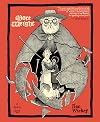
There were no witches in 1692. That is a central them of Ben Wickey's More Weight, a graphic history of Salem and its role in pop culture, literature, and politics since the town first made its name as the location of the 1692 witch trials. Toggling between the 1692 witch hysteria, the 19th century Salem of author Nathaniel Hawthorne, and the modern Massachusetts city that is home to parking lots and tchotchke show more shops, Wickey creates a completely unromanticized and devastating portrait of the trials, their perpetrators, and victims. Past chroniclers of Salem have always seen what they wanted to see in the trials: Arthur Miller saw political persecution and sexual repression, Longfellow saw his own grief. Wickey's depiction of these events is not so melodramatic; although he takes inspiration from centuries of Salem-based literature, his sympathetic portrait is likely closer to what those Salemites experienced: confusion, frustration, and terror. The use of a cartoonish drawing style, reminiscent of Edward Gorey or perhaps even the engraved tombstones of Salem itself, lulls the reader into thinking that they are reading a fable the likes of the Crucible, something distanced from the 19th and 21st century Salems, which are rendered in a realist style. That only makes the later collision of these two styles, and the visceral depictions of the victims, all the more effective at pushing forth one of Wickey's central ideas: that Salem is not a fable, and there is no moral. It is not an allegory for political "witch hunts", or the last vestige of a "women's holocaust", and there were no witches in 1692: the witch trials were a terrible miscarriage of justice that resulted in the deaths of dozens of people and trauma to countless more. Like many children growing up in Massachusetts, Giles Corey's infamous last words "more weight" (the historicity of which are debated) were seared into my memory. Wickey's chronicle of Salem, astounding in its scope and depth, paints new emotion into these words and has given me a new appreciation of one of Massachusetts' darkest chapters. The extensive notes and bibliography, as well as the breadth of Massachusetts history touched on, will also give history enthusiasts much to chew on long after they have closed this book. show less
There were no witches in 1692. That is a central them of Ben Wickey's More Weight, a graphic history of Salem and its role in pop culture, literature, and politics since the town first made its name as the location of the 1692 witch trials. Toggling between the 1692 witch hysteria, the 19th century Salem of author Nathaniel Hawthorne, and the modern Massachusetts city that is home to parking lots and tchotchke show more shops, Wickey creates a completely unromanticized and devastating portrait of the trials, their perpetrators, and victims. Past chroniclers of Salem have always seen what they wanted to see in the trials: Arthur Miller saw political persecution and sexual repression, Longfellow saw his own grief. Wickey's depiction of these events is not so melodramatic; although he takes inspiration from centuries of Salem-based literature, his sympathetic portrait is likely closer to what those Salemites experienced: confusion, frustration, and terror. The use of a cartoonish drawing style, reminiscent of Edward Gorey or perhaps even the engraved tombstones of Salem itself, lulls the reader into thinking that they are reading a fable the likes of the Crucible, something distanced from the 19th and 21st century Salems, which are rendered in a realist style. That only makes the later collision of these two styles, and the visceral depictions of the victims, all the more effective at pushing forth one of Wickey's central ideas: that Salem is not a fable, and there is no moral. It is not an allegory for political "witch hunts", or the last vestige of a "women's holocaust", and there were no witches in 1692: the witch trials were a terrible miscarriage of justice that resulted in the deaths of dozens of people and trauma to countless more. Like many children growing up in Massachusetts, Giles Corey's infamous last words "more weight" (the historicity of which are debated) were seared into my memory. Wickey's chronicle of Salem, astounding in its scope and depth, paints new emotion into these words and has given me a new appreciation of one of Massachusetts' darkest chapters. The extensive notes and bibliography, as well as the breadth of Massachusetts history touched on, will also give history enthusiasts much to chew on long after they have closed this book. show less
This is a good history of the Salem witch trials where the focus is on one couple, both of whom died in the panic, first Martha Corey, a devout woman who viewed the hunt for witches as nonsense, and her husband, an irascible crank who enjoyed the spectacle until his own words made his wife a target. The fever would finally break, but not before twenty people had been killed, most by hanging, but Giles Corey, who refused to submit, was pressed to death, a horrific way to die. Along with the show more witch trials, Wickey also looks at the literature surrounding the events, with a second time line following Henry Wadsworth Longfellow and Nathaniel Hawthore, as they walk around Salem, talking. A third thread is centered on Salem as it is now, where its financial well-being based on Hallowe'en and witches.
Wickey does a good job of giving the reader a feel for the terror the people accused of being witches went through, while also going over the history carefully. By adding the 19th century time line, Wickey is able to focus on how the trials have been seen in popular history and literature, where he also notes where various writers deviated from the historic record. And in the parts taking place in the present, he can look at what Salem is like today, and how that comes with its own amendments to the history. This was a very interesting book and I'll have to look for more graphic non-fiction. show less
Wickey does a good job of giving the reader a feel for the terror the people accused of being witches went through, while also going over the history carefully. By adding the 19th century time line, Wickey is able to focus on how the trials have been seen in popular history and literature, where he also notes where various writers deviated from the historic record. And in the parts taking place in the present, he can look at what Salem is like today, and how that comes with its own amendments to the history. This was a very interesting book and I'll have to look for more graphic non-fiction. show less
There is a worthwhile history of the Salem witch trials buried in these 534 pages, but the effort required to dig it out is simply too great. This is obviously a passion project, but it is one in need of a draconian editor.
I got bogged down 150 pages into the story, lost in the giant cast of poorly introduced characters. And not only are we dealing with the events of 1690, but there are alternating fantasy chapters set in the 1860s that imagine a long, miserable, and convoluted conversation show more between Nathaniel Hawthorne and Henry Wadsworth Longfellow as they take a walking tour of Salem. Were I editor, these tedious intrusions would never have seen the light of day.
After setting the work aside for several weeks, I dived back in one lazy weekend afternoon and forced myself over the course of way too many hours to trudge through another 300 pages. I almost found myself intrigued at times as the story of Giles Corey finally took on a form I could decipher, but the author kept fighting me with a barrage of words and fantasy sequences.
And once I made it to the end of the narrative, there were still two challenges. The “Outro” — the author’s diatribe against the exploitative consumerism of modern-day Salem, a veritable “Witch City” amusement park — while interesting at times, is overburdened with purple prose and an ever-growing deluge of words that increasingly cause the captions to bulge further and further into the space meant for the illustrations. It was disheartening to turn the page and realize that my eyestrain was only going to get worse and Wickey’s tone more strident. And then there are the more than fifty pages of Author’s Notes, which of course are footnoted because how else can it be made more ridiculous?!?!?! I tried wading into this sea of text, but gave up after a page or three of sources, quotes, rationalizations, and asides.
The influence of Alan Moore’s From Hell seems to be all over this work — starting with his blurb on the front cover to the in-depth annotation. Moore’s study of Jack the Ripper has never broken into my mental top ten of his best works, often for similar reasons outlined above for this book, but he has a gift for putting together words and scenes that Wickey is still a long way from achieving but is at least moving toward — perhaps more quickly with some editorial assistance.
Disclosure: I received access to a copy of this book from the publisher through NetGalley.com. show less
I got bogged down 150 pages into the story, lost in the giant cast of poorly introduced characters. And not only are we dealing with the events of 1690, but there are alternating fantasy chapters set in the 1860s that imagine a long, miserable, and convoluted conversation show more between Nathaniel Hawthorne and Henry Wadsworth Longfellow as they take a walking tour of Salem. Were I editor, these tedious intrusions would never have seen the light of day.
After setting the work aside for several weeks, I dived back in one lazy weekend afternoon and forced myself over the course of way too many hours to trudge through another 300 pages. I almost found myself intrigued at times as the story of Giles Corey finally took on a form I could decipher, but the author kept fighting me with a barrage of words and fantasy sequences.
And once I made it to the end of the narrative, there were still two challenges. The “Outro” — the author’s diatribe against the exploitative consumerism of modern-day Salem, a veritable “Witch City” amusement park — while interesting at times, is overburdened with purple prose and an ever-growing deluge of words that increasingly cause the captions to bulge further and further into the space meant for the illustrations. It was disheartening to turn the page and realize that my eyestrain was only going to get worse and Wickey’s tone more strident. And then there are the more than fifty pages of Author’s Notes, which of course are footnoted because how else can it be made more ridiculous?!?!?! I tried wading into this sea of text, but gave up after a page or three of sources, quotes, rationalizations, and asides.
The influence of Alan Moore’s From Hell seems to be all over this work — starting with his blurb on the front cover to the in-depth annotation. Moore’s study of Jack the Ripper has never broken into my mental top ten of his best works, often for similar reasons outlined above for this book, but he has a gift for putting together words and scenes that Wickey is still a long way from achieving but is at least moving toward — perhaps more quickly with some editorial assistance.
Disclosure: I received access to a copy of this book from the publisher through NetGalley.com. show less
Lists
Awards


You May Also Like
Associated Authors
Statistics
- Works
- 3
- Also by
- 2
- Members
- 50
- Popularity
- #316,247
- Rating
- 3.9
- Reviews
- 6
- ISBNs
- 2