
Alex Thomson (1)
Author of Death of a Clone
For other authors named Alex Thomson, see the disambiguation page.
About the Author
Image credit: https://angryrobotbooks.com/book_author/alex-thomson/
Works by Alex Thomson
Tagged
Common Knowledge
- Occupations
- teacher
- Short biography
- Alex Thomson has worked in the publishing industry for the last twelve years, selling translation rights for children's books, gardening books, yoga books, crystal books, cookery books, and lately sci-fi and fantasy books. He wrote DEATH OF A CLONE on the train during his daily commute to London, scribbling away in biro in a notebook, surrounded by sweaty commuters. He has two small and lively boys, which explains why trying to write at home was not always a realistic option. His short fiction has been published in the Nocturne anthologies. When not writing, he can be found whiling away the hours in board game cafes or playing the bongos.
- Nationality
- UK
- Associated Place (for map)
- UK
Members
Reviews

130 years ago Val Kedić fell to the Keda. The new rules renamed the city, forced the population to build them an island in the middle of the city and proceeded to treat them as almost slaves - almost everyone is kept without anything while the rules live in splendor. And in order to keep the population calm, the Keda use the children - every child with a family is sent to work in the mines between the ages of 11 and 18. That makes sure that they come back with broken spirit - and any time show more when a parent does anything which the rulers do not like, it is their kid that gets punished.
And if that was not nightmarish enough, the Keda do not seem to be able to speak (later in the book, one of the characters dreams of making the Keda learn tonguespeak (aka actual speech) but that seems like an impossibility from everything else we are told). They communicate with what the citizens call fingerspeak - a touch language where the fingers of the speaker touch, squeeze, tap and so on the forearm of the listener, with 2 metal bands on the arm to assist with the possible words. That requires someone from the population to understand and translate (or how would you rule them?) in both directions so the guild of the translators was born.
When the novel opens, we meet Razvan - one of the best translators in the Guild (there is a very limited number of them for various reasons), with a son in the mines and who is just trying to survive. Before long another tribe/peoples show up intent on defeating the Keda and getting the city and the stage for the novel is set.
So what happens when you rule a city where you cannot hear and speak (let alone understand) the language of the streets and the streets decide that it is time for revolution, using the disruption of the enemy coming in? You rely on your translators. And then some of them decide that they had enough - nothing like a bit of a linguistic subterfuge to kick start the revolution - and things start unraveling. But even in the middle of all that, there is an enemy at the gate and they don't seem to care much about who is who - they want the city. Where would your loyalties be in that situation - the evil you know or the one you don't?
The world has no modern technology (the city does not, it does not seem that the horde that shows up has any either) but there is some form of alchemy so the whole novel has a medieval feel to it. The parts which deal with the language are fascinating (no brushing away the fact that a touch language's grammar works very differently from a spoken one). The sections when Razvan showed us the past and his own history added to the build-up of the novel nicely. A lot of the twists actually worked and did not feel either too expected or coming out of the blue.
And yet, something felt off in the novel as a whole. Part of it is the almost invincibility of the people who had to survive for a plan to work (characters died but... they were never that important). Part of it is that the good guys seemed too good to be believable in places (plus the whole "noone trusts me but I do the best and now everyone does"). It almost felt like a great setting for a novel which just did not have an interesting story to tell - the story felt almost formulaic if you remove the fingerspeak. And yet, I am happy I read it - despite its deficiencies, the linguistic part of the world is fascinating. show less
And if that was not nightmarish enough, the Keda do not seem to be able to speak (later in the book, one of the characters dreams of making the Keda learn tonguespeak (aka actual speech) but that seems like an impossibility from everything else we are told). They communicate with what the citizens call fingerspeak - a touch language where the fingers of the speaker touch, squeeze, tap and so on the forearm of the listener, with 2 metal bands on the arm to assist with the possible words. That requires someone from the population to understand and translate (or how would you rule them?) in both directions so the guild of the translators was born.
When the novel opens, we meet Razvan - one of the best translators in the Guild (there is a very limited number of them for various reasons), with a son in the mines and who is just trying to survive. Before long another tribe/peoples show up intent on defeating the Keda and getting the city and the stage for the novel is set.
So what happens when you rule a city where you cannot hear and speak (let alone understand) the language of the streets and the streets decide that it is time for revolution, using the disruption of the enemy coming in? You rely on your translators. And then some of them decide that they had enough - nothing like a bit of a linguistic subterfuge to kick start the revolution - and things start unraveling. But even in the middle of all that, there is an enemy at the gate and they don't seem to care much about who is who - they want the city. Where would your loyalties be in that situation - the evil you know or the one you don't?
The world has no modern technology (the city does not, it does not seem that the horde that shows up has any either) but there is some form of alchemy so the whole novel has a medieval feel to it. The parts which deal with the language are fascinating (no brushing away the fact that a touch language's grammar works very differently from a spoken one). The sections when Razvan showed us the past and his own history added to the build-up of the novel nicely. A lot of the twists actually worked and did not feel either too expected or coming out of the blue.
And yet, something felt off in the novel as a whole. Part of it is the almost invincibility of the people who had to survive for a plan to work (characters died but... they were never that important). Part of it is that the good guys seemed too good to be believable in places (plus the whole "noone trusts me but I do the best and now everyone does"). It almost felt like a great setting for a novel which just did not have an interesting story to tell - the story felt almost formulaic if you remove the fingerspeak. And yet, I am happy I read it - despite its deficiencies, the linguistic part of the world is fascinating. show less

Leila wants answers - but she’s not getting any. A designed clone working out a contract on an asteroid mining outpost (nicknamed Hell by the 3 Overseers) , Leila is part of a group of six cloned siblings, the Ells, just as there are six Ays (well, five, really), six Bees, and six Jays. Except that there aren’t six Ells, just Leila and Lily, and Leila can’t quite remember what happened to her four sisters. When Lily is murdered, it seems it may have been because Lily was asking too show more many questions. Now it’s Leila’s turn to ask the questions.
Leila is an Agatha Christie fan and models her investigation on the methods of Miss Marple, but she’s naive and inexperienced and no one seems to be telling her the truth. Everyone seems to be keeping secrets….
[Death of a Clone] is an excellent science fiction and mystery genre cross. The references to Christie’s novels (particularly to Miss Marple) will please mystery fans and the science fiction elements are critical to the story itself - it’s not just an interesting setting.
As I read, I found myself with a growing sense of unease - well, I don't want to say too much. I’ll admit I wasn’t quite sure what to expect out of this book, but I was amply rewarded by reading it.
Something about St. Mary Mead reminds me of Hell--a small, enclosed society; the stifling claustrophobia and social stratification; and all those secrets lying beneath the veneer of respectability. show less
Leila is an Agatha Christie fan and models her investigation on the methods of Miss Marple, but she’s naive and inexperienced and no one seems to be telling her the truth. Everyone seems to be keeping secrets….
[Death of a Clone] is an excellent science fiction and mystery genre cross. The references to Christie’s novels (particularly to Miss Marple) will please mystery fans and the science fiction elements are critical to the story itself - it’s not just an interesting setting.
As I read, I found myself with a growing sense of unease - well, I don't want to say too much. I’ll admit I wasn’t quite sure what to expect out of this book, but I was amply rewarded by reading it.
Something about St. Mary Mead reminds me of Hell--a small, enclosed society; the stifling claustrophobia and social stratification; and all those secrets lying beneath the veneer of respectability. show less
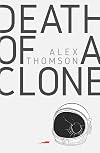
Goodreads Synopsis:
An Agatha Christie thriller in space!
The Overseers may call it Hell, but for Leila and the other clones, the mining base on asteroid Mizushima-00109 is the only home they’ve ever known. But then Leila’s sister Lily is murdered, and the Overseers seem less interested in solving the crime than in making their mining quota and returning to Earth.
Leila decides to find the murderer, just like the heroes of her old detective novels would. But Hell is a place of terrible show more secrets, and a love of cozy mysteries may not be enough to keep Leila from ending up like her sister.
My Review:
In the distant future, space travel is frequent. At least it is when the earth is running dangerously low on precious metals and resources. Cloning is also a huge thing, as it's hard to find people who want to give up such a huge chunk of their life to mine on an asteroid like the one Leila lives on with her "family", on one they've nicknamed Hell. It's an unwelcoming clump of metal with a toxic atmosphere and a pale sun, and induces headaches for the people living there. But they do what they have to, work until the collection ship arrives, where the clones will earn their passage to Earth, and the Overseer's will finally get to go home. Most families have more than four clones in them, but Leila's family only consists of her and her sister Lily. There were supposed to be four others, but something happened with them, supposedly they didn't grow properly. Lily has been suspicious for a very long time that something happened to their missing sisters, but Leila thinks nothing of it and continues her work.
I know I say this a lot, but this book is completely unlike anything I've read lately. Not only is the murder mystery completely unique, the characters are a lot different than any other I've read about, and not just because they're clones. It's easy to read, and easy to imagine. I would love to have a copy on my shelf to read again and again, and that's really saying something because I don't usually want to read books more than once because I have so many to read. Leila is an amazing person, full of surprises, and I really love that she plays detective even though she's never even known what a detective is outside of the books she reads. I was sucked into the story immediately, and I couldn't put it down until I was finished. I absolutely loved it. The story is just so interesting, and I couldn't predict it at all. The characters are interesting too, despite being clones raised in the same conditions, they're all so different. The ending is a whole other thing all together. It's more horrific than I ever could have imagined, and I loved every second of it. I definitely recommend you check out this story if you get the chance!
Here's a link to the book on Amazon, and another link to the Author's Twitter.
https://www.amazon.ca/Death-Clone-Alex-Thomson/dp/1781086346/ref=sr_1_1?ie=UTF8&...
https://twitter.com/mr_alexthomson
Thanks for reading! Check out this review and more at my blog.
(Radioactivebookreviews.wordpress.com) show less
An Agatha Christie thriller in space!
The Overseers may call it Hell, but for Leila and the other clones, the mining base on asteroid Mizushima-00109 is the only home they’ve ever known. But then Leila’s sister Lily is murdered, and the Overseers seem less interested in solving the crime than in making their mining quota and returning to Earth.
Leila decides to find the murderer, just like the heroes of her old detective novels would. But Hell is a place of terrible show more secrets, and a love of cozy mysteries may not be enough to keep Leila from ending up like her sister.
My Review:
In the distant future, space travel is frequent. At least it is when the earth is running dangerously low on precious metals and resources. Cloning is also a huge thing, as it's hard to find people who want to give up such a huge chunk of their life to mine on an asteroid like the one Leila lives on with her "family", on one they've nicknamed Hell. It's an unwelcoming clump of metal with a toxic atmosphere and a pale sun, and induces headaches for the people living there. But they do what they have to, work until the collection ship arrives, where the clones will earn their passage to Earth, and the Overseer's will finally get to go home. Most families have more than four clones in them, but Leila's family only consists of her and her sister Lily. There were supposed to be four others, but something happened with them, supposedly they didn't grow properly. Lily has been suspicious for a very long time that something happened to their missing sisters, but Leila thinks nothing of it and continues her work.
I know I say this a lot, but this book is completely unlike anything I've read lately. Not only is the murder mystery completely unique, the characters are a lot different than any other I've read about, and not just because they're clones. It's easy to read, and easy to imagine. I would love to have a copy on my shelf to read again and again, and that's really saying something because I don't usually want to read books more than once because I have so many to read. Leila is an amazing person, full of surprises, and I really love that she plays detective even though she's never even known what a detective is outside of the books she reads. I was sucked into the story immediately, and I couldn't put it down until I was finished. I absolutely loved it. The story is just so interesting, and I couldn't predict it at all. The characters are interesting too, despite being clones raised in the same conditions, they're all so different. The ending is a whole other thing all together. It's more horrific than I ever could have imagined, and I loved every second of it. I definitely recommend you check out this story if you get the chance!
Here's a link to the book on Amazon, and another link to the Author's Twitter.
https://www.amazon.ca/Death-Clone-Alex-Thomson/dp/1781086346/ref=sr_1_1?ie=UTF8&...
https://twitter.com/mr_alexthomson
Thanks for reading! Check out this review and more at my blog.
(Radioactivebookreviews.wordpress.com) show less

A very enjoyable young adult - science fiction - mystery. Leila is a clone working on mining of an asteroid. When her sister is murdered the Overseers don't care. But Leila who is a fan of old detective novels decides she will solve the mystery. She can not give up asking questions to find out the truth about he sister and their existence.
Lists
Statistics
- Works
- 2
- Members
- 60
- Popularity
- #277,519
- Rating
- 3.6
- Reviews
- 6
- ISBNs
- 44
- Languages
- 1