
Bill Gates (1) (1955–)
Author of The Road Ahead
For other authors named Bill Gates, see the disambiguation page.
Bill Gates (1) has been aliased into Bill Gates.
About the Author
Image credit: Bill Gates, 2011
Series
Works by Bill Gates
Works have been aliased into Bill Gates.
How to Avoid a Climate Disaster: The Solutions We Have and the Breakthroughs We Need (2021) 1,002 copies, 26 reviews
Sono un ottimista globale. Conversazione con Massimo Franco (La piccola cultura) (2017) 5 copies, 2 reviews
Bill Gates on Energy 1 copy
Associated Works
Works have been aliased into Bill Gates.
This I Believe: The Personal Philosophies of Remarkable Men and Women (2006) — Contributor — 1,142 copies, 36 reviews
Tap Dancing to Work: Warren Buffett on Practically Everything, 1966-2012 (2012) — Contributor — 332 copies, 5 reviews
Total Recall: How the E-Memory Revolution Will Change Everything (2009) — Foreword; Foreword — 256 copies, 9 reviews
What Will Be: How the World of Information Will Change Our Lives (1997) — Foreword — 223 copies, 5 reviews
Disease Control Priorities: Improving Health and Reducing Poverty (2017) — Foreword, some editions — 5 copies
Jobs Vs Gates: The Hippie And The Nerd [2015 film] — Self — 3 copies
Was hat Bill Gates mit Corona zu tun?: Ein Hörbuch über die Entstehung von Verschwörungstheorien und den Umgang mit ihnen (2020) — Associated Name — 2 copies
Tagged
Common Knowledge
- Legal name
- Gates, William Henry, III
- Other names
- GATES, William Henry
GATES, Bill - Birthdate
- 1955-10-28
- Gender
- male
- Education
- Harvard University
- Organizations
- Microsoft
Bill and Melinda Gates Foundation
British Computer Society (Distinguished Fellow|1994)
National Academy of Engineering - Awards and honors
- Order of the British Empire (Honorary Knight Commander|2005)
Order of the Aztec Eagle (2006)
Silver Buffalo Award (2010)
Jefferson Award (2002) - Relationships
- Gates, Bill, Sr. (father)
Gates, Melinda (wife) - Nationality
- USA
- Birthplace
- Seattle, Washington, USA
- Places of residence
- Medina, Washington, USA
- Associated Place (for map)
- Washington, USA
Members
Discussions
BILL GATES for PRESIDENT in Pro and Con (March 2020)
Bill and Melinda Gates in Pro and Con (February 2010)
Reviews

I have no doubt that everything in this book regarding pandemic prevention is a good idea. But Gates completely ignores the fact that all the science in the universe will be useless if another person like Trump is president of the US (or other countries) during the next pandemic. Technology may be the tool, but that tool will be ineffective without political will.
I also found completely disingenuous the plug for Facebook's Meta at the end of the book. How can you even bring up Facebook show more without acknowledging that the spread of Covid misinformation (propagated by Facebook, Twitter, and other social media) has been, and continues to be, one of the reasons people don't mask, get vaccinated, or support public health measures to prevent the spread of infection?
I'm also totally done with people who have no background in education telling educators how to teach. You wouldn't know it from the space in this book that Gates spends talking about education, but for over 10 years we've been using scaffolding learning, clickers to instantaneously gauge comprehension during class time, and asynchronous online learning tools for assessment that gives students instant feedback and hints. show less
I also found completely disingenuous the plug for Facebook's Meta at the end of the book. How can you even bring up Facebook show more without acknowledging that the spread of Covid misinformation (propagated by Facebook, Twitter, and other social media) has been, and continues to be, one of the reasons people don't mask, get vaccinated, or support public health measures to prevent the spread of infection?
I'm also totally done with people who have no background in education telling educators how to teach. You wouldn't know it from the space in this book that Gates spends talking about education, but for over 10 years we've been using scaffolding learning, clickers to instantaneously gauge comprehension during class time, and asynchronous online learning tools for assessment that gives students instant feedback and hints. show less
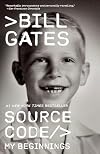
Among computer programmers, Bill Gates is still a controversial figure for his business practices. Many coders love writing code and despise how business folk interfere with our products. Of course, some of that view neglects how business folk pay our bills, too. Bill Gates, more than anyone else, deserves credit for turning writing code into a profession with a paycheck. This memoir unlocks his personality which guided the founding of Microsoft.
Well-known to us programmers is his intense, show more autism-like focus on coding. That neurodivergent personality trait comes through clearly in the book through honesty about all-night coding sessions. Also conveyed is his not picking up on social queues well, something not as well understood in the 1970s as they are today. He is equally honest and candid about such shortcomings, too.
The support of his parents' household shines through most strongly. Despite not having a formal diagnosis, they guided him in a gentle yet engaged way that didn't force their ways upon him. His dad, a partner in a law firm who was suggested for a judgeship, and his socially engaged mom can serve as models for those with neurodivergent children.
As one involved in coding, I'm still wary of Microsoft - specifically Bill Gates' - penchant for taking over smaller companies' coding projects and inhibiting the products' full creative expression. However, those stories are not covered in this book. This book instead focuses on earlier years and demonstrates deeper humanity. I appreciate how Gates' reflective voice comes through in a way that does not hide his intelligence yet appreciates the role of human compassion in his journey. This book is well worth reading not only for those interested in the computer industry but also for those interested in nurturing the human contributions of those of us who are labeled "a tad different." show less
Well-known to us programmers is his intense, show more autism-like focus on coding. That neurodivergent personality trait comes through clearly in the book through honesty about all-night coding sessions. Also conveyed is his not picking up on social queues well, something not as well understood in the 1970s as they are today. He is equally honest and candid about such shortcomings, too.
The support of his parents' household shines through most strongly. Despite not having a formal diagnosis, they guided him in a gentle yet engaged way that didn't force their ways upon him. His dad, a partner in a law firm who was suggested for a judgeship, and his socially engaged mom can serve as models for those with neurodivergent children.
As one involved in coding, I'm still wary of Microsoft - specifically Bill Gates' - penchant for taking over smaller companies' coding projects and inhibiting the products' full creative expression. However, those stories are not covered in this book. This book instead focuses on earlier years and demonstrates deeper humanity. I appreciate how Gates' reflective voice comes through in a way that does not hide his intelligence yet appreciates the role of human compassion in his journey. This book is well worth reading not only for those interested in the computer industry but also for those interested in nurturing the human contributions of those of us who are labeled "a tad different." show less
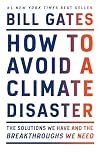
Summary: An assessment of what it will take to get to “net zero” carbon emissions by 2050, and the technological breakthroughs we will need to achieve that.
If you do not believe the scientific consensus about our changing climate and the implication of increasing global temperatures for all forms of life on planet earth, you probably want to take a pass on this post. Likewise if you have it out for Bill Gates. I’m not interested in arguments with you. I review books for those who want show more to know about new books so they may decide whether or not to purchase them and that’s who this review is for.
Bill Gates spent his early adult life building Microsoft as one of the leaders of the personal computer revolution, with the goal of a computer in every home, many of them powered by Microsoft software. He made a massive fortune and has spent the second half of his life giving much of it away, focusing particularly quality healthcare for the impoverished of the world and quality educational opportunities. The Bill and Melinda Gates Foundation has led initiatives for vaccinations to eliminate childhood diseases, and poured money into COVID-19 vaccines, resulting in conspiratorial allegations, a classic example of the axiom that “no good deed goes unpunished.” His travels around the world have brought to his attention how global climate challenge threatens to undo the progress made by the health and education programs the foundation has funded. And in typical Gates fashion, he has researched the problem, read voraciously, and put his own money where his mouth is. His book recommendations at GatesNotes are second only to my own (just kidding!).
This new book makes a very simple contention. We need to go from 51 billion to zero. 51 billion is the amount of pounds of greenhouse gases being emitted into the atmosphere. Zero is zero net emissions, which most climate scientists believe we need to get to by 2050 at the latest if we have any chances of averting the worst consequences of anthropogenic climate change. Gates outlines their case and the consequences, disproportionately hitting the world’s poorest who have contributed the least to the crisis. And probably in the biggest understatement of the whole book, Gates spends the next chapter telling us “this will be hard.” If we ignore it, things will be even worse. We could just say, we have what it takes and we just need to do it. Gates makes the case that this is only partially true at best. To get to zero, there are problems we need to solve for which we do not yet have the solutions. And we hardly have a consensus that we need to lean into this hard work and invest in solutions we don’t even have.
In the chapters that follow, he lays out the challenges. Electricity and the grid that delivers it is an amazing thing. But we get much of it from burning fossil fuels and we have to figure out how to eliminate those emissions, either by capturing the carbon or better, using forms that don’t require burning carbon-based fuels. He reviews all the alternatives, making the argument for solar, wind, and thermal, but also for a new generation of nuclear plants (in which he is investing). We need to figure out how to make things without carbon emissions. Plastic, steel, and concrete all require significant emissions as currently manufactured. We have to deal with how we grow our food. Huge increases in crop yields have fed the world, but require fertilizers that add to our emissions as do the cows that provide for our beef-heavy appetites, through their burps and farts (Gates’ words!). Then there is transportation. Trains, planes, and automobiles (and ships) are most efficiently powered by fossil fuels. Battery technology allows cars to travel up to a few hundred miles, but they are heavy, and the larger the vehicle, the more limited they are as a solution. Finally, there is heating and cooling. Even if there are solutions for all these problems (and for some they don’t yet exist), the Green Premium (the extra cost of the carbon-free alternative) is often prohibitive, especially in poorer countries, and needs to be reduced.
The final part of the book attempts to chart the course governments, companies, and individuals will need to take to overcome these challenges to get to net zero. First he addresses the fact that adaptation will be part of it. The world will get warmer. It will be particularly critical to address food production, especially in poorer countries. Then Gates argues for the importance of government policies that invest in research and in leveling the playing field so fossil fuel based solutions don’t enjoy an advantage that removes the incentive to develop alternatives, and more. One of the most critical pieces is to invest in research and development and match it to our greatest needs. Finally he focuses on what each of us can do as citizen advocates, as conserving consumers, and as Green employers.
I found myself reflecting as I read all this on whether we have any hope of making it to zero. One thing I appreciate about Gates is his blunt honesty. This is incredibly hard! Even at the height of pandemic lockdowns, carbon emissions only went down 17 percent, according to Gates. Actually, it seems to me that the pandemic is a kind of dress rehearsal for what we need to do globally to address climate change. While there are bright spots like the rapidity in which the vaccines and new therapies were developed, or individual countries that managed to balance public health and economic pressures well with high citizen cooperation, the uncoordinated global response and contentiousness within countries have led to a muddled effort at best, far from optimum. Bill Gates does not address how to overcome the resistance to the hard work needed (when many resisted even wearing masks) and what will be needed to engender trust in the science instead of suspicion.
Perhaps the question is whether a critical number of world leaders, business leaders, science leaders, community leaders, and faith leaders will come together in resolute action over a thirty year period. Not all will follow–at least at first. Over time, new norms may just become norms. Bill Gates is hopeful that we will take the measures needed and that we will find and implement the solutions that are necessary. I’m not so sure. But I also agree with him that the alternative is far less desirable. The question is whether we will see it coming before it is here. show less
If you do not believe the scientific consensus about our changing climate and the implication of increasing global temperatures for all forms of life on planet earth, you probably want to take a pass on this post. Likewise if you have it out for Bill Gates. I’m not interested in arguments with you. I review books for those who want show more to know about new books so they may decide whether or not to purchase them and that’s who this review is for.
Bill Gates spent his early adult life building Microsoft as one of the leaders of the personal computer revolution, with the goal of a computer in every home, many of them powered by Microsoft software. He made a massive fortune and has spent the second half of his life giving much of it away, focusing particularly quality healthcare for the impoverished of the world and quality educational opportunities. The Bill and Melinda Gates Foundation has led initiatives for vaccinations to eliminate childhood diseases, and poured money into COVID-19 vaccines, resulting in conspiratorial allegations, a classic example of the axiom that “no good deed goes unpunished.” His travels around the world have brought to his attention how global climate challenge threatens to undo the progress made by the health and education programs the foundation has funded. And in typical Gates fashion, he has researched the problem, read voraciously, and put his own money where his mouth is. His book recommendations at GatesNotes are second only to my own (just kidding!).
This new book makes a very simple contention. We need to go from 51 billion to zero. 51 billion is the amount of pounds of greenhouse gases being emitted into the atmosphere. Zero is zero net emissions, which most climate scientists believe we need to get to by 2050 at the latest if we have any chances of averting the worst consequences of anthropogenic climate change. Gates outlines their case and the consequences, disproportionately hitting the world’s poorest who have contributed the least to the crisis. And probably in the biggest understatement of the whole book, Gates spends the next chapter telling us “this will be hard.” If we ignore it, things will be even worse. We could just say, we have what it takes and we just need to do it. Gates makes the case that this is only partially true at best. To get to zero, there are problems we need to solve for which we do not yet have the solutions. And we hardly have a consensus that we need to lean into this hard work and invest in solutions we don’t even have.
In the chapters that follow, he lays out the challenges. Electricity and the grid that delivers it is an amazing thing. But we get much of it from burning fossil fuels and we have to figure out how to eliminate those emissions, either by capturing the carbon or better, using forms that don’t require burning carbon-based fuels. He reviews all the alternatives, making the argument for solar, wind, and thermal, but also for a new generation of nuclear plants (in which he is investing). We need to figure out how to make things without carbon emissions. Plastic, steel, and concrete all require significant emissions as currently manufactured. We have to deal with how we grow our food. Huge increases in crop yields have fed the world, but require fertilizers that add to our emissions as do the cows that provide for our beef-heavy appetites, through their burps and farts (Gates’ words!). Then there is transportation. Trains, planes, and automobiles (and ships) are most efficiently powered by fossil fuels. Battery technology allows cars to travel up to a few hundred miles, but they are heavy, and the larger the vehicle, the more limited they are as a solution. Finally, there is heating and cooling. Even if there are solutions for all these problems (and for some they don’t yet exist), the Green Premium (the extra cost of the carbon-free alternative) is often prohibitive, especially in poorer countries, and needs to be reduced.
The final part of the book attempts to chart the course governments, companies, and individuals will need to take to overcome these challenges to get to net zero. First he addresses the fact that adaptation will be part of it. The world will get warmer. It will be particularly critical to address food production, especially in poorer countries. Then Gates argues for the importance of government policies that invest in research and in leveling the playing field so fossil fuel based solutions don’t enjoy an advantage that removes the incentive to develop alternatives, and more. One of the most critical pieces is to invest in research and development and match it to our greatest needs. Finally he focuses on what each of us can do as citizen advocates, as conserving consumers, and as Green employers.
I found myself reflecting as I read all this on whether we have any hope of making it to zero. One thing I appreciate about Gates is his blunt honesty. This is incredibly hard! Even at the height of pandemic lockdowns, carbon emissions only went down 17 percent, according to Gates. Actually, it seems to me that the pandemic is a kind of dress rehearsal for what we need to do globally to address climate change. While there are bright spots like the rapidity in which the vaccines and new therapies were developed, or individual countries that managed to balance public health and economic pressures well with high citizen cooperation, the uncoordinated global response and contentiousness within countries have led to a muddled effort at best, far from optimum. Bill Gates does not address how to overcome the resistance to the hard work needed (when many resisted even wearing masks) and what will be needed to engender trust in the science instead of suspicion.
Perhaps the question is whether a critical number of world leaders, business leaders, science leaders, community leaders, and faith leaders will come together in resolute action over a thirty year period. Not all will follow–at least at first. Over time, new norms may just become norms. Bill Gates is hopeful that we will take the measures needed and that we will find and implement the solutions that are necessary. I’m not so sure. But I also agree with him that the alternative is far less desirable. The question is whether we will see it coming before it is here. show less
It’s no secret that climate change has begun to affect human lifestyles. Unfortunately, world politics and economics are ill-positioned to deal with this crisis. If we can’t agree that vaccines are a good thing, how can we agree on the difficult sacrifices required to preserve our planet for future generations? Despite this (or perhaps because of this), Bill Gates, co-founder of Microsoft and the philanthropy Gates Foundation, is lending not only his name but also his time/energy to the show more effort. In this text, he approaches the crisis as an engineering problem and spells out specific needs and solutions for the world to embrace. However, he neglects to address how to overcome politically entrenched special interests groups.
Without a doubt, the billionaire Gates is thinking about his legacy as he attempts to give much of his fortune away through the Gates Foundation. This book, likewise, is certainly part of these efforts. Nonetheless, he shows particular care in how he deals with these issues in detail. He talks about specific technologies and economic impacts. This book does not go the way of a mere jeremiad about the environment, but is rather concerned with specifics of how humans will survive under new conditions. It will upset many who stand to lose power, money, and influence in a remade world economy.
This book covers everything from what is happening and why, to how society must change and how individuals can promote change today. He also shows attention to the concerns of poorer nations – those most affected by climate change who did the least to cause it. This book’s most difficult aspect is that it covers so many details that the reader is easily overwhelmed. That just goes to show that climate change is a complex problem with complex solutions.
Gates is ambitious to tackle this subject. He does an excellent job at providing high-level analysis. However, readers cannot help if they feel he is being a bit idealistic about solutions. Climate change is on the radar of politicians in developed countries, but if the public lacks the political will to attack COVID squarely, how can we unify in attack against something as difficult and upsetting as climate change? I’m a bit cynical that we will. Gates needs helpers among national leaders in the ruling classes. Still, technologists should bite at these prospects, however, because he talks details about economic opportunities to seize the future.
With this book, Gates attempts to pique the interests of the reading public about the effects of climate change. He does so in a practical and helpful way that advances the conversation. He is not a partisan of any political ideology nor a scientific ideology. He is realistic and honest about the sacrifices needed. I lament that society does not have much of a choice about tackling this matter. I also lament that so many think that we do, choosing short-term financial gain over long-term human health. It’s time to act, and Gates makes that case forthrightly. I’m wondering, though, is anyone listening? show less
Without a doubt, the billionaire Gates is thinking about his legacy as he attempts to give much of his fortune away through the Gates Foundation. This book, likewise, is certainly part of these efforts. Nonetheless, he shows particular care in how he deals with these issues in detail. He talks about specific technologies and economic impacts. This book does not go the way of a mere jeremiad about the environment, but is rather concerned with specifics of how humans will survive under new conditions. It will upset many who stand to lose power, money, and influence in a remade world economy.
This book covers everything from what is happening and why, to how society must change and how individuals can promote change today. He also shows attention to the concerns of poorer nations – those most affected by climate change who did the least to cause it. This book’s most difficult aspect is that it covers so many details that the reader is easily overwhelmed. That just goes to show that climate change is a complex problem with complex solutions.
Gates is ambitious to tackle this subject. He does an excellent job at providing high-level analysis. However, readers cannot help if they feel he is being a bit idealistic about solutions. Climate change is on the radar of politicians in developed countries, but if the public lacks the political will to attack COVID squarely, how can we unify in attack against something as difficult and upsetting as climate change? I’m a bit cynical that we will. Gates needs helpers among national leaders in the ruling classes. Still, technologists should bite at these prospects, however, because he talks details about economic opportunities to seize the future.
With this book, Gates attempts to pique the interests of the reading public about the effects of climate change. He does so in a practical and helpful way that advances the conversation. He is not a partisan of any political ideology nor a scientific ideology. He is realistic and honest about the sacrifices needed. I lament that society does not have much of a choice about tackling this matter. I also lament that so many think that we do, choosing short-term financial gain over long-term human health. It’s time to act, and Gates makes that case forthrightly. I’m wondering, though, is anyone listening? show less
Lists
Awards


You May Also Like
Associated Authors
Statistics
- Works
- 18
- Also by
- 15
- Members
- 4,666
- Popularity
- #5,403
- Rating
- 3.6
- Reviews
- 74
- ISBNs
- 198
- Languages
- 21
- Favorited
- 1
