
About the Author
Edward G. Longacre is a retired U.S. Department of Defense Historian and the author of numerous articles and books on the Civil War and U.S. military history, including The Cavalry at Gettysburg, winner of the Fletcher Pratt Award, and Gentleman and Soldier: A Biography of Wade Hampton III, show more recipient of the Douglas Southall Freeman History Award. show less
Image credit: courtesy of Rutledge Hill Press
Works by Edward G. Longacre
The Cavalry at Gettysburg: A Tactical Study of Mounted Operations During the Civil War's Pivotal Campaign, June 9-July 14, 1863 (1986) 145 copies
From Union stars to top hat;: A biography of the extraordinary General James Harrison Wilson, (1972) 85 copies, 2 reviews
The Man Behind The Guns: A Military Biography Of General Henry J. Hunt, Commander Of Artillery, Army Of The Potomac (1977) 63 copies
Worthy Opponents: William T. Sherman and Joseph E. Johnston: Antagonists in War-Friends in Peace (2006) 47 copies, 1 review
The Cavalry at Appomattox: A Tactical Study of Mounted Operations During the Civil War's Climactic Campaign, March 27-April 9, 1865 (2003) 40 copies
Unsung Hero of Gettysburg: The Story of Union General David McMurtrie Gregg (2021) 19 copies, 1 review
The Sharpshooters: A History of the Ninth New Jersey Volunteer Infantry in the Civil War (2017) 13 copies
To Gettysburg and Beyond: The Twelfth New Jersey Volunteer Infantry, H Corps, Army of the Potomac 1862-1865 (1988) 12 copies
Associated Works
Confederate Goliath: The Battle of Fort Fisher (1991) — Foreword, some editions — 170 copies, 3 reviews
Tagged
Common Knowledge
- Birthdate
- 1946-12-22
- Gender
- male
- Education
- Temple University (PhD|American History)
- Occupations
- historian
- Nationality
- USA
- Birthplace
- New Jersey, USA
- Places of residence
- Nebraska, USA
- Associated Place (for map)
- USA
Members
Reviews
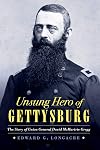
The title of this book is an accurate summation, as David Gregg was a consummate professional with little taste for the spotlight, an admirable quality which was of little personal value in a military where promotion often depended on a good press and good political connections. Still, coming off his professional zenith at the battle of Gettysburg, one is left with the question of why Gregg saw fit to resign from service in January of 1865. Longacre believes that family business, increasing show more ill health, and poor personal morale (by this point in the war Gregg was mostly a place-holder on an organization chart) are the most likely explanations. Set aside are more lurid theories such as an unwillingness to serve under Phil Sheridan (unlikely considering the post-war good relations of the two men), or being out of sympathy with late-war politics (a little more likely). Reading between the lines myself, one could speculate that Gregg might have lost the confidence of George Meade and some of the other corps commanders of the Army of the Potomac, due to a number of fights where Gregg can be interpreted as lacking a certain amount of "grip;" the ascendancy of Grant and Sheridan might well have saved Gregg's career, if not his promotion potential.
Apart from that, besides being a military life of Gregg, this book also works quite well as a focused analysis of the command politics of the cavalry of the Army of the Potomac; the quality that lifts this study above being just another biography of a little-known general (otherwise I would have only handed out 3.5 stars). show less
Apart from that, besides being a military life of Gregg, this book also works quite well as a focused analysis of the command politics of the cavalry of the Army of the Potomac; the quality that lifts this study above being just another biography of a little-known general (otherwise I would have only handed out 3.5 stars). show less

I've had mixed feeling about Longacre's writing over the years, in as much his examinations of Civil War cavalry operations date from decades ago and his biography of Joseph E. Wheeler had the apologetic aura of official history. This is very much not official history, as Longacre adopts a tone of dry sarcasm in relation to the acts of many of the key players. What is most important though is the analytic approach that Longacre adopts, in that by beginning with the senior field commanders show more (G.T. Beauregard, Joseph E. Johnston, Irvin McDowell, and (the often glossed over) Robert Patterson) it soon becomes clear that Longacre is doing a modern-style operational analysis of a campaign, which is important in that where the Union forces really lost this battle is at the operational level. Had Patterson achieved his objective of tying down Johnston's forces McDowell would have had a much better chance of making his battle a success. Instead, McDowell basically was stuck with a fair fight against a better motivated force on ground of its own choosing and the rest, as they say, is history. I could go on further but I really can't recommend this book enough. show less
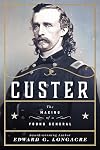
First off, George Armstrong Custer has never been someone I particularly admired, or felt that much need to learn about. But when I noticed that Edward Longacre, probably the leading expert on cavalry in the U.S. Civil War had a book out on Custer's service during the late unpleasantness of the 1860s, I felt that I'd get an accurate assessment of the man. So, the big dichotomy here is how a man who apparently made a mission of skating through West Point with as little effort as possible, show more turned into such a determined careerist once he was actually on active service. Longacre really doesn't have a great answer to that, except to note that he doesn't find Custer to be an especially complicated individual, as opposed to being a bundle of contradictions. Perhaps the answer is that when actual responsibility was thrust upon Custer he realized that he had to live up to the moment and, in an army dominated by men past their prime, raw drive and energy counted for a lot. show less
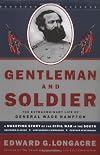
This is a very gentlemanly book. Mr. Hampton was one of the few rich Southerners to actually put his money into arming a unit to join the Army of Northern Virginia. When J.E.B. Stuart was killed, then Hampton stepped up and ended the war as the successor in command of Lee's Cavalry. Then after the war Hampton was elected Governor of South Carolina and continued to watch over the interests of the white people of his state. There's not a word on white-black relationships in the whole book. show more It's a triumph of historical tap-dancing. show less
Awards


You May Also Like


Associated Authors
Statistics
- Works
- 34
- Also by
- 3
- Members
- 1,590
- Popularity
- #16,227
- Rating
- 3.7
- Reviews
- 14
- ISBNs
- 78