
Shelby Foote (1916–2005)
Author of The Civil War: A Narrative, Volume 1: Fort Sumter to Perryville
About the Author
Author and historian Shelby Foote was born in Greenville, Mississippi on November 17, 1916. He was educated at the University of North Carolina and served with the U.S. Army artillery during World War II. He was dismissed in 1944 for using a government vehicle against regulations. He later enlisted show more in the U.S. Marine Corps, but did not see active duty. After being discharged from the military, he briefly became a journalist. He has written short stories, plays, and longer works, but is best known for his three-volume narrative history of the Civil War. He was awarded Guggenheim fellowships in 1958, 1959, and 1960, a Ford Foundation grant in 1963, and the Dos Passos Prize for Literature in 1988. In 2003, Foote received the Peggy V. Helmerich Distinguished Author Award. The Helmerich Award is presented annually by the Tulsa Library Trust. He appeared in Ken Burns' PBS documentary The Civil War. He died at home in Memphis, Tennessee, on June 27, 2005 due to a heart attack. He was interred in Elmwood Cemetery in Memphis. (Bowker Author Biography) show less
Image credit: from Lifeinlegacy.com
Series
Works by Shelby Foote
The Beleaguered City: The Vicksburg Campaign, December 1862-July 1863 (Modern Library) (1963) — Author; Narrator, some editions — 217 copies, 1 review
The Civil War: A Narrative, Volume I: Fort Sumter to Kernstown - First Blood: The Thing Gets Underway (1958) 57 copies
The Civil War: A Narrative, Volume VIII: Petersburg to Savannah - War Is Cruelty, You Cannot Refine It (1974) 50 copies
The Civil War: A Narrative, Volume IX: Five Forks to Appomattox - Victory and Defeat (1974) 49 copies
The Civil War: A Narrative, Volume III: Second Manassas to Perryville - The Sun Shines South (1974) 49 copies
The Civil War: A Narrative, Volume VII: Red River to Chattahoochee - Another Grand Design (1974) 48 copies
The Civil War: A Narrative, Volume II: Pea Ridge to the Seven Days - War Means Fighting, Fighting Means Killing (1958) 46 copies
The Civil War: A Narrative, Volume IV: Fredericksburg to Chancellorsville - The Longest Journey (1963) 45 copies
The Merchant of Bristol 1 copy
Echoes of Shiloh 1 copy
The Letters in Perspective 1 copy
Associated Works
Booknotes: America's Finest Authors on Reading, Writing, and the Power of Ideas (1997) — Contributor — 458 copies, 5 reviews
The Lincoln Anthology: Great Writers on His Life and Legacy from 1860 to Now (2008) — Contributor — 172 copies, 1 review
Anton Chekhov Early Short Stories, 1883-1888 (Modern Library) (1999) — Editor — 123 copies, 1 review
Walker Percy Remembered: A Portrait in the Words of Those Who Knew Him (2006) — Contributor — 24 copies
MHQ: The Quarterly Journal of Military History — Spring 1992 (1992) — Author "Stand up for Bastards!" — 22 copies
New Short Novels By Jean Stafford, Shelby Foote, Elizabeth Etnier, Clyde Miller (1954) — Contributor — 6 copies
Tagged
Common Knowledge
- Canonical name
- Foote, Shelby
- Legal name
- Foote, Shelby Dade, Jr.
- Birthdate
- 1916-11-17
- Date of death
- 2005-06-27
- Gender
- male
- Education
- University of North Carolina
- Occupations
- novelist
historian - Organizations
- Fellowship of Southern Writers (founding member)
Mississippi National Guard
United States Marine Corps
Alpha Tau Omega
United States Army - Awards and honors
- Charles Frankel Prize (1992)
Cleanth Brooks Medal for Lifetime Achievement (1999)
American Academy of Arts and Letters (1994)
John Dos Passos Prize (1988)
Richard M. Weaver Award (1997)
Peggy V. Helmerich Distinguished Author Award (2003) - Relationships
- Foote, Horton (cousin)
Percy, Walker (friend)
Percy, William Alexander (friend)
Spencer, Elizabeth (colleague) - Cause of death
- heart attack (from pulmonary embolism)
pulmonary embolism - Nationality
- USA
- Birthplace
- Greenville, Mississippi, USA
- Places of residence
- Jackson, Mississippi, USA
Vicksburg, Mississippi, USA
Pensacola, Florida, USA
Mobile, Alabama, USA - Place of death
- Memphis, Tennessee, USA
- Burial location
- Elmwood Cemetery, Memphis, Tennessee, USA
- Map Location
- Mississippi, USA
Members
Discussions
Shelfby Foote v. Bruce Catton v. James McPherson in American Civil War (July 2017)
Reviews
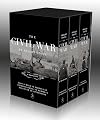
Three volumes, more than one thousand pages, one million five hundred thousand words, twenty years in the making. Not history in the usual sense (i.e., written by historians, for historians), nor a novel. It is a narrative, well-told. One of the essays in the accompanying booklet sums it up well: A flawed masterpiece.
It’s very much a “Battles and Leaders” account, notable for doing justice to other theaters besides Virginia.
Underlying this is a repeated juxtaposition of Jefferson show more Davis and Abraham Lincoln—this is what first drew me into the book. Before deciding to purchase, I borrowed volume one from the library. By the time I finished the prelude, with its parallel portraits of Davis and Lincoln as war clouds gathered, I knew I wanted my own set. It took a little searching to find out which editions were available; I chose the three-volume Modern Library set with the booklet of essays edited by Jon Meacham. Then I did something I rarely do when I own a printed book (a “real” book): I bought the e-reader version as well, so that I could keep moving forward even while traveling.
Foote’s fascination with contrasting Davis and Lincoln runs like a figured bass counterpoint beneath the long narrative, but it betrays him. The final section, “Lucifer in Starlight,” gives the impression that, in the end, Davis, unrepentant to the last, won simply by surviving nearly a quarter of a century longer than his opponent. It’s reminiscent of Satan in Milton’s Paradise Lost, who steals the spotlight in that book.
After the promising opening to volume one, the book settles into what it advertises itself to be, nothing more: a narrative of a war. But what a narrative! Foote is good at describing the tactical set-ups of each battle he treats. As part of his thorough preparation, he toured each site, often on the anniversary of the fight, with one of the knowledgeable National Park Service guides to lead him. Foote’s skill as a novelist makes him sensitive to landscape and weather, enabling him to sense what the combatants experienced and help the reader see it, too. Even more, he evokes what neither he nor the reader can experience: the hellish fury of booming cannons, clattering muskets, the shriek of the rebel yell, and the moans of the wounded and dying.
Foote’s insistence on covering all the theaters of the war—and from both sides as well—presented him with the challenge of juggling the narrative back and forth and deciding just how much to include of what the two presidents were facing in their respective capitals. Overall, I feel he met this well. A reader less familiar with the names and faces of all the generals might have trouble keeping them straight. However, I still have the multivolume Photographic History of the Civil War that I received as a Christmas present in 1957, the year it was reprinted, which I pored over as a child by the hour. So I was okay. Foote draws these characters with the skill of a novelist. His debt to Homer, who taught him a thing or two about keeping several narrative balls in the air, is also evident in his love of fixed circumlocutions to refer, leitmotif-like, to his characters. To my taste, he overdoes this; he could have omitted a few references to the one-legged Kentucky-born Texan and simply written “Hood.”
The passage of time between commencing and finishing this epic makes itself felt in changes of opinion from one book to the next. In volume one, Foote’s treatment of T. J. Jackson is ambivalent, down to the original application of the nickname “Stonewall” (it was not a compliment). By the time we reach Jackson’s death in volume two, a victim of friendly fire, the tone of Foote’s prose is hagiographic.
Such changes in tone might also be due to passing from documentary sources to secondary. As part of his preparation, Foote read all 128 volumes of War of the Rebellion; he may have been the only one of his generation to do so. This set collects dispatches, orders, and other documents of the time. As such, Foote assigned higher value to it than to the glut of memoirs through which Grant, Johnston, Longstreet, and others refought and reinterpreted the war in subsequent decades. But he supplemented this reading with secondary works. For instance, Strode’s three-volume paean to Jefferson Davis appeared in step with how far Foote was. Its influence may help explain Foote’s treatment of Davis.
One other change in volumes two and three, compared to volume one, is a tendency to write in circles. For instance, the narrative thrice refers to Jubal Early’s troops passing Jackson’s grave. Nor was it illuminating to read after any of a number of battles that it was not the Cannae one general or another had hoped for. It was revealing to read the essay by Bob Loomis, Foote’s editor at Random House, in the accompanying booklet. After the first volume, Loomis decided to dispense with the usual copy-editing, simply marking the manuscript for style. Quite a compliment to an author, but the set would be stronger if Loomis had decided otherwise.
Yet the judgment that this is a “flawed masterpiece” doesn’t rest on such stylistic quibbles. Instead, it’s a reflection of the stance Foote takes. Clearly, he strove to take an even-handed approach; Foote is by no means an apologist for the Southern side. Yet his reluctance to appear to be taking sides means he makes no comment on Davis’s claims that the Confederacy was fighting for honor and liberty. I can believe that Davis was blind to the irony that this “liberty” meant the freedom to enslave millions of fellow humans in perpetuity. But surely Foote sees this. Or does he?
This is even more striking when it comes to one of Foote’s heroes, Nathan Bedford Forrest, whom he famously called one of two geniuses produced by the war (the other was Lincoln). From these pages, the reader has no inkling of Forrest’s post-war infamy with the Ku Klux Klan.
Yet Foote did find room for many anecdotes that his vast reading turned up, to this reader’s delight. My favorite was Breckinridge’s reaction to the bottle of bourbon Sherman produced from his saddlebacks to open the negotiations for the surrender of the Army of Tennessee.
Aside from these vignettes, there was something else new to me. Before reading these volumes, I knew that while some Southern leaders, such as Alexander Stephens, openly admitted they went to war to preserve the institution of slavery, most were less straight-forward, referring to their “way of life” or, closer to the mark, “our Southern system of labor.” Like Jefferson Davis, they cloaked themselves in “honor” and “liberty.”
What I learned, however, was that as the war ground on, one Confederate general, Patrick Cleburne, proposed emancipating the slaves and arming them. That proposal went nowhere, nor did Cleburne’s career after that. Telling was Howell Cobb’s remark: “If slaves will make good soldiers our whole theory of slavery is wrong.”
Foote’s narrative shows there was ample skill and incompetence, nobility, and venality on both sides, although it’s clear that, on balance, the South had a higher proportion of good generals. And the men they led, the common soldiers, punched above their weight. But for what? Like Foote, I descend from men who fought for the Confederacy. Whenever I consider how many sons and grandsons my great (x 3) grandfather lost, I wonder why they fought. Foote quotes one farmer in western North Carolina who summed it up in 1863: “A rich man’s war and a poor man’s fight.” show less
It’s very much a “Battles and Leaders” account, notable for doing justice to other theaters besides Virginia.
Underlying this is a repeated juxtaposition of Jefferson show more Davis and Abraham Lincoln—this is what first drew me into the book. Before deciding to purchase, I borrowed volume one from the library. By the time I finished the prelude, with its parallel portraits of Davis and Lincoln as war clouds gathered, I knew I wanted my own set. It took a little searching to find out which editions were available; I chose the three-volume Modern Library set with the booklet of essays edited by Jon Meacham. Then I did something I rarely do when I own a printed book (a “real” book): I bought the e-reader version as well, so that I could keep moving forward even while traveling.
Foote’s fascination with contrasting Davis and Lincoln runs like a figured bass counterpoint beneath the long narrative, but it betrays him. The final section, “Lucifer in Starlight,” gives the impression that, in the end, Davis, unrepentant to the last, won simply by surviving nearly a quarter of a century longer than his opponent. It’s reminiscent of Satan in Milton’s Paradise Lost, who steals the spotlight in that book.
After the promising opening to volume one, the book settles into what it advertises itself to be, nothing more: a narrative of a war. But what a narrative! Foote is good at describing the tactical set-ups of each battle he treats. As part of his thorough preparation, he toured each site, often on the anniversary of the fight, with one of the knowledgeable National Park Service guides to lead him. Foote’s skill as a novelist makes him sensitive to landscape and weather, enabling him to sense what the combatants experienced and help the reader see it, too. Even more, he evokes what neither he nor the reader can experience: the hellish fury of booming cannons, clattering muskets, the shriek of the rebel yell, and the moans of the wounded and dying.
Foote’s insistence on covering all the theaters of the war—and from both sides as well—presented him with the challenge of juggling the narrative back and forth and deciding just how much to include of what the two presidents were facing in their respective capitals. Overall, I feel he met this well. A reader less familiar with the names and faces of all the generals might have trouble keeping them straight. However, I still have the multivolume Photographic History of the Civil War that I received as a Christmas present in 1957, the year it was reprinted, which I pored over as a child by the hour. So I was okay. Foote draws these characters with the skill of a novelist. His debt to Homer, who taught him a thing or two about keeping several narrative balls in the air, is also evident in his love of fixed circumlocutions to refer, leitmotif-like, to his characters. To my taste, he overdoes this; he could have omitted a few references to the one-legged Kentucky-born Texan and simply written “Hood.”
The passage of time between commencing and finishing this epic makes itself felt in changes of opinion from one book to the next. In volume one, Foote’s treatment of T. J. Jackson is ambivalent, down to the original application of the nickname “Stonewall” (it was not a compliment). By the time we reach Jackson’s death in volume two, a victim of friendly fire, the tone of Foote’s prose is hagiographic.
Such changes in tone might also be due to passing from documentary sources to secondary. As part of his preparation, Foote read all 128 volumes of War of the Rebellion; he may have been the only one of his generation to do so. This set collects dispatches, orders, and other documents of the time. As such, Foote assigned higher value to it than to the glut of memoirs through which Grant, Johnston, Longstreet, and others refought and reinterpreted the war in subsequent decades. But he supplemented this reading with secondary works. For instance, Strode’s three-volume paean to Jefferson Davis appeared in step with how far Foote was. Its influence may help explain Foote’s treatment of Davis.
One other change in volumes two and three, compared to volume one, is a tendency to write in circles. For instance, the narrative thrice refers to Jubal Early’s troops passing Jackson’s grave. Nor was it illuminating to read after any of a number of battles that it was not the Cannae one general or another had hoped for. It was revealing to read the essay by Bob Loomis, Foote’s editor at Random House, in the accompanying booklet. After the first volume, Loomis decided to dispense with the usual copy-editing, simply marking the manuscript for style. Quite a compliment to an author, but the set would be stronger if Loomis had decided otherwise.
Yet the judgment that this is a “flawed masterpiece” doesn’t rest on such stylistic quibbles. Instead, it’s a reflection of the stance Foote takes. Clearly, he strove to take an even-handed approach; Foote is by no means an apologist for the Southern side. Yet his reluctance to appear to be taking sides means he makes no comment on Davis’s claims that the Confederacy was fighting for honor and liberty. I can believe that Davis was blind to the irony that this “liberty” meant the freedom to enslave millions of fellow humans in perpetuity. But surely Foote sees this. Or does he?
This is even more striking when it comes to one of Foote’s heroes, Nathan Bedford Forrest, whom he famously called one of two geniuses produced by the war (the other was Lincoln). From these pages, the reader has no inkling of Forrest’s post-war infamy with the Ku Klux Klan.
Yet Foote did find room for many anecdotes that his vast reading turned up, to this reader’s delight. My favorite was Breckinridge’s reaction to the bottle of bourbon Sherman produced from his saddlebacks to open the negotiations for the surrender of the Army of Tennessee.
Aside from these vignettes, there was something else new to me. Before reading these volumes, I knew that while some Southern leaders, such as Alexander Stephens, openly admitted they went to war to preserve the institution of slavery, most were less straight-forward, referring to their “way of life” or, closer to the mark, “our Southern system of labor.” Like Jefferson Davis, they cloaked themselves in “honor” and “liberty.”
What I learned, however, was that as the war ground on, one Confederate general, Patrick Cleburne, proposed emancipating the slaves and arming them. That proposal went nowhere, nor did Cleburne’s career after that. Telling was Howell Cobb’s remark: “If slaves will make good soldiers our whole theory of slavery is wrong.”
Foote’s narrative shows there was ample skill and incompetence, nobility, and venality on both sides, although it’s clear that, on balance, the South had a higher proportion of good generals. And the men they led, the common soldiers, punched above their weight. But for what? Like Foote, I descend from men who fought for the Confederacy. Whenever I consider how many sons and grandsons my great (x 3) grandfather lost, I wonder why they fought. Foote quotes one farmer in western North Carolina who summed it up in 1863: “A rich man’s war and a poor man’s fight.” show less
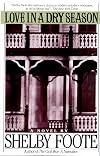
For me, Shelby Foote has always been that intrepid Civil War historian that wrote the book on the Southern perspective and contributed so much of importance to the Ken Burn’s mini-series. Now I find that he is also a novelist of some power and skill.
Love in a Dry Season was a 5-star novel to me right up to the last two chapters, when it slid down the scale to a still very respectable 4-stars. Written in the Southern Gothic style that echoes with strains of Faulkner and Tennessee Williams, show more it looks at Mississippi through the eyes of someone who understands even the quirkiest parts of Southern culture and what sets it apart from any other place on earth. Major Barcroft is shudderingly believable here and inconceivable anywhere else.
Foote gives us the willing victim, self-sacrificing Miss Amanda, who has a strength of character and endurance that is as admirable as it is bewildering; the pitiable Jeff Carruthers, who can be as easily despised as pitied; Jeff’s abominable wife, Amy; and the ultimate con-man around whom they all rotate, Harley Drew. He leads us a dance that is hard to watch, but from which we cannot force ourselves to look away.
The end of this novel was not a bad ending. It was not an illogical ending. It was not even an unjustifiable ending. But, for me it was an unsatisfactory ending. It felt as if the story had built to a crescendo and then someone popped the champagne cork to find the champagne itself was flat, had already fizzed out before it could be sampled. Perhaps I wanted a kind of retributive justice that doesn’t show up all that often in life or in novels. Who knows.
I’m pleased that I was brought to this novel by On The Southern Literary Trail book group. I don’t think I would have come across it on my own. It was time well spent and I would not hesitate to read other novels by this great historian, who obviously knows that history is really just the story of people. show less
Love in a Dry Season was a 5-star novel to me right up to the last two chapters, when it slid down the scale to a still very respectable 4-stars. Written in the Southern Gothic style that echoes with strains of Faulkner and Tennessee Williams, show more it looks at Mississippi through the eyes of someone who understands even the quirkiest parts of Southern culture and what sets it apart from any other place on earth. Major Barcroft is shudderingly believable here and inconceivable anywhere else.
Foote gives us the willing victim, self-sacrificing Miss Amanda, who has a strength of character and endurance that is as admirable as it is bewildering; the pitiable Jeff Carruthers, who can be as easily despised as pitied; Jeff’s abominable wife, Amy; and the ultimate con-man around whom they all rotate, Harley Drew. He leads us a dance that is hard to watch, but from which we cannot force ourselves to look away.
The end of this novel was not a bad ending. It was not an illogical ending. It was not even an unjustifiable ending. But, for me it was an unsatisfactory ending. It felt as if the story had built to a crescendo and then someone popped the champagne cork to find the champagne itself was flat, had already fizzed out before it could be sampled. Perhaps I wanted a kind of retributive justice that doesn’t show up all that often in life or in novels. Who knows.
I’m pleased that I was brought to this novel by On The Southern Literary Trail book group. I don’t think I would have come across it on my own. It was time well spent and I would not hesitate to read other novels by this great historian, who obviously knows that history is really just the story of people. show less
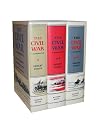
Well, I made it through. It took 14 months, but I read the whole thing. The reading is fairly demanding: so much information is packed into Foote's concise text that I often found I could only read around 4-5 pages before stopping to absorb what I had just read. Since the trilogy is over 2,500 pages long, the overall effect is rather monumental.
Before reading this, I knew little more about the Civil War than the average man (or woman) on the street. I knew the names of a few of the really show more big players; I had visited the Gettysburg battlefield as a kid (and memorized Lincoln's famous address delivered there); I had heard of Sherman's march to the sea; I knew about the Emancipation Proclamation and Lincoln's assassination. That was pretty much it. The rest was mostly just a blur.
Reading this trilogy changed that, of course, but more than just improving my knowledge and understanding of this period of American history, I believe this has somewhat changed my understanding of America itself. In the first half of the 1960s, my parents, who were both from New Jersey, lived in Richmond, VA, the capital of the Confederacy. This coincided with the centennial remembrances of the War, as well as much of the Civil RIghts Movement. (Foote would have been in the process of writing this work for the whole of that period as well.) My parents later reported to me that Richmond had definitely not forgotten what had happened 100 years earlier. They were still bitter, and took it out on Northerners by mostly shunning them. There were only a very few people who accepted my parents socially, and that only towards the end of their 6 years there. Although the more than half a century that has passed since then has seen a significant reduction in the resentment levels of most people in the South, I can now understand this phenomenon better. And in spite of the fact that the Civil War as a lived event about which people still have strong feelings is now fading into the distant past, I think understanding that time can shed some light on our current situation as well.
Some have complained that Foote was a Confederate sympathizer. This is not untrue, and stems from his roots. Among other things, Foote's family was friends with the descendants of Nathan Bedford Forrest. As a child Foote had been allowed to hold that general's sword. Confederate lore was in his blood, and it shows through slightly in these books. Overall, however, the balance he achieved is remarkable. In later years, Foote told a story of how, after he had written the trilogy, he had told somebody in the Forrest family that he considered the War to have had only two real geniuses: Forrest and Abraham Lincoln. The response he got was, "We have never been very fond of Mr. Lincoln."
Since almost everybody now can agree that the "correct" side won the Civil War, it is, I believe, useful to at least understand something of what the other side thought and felt, as well as the perspectives of the "good guys". After reading this trilogy, I almost feel as though I have lived through that tragic war myself, on both sides. So many people, so many places, so many stories. It is immersive, in the way the best narrative history can be. And this is surely among the best histories that have ever been written in English, a classic which likely will endure for centuries. show less
Before reading this, I knew little more about the Civil War than the average man (or woman) on the street. I knew the names of a few of the really show more big players; I had visited the Gettysburg battlefield as a kid (and memorized Lincoln's famous address delivered there); I had heard of Sherman's march to the sea; I knew about the Emancipation Proclamation and Lincoln's assassination. That was pretty much it. The rest was mostly just a blur.
Reading this trilogy changed that, of course, but more than just improving my knowledge and understanding of this period of American history, I believe this has somewhat changed my understanding of America itself. In the first half of the 1960s, my parents, who were both from New Jersey, lived in Richmond, VA, the capital of the Confederacy. This coincided with the centennial remembrances of the War, as well as much of the Civil RIghts Movement. (Foote would have been in the process of writing this work for the whole of that period as well.) My parents later reported to me that Richmond had definitely not forgotten what had happened 100 years earlier. They were still bitter, and took it out on Northerners by mostly shunning them. There were only a very few people who accepted my parents socially, and that only towards the end of their 6 years there. Although the more than half a century that has passed since then has seen a significant reduction in the resentment levels of most people in the South, I can now understand this phenomenon better. And in spite of the fact that the Civil War as a lived event about which people still have strong feelings is now fading into the distant past, I think understanding that time can shed some light on our current situation as well.
Some have complained that Foote was a Confederate sympathizer. This is not untrue, and stems from his roots. Among other things, Foote's family was friends with the descendants of Nathan Bedford Forrest. As a child Foote had been allowed to hold that general's sword. Confederate lore was in his blood, and it shows through slightly in these books. Overall, however, the balance he achieved is remarkable. In later years, Foote told a story of how, after he had written the trilogy, he had told somebody in the Forrest family that he considered the War to have had only two real geniuses: Forrest and Abraham Lincoln. The response he got was, "We have never been very fond of Mr. Lincoln."
Since almost everybody now can agree that the "correct" side won the Civil War, it is, I believe, useful to at least understand something of what the other side thought and felt, as well as the perspectives of the "good guys". After reading this trilogy, I almost feel as though I have lived through that tragic war myself, on both sides. So many people, so many places, so many stories. It is immersive, in the way the best narrative history can be. And this is surely among the best histories that have ever been written in English, a classic which likely will endure for centuries. show less

WOOT W00T Rooty-toot-toot! I finished!!
THE CIVIL WAR: A NARRATIVE: FORT SUMTER TO PERRYVILLE by Shelby Foote
I did. I did. I read every word. Even when I despaired of ever finishing, I read and read and read. I gave it 5 stars too because it is a monument. Shelby marches every army over almost every mile of every day of the war from Jefferson Davis's farewell to the U.S. Senate to the aftermath of Perryville in 1862. His goal was to make the reader a participant, and he largely succeeded. I show more learned things that I never knew and more than I wanted to know about strategy and tactics and the sheer bloodiness of the war itself. I bogged down in swamps. I imagined marching the miles without shoes or food.
I was vastly relieved when the narrative turned itself to politics, whether Union or Confederate. I loved the Lincoln stories (could he borrow McLellan's army since he wasn't using it?) and the pictures of Stonewall Jackson sucking his lemon, and the appearance of Polk at Perryville at a Federal gun emplacement (he was wearing a new, dark uniform, and realized too late that the soldiers he was yelling at to stop firing at their own men were actually Yankees. He brazened out their questions and rode slowly away from them expecting a bullet at every heartbeat) and Bragg requisitioning supplies as commander and denying them to himself as quartermaster.
I came away astounded at how many men moved over huge distances. I was astounded also at the number of generals on both sides. I was astounded at how many mistakes were made because of miscommunications or some general deciding on his own to do something different from the battle plan. I was humbled and full of pity for the gallant, ignorant men on both sides who marched or ran into gunfire or turned tail and ran.
I wish that he had mentioned the year a little more often. I wish that he had included a listing of the generals by army (but I made my own). Otherwise, I find that I am glad to have spent the time I spent in this book, and I suspect that I'll move on to volume 2 next year when I've recovered.
ETA: DH reminds me that S. Foote wrote the whole thing with a nib pen - dip and write, dip and write, dip and write.
I see that volume 2 is even longer. show less
THE CIVIL WAR: A NARRATIVE: FORT SUMTER TO PERRYVILLE by Shelby Foote
I did. I did. I read every word. Even when I despaired of ever finishing, I read and read and read. I gave it 5 stars too because it is a monument. Shelby marches every army over almost every mile of every day of the war from Jefferson Davis's farewell to the U.S. Senate to the aftermath of Perryville in 1862. His goal was to make the reader a participant, and he largely succeeded. I show more learned things that I never knew and more than I wanted to know about strategy and tactics and the sheer bloodiness of the war itself. I bogged down in swamps. I imagined marching the miles without shoes or food.
I was vastly relieved when the narrative turned itself to politics, whether Union or Confederate. I loved the Lincoln stories (could he borrow McLellan's army since he wasn't using it?) and the pictures of Stonewall Jackson sucking his lemon, and the appearance of Polk at Perryville at a Federal gun emplacement (he was wearing a new, dark uniform, and realized too late that the soldiers he was yelling at to stop firing at their own men were actually Yankees. He brazened out their questions and rode slowly away from them expecting a bullet at every heartbeat) and Bragg requisitioning supplies as commander and denying them to himself as quartermaster.
I came away astounded at how many men moved over huge distances. I was astounded also at the number of generals on both sides. I was astounded at how many mistakes were made because of miscommunications or some general deciding on his own to do something different from the battle plan. I was humbled and full of pity for the gallant, ignorant men on both sides who marched or ran into gunfire or turned tail and ran.
I wish that he had mentioned the year a little more often. I wish that he had included a listing of the generals by army (but I made my own). Otherwise, I find that I am glad to have spent the time I spent in this book, and I suspect that I'll move on to volume 2 next year when I've recovered.
ETA: DH reminds me that S. Foote wrote the whole thing with a nib pen - dip and write, dip and write, dip and write.
I see that volume 2 is even longer. show less
Lists
Favourite Books (3)
THE WAR ROOM (1)
Awards


You May Also Like


Associated Authors
Statistics
- Works
- 54
- Also by
- 18
- Members
- 13,041
- Popularity
- #1,784
- Rating
- 4.0
- Reviews
- 210
- ISBNs
- 195
- Languages
- 4
- Favorited
- 60
