
Zhang Wei (1956–)
Author of The Ancient Ship (Harperperennial Modern Chinese Classics)
Zhang Wei is Wei Zhang (1). For other authors named Wei Zhang, see the disambiguation page.
About the Author
Image credit: Zhang Wei
Works by Zhang Wei
Songs from the Forest 3 copies
Zhang Wei zhong pian xiao shuo ji / Zhang Wei zhu. = 张炜中篇小说集 / 张炜著 = 張煒中篇小說集 / 張煒著 (1987) 2 copies
小說坊八講 1 copy
Tagged
Common Knowledge
- Canonical name
- Zhang Wei
- Legal name
- 張煒
- Birthdate
- 1956-11-07
- Gender
- male
- Organizations
- Chinese Writers' Association (vice chair)
- Nationality
- China
- Birthplace
- Longkou, Shandong, China
- Map Location
- China
Members
Reviews
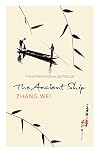
'The Ancient Ship' follows events in the fictional Chinese town of Wali, which specialises in the production of glass noodles. Although the violence of the Cultural Revolution, suffering of the devastating famine, and mayhem of the Great Leap Forward are all shown, the structure and pacing are elliptical. Flashbacks to past horrors occasionally punctuate a narrative of the 1980s, characterised by family conflicts and gradual economic change. I found the book had a rather ponderous quality, show more as past tragedies came to light only gradually and a great deal of time was spent on the specifics of noodle manufacture. I don't object to this, but it did take me a while to get into. The atmosphere of Wali comes across vividly and there are some very powerful and shocking scenes, as well as some funny and profound moments of dialogue or minor incident. I liked the discussions of star wars (the missile shield, not the movies).
I was particularly struck by Baopu's contemplation of past traumas and their legacy on subsequent generations. He is mostly a silent and unobtrusive presence, working long hours in the noodle factory and obsessively reading the Communist Manifesto in his spare time. Then about two thirds of the way into the book he unburdens himself at length to his brother Jiansu, in an extraordinary speech:
His soliloquy then turns to Wali's past sufferings and the fundamental problem of humans coexisting peacefully in communities. The tensions of the past gradually build until they erupt in dramatic events - which are nonetheless minor in comparison to what came before. The plot explores themes of collective memory and forgetting, of family legacies, and of economic change. 'The Ancient Ship' is subtle and thought-provoking, but also a bit muddy. Quite possibly there are nuances that I missed, or that cannot readily be translated. Although I appreciated it overall, there were sections that dragged rather, especially those concerning cooking. I preferred [b:The Four Books|22571886|The Four Books|Yan Lianke|https://i.gr-assets.com/images/S/compressed.photo.goodreads.com/books/1421890260l/22571886._SY75_.jpg|42038317] by Yan Lianke on the Great Leap Forward and [b:China Dream|38323527|China Dream|Ma Jian|https://i.gr-assets.com/images/S/compressed.photo.goodreads.com/books/1530548894l/38323527._SY75_.jpg|59977983] by Ma Jian on the Cultural Revolution. show less
I was particularly struck by Baopu's contemplation of past traumas and their legacy on subsequent generations. He is mostly a silent and unobtrusive presence, working long hours in the noodle factory and obsessively reading the Communist Manifesto in his spare time. Then about two thirds of the way into the book he unburdens himself at length to his brother Jiansu, in an extraordinary speech:
"I'm hopeless. I don't understand myself. Sometimes my self-loathing is greater than my loathing for any other person or thing. So I sit there day in and day out, having a conversation with myself the whole time. I ask myself a question and answer it myself; sometimes I just curse myself. Jiansu, you may not know this, but quiet people are actually the most talkative; they talk so much their tongue is parched and their lips run dry. They talk to themselves and they suffer alone. What did I ask myself? Nothing but a bunch of muddled yet common questions."
His soliloquy then turns to Wali's past sufferings and the fundamental problem of humans coexisting peacefully in communities. The tensions of the past gradually build until they erupt in dramatic events - which are nonetheless minor in comparison to what came before. The plot explores themes of collective memory and forgetting, of family legacies, and of economic change. 'The Ancient Ship' is subtle and thought-provoking, but also a bit muddy. Quite possibly there are nuances that I missed, or that cannot readily be translated. Although I appreciated it overall, there were sections that dragged rather, especially those concerning cooking. I preferred [b:The Four Books|22571886|The Four Books|Yan Lianke|https://i.gr-assets.com/images/S/compressed.photo.goodreads.com/books/1421890260l/22571886._SY75_.jpg|42038317] by Yan Lianke on the Great Leap Forward and [b:China Dream|38323527|China Dream|Ma Jian|https://i.gr-assets.com/images/S/compressed.photo.goodreads.com/books/1530548894l/38323527._SY75_.jpg|59977983] by Ma Jian on the Cultural Revolution. show less
I did not find this an easy book to read, but in the end I felt rewarded by the insights it offers into contemporary China and its people. It has no dramatic character-led narrative such as you might find in popular Western historical epics: the narrative does not lack dramatic incidents, but is not chronologically linear and is only obliquely connected to larger historical events. I feel that the locations, the people and the events are highly symbolic, and I was often frustrated by an show more insufficiently detailed knowledge of China. However, a little background reading, such as the review by Mike on his blog "Serve the People" can help a lot. show less
Zhang Wei's epic novel follows three generations of the families through four decades of upheaval in China. An award winner and bestseller in China, translated for the first time into English, The Ancient Ship is a bold examination of a society in turmoil and a masterful study of human nature, the struggle of the oppressed people to control their own fate, and the clash between tradition and modernization.
Awards


Statistics
- Works
- 22
- Members
- 150
- Popularity
- #138,699
- Rating
- 3.4
- Reviews
- 3
- ISBNs
- 120
- Languages
- 7