
Andrew Dana Hudson
Author of Absence
Works by Andrew Dana Hudson
Any Percent 1 copy
Associated Works
Working Futures: 14 Speculative Stories About the Future of Work (2019) — Contributor — 8 copies, 1 review
GigaNotoSaurus - 2024 Hugo Finalist — Contributor, some editions — 2 copies
Tagged
Common Knowledge
There is no Common Knowledge data for this author yet. You can help.
Members
Reviews
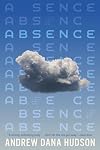
Absence is an ambitious novel by Andrew Dana Hudson. The premise? People, sometimes by themselves, sometimes in “clusters”, simply disappear. One minute they are there, then, with a popping sound, they are gone. People pop. They are no longer there. No one can explain it. No one knows what happens to those who have popped, where they go, and whether they are living or dead. They just disappear.
This has been going on for several years now, and the world has found ways to cope with the show more anxiety and lack of knowing that this phenomenon has engendered. For one thing, the government has formed the Bureau of Depopulation Affairs to track the disappearances and to make sure that folks are not trying to commit fraud or murder under the guise of a false pop. It’s at the Bureau that our protagonist, Harvey Ellis, works as a kind of investigator.
One day his boss calls him in and asks him to take a trip to rural Kansas to investigate a woman who claims to have returned after having popped. So far, no one has ever been known to have returned. No one even knows if “returning” is possible.
What follows is a combination of a police procedural, a vision of societal breakdown, a meditation on religion and belief, and a rumination on our mortality and the fragility of life. It’s very well done, with each new scene and event building on the ones before in a slow but satisfying revelation. There is some repetitiveness, and the book went a bit too long to reach its clever conclusion. But those are quibbles that didn’t take away from my enjoyment of the book.
This is a science fiction story that is more fiction than science. For my tastes that would not normally be a positive statement. But in this case, it works beautifully. As I read, I started picturing its events as part of a TV miniseries, and my mind went to the adaptation of Emily St John Mandel’s Station Eleven. All of which is to say that I think Absence is a fine American novel. Read it for a window into a dystopian future, and a reflection back to our own lives. show less
This has been going on for several years now, and the world has found ways to cope with the show more anxiety and lack of knowing that this phenomenon has engendered. For one thing, the government has formed the Bureau of Depopulation Affairs to track the disappearances and to make sure that folks are not trying to commit fraud or murder under the guise of a false pop. It’s at the Bureau that our protagonist, Harvey Ellis, works as a kind of investigator.
One day his boss calls him in and asks him to take a trip to rural Kansas to investigate a woman who claims to have returned after having popped. So far, no one has ever been known to have returned. No one even knows if “returning” is possible.
What follows is a combination of a police procedural, a vision of societal breakdown, a meditation on religion and belief, and a rumination on our mortality and the fragility of life. It’s very well done, with each new scene and event building on the ones before in a slow but satisfying revelation. There is some repetitiveness, and the book went a bit too long to reach its clever conclusion. But those are quibbles that didn’t take away from my enjoyment of the book.
This is a science fiction story that is more fiction than science. For my tastes that would not normally be a positive statement. But in this case, it works beautifully. As I read, I started picturing its events as part of a TV miniseries, and my mind went to the adaptation of Emily St John Mandel’s Station Eleven. All of which is to say that I think Absence is a fine American novel. Read it for a window into a dystopian future, and a reflection back to our own lives. show less
Everyone knows the world is falling apart.
We just don’t like to talk about it.
Blade Runner skies over San Francisco. California wildfires September 2020
But what if we did talk about climate change? What if we stopped being paralyzed by the immensity of the problem, the multifaceted slow-motion catastrophe that everyone is responsible for, and nobody is accountable for? Decarbonization and any associated global political change are famously wicked problems, with manifold uncertainties and show more high costs, but climate change and how we deal with it is the story of the 21st century. And for all that climate change is the story, there are not enough stories about climate change.
Most climate fiction remains resolutely Delugist in orientation. In Oryx and Crake, The Windup Girl, or Don’t Look Up the core message is the sins of industrial civilization will finally overwhelm a weak and corrupt society. Out of the seeds of the devastation, a handful of survivors will rebuild, climate absolution paid for in gigadeaths. The kind of story about climate change is an apocalyptic fantasy, a re-inscription of Christian mythology into a modern context. It can make for a fine horror story, but it's facile, boring, and it’s a lie. If we’ve learned one thing about the apocalypse the past few years, there will not be angelic trumpets and letters of fire in the sky. You’ll just have to keep going to work, even as the sky rains blood.
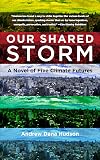
Our Shared Storm is climate fiction done right. It’s a serious piece of futurism inspired by the latest IPCC scenarios and ethnography at COP24 (Conference of the Parties, the major UN climate conference) in Krakow in 2018. It’s also such good storytelling that I could not put it down, and stayed up far past a sensible bedtime to finish it in one gulp.
The stories are centered around COP60 in 2054, held in Buenos Aires. With a bit of literary and and futurological sleight of hand, Hudson holds constant the basic plot of the conference being hit with a torrential “neverstorm”, and the characters of Noah, Saga, Luis, and Diya, and let’s the world shift around them to show the five official IPCC Shared Socioeconomic Pathway scenarios. I’ll confess to skepticism reading the introduction, but this is very much not the same story five times. Shifts in point of view and central dramatic tension along with the state of the world, make each timeline its own unique experience, and I was excited to see what in the characters remained fixed and what changed.
The stories trace an arc, from the business as usual scenario of diplomatic horse-trading over reparations for losses against investments in the future, to a wild party of fossil-fueled development and venture-disaster-capitalism, to stark inequality between those deemed useful and worthy of survival and the restive excess population, to a world of conflict and collapse, where a handful of scientists attempt to record the climate catastrophe like monks protecting the treasures of antiquity from Visigoths, to finally a sustainable utopia, where the major choice is how much to invest in decarbonization how quickly. It’s a tour from a world very much like our own, to ones much worse, and finally one where things are, well, not perfect, but apocalypse canceled. And even in the scenarios where things are bad, life goes on. “The collapse” can only been in retrospect. For those living in it, it’s just another day.
Our Shared Storm makes bold promises in the introduction, and accomplishes all of them with verve. First, these are good short stories, some of the more well-crafted speculative fiction I’ve read in quite a while. An academic work always has the threat of being too didactic, getting lost in abstract ideas and teachable moments, rather than story-telling. Our Shared Storm never loses the bubble that these stories are about human beings, not planetary systems. Second, this is a serious piece of scholarship, grounded in the best estimates we have, which successfully translates the bland bureaucratese of an IPCC report into the richly textured sensation of the future. And third, this is a methodological advance in narrative foresight, with the conceit of the same characters and events but different settings. I’ve done work in this field (Burnam-Fink, 2015, “Creating narrative scenarios: Science fiction prototype at Emerge”, Futures), and there’s a lot of theory but precious little successful practice.
Our Shared Storm is an impressive debut: Provocative, imaginative, and even inspiring. Hudson is a talent to watch. show less
We just don’t like to talk about it.
Blade Runner skies over San Francisco. California wildfires September 2020
But what if we did talk about climate change? What if we stopped being paralyzed by the immensity of the problem, the multifaceted slow-motion catastrophe that everyone is responsible for, and nobody is accountable for? Decarbonization and any associated global political change are famously wicked problems, with manifold uncertainties and show more high costs, but climate change and how we deal with it is the story of the 21st century. And for all that climate change is the story, there are not enough stories about climate change.
Most climate fiction remains resolutely Delugist in orientation. In Oryx and Crake, The Windup Girl, or Don’t Look Up the core message is the sins of industrial civilization will finally overwhelm a weak and corrupt society. Out of the seeds of the devastation, a handful of survivors will rebuild, climate absolution paid for in gigadeaths. The kind of story about climate change is an apocalyptic fantasy, a re-inscription of Christian mythology into a modern context. It can make for a fine horror story, but it's facile, boring, and it’s a lie. If we’ve learned one thing about the apocalypse the past few years, there will not be angelic trumpets and letters of fire in the sky. You’ll just have to keep going to work, even as the sky rains blood.
Our Shared Storm is climate fiction done right. It’s a serious piece of futurism inspired by the latest IPCC scenarios and ethnography at COP24 (Conference of the Parties, the major UN climate conference) in Krakow in 2018. It’s also such good storytelling that I could not put it down, and stayed up far past a sensible bedtime to finish it in one gulp.
The stories are centered around COP60 in 2054, held in Buenos Aires. With a bit of literary and and futurological sleight of hand, Hudson holds constant the basic plot of the conference being hit with a torrential “neverstorm”, and the characters of Noah, Saga, Luis, and Diya, and let’s the world shift around them to show the five official IPCC Shared Socioeconomic Pathway scenarios. I’ll confess to skepticism reading the introduction, but this is very much not the same story five times. Shifts in point of view and central dramatic tension along with the state of the world, make each timeline its own unique experience, and I was excited to see what in the characters remained fixed and what changed.
The stories trace an arc, from the business as usual scenario of diplomatic horse-trading over reparations for losses against investments in the future, to a wild party of fossil-fueled development and venture-disaster-capitalism, to stark inequality between those deemed useful and worthy of survival and the restive excess population, to a world of conflict and collapse, where a handful of scientists attempt to record the climate catastrophe like monks protecting the treasures of antiquity from Visigoths, to finally a sustainable utopia, where the major choice is how much to invest in decarbonization how quickly. It’s a tour from a world very much like our own, to ones much worse, and finally one where things are, well, not perfect, but apocalypse canceled. And even in the scenarios where things are bad, life goes on. “The collapse” can only been in retrospect. For those living in it, it’s just another day.
Our Shared Storm makes bold promises in the introduction, and accomplishes all of them with verve. First, these are good short stories, some of the more well-crafted speculative fiction I’ve read in quite a while. An academic work always has the threat of being too didactic, getting lost in abstract ideas and teachable moments, rather than story-telling. Our Shared Storm never loses the bubble that these stories are about human beings, not planetary systems. Second, this is a serious piece of scholarship, grounded in the best estimates we have, which successfully translates the bland bureaucratese of an IPCC report into the richly textured sensation of the future. And third, this is a methodological advance in narrative foresight, with the conceit of the same characters and events but different settings. I’ve done work in this field (Burnam-Fink, 2015, “Creating narrative scenarios: Science fiction prototype at Emerge”, Futures), and there’s a lot of theory but precious little successful practice.
Our Shared Storm is an impressive debut: Provocative, imaginative, and even inspiring. Hudson is a talent to watch. show less
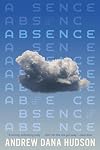
What an unusual novel. It's some time in the future and the population is shrinking due to a phenomenon that makes people randomly "pop" - vanish. A government agency has been set up to track and monitor these disappearances and various steps have been taken to minimize harms (like cars careening out of control when drivers pop - instead Amtrak has been expanded and improved, crossing the whole country with excellent service, perhaps the most implausible part of the story!) Two agents show more tracking pops in a small town in Kansas that had fashioned itself as a safe place until it clearly wasn't encounter a woman who claims to have returned after popping. They need to find out if her story checks out. If it's possible to return, it changes everything.
I wonder if the idea for this book percolated during the pandemic; at any rate, it made me think of the eerie feeling that everything had changed and people were being taken in unfathomable numbers. (Note, there is nothing in the book that makes that connection, it's just something that occurred to me as I tried to figure out what to make of it.) It does align with current concerns about population decline, which is not something I'm personally as wrought up about as some are, but it raises some questions about living in a world where the population is dwindling.
I'm not a frequent reader of science fiction so can't judge it within the genre, but the world building was interesting and the dilemma - can this person be trusted? how badly do you want to believe in her story? - is thought-provoking. There are no simple answers in the end. show less
I wonder if the idea for this book percolated during the pandemic; at any rate, it made me think of the eerie feeling that everything had changed and people were being taken in unfathomable numbers. (Note, there is nothing in the book that makes that connection, it's just something that occurred to me as I tried to figure out what to make of it.) It does align with current concerns about population decline, which is not something I'm personally as wrought up about as some are, but it raises some questions about living in a world where the population is dwindling.
I'm not a frequent reader of science fiction so can't judge it within the genre, but the world building was interesting and the dilemma - can this person be trusted? how badly do you want to believe in her story? - is thought-provoking. There are no simple answers in the end. show less
Andrew Dana Hudson's excellent tale of five possible climate outcomes is an ambitious project, both complex and simple. He calls it speculative fiction, which he discusses in an Afterword, and also includes an Introduction explaining some of his process of writing it, and how it is structured.
It seems complex because the five stories (or chapters or novellas) are based on different models defined by the real-world series of international yearly meetings, called COPs, where diplomats, show more scientists, business leaders, and other concerned groups discuss how to deal with climate problems.
What makes the book seem simple is Hudson's stories, each a very different scenario of what the COP meetup could be like in 2054, depending on climate action or inaction in the previous thirty years or so. Many groups are mentioned, but there are just four main characters and only a few others named. Each character, Noah, Saga, Diya, and Luis are the same in each story, though changed by circumstances into different but recognizable people.
There is much explaining of the science and politics of climate change, mostly done with dialog. But that's a given for this kind of fiction.
Each of the five outcomes seems possible, each comes with problems. Some are a lot better than others, but I could believe each one. A worthwhile read. show less
It seems complex because the five stories (or chapters or novellas) are based on different models defined by the real-world series of international yearly meetings, called COPs, where diplomats, show more scientists, business leaders, and other concerned groups discuss how to deal with climate problems.
What makes the book seem simple is Hudson's stories, each a very different scenario of what the COP meetup could be like in 2054, depending on climate action or inaction in the previous thirty years or so. Many groups are mentioned, but there are just four main characters and only a few others named. Each character, Noah, Saga, Diya, and Luis are the same in each story, though changed by circumstances into different but recognizable people.
There is much explaining of the science and politics of climate change, mostly done with dialog. But that's a given for this kind of fiction.
Each of the five outcomes seems possible, each comes with problems. Some are a lot better than others, but I could believe each one. A worthwhile read. show less
You May Also Like
Associated Authors
Statistics
- Works
- 3
- Also by
- 10
- Members
- 39
- Popularity
- #376,656
- Rating
- 4.0
- Reviews
- 6
- ISBNs
- 5