
Andrea L. Rogers
Author of Man Made Monsters
About the Author
Image credit: Photo by: Hiba Tahir. Photo Source: https://andrealrogers.com/about-andrea/
Works by Andrea L. Rogers
Associated Works
Never Whistle at Night: An Indigenous Dark Fiction Anthology (2023) — Contributor — 1,647 copies, 26 reviews
Allies: Real Talk About Showing Up, Screwing Up, And Trying Again (2021) — Contributor — 91 copies, 6 reviews
Tagged
Common Knowledge
- Gender
- female
- Education
- Institute for American Indian Arts (MFA)
- Occupations
- teacher
- Short biography
- Andrea L. Rogers is an award-winning author of historical and contemporary fiction across a variety of genres. Her work includes essays, picture books, young adult novels, middle grade stories and one comic. So far. Her first book, Mary and the Trail of Tears is historical fiction, which is pretty much horror for Native people. It was on both the NPR & American Indians in Children's Literature best of 2020 lists.
Her critically acclaimed Young Adult Horror Novel, Man Made Monsters, was released by Levine Querido in October 2022. It includes illustrations by Jeff Edwards (Cherokee). The novel received the Walter Award and several other accolades. Her next YA novel is a Cherokee Futurism called The Art Thieves out September 2024.
Her debut picture book about Southeastern tribes and wild onion dinners (the opposite of horror) is called When We Gather and will be illustrated by Madelyn Goodnight (Chickasaw) will be out in May 2024. A second picture book, Chooch Helped, will also be out in October 2024 and will be illustrated by Rebecca Kunz (Cherokee).
Andrea is a citizen of the Cherokee Nation and grew up in Tulsa, Oklahoma. She currently attends The University of Arkansas in Fayetteville where she is a doctoral student in English. Andrea graduated with an MFA from the Institute for American Indian Arts. She taught Art and HS English in public schools for 14 years. She has three wonderful children. - Nationality
- Cherokee Nation
- Places of residence
- Tulsa, Oklahoma, USA
Fayetteville, Arkansas, USA - Map Location
- USA
Members
Reviews
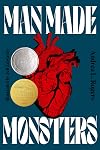
Achilling story collection following a sprawling Cherokee family through many generations.
Starting with Ama Wilson in 1839 and ending in 2039, this spooky speculative assortment features stories from times historical, present, and yet to come. Although each of Cherokee author Rogers’ stories could stand alone (and versions of some were previously published individually), placing them in chronological order and thus in dialogue with each other results in a thematically richer read and show more allows readers the delight of tracing the family trees in the frontmatter to situate the characters in relation to other protagonists. Ama’s opening story, set during a forcible relocation to Indian Territory, sets the tone: Ama thinks her family’s main worries are Texas Rangers and disease; she also faces a supernatural nightmare. The tight focus on families and the specificity of their experiences, along with the matter-of-fact text, directly address the way persecution of the Cherokee Nation morphs over the decades. Rogers’ grounded, smooth writing style—juggling first-, third-, and even second-person points of view—makes magical elements (from milder hauntings to monsters like vampires, werewolves, and zombies) as threatening as human villains. The stakes remain high: The short story format means any character one meets could later die. Exquisite white-on-black line art from Cherokee artist Edwards sets the eerie mood. The use of the Noto Sans Cherokee typeface and Edwards’ hand-drawn Cherokee syllabary beautifully integrates written language into the book’s design.
A creepy and artful exploration of a haunting heritage. (glossary) (Horror. 12-adult)
-Kirkus Review show less
Starting with Ama Wilson in 1839 and ending in 2039, this spooky speculative assortment features stories from times historical, present, and yet to come. Although each of Cherokee author Rogers’ stories could stand alone (and versions of some were previously published individually), placing them in chronological order and thus in dialogue with each other results in a thematically richer read and show more allows readers the delight of tracing the family trees in the frontmatter to situate the characters in relation to other protagonists. Ama’s opening story, set during a forcible relocation to Indian Territory, sets the tone: Ama thinks her family’s main worries are Texas Rangers and disease; she also faces a supernatural nightmare. The tight focus on families and the specificity of their experiences, along with the matter-of-fact text, directly address the way persecution of the Cherokee Nation morphs over the decades. Rogers’ grounded, smooth writing style—juggling first-, third-, and even second-person points of view—makes magical elements (from milder hauntings to monsters like vampires, werewolves, and zombies) as threatening as human villains. The stakes remain high: The short story format means any character one meets could later die. Exquisite white-on-black line art from Cherokee artist Edwards sets the eerie mood. The use of the Noto Sans Cherokee typeface and Edwards’ hand-drawn Cherokee syllabary beautifully integrates written language into the book’s design.
A creepy and artful exploration of a haunting heritage. (glossary) (Horror. 12-adult)
-Kirkus Review show less
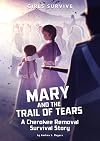
This is a totally solid book, which covers the intense and slow horror of one girl experiencing the Cherokee removal. I'd say the main difference between this and Tim Tingle's How I Became a Ghost is that Tingle manages to keep moments of humor that act as a foil for tragedy. Rogers doesn't lighten things for her readers, but presents an all-too-believable story of a family struggling to survive the bewildering and extremely cruel circumstances. Well written. Bleak.
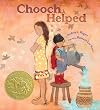
Ayoung Indigenous girl attempts to get along with her infuriating little brother.
Sissy has a mischievous 2-year-old brother called Chooch—an affectionate nickname based on the Cherokee word for boy or son. No matter what the usdi (baby) does, he “just gets away with everything”—from painting streaks through Elisi’s mural to making a mess of Edutsi’s grape dumpling flour. Each transgression is followed by the same refrain: “Chooch helped.” Sissy has less tolerance for her show more brother’s “assistance,” and the last straw comes when Chooch damages her clay pot. After the fed-up narrator screams at the little boy, her parents yell at her, bringing the beleaguered sister to tears. But Chooch shows up to do what he always does—with his arms around a sobbing Sissy, “Chooch [helps].” Sissy comes to understand that young children learn by watching others and that her patience helps Chooch grow. Author Rogers and illustrator Kunz, both members of the Cherokee Nation, portray Sissy’s older sisterhood with tenderness; illuminating backmatter explains the links between the story and the creators’ own heritage. The touching narrative and its universal lesson are brought to life through Kunz’s powerful images, which make stunning use of collage to illustrate the children’s rich familial and cultural webs. Readers’ hearts will be warmed by Sissy and Chooch’s relationship and by the moving representation of Cherokee traditions.
Native life and language are at the center of this beautiful sibling story. (author’s and illustrator’s notes, instructions for creating a pinch pot, glossary) (Picture book. 4-10)
-Kirkus Review show less
Sissy has a mischievous 2-year-old brother called Chooch—an affectionate nickname based on the Cherokee word for boy or son. No matter what the usdi (baby) does, he “just gets away with everything”—from painting streaks through Elisi’s mural to making a mess of Edutsi’s grape dumpling flour. Each transgression is followed by the same refrain: “Chooch helped.” Sissy has less tolerance for her show more brother’s “assistance,” and the last straw comes when Chooch damages her clay pot. After the fed-up narrator screams at the little boy, her parents yell at her, bringing the beleaguered sister to tears. But Chooch shows up to do what he always does—with his arms around a sobbing Sissy, “Chooch [helps].” Sissy comes to understand that young children learn by watching others and that her patience helps Chooch grow. Author Rogers and illustrator Kunz, both members of the Cherokee Nation, portray Sissy’s older sisterhood with tenderness; illuminating backmatter explains the links between the story and the creators’ own heritage. The touching narrative and its universal lesson are brought to life through Kunz’s powerful images, which make stunning use of collage to illustrate the children’s rich familial and cultural webs. Readers’ hearts will be warmed by Sissy and Chooch’s relationship and by the moving representation of Cherokee traditions.
Native life and language are at the center of this beautiful sibling story. (author’s and illustrator’s notes, instructions for creating a pinch pot, glossary) (Picture book. 4-10)
-Kirkus Review show less
First sentence: This is the baby. We call him Chooch. The word for boy or son in Cherokee is atsutsa.
Premise/plot: A sister is terribly, horribly annoyed with her younger brother--or bother as the case may be. The book is set within a Cherokee family/community; while the book is not wholly bilingual, the book certainly has an emphasis on introducing new words to readers.
My thoughts: This one won/earned the Caldecott Medal in 2025. (The awards were announced earlier this morning). It is show more totally normal for me to be unimpressed with the winner. My artistic taste--or artistic eye--for better or worse never has aligned at all--not even a little bit--with the majority of winners. What I absolutely love, love, love and am drawn to is never what the judges are looking for--apparently. Which is fine. To each their own. Picture books have always had the most potential for being polarizing because you've got TEXT and ART.
The story is simple, relatable, enjoyable enough. The art just wasn't for me--personally. You may love it. I think anyone with a sibling can appreciate this one. show less
Premise/plot: A sister is terribly, horribly annoyed with her younger brother--or bother as the case may be. The book is set within a Cherokee family/community; while the book is not wholly bilingual, the book certainly has an emphasis on introducing new words to readers.
My thoughts: This one won/earned the Caldecott Medal in 2025. (The awards were announced earlier this morning). It is show more totally normal for me to be unimpressed with the winner. My artistic taste--or artistic eye--for better or worse never has aligned at all--not even a little bit--with the majority of winners. What I absolutely love, love, love and am drawn to is never what the judges are looking for--apparently. Which is fine. To each their own. Picture books have always had the most potential for being polarizing because you've got TEXT and ART.
The story is simple, relatable, enjoyable enough. The art just wasn't for me--personally. You may love it. I think anyone with a sibling can appreciate this one. show less
Lists
Awards


You May Also Like
Associated Authors
Statistics
- Works
- 7
- Also by
- 5
- Members
- 613
- Popularity
- #41,001
- Rating
- 4.0
- Reviews
- 24
- ISBNs
- 28
- Languages
- 1