
Juan Eduardo Cirlot (1916–1973)
Author of A Dictionary of Symbols
About the Author
Works by Juan Eduardo Cirlot
El Arte De Gaudi 7 copies
Joan Miró 4 copies
La pintura abstracta 2 copies
La pintura de Montserrat Gudiol 2 copies
The genesis of Gaudian architecture 2 copies
Signification de la Pintura de Tapis 2 copies
Variaciones fonovisuales 2 copies
La peinture de Tapies [Extrait du volume 11 de la Revue Internationale d'Art Moderne Quadrum] 1 copy
Arte Madí Universal Nº 7–8 1 copy
Obra completa de Gaudí 1 copy
La imagen surrealista 1 copy
Pictura contemporana 1 copy
88 sueños 1 copy
Yo también canto la Navidad 1 copy
Subirachs 1 copy
Introducción al surrealismo 1 copy
Poemas de Cartago 1 copy
Las Hojas del fuego 1 copy
Il libro dei simboli 1 copy
Associated Works
The Sources of Modern Architecture and Design (1968) — Translator, some editions — 306 copies, 2 reviews
Pintura española — Translator, some editions — 2 copies
Tagged
Common Knowledge
- Canonical name
- Cirlot, Juan Eduardo
- Birthdate
- 1916-04-09
- Date of death
- 1973-05-11
- Gender
- male
- Occupations
- bank clerk
customs clerk
composer
art critic
symbologist
poet - Organizations
- Academia del Faro de San Cristobal
- Relationships
- Cirlot, Lourdes (filla)
Cirlot, Victoria (filla) - Nationality
- Spain
- Places of residence
- Barcelona, Spain
- Associated Place (for map)
- Barcelona, Spain
Members
Reviews

Antoni Gaudi i Cornet (1852 – 1926) was perhaps one of the most inventive architects of all time. His works were Seussian before Seuss was Seussian. The building he conceived, drafted, and had built have to be seen to be believed. From the Neo-gothic windows on the Palacio Episcopal de Astorga to the bulbous terraces on the Casa Mila, his innovations and additions to the field gave people a new interest in how buildings were made. His most significant work, the Basilica i Temple Expiatori show more de la Sagrada Familia, won’t be finished for another 12 to 14 years. Juan-Eduardo Cirlot’s Gaudi is a splendid look at the life, philosophy, and leaps of intuition that Gaudi experienced as one of the foremost designers of his time.
One of the most impressive things about Gaudi was his simplistic view of a complicated field. Man is a creature of nature, so his buildings must surround him in natural shapes. He was skilled in so many disciplines that he designed not only the main look of each of his buildings, but also created wrought-iron sculptures to surround them, the stained glass to adorn them, and the ceramic tiling to cover them. The illustrations in this volume are full color and absolutely incredible. It’s a short book, and the biography is a little thin, but the overall impression of his life and work are good enough to keep your interest. You’ll come for the facts and stay for the photos. A quick and delightful book. show less
One of the most impressive things about Gaudi was his simplistic view of a complicated field. Man is a creature of nature, so his buildings must surround him in natural shapes. He was skilled in so many disciplines that he designed not only the main look of each of his buildings, but also created wrought-iron sculptures to surround them, the stained glass to adorn them, and the ceramic tiling to cover them. The illustrations in this volume are full color and absolutely incredible. It’s a short book, and the biography is a little thin, but the overall impression of his life and work are good enough to keep your interest. You’ll come for the facts and stay for the photos. A quick and delightful book. show less

The basic aim of this book is as a central reference point for symbological research. A quick 'look up' for those interested in the unconscious nature of dreams and other forms of psycho-analyses.
It is also a fantastic source book for the artist. Illustrators and writers such as Robert Richard Hieronimus Ph.D. (Author of Inside the Yellow Submarine) who have used it in their work to add sub-layer of meaning as a 'mise en abîme'.
Jimmy Hendrix was fascinated by this book!
You should not show more overlook the Index at the back, which does not show main entries in the Dictionary itself but acts more like a cross reference.
I will just point out that the book is not overly generous with illustrations, but there are diagrams to show the differences between some simple symbols - mostly variations of geometric shapes, as well as a smattering of wood-cuts throughout. There are, however, 28 black & white photographic plates in two sections of the book mainly concerned with depicting religious masonry and Roman to 15th-century works of art, which are quite nice.
Also, some of the entries do seem naively obvious:
Fossil Broadly, its symbolic significance corresponds to that of the stone, but, because of its ambivilent character, it embraces the concepts of time and eternity, life and death, the evolution of species, and their petrifaction.
But, many are far less so. Such as:
Shoes symbolising the female sex organ, and quoting the implication within the story of *Cinderella!
Now, I know what you must be thinking; what is the 'foot' in that case?
According to this book it is mainly to do with the soul (even though we all know what they say about men with big feet!).
Jokes aside, I don't think there is a better book on the market, even today, on this area of symbolism in cultural anthropology.
*I guess what they were hinting at was that Prince Charming was no more than a foot fetishist with an O.C.D. ;)
-
Review of the 1971 second edition (of which I own a 1973 reprint) which incorporates extensive revisions from the first edition of 1962. show less
It is also a fantastic source book for the artist. Illustrators and writers such as Robert Richard Hieronimus Ph.D. (Author of Inside the Yellow Submarine) who have used it in their work to add sub-layer of meaning as a 'mise en abîme'.
Jimmy Hendrix was fascinated by this book!
You should not show more overlook the Index at the back, which does not show main entries in the Dictionary itself but acts more like a cross reference.
I will just point out that the book is not overly generous with illustrations, but there are diagrams to show the differences between some simple symbols - mostly variations of geometric shapes, as well as a smattering of wood-cuts throughout. There are, however, 28 black & white photographic plates in two sections of the book mainly concerned with depicting religious masonry and Roman to 15th-century works of art, which are quite nice.
Also, some of the entries do seem naively obvious:
Fossil Broadly, its symbolic significance corresponds to that of the stone, but, because of its ambivilent character, it embraces the concepts of time and eternity, life and death, the evolution of species, and their petrifaction.
But, many are far less so. Such as:
Shoes symbolising the female sex organ, and quoting the implication within the story of *Cinderella!
Now, I know what you must be thinking; what is the 'foot' in that case?
According to this book it is mainly to do with the soul (even though we all know what they say about men with big feet!).
Jokes aside, I don't think there is a better book on the market, even today, on this area of symbolism in cultural anthropology.
*I guess what they were hinting at was that Prince Charming was no more than a foot fetishist with an O.C.D. ;)
-
Review of the 1971 second edition (of which I own a 1973 reprint) which incorporates extensive revisions from the first edition of 1962. show less
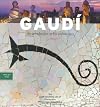
Art just isn't my thing, but by complete coincidence I saw Malkovich's Klimt the other day and have read this book about Gaudi. Two men of the same period, two men who now seem to make their period what it was. We see them as being part of a movement - Art Nouveau - but that seems after the fact to me, a little like, as Hadrian would say through Yourcenar, pulling at the facts, arranging them to one's satisfaction.
Each of them was utterly their own man, however much they were in the employ show more of others. Their development as artists, as far as I can see, is specific to each of them, not part of some commonality of the period.
Well. Maybe they do share one vital aspect. Malkovich is a dead ringer for both of them. He's done Klimt, maybe Gaudi is next. I guess it's the Victorian beard thing.
I have to say, the text of this book is as turgid as turgid could be. I was wondering if it is translated, though I don't see a translator acknowledged.
No wonder Klimt hated art critics. show less
Each of them was utterly their own man, however much they were in the employ show more of others. Their development as artists, as far as I can see, is specific to each of them, not part of some commonality of the period.
Well. Maybe they do share one vital aspect. Malkovich is a dead ringer for both of them. He's done Klimt, maybe Gaudi is next. I guess it's the Victorian beard thing.
I have to say, the text of this book is as turgid as turgid could be. I was wondering if it is translated, though I don't see a translator acknowledged.
Nevertheless, the joining of opposites often resolves antimonies and this tendency towards mechanical expression seems to us to be more than an expression of a cold 'techical' side to Gaudi, rather his faith in evertyhing that was beautiful and divinely demonstrated.
No wonder Klimt hated art critics. show less

This is a useful, carefully researched, lexicon of symbols. It is an excellent resource for writers as the author is clear , succinct and unabiguous in language and intent, His profound interest and affection for his work is palpable. This is my first go to when I am struggling with a poem.
You May Also Like


Associated Authors
Statistics
- Works
- 56
- Also by
- 2
- Members
- 1,893
- Popularity
- #13,589
- Rating
- 4.0
- Reviews
- 23
- ISBNs
- 80
- Languages
- 9