
Kay Dickinson
Author of Movie Music, The Film Reader (In Focus: Routledge Film Readers)
About the Author
Kay Dickinson is Associate Professor of Film Studies at Concordia University, Canada. She has published widely on Arab Culture and is a co-editor of the Arab Avant-Garde (2013). She has also written on the interaction between different media industries, in texts focusing on music, film and show more relevision, including Off Key: When Film and Music Won't Work Together (2008) and Teen TV (2004). show less
Works by Kay Dickinson
Tagged
Common Knowledge
There is no Common Knowledge data for this author yet. You can help.
Members
Reviews

Rating: 4.5* of five
The Publisher Says: Kay Dickinson outlines how ABBA’s mega-hit song “Fernando” could express support with anti-capitalist and Third World liberation while simultaneously becoming an icon of global capital.
Since its release in 1976, ABBA’s song “Fernando” has been loved by fans around the globe both for its sing-along chorus and its revolutionary spirit. In Fernando, Kay Dickinson takes readers from Sweden and Chile to Australia and Poland, tracing the show more complicated ways the song could express support with anticapitalist and Third World liberation struggles while remaining an unrepentant commodity. A song about freedom fighters was unlikely to become a pop mega-hit, yet as Dickinson demonstrates, ABBA’s lucrative, longstanding appeal rests on their ability to bridge contradictions within everyday life.
Five decades later, “Fernando’s” rousing calls for freedom continue to resonate with gay liberation movements and other social struggles, demonstrating how a song can be both revolutionary and an envoy for global capital.
I RECEIVED A DRC FROM THE PUBLISHER VIA EDELWEISS+. THANK YOU.
My Review: We interrupt our dive into the shallow, luxuriantly populated waters of consumer capitalism to clamber, just briefly, onto the rock of social responsibility. Never fear, we're still dabbling our toeses into the lovely warm consumerist dreamworld! ABBA was hugely commercially successful, and never pretended that was not the point of "Fernando."
Gotta meet people where they are. If the people do not want to listen to you, your message is unheard. This is a profound insight I try not to forget but regularly do...just look at my blog's viewership numbers.
This tune burst onto the scene like a cannonade from the Crimean War. It was *everywhere* and it was not just Anglophone-famous. It's about regular fighters in the 1910 Mexican Revolution. It is hard to think of a more anti-oligarchic, anti-capitalist popular uprising than this one was. (It failed; let's save that discussion for another time.)
In ABBA's earworm-y tunefulness, they made the record industry (and themselves) quite a lot of money around the world...this tune's popularity in Hispanophone countries seems self-evident, but there are layers and levels to the popularity of the song that differ from market to market. Author Kay Dickinson explores some relevant examples of different reasons for a Swedish group's Anglophone product resonating in places you wouldn't expect.
It's worth noting that this is a popular history, not a musicological tome. I could read it for hours at a stretch without resorting to the dictionary. I was also that immersed and that invested in the subject matter. My car's radio sound is still the way I "hear" this song when earwormed by it...it's tat powerful...and that should say it all to a prospective buyer. Gifting or self-gifting, this is a book perfectly timed...fifty years ago is still alive to many of us...and perfectly aimed at the interests of those nostalgic, those curious, and those seeking some reminder that participating in and benefiting from capitalism does not require one to surrender one's soul. Speaking of which, some photos would've bounced this into five-starhood... show less
The Publisher Says: Kay Dickinson outlines how ABBA’s mega-hit song “Fernando” could express support with anti-capitalist and Third World liberation while simultaneously becoming an icon of global capital.
Since its release in 1976, ABBA’s song “Fernando” has been loved by fans around the globe both for its sing-along chorus and its revolutionary spirit. In Fernando, Kay Dickinson takes readers from Sweden and Chile to Australia and Poland, tracing the show more complicated ways the song could express support with anticapitalist and Third World liberation struggles while remaining an unrepentant commodity. A song about freedom fighters was unlikely to become a pop mega-hit, yet as Dickinson demonstrates, ABBA’s lucrative, longstanding appeal rests on their ability to bridge contradictions within everyday life.
Five decades later, “Fernando’s” rousing calls for freedom continue to resonate with gay liberation movements and other social struggles, demonstrating how a song can be both revolutionary and an envoy for global capital.
I RECEIVED A DRC FROM THE PUBLISHER VIA EDELWEISS+. THANK YOU.
My Review: We interrupt our dive into the shallow, luxuriantly populated waters of consumer capitalism to clamber, just briefly, onto the rock of social responsibility. Never fear, we're still dabbling our toeses into the lovely warm consumerist dreamworld! ABBA was hugely commercially successful, and never pretended that was not the point of "Fernando."
Gotta meet people where they are. If the people do not want to listen to you, your message is unheard. This is a profound insight I try not to forget but regularly do...just look at my blog's viewership numbers.
This tune burst onto the scene like a cannonade from the Crimean War. It was *everywhere* and it was not just Anglophone-famous. It's about regular fighters in the 1910 Mexican Revolution. It is hard to think of a more anti-oligarchic, anti-capitalist popular uprising than this one was. (It failed; let's save that discussion for another time.)
In ABBA's earworm-y tunefulness, they made the record industry (and themselves) quite a lot of money around the world...this tune's popularity in Hispanophone countries seems self-evident, but there are layers and levels to the popularity of the song that differ from market to market. Author Kay Dickinson explores some relevant examples of different reasons for a Swedish group's Anglophone product resonating in places you wouldn't expect.
It's worth noting that this is a popular history, not a musicological tome. I could read it for hours at a stretch without resorting to the dictionary. I was also that immersed and that invested in the subject matter. My car's radio sound is still the way I "hear" this song when earwormed by it...it's tat powerful...and that should say it all to a prospective buyer. Gifting or self-gifting, this is a book perfectly timed...fifty years ago is still alive to many of us...and perfectly aimed at the interests of those nostalgic, those curious, and those seeking some reminder that participating in and benefiting from capitalism does not require one to surrender one's soul. Speaking of which, some photos would've bounced this into five-starhood... show less
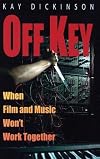
Very high jargon content, arguing that instances often identified as failures in film—Elvis in Harum Scarum, pop stars who are cast in movies but can’t act, “video nasties,” etc. are indicative of larger contradictions in capitalism centered around work, that is, around labor. The most interesting bit to me was finding out that, not only did people historically complain that the piano forte was destroying musicmaking because it required much less actual musical talent, they also show more complained when mechanical levers were added to flutes, making them easier to operate and facilitating more uniform and clearer tones. Basically, technological developments always are seen as replacing real talent with ersatz creativity, until the new forms of creativity they enable are better understood. show less
Statistics
- Works
- 4
- Members
- 30
- Popularity
- #449,941
- Rating
- 3.8
- Reviews
- 2
- ISBNs
- 13