
Raymond Borde (1920–2004)
Author of A Panorama of American Film Noir (1941-1953)
Works by Raymond Borde
L'extricable 1 copy
Tagged
Common Knowledge
- Birthdate
- 1920-08-28
- Date of death
- 2004-09-20
- Gender
- male
- Occupations
- film critic
- Nationality
- France
- Birthplace
- Toulouse, France
- Place of death
- Toulouse, France
- Associated Place (for map)
- Toulouse, France
Members
Reviews
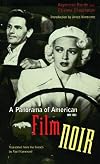
Surveys of the history of Film Noir almost can’t help but be interesting. Noir is so loosely defined, and the films themselves are often so full of questions and provocations rather than simple morals, the subject never gets closed.
This book dates back to the France of 1955, just after the “end” of the Noir era in America and, as I understand, is the first book-length treatment of the subject. The tone is some mix of film critic style and a bit of academic style. That’s kind of in show more keeping with the subject matter, which is interesting in itself. Noir has always been kind of a high brow/low brow thing, pulp art.
Right off the bat the authors offer a kind of definition of Film Noir: “the state of tension created in the spectators by the disappearance of their psychological bearings. The vocation of film noir has been to create a specific sense of malaise.” As a definition, or maybe better, a characterization, of the genre, that resonates with me — that feeling that you are sinking into a discomfort, a situation that lies somewhere between anxiety and fatalism.
They also offer five characteristic attributes of Film Noir: “oneiric” (or dreamlike), strange, erotic, ambivalent, and cruel. I don’t think these are to be read as all necessary for something to qualify as Noir, and, for that matter, those first two — oneiric and strange seem dominant both in the authors’ discussions of particular films and in my own impressions.
There is a kind of suspension of the normal when you enter one of these movies. The norms of moral behavior, the norms of resistance to temptation, and also, I think, a tension in the normal consequences and connections among actions and events — a tension that keeps you engaged. Does conscience matter? How long can the character sustain this state of mind or state of affairs? When will everything crash down?
That tension is, for me as a fan anyway, one of the things that keeps bringing me back, even when I know what is going to happen. The unfolding of a fate. The flaws, character flaws, moral flaws, flaws of life-plans and crime-plans.
Think about Double Indemnity, certainly a paradigm of Film Noir. We KNOW this isn’t going to work. If you can’t see it intellectually, you can feel it in the tension of the characters, or in the certainty of Edward G. Robinson as the examiner. It’s just NOT going to work, we know it, and the plot will tell us, bit by excruciating bit, HOW it won’t work out. Noirs aren’t mysteries (for the largest part anyway). It isn’t about figuring out the puzzle — it’s about watching it all come together and fall apart, often just as it has to.
The authors take as central the task of telling the story of where Noir comes from — psychologically, sociologically, historically, and as a matter of art. I think their strongest accounts blend the sociological and the historical. World War II, its end, and the distance at which America experienced the war culturally despite the direct participation and sacrifices. Noir came only later to Europe.
Artistically, the authors point to the influence of German Expressionism, and also to the gangster and crime movies of the 1920s and 30s. And of course, there were the noir novels that predated the movies.
Intellectually, the place of psychoanalysis in American culture, particularly within the arts community, is properly pointed to as critical. That tension I was talking about is first and foremost a psychological tension — guilt, temptation, the push and pull of the norm, . . . And of course there are explicitly psychological and psychoanalytical plots — Gaslight, or even more explicitly, The Snakepit.
Often the stories are even told from the psychological standpoint of the bad guys (or women), so that we can crawl inside and feel how their minds work.
I think this is part of what make Noir so interesting. Its characters have a psychological complexity, often bound up with temptation. There is realism there, and food for thought about your own motives and behavior (hopefully on a less extreme scale). Few people are invulnerable to temptation or to overcooked emotions and ambitions. These are the people who gave in and restrained their better angels. These are the people we don’t want to be, and the events we don’t want to be part of.
As the authors say, “In the last analysis, the psychosocial substance of the series [or genre] is perhaps its most original and most solid contribution.”
If I were to fault the authors for one thing in their account, it would be their relative scant attention to the influence of the Hays Code on the content and style of the movies. The intersection of the Hays Code with the desire to show the corrupt, seamy, violent, and dishonest side of life seems to result, maybe not by design, in an interesting moral depiction — the weight of guilt, the frustration of plans that rely on deception and dishonesty, etc. The bad guys have to lose, by the Code, but that doesn’t mean they can’t be interesting and even ingenious losers. The restrictions of the Code itself seem to contribute to the dramatic tension.
Well, I’ll also fault them for insufficient attention to the misogyny that may not be as consistent a theme as some of the others the authors mention, but is certainly rampant. Women are so often relegated to “girlfriends” or “wives,” or femmes fatales. Women are routinely abused, ignored, or treated by men as in their way. The femme fatale character is certainly interesting and is where cleverness can live in the genre’s female characters. But finding the good kind of cleverness, or even a depth of moral substance, in the female characters is unfortunately harder.
Okay, once we go down that road, we will have to talk also about race — again largely, although with exception, non-white characters are relegated to stereotypical or minor roles in the movies. This is the the 1940s and 1950s. Film Noir didn’t do a great job at breaking down barriers.
As a final chapter, the authors provide what they call a “balance sheet.” Included there is an interesting speculation on why Noir faded in the 1950s. “The series [genre] has died due to a crisis in the subject: Uninteresting strangeness or police realism: the series has been unable to escape this dilemma.” They believe that, as the genre evolved, it fell between those two poles of realism and a strangeness that had run its course, with documentary style police stories (e.g., The Naked City) pulling away from the strangeness, the unreality, of classic Film Noir.
I think there may also be an inherent limit to strangeness, at least in the context of Noir plots. Strangeness, with repetition, becomes a norm itself, the standard that the movies need to somehow rebel against and embrace at the same time.
For my own balance sheet: Does the book help me to understand the movies more deeply, and does it inspire me to rewatch movies I have seen, because I want to see more deeply into them? Definitely. show less
This book dates back to the France of 1955, just after the “end” of the Noir era in America and, as I understand, is the first book-length treatment of the subject. The tone is some mix of film critic style and a bit of academic style. That’s kind of in show more keeping with the subject matter, which is interesting in itself. Noir has always been kind of a high brow/low brow thing, pulp art.
Right off the bat the authors offer a kind of definition of Film Noir: “the state of tension created in the spectators by the disappearance of their psychological bearings. The vocation of film noir has been to create a specific sense of malaise.” As a definition, or maybe better, a characterization, of the genre, that resonates with me — that feeling that you are sinking into a discomfort, a situation that lies somewhere between anxiety and fatalism.
They also offer five characteristic attributes of Film Noir: “oneiric” (or dreamlike), strange, erotic, ambivalent, and cruel. I don’t think these are to be read as all necessary for something to qualify as Noir, and, for that matter, those first two — oneiric and strange seem dominant both in the authors’ discussions of particular films and in my own impressions.
There is a kind of suspension of the normal when you enter one of these movies. The norms of moral behavior, the norms of resistance to temptation, and also, I think, a tension in the normal consequences and connections among actions and events — a tension that keeps you engaged. Does conscience matter? How long can the character sustain this state of mind or state of affairs? When will everything crash down?
That tension is, for me as a fan anyway, one of the things that keeps bringing me back, even when I know what is going to happen. The unfolding of a fate. The flaws, character flaws, moral flaws, flaws of life-plans and crime-plans.
Think about Double Indemnity, certainly a paradigm of Film Noir. We KNOW this isn’t going to work. If you can’t see it intellectually, you can feel it in the tension of the characters, or in the certainty of Edward G. Robinson as the examiner. It’s just NOT going to work, we know it, and the plot will tell us, bit by excruciating bit, HOW it won’t work out. Noirs aren’t mysteries (for the largest part anyway). It isn’t about figuring out the puzzle — it’s about watching it all come together and fall apart, often just as it has to.
The authors take as central the task of telling the story of where Noir comes from — psychologically, sociologically, historically, and as a matter of art. I think their strongest accounts blend the sociological and the historical. World War II, its end, and the distance at which America experienced the war culturally despite the direct participation and sacrifices. Noir came only later to Europe.
Artistically, the authors point to the influence of German Expressionism, and also to the gangster and crime movies of the 1920s and 30s. And of course, there were the noir novels that predated the movies.
Intellectually, the place of psychoanalysis in American culture, particularly within the arts community, is properly pointed to as critical. That tension I was talking about is first and foremost a psychological tension — guilt, temptation, the push and pull of the norm, . . . And of course there are explicitly psychological and psychoanalytical plots — Gaslight, or even more explicitly, The Snakepit.
Often the stories are even told from the psychological standpoint of the bad guys (or women), so that we can crawl inside and feel how their minds work.
I think this is part of what make Noir so interesting. Its characters have a psychological complexity, often bound up with temptation. There is realism there, and food for thought about your own motives and behavior (hopefully on a less extreme scale). Few people are invulnerable to temptation or to overcooked emotions and ambitions. These are the people who gave in and restrained their better angels. These are the people we don’t want to be, and the events we don’t want to be part of.
As the authors say, “In the last analysis, the psychosocial substance of the series [or genre] is perhaps its most original and most solid contribution.”
If I were to fault the authors for one thing in their account, it would be their relative scant attention to the influence of the Hays Code on the content and style of the movies. The intersection of the Hays Code with the desire to show the corrupt, seamy, violent, and dishonest side of life seems to result, maybe not by design, in an interesting moral depiction — the weight of guilt, the frustration of plans that rely on deception and dishonesty, etc. The bad guys have to lose, by the Code, but that doesn’t mean they can’t be interesting and even ingenious losers. The restrictions of the Code itself seem to contribute to the dramatic tension.
Well, I’ll also fault them for insufficient attention to the misogyny that may not be as consistent a theme as some of the others the authors mention, but is certainly rampant. Women are so often relegated to “girlfriends” or “wives,” or femmes fatales. Women are routinely abused, ignored, or treated by men as in their way. The femme fatale character is certainly interesting and is where cleverness can live in the genre’s female characters. But finding the good kind of cleverness, or even a depth of moral substance, in the female characters is unfortunately harder.
Okay, once we go down that road, we will have to talk also about race — again largely, although with exception, non-white characters are relegated to stereotypical or minor roles in the movies. This is the the 1940s and 1950s. Film Noir didn’t do a great job at breaking down barriers.
As a final chapter, the authors provide what they call a “balance sheet.” Included there is an interesting speculation on why Noir faded in the 1950s. “The series [genre] has died due to a crisis in the subject: Uninteresting strangeness or police realism: the series has been unable to escape this dilemma.” They believe that, as the genre evolved, it fell between those two poles of realism and a strangeness that had run its course, with documentary style police stories (e.g., The Naked City) pulling away from the strangeness, the unreality, of classic Film Noir.
I think there may also be an inherent limit to strangeness, at least in the context of Noir plots. Strangeness, with repetition, becomes a norm itself, the standard that the movies need to somehow rebel against and embrace at the same time.
For my own balance sheet: Does the book help me to understand the movies more deeply, and does it inspire me to rewatch movies I have seen, because I want to see more deeply into them? Definitely. show less
My first entry for a "film" category, though i have never been too crazy about books about movies (just watch them, right?), still- this one breaks through and is necessary. Classic- older, French book - stands out for me at least in part due to the great enthusiasm for the genre that the authors evince. That is enough for me to relish this read- add to that lots of great background, obviously and context. I am using it to make up a list of must see titles.
You May Also Like
Associated Authors
Statistics
- Works
- 6
- Members
- 78
- Popularity
- #229,021
- Rating
- 4.1
- Reviews
- 2
- ISBNs
- 5
- Languages
- 2