
Kenneth R. Rosen
Author of Troubled: The Failed Promise of America’s Behavioral Treatment Programs
Works by Kenneth R. Rosen
Tagged
Common Knowledge
There is no Common Knowledge data for this author yet. You can help.
Members
Reviews
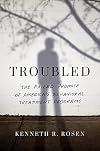
Tragic. Rosen uses case studies of four particular people and their experiences with wilderness re-education camps (and residential, boarding school style similar institutions) to paint a truly tragic picture. On an anecdotal basis, these camps seem horrifying in an Orange Is The New Black kind of way - an in depth look at the what really happens to some individuals. For what it is - these anecdotal experiences with a few claims backed up with the barest of bibliographies - it really is a show more strong read and a needed one. However, I would welcome a much more comprehensive, and cited, further examination along the lines of Radley Balko's Rise of the Warrior Cop or Michelle Alexander's The New Jim Crow. Because this particular topic, based on the strengths of these particular anecdotes, seems to warrant such an investigation. Very much recommended. show less

This riveting book about the changing Arctic and its growing importance is part history, part political treatise, part environmental primer, and part a lyrical travelogue. It also is a paean to the Arctic's wild and as yet untouched areas, and its star-filled (and increasingly, Starlink-filled) skies.
Rosen dismisses Trump’s obvious canard that “climate change is a hoax” and instead focuses on how (other) nations across the globe acknowledge the warming planet.
[Note: On December 16, show more 2025, the National Oceanic and Atmospheric Administration reported: "The Arctic last season was the hottest it has been in the past 125 years. The extent of sea ice during its usual maximum in March was the lowest in 47 years of satellite recordkeeping. The North American tundra was more green with plant life than ever recorded.”]
Rosen sets the stage for his tour of the region by defining the parameters of “the Arctic” and pointing out that the Arctic is warming four to five times faster than the rest of the world. He explains thermohaline circulation, the process by which salt and water temperatures are dispersed throughout the world’s oceans, and provides examples of what climate-related changes have already occurred in Arctic countries. He notes that each year, the planet permanently loses a section of sea ice the size of Nebraska, and what that means for global temperatures.
Many nations regard the Arctic, with its increasing accessibility thanks to melting, as presenting an opportunity for expansion and the establishment of military dominance.
[Trump is not totally oblivious to the value of the Arctic, as shown by his stated intention to “to make Greenland a part of the U.S.” Greenland has rare earth minerals, vital to high-tech industries. This asset has attracted the interest of top officials in the Trump administration, who see an opportunity for - frankly - plunder. As Brian Kilmeade recently said on Fox, "Look, we are going to need their natural resources to mine them . . . But in the meantime, we have to expand our bases there and access to the waterways, because the arctic is melting and we need access there. Russia and China is (sic) trying to dominate.” And Trump's top aide Stephen Miller asserted (after the Venezuela invasion) that Greenland "rightfully" belonged to the United States and that the Trump administration could seize the semiautonomous Danish territory if it wanted, because "We live in a world, in the real world . . . that is governed by strength, that is governed by force, that is governed by power."]
Drawing on interviews with more than 400 individuals and from having embedded himself in a number of Arctic operations, Rosen found serious mismanagement by the US in its half-hearted attempts to pierce the new “ice curtain” in the Arctic. Furthermore, “the Trump Administration’s egregious campaign to ‘get’ and ‘secure’ Greenland” managed to alienate all concerned parties: “America has not gracefully risen to meet the occasion.”
Rather, Rosen reports, US troops sent to train in and patrol the area have to deal with infrastructure dating from the Cold War that is now crumbing as the permafrost melts; a lack of suitable equipment that can withstand the frigid temperatures; chronic underfunding; and low morale combined with a high suicide rate.
[In October, 2025, the US contracted with Finland to build new icebreakers to be purchased for the Coast Guard. Simultaneously, it undermined a long-planned change by the International Maritime Organization to force ships to start paying fees for the greenhouse gases their vessels inevitably emit which damage the climate. (US officials were accused of “bullying” and “intimidation”, as the UK Guardian reported. Specifically, "The US threatened countries, and individual officials, with tariffs, penalties and visa revocations if they supported the pricing mechanism.")]
Other countries have stepped up their commitment. In fact, Rosen points out, some in the Arctic even characterize this as a “pre-war” period.
Rosen ends with a “to-do” list for the U.S. to meet the moment, but it clearly would call for a different Administration to accept the need for, much less endeavor to accomplish, any of his proposed action items.
Evaluation: Fascinating and highly recommended. show less
Rosen dismisses Trump’s obvious canard that “climate change is a hoax” and instead focuses on how (other) nations across the globe acknowledge the warming planet.
[Note: On December 16, show more 2025, the National Oceanic and Atmospheric Administration reported: "The Arctic last season was the hottest it has been in the past 125 years. The extent of sea ice during its usual maximum in March was the lowest in 47 years of satellite recordkeeping. The North American tundra was more green with plant life than ever recorded.”]
Rosen sets the stage for his tour of the region by defining the parameters of “the Arctic” and pointing out that the Arctic is warming four to five times faster than the rest of the world. He explains thermohaline circulation, the process by which salt and water temperatures are dispersed throughout the world’s oceans, and provides examples of what climate-related changes have already occurred in Arctic countries. He notes that each year, the planet permanently loses a section of sea ice the size of Nebraska, and what that means for global temperatures.
Many nations regard the Arctic, with its increasing accessibility thanks to melting, as presenting an opportunity for expansion and the establishment of military dominance.
[Trump is not totally oblivious to the value of the Arctic, as shown by his stated intention to “to make Greenland a part of the U.S.” Greenland has rare earth minerals, vital to high-tech industries. This asset has attracted the interest of top officials in the Trump administration, who see an opportunity for - frankly - plunder. As Brian Kilmeade recently said on Fox, "Look, we are going to need their natural resources to mine them . . . But in the meantime, we have to expand our bases there and access to the waterways, because the arctic is melting and we need access there. Russia and China is (sic) trying to dominate.” And Trump's top aide Stephen Miller asserted (after the Venezuela invasion) that Greenland "rightfully" belonged to the United States and that the Trump administration could seize the semiautonomous Danish territory if it wanted, because "We live in a world, in the real world . . . that is governed by strength, that is governed by force, that is governed by power."]
Drawing on interviews with more than 400 individuals and from having embedded himself in a number of Arctic operations, Rosen found serious mismanagement by the US in its half-hearted attempts to pierce the new “ice curtain” in the Arctic. Furthermore, “the Trump Administration’s egregious campaign to ‘get’ and ‘secure’ Greenland” managed to alienate all concerned parties: “America has not gracefully risen to meet the occasion.”
Rather, Rosen reports, US troops sent to train in and patrol the area have to deal with infrastructure dating from the Cold War that is now crumbing as the permafrost melts; a lack of suitable equipment that can withstand the frigid temperatures; chronic underfunding; and low morale combined with a high suicide rate.
[In October, 2025, the US contracted with Finland to build new icebreakers to be purchased for the Coast Guard. Simultaneously, it undermined a long-planned change by the International Maritime Organization to force ships to start paying fees for the greenhouse gases their vessels inevitably emit which damage the climate. (US officials were accused of “bullying” and “intimidation”, as the UK Guardian reported. Specifically, "The US threatened countries, and individual officials, with tariffs, penalties and visa revocations if they supported the pricing mechanism.")]
Other countries have stepped up their commitment. In fact, Rosen points out, some in the Arctic even characterize this as a “pre-war” period.
Rosen ends with a “to-do” list for the U.S. to meet the moment, but it clearly would call for a different Administration to accept the need for, much less endeavor to accomplish, any of his proposed action items.
Evaluation: Fascinating and highly recommended. show less
 This review was written for LibraryThing Early Reviewers.
Kenneth R. Rosen's Polar War: Submarines, Spies, and the Struggle for Power in a Melting Arctic promises a thrilling exposé of great-power competition in the thawing north, complete with submarines, spies, and impending conflict. The subtitle alone conjures images of shadowy espionage, underwater duels, and high-stakes brinkmanship. Unfortunately, the book delivers far less than it advertises, resulting in a frustrating, overhyped disappointment that feels more like a padded policy brief show more than a gripping narrative.
From the outset, Rosen misleads readers with sensational framing. Spies do not really appear in the book and submarines are mentioned more as background scenery than active players. Instead of pulse-pounding frontline drama, the bulk of the text fixates on America's alleged incompetence in the Arctic: crumbling Cold War-era infrastructure, underfunded icebreakers, inadequate cold-weather gear, low troop morale, and bureaucratic neglect. While these criticisms may hold water, Rosen hammers them relentlessly, turning what could have been sharp analysis into repetitive complaining. The book reads like an extended op-ed arguing that the U.S. is "hopelessly behind" Russia and China, with European allies (especially Norway) held up as models of competence in contrast to American sloppiness.
Rosen's travelogue elements—embeddings with patrols, visits to remote outposts—offer few vivid moments, and they rarely cohere into a compelling story. Indigenous perspectives and environmental collapse get dutiful nods, yet they feel tacked on, pointless anecdotes about Rosen's many conversations with locals in bars. The prose often veers into breathless alarmism ("a new cold war—and every day it grows hotter"), but the evidence remains anecdotal and uneven, allegedly drawn from hundreds of interviews that somehow yield almost no revelatory insights.
Readers hoping for a thriller-like blend of geopolitics and adventure will feel baited and switched. What remains is a one-note lament about U.S. decline in a strategic region, stretched to book length with redundant vignettes and a minute number of policy recommendations buried in an appendix. For those already steeped in Arctic affairs, it adds little new; for general readers, it's misleading and ultimately dull. Skip this one. show less
From the outset, Rosen misleads readers with sensational framing. Spies do not really appear in the book and submarines are mentioned more as background scenery than active players. Instead of pulse-pounding frontline drama, the bulk of the text fixates on America's alleged incompetence in the Arctic: crumbling Cold War-era infrastructure, underfunded icebreakers, inadequate cold-weather gear, low troop morale, and bureaucratic neglect. While these criticisms may hold water, Rosen hammers them relentlessly, turning what could have been sharp analysis into repetitive complaining. The book reads like an extended op-ed arguing that the U.S. is "hopelessly behind" Russia and China, with European allies (especially Norway) held up as models of competence in contrast to American sloppiness.
Rosen's travelogue elements—embeddings with patrols, visits to remote outposts—offer few vivid moments, and they rarely cohere into a compelling story. Indigenous perspectives and environmental collapse get dutiful nods, yet they feel tacked on, pointless anecdotes about Rosen's many conversations with locals in bars. The prose often veers into breathless alarmism ("a new cold war—and every day it grows hotter"), but the evidence remains anecdotal and uneven, allegedly drawn from hundreds of interviews that somehow yield almost no revelatory insights.
Readers hoping for a thriller-like blend of geopolitics and adventure will feel baited and switched. What remains is a one-note lament about U.S. decline in a strategic region, stretched to book length with redundant vignettes and a minute number of policy recommendations buried in an appendix. For those already steeped in Arctic affairs, it adds little new; for general readers, it's misleading and ultimately dull. Skip this one. show less
This review was written for LibraryThing Early Reviewers.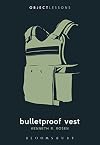
Bulletproof Vest (Object Lessons) by Kenneth R Rosen is another volume in Bloomsbury Academic's Object Lessons series. Like the others I have read, this combines the personal with the broader understanding of the object under discussion.
As a war correspondent, Rosen had need of an actual physical bulletproof (or bullet resistant as he was informed) vest. It is in going into the history of personal protective equipment and especially Kevlar that we are also shown the limitations of such show more protection. When this factual aspect of product history meets up with his personal history of feeling safe, protected, and/or secure, we begin to reflect on what actually constitutes feeling protected as compared to actually being protected. While Rosen makes these contrasts explicit in the extreme circumstances of a war zone he also reflects on the more internal and personal types of insecurity and feeling unsafe.
I found these ideas, and the thoughts they generated in my mind, most interesting. When are we technically the most safe from any particular danger and does that always coincide with when we actually feel the safest? In my case, often not. As he mentions, it is often the company of others, the feeling of community, however temporary or fragile it might be, that provides the feeling of safety, even in the absence of whatever technology we might have that is designed to protect us.
I thought back to my time on subs. For the first period of time I felt neither safe nor unsafe, though as a submariner you know how close you always are to catastrophe. Yet when I went through the training to become a boat's diver I actually felt safer, even though on the whole my safety level hadn't changed and, in case of some types of accidents, my safety was what was jeopardized first. Yet the feeling of choice and having some small amount of control made me feel safer. I think Rosen's work will make many readers reflect on times or situations where what made them feel safe wasn't necessarily safer for them and was potentially less safe. But we could feel, even momentarily, "bulletproof." [Just for clarity, I was in the Navy in the 1970s and early 80s, there was no rating, as there is now, for Navy Diver (ND). Every sub had a couple of crew members who went through a grueling SEAL led course to become certified. So I was not a full-fledged Navy Diver like there is now. I was trained primarily so that if we needed to leave a disabled boat underwater through the escape hatch I could help lead such an operation.]
Reviewed from a copy made available by the publisher via NetGalley. show less
As a war correspondent, Rosen had need of an actual physical bulletproof (or bullet resistant as he was informed) vest. It is in going into the history of personal protective equipment and especially Kevlar that we are also shown the limitations of such show more protection. When this factual aspect of product history meets up with his personal history of feeling safe, protected, and/or secure, we begin to reflect on what actually constitutes feeling protected as compared to actually being protected. While Rosen makes these contrasts explicit in the extreme circumstances of a war zone he also reflects on the more internal and personal types of insecurity and feeling unsafe.
I found these ideas, and the thoughts they generated in my mind, most interesting. When are we technically the most safe from any particular danger and does that always coincide with when we actually feel the safest? In my case, often not. As he mentions, it is often the company of others, the feeling of community, however temporary or fragile it might be, that provides the feeling of safety, even in the absence of whatever technology we might have that is designed to protect us.
I thought back to my time on subs. For the first period of time I felt neither safe nor unsafe, though as a submariner you know how close you always are to catastrophe. Yet when I went through the training to become a boat's diver I actually felt safer, even though on the whole my safety level hadn't changed and, in case of some types of accidents, my safety was what was jeopardized first. Yet the feeling of choice and having some small amount of control made me feel safer. I think Rosen's work will make many readers reflect on times or situations where what made them feel safe wasn't necessarily safer for them and was potentially less safe. But we could feel, even momentarily, "bulletproof." [Just for clarity, I was in the Navy in the 1970s and early 80s, there was no rating, as there is now, for Navy Diver (ND). Every sub had a couple of crew members who went through a grueling SEAL led course to become certified. So I was not a full-fledged Navy Diver like there is now. I was trained primarily so that if we needed to leave a disabled boat underwater through the escape hatch I could help lead such an operation.]
Reviewed from a copy made available by the publisher via NetGalley. show less
Statistics
- Works
- 5
- Members
- 102
- Popularity
- #187,250
- Rating
- 3.4
- Reviews
- 10
- ISBNs
- 16
