
Iain H. Murray
Author of The Forgotten Spurgeon
About the Author
Iain H. Murray co-founded the Banner of Truth Trust in 1957 whilst serving as assistant to Dr Martyn Lloyd-Jones at Westminster Chapel, London, and was Editorial Director until 1996. He is the author of many books, including the lives of Jonathan Edwards, Martyn Lloyd-Jones, and Amy Carmichael, show more among others. Iain and his wife Jean live in Edinburgh, and he continues to speak and write. show less
Image credit: Pastor and People
Series
Works by Iain H. Murray
Evangelicalism Divided: A Record of Crucial Change in the Years 1950 to 2000 (2000) 961 copies, 4 reviews
JOHN MURRAY OF BADBEA, AND WESTMINSTER SEMINARY, PHILADELPHIA BANNER OF TRUTH MAGAZINE, ISSUES 143-144 (1975) 11 copies
Not a Museum But a Living Force: The Fiftieth Anniversary of the Evangelical Library in London (1995) 10 copies
The Banner of Truth Issue 108 3 copies
The Banner of Truth Issue 100 2 copies
The Banner of Truth Issue 175 2 copies
The Banner of Truth Issue 165 2 copies
The Banner of Truth Issue 173 2 copies
Advancing in Adversity: Papers Read at the 1991 Westminster Conference (Puritan and Westminster Conference Papers) (1991) 2 copies
The Banner of Truth Issue 290 2 copies
The Banner of Truth Issue 106-107 2 copies
The Banner of Truth Issue 179-180 2 copies
The Banner of Truth Issue 126 2 copies
The Banner of Truth Issue 190 2 copies
The Banner of Truth Issue 56 2 copies
The Banner of Truth Issue 185 2 copies
The Banner of Truth Issue 260 2 copies
The Banner of Truth Issue 54 2 copies
The Banner of Truth Issue 198 2 copies
The Banner of Truth Issue 58-59 2 copies
The Banner of Truth Issue 93 1 copy
The Banner of Truth Issue 92 1 copy
The Banner of Truth Issue 91 1 copy
The Banner of Truth Issue 90 1 copy
The Banner of Truth Issue 96 1 copy
The Banner of Truth Issue 97 1 copy
The Banner of Truth Issue 98 1 copy
The Banner of Truth Issue 99 1 copy
The Banner of Truth Issue 78 1 copy
The Banner of Truth Issue 89 1 copy
The Banner of Truth Issue 50 1 copy
The Banner of Truth Issue 64 1 copy
The Banner of Truth Issue 63 1 copy
The Banner of Truth Issue 62 1 copy
The Banner of Truth Issue 61 1 copy
The Banner of Truth Issue 60 1 copy
The Banner of Truth Issue 51 1 copy
The Banner of Truth Issue 49 1 copy
The Banner of Truth Issue 66 1 copy
The Banner of Truth Issue 48 1 copy
The Banner of Truth Issue 47 1 copy
The Banner of Truth Issue 46 1 copy
The Banner of Truth Issue 45 1 copy
The Banner of Truth Issue 44 1 copy
The Banner of Truth Issue 43 1 copy
The Banner of Truth Issue 65 1 copy
The Banner of Truth Issue 67 1 copy
The Banner of Truth Issue 88 1 copy
The Banner of Truth Issue 79 1 copy
The Banner of Truth Issue 87 1 copy
The Banner of Truth Issue 86 1 copy
The Banner of Truth Issue 85 1 copy
The Banner of Truth Issue 84 1 copy
The Banner of Truth Issue 80 1 copy
The Banner of Truth Issue 68 1 copy
The Banner of Truth Issue 77 1 copy
The Banner of Truth Issue 76 1 copy
The Banner of Truth Issue 74 1 copy
The Banner of Truth Issue 73 1 copy
The Banner of Truth Issue 72 1 copy
The Banner of Truth Issue 69 1 copy
The Banner of Truth Issue 41 1 copy
The Banner of Truth Issue 42 1 copy
The Banner of Truth Issue 40 1 copy
Not a museum but a living force : the fiftieth anniversary of the Evangelical Library in London 1 copy
Thomas Chalmers 1 copy
John Newton 1 copy
Psalter - The Only Hymnal? 1 copy
The Banner of Truth Issue 39 1 copy
The Banner of Truth Issue 38 1 copy
The Banner of Truth Issue 37 1 copy
The Banner of Truth Issue 36 1 copy
The Banner of Truth Issue 35 1 copy
The Banner of Truth Issue 34 1 copy
Associated Works
John Calvin: A Heart for Devotion, Doctrine, Doxology (2008) — Foreword, some editions — 994 copies, 2 reviews
Tagged
Common Knowledge
- Birthdate
- 1931
- Gender
- male
- Education
- University of Durham
- Occupations
- author
pastor - Nationality
- UK
- Places of residence
- Isle of Man Sydney
New South Wales, Australia
Edinburgh, Scotland, UK
Members
Reviews

The most personally influential biography I have read to date. Jonathan Edwards was an incredibly godly, intelligent, dedicated, and flawed man, a giant in any generation. This book shook me deeply and left me with an enduring passion and commitment to be a godly churchman, to love and support my elders and pastors well. And when I am tempted to think I have it all together, I remember that Jonathan Edwards was a slaveholder. If a man of his caliber could have such a glaring blindspot in his show more belief and practice, then I must walk humbly before God and my fellow man. show less
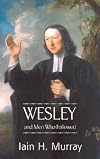
Iain H. Murray, a prolific author and excellent historian who has given us substantial biographies on four great Evangelical Calvinists - Jonathan Edwards (Jonathan Edwards: A New Biography), D. Martyn Lloyd-Jones (The First Forty Years and The Fight of Faith), Arthur W. Pink (The Life of Arthur W. Pink), and John Murray (The Life of John Murray), as well as two books on the theology of Charles Haddon Spurgeon (The Forgotten Spurgeon and Spurgeon v. Hyper-Calvinism), three books on revival show more (The Puritan Hope, Revival and Revivalism, and Pentecost Today?), and two on Christian history (Australian Christian Life from 1788: An Introduction & An Anthology and Evangelicalism Divided) - now turns his hand towards the great Evangelical Arminian and founder of what eventually became the Methodist church, John Wesley. As with his earlier writings, this book is not mere historiography. It is a critical, yet kind, reflection on the life and labors, piety and theology, of the man who, along with George Whitefield, was the primary human instrument used of God in the Evangelical Great Awakening of the eighteenth century.
Murray's book is divided into four parts. Part one addresses Wesley himself in five chapters which cover the main movements of his life and the primary features of his thought and ministry. Chapter one, "From Oxford Don to Open-Air Preacher," chronicles the story of Wesley's conversion and explores the various influences upon Wesley's religious thought. Murray tracks Wesley's spiritual journey from his birth in 1703 to his ordination as a deacon in the Church of England in 1725, then his unfruitful missionary labors among the Indians in North America in 1735, on to the decisive Aldersgate experience in 1738 where Wesley heard someone read Luther's Preface to the Epistle of Romans and felt his heart "strangely warmed" and came to "trust in Christ, Christ alone for salvation" (8). "From this point," writes Murray, "Wesley was a changed man" (9) - and the change evidenced itself in Wesley's preaching, prayer and praise (9-12). Murray then explores the various religious influences in Wesley's life, including the Puritan heritage of his family, Bishop Jeremy Taylor (one of Wesley's favorite authors), the writings of mystics such as William Law and Thomas a'Kempis, and finally the Moravians, "devout emigrants and missionaries from the evangelical settlements led by Count Zinzendorf and others in Germany" (19), whose witness in route to Savannah, Georgia was so instrumental in leading Wesley to evangelical faith. This first chapter ends by focusing on the consequences, both in his family and his ministry, which followed the great change in Wesley's life.
Chapter two, "Kingdoms on a Blaze," gives attention to Wesley's role in the revival and spiritual awakening of the 1740s. Murray recounts how Wesley preached to vast numbers of people (an estimated fifty thousand in one open-air meeting in London!), how the "constant theme" of his preaching was salvation by grace through faith, and how John Nelson came to faith under his preaching, eventually becoming one of Wesley's first assistants. Murray appropriately reminds us that the real impetus behind the awakening was the power of the Holy Spirit. He includes a quotation from Wesley which I found surprising and encouraging:
"Supposing a man be now void of faith and hope and love, he cannot effect any degree of them in himself by any possible exertion of his understanding, and of any or all of his other natural faculties, though he should enjoy them to the utmost perfection. A distinct power from God, not implied in any of these, is indispensably necessary before it is possible he should arrive at the very least degree of Christian faith, or hope, or love. In order to his having any of these (which on this very consideration I suppose St Paul terms 'the fruits of the Spirit') he must be created anew, throughly and inwardly changed by the operation of the Spirit of God, by a power equivalent to that which raises the dead, and which calls things which are not as though they were" (33).
But the revival was accompanied by trouble - in relationships with both the Moravians and George Whitefield, and among the societies Wesley established, each of which Murray also discusses.
The next chapter attempts to help us in "Understanding Wesley's Thought." Several things come into play in this chapter, including Wesley's impatience with theoretical, as opposed to practical, Christianity, his views on baptism and prevenient grace, his tendencies towards asceticism (seen not least in his negative attitude towards marriage), his unique teaching on "Christian perfection" or "entire sanctification," and his views on conversion and assurance. Murray's primary criticism is that Wesley allowed his experience (and the experiences of others) to shape his theology, a fact which is adduced by charting the changes in Wesley's theology over the years and probable reasons for those changes. A prime example of this is Wesley's own re-evaluation of the Aldersgate experience, which he eventually came to view not as his conversion, but as the receiving of assurance of his pardon.
"The Collision with Calvinism" is the focus of the fourth chapter, where the tensions between Wesley and George Whitefield are discussed. "The reason for the breach with Whitefield is essential to any understanding of John Wesley" (56). The division happened in 1740-41, and "thereafter the two men were seldom able to work long together" (56). Differing personalities surely played a part in the conflict, but their different theologies lay at the root. "What has to be recognized is that from the outset the two men meant different things by `Calvinism.' For Whitefield - if he used the word at all - it meant the evangelical theology of the Reformation; for Wesley it meant the imposition on Christianity of a form of belief that had brought decadence on the churches" (56-57). Wesley, who followed the theology of his mother, associated Whitefield with the hyper-calvinism which characterized many dissenting churches. Yet even if Wesley misunderstood Whitefield, the difference between them was real. Wesley truly thought that "predestinarian" belief was a threat to true evangelical Christianity. He also though that antinomianism was "a direct consequence of Calvinistic belief" (65). Interestingly, many of the early Methodists followed the theology of Whitefield rather than Wesley. Murray quotes Wesley's biographer Luke Tyreman who comments `that in the year 1766, `Wesley stood almost alone, with the exception of his friend Fletcher'" (70). Yet Wesley remained steadfast to the end in his opposition to any form of Calvinism. Despite Wesley's opposition, Whitefield could say, "Mr Wesley I think is wrong in some things; yet I believe . . . Mr Wesley, and others, with whom we do not agree in all things, will shine bright in glory" (71). In his conclusion to the chapter, Murray (whose theological sympathies are obviously with Whitefield, not Wesley) asks, "If Wesley's theology was confused, why, some might ask, should we value his memory today? The answer is that it is not in his theology that his real legacy lies. Christian leaders are raised up for different purposes. The eighteenth-century evangelicals were primarily men of action, and, in that role, John Wesley did and said much which was to the lasting benefit of thousands" (79). He then quotes J. C. Ryle who said, "That Wesley would have done better if he could have thrown off his Arminianism, I have not the least doubt; but that he preached the gospel, honoured Christ, and did extensive good, I no more doubt that I doubt my own existence" (79).
In chapter five, Murray lays aside the controversial issues and examines John Wesley, "The Leader." Acknowledging that Wesley's "biographers have portrayed [his] character in as many as twenty different versions" Murray begins stating that "in any remotely authentic account of [Wesley's] life one thing should stand out: the unifying principle was his commitment to the Bible" (80). Wesley himself exhorted a preacher to "enjoin nothing that the Bible does not clearly enjoin. Forbid nothing that it does not clearly forbid" (80-81). It was his devotion to Scripture which birthed his passion for God and for souls and kept his disciplined piety and evangelistic intensity steady throughout his life. "What stands out in Wesley is the way the endeavour [to make Christ known] was maintained and never seemed to flag" (81). "His prayer was granted, `Lord, let me never live to be useless'" (83). Wesley was an excellent leader as the organization of the Methodist societies and his mentoring of Methodist preachers (or "Assistants") shows. Wesley the leader attracted high caliber men to his work. And his description of his first helpers is stirring: "poor, ignorant men, without experience, learning or art; but simple of heart, devoted to God, full of faith and zeal, seeking no honour profit, no pleasure, no ease, but merely to save souls; fearing neither want, pain, persecution, nor whatever man could do unto them" (87). The chapter goes on to recount some of Wesley's exhortations to these men, describe some features of the societies, consider the contrasts and complexities in Wesley's make-up, and ends with a brief evaluation of the legacy of Wesley and the Evangelical Revival.
The second part of the book, "Men Who Followed," is made up of three chapters which consider three Methodist leaders (William Bramwell, Gideon Ouseley, and Thomas Collins) who carried on the legacy of John Wesley and through whom the Lord caused Methodism to rise to its height in the early nineteenth century. In my own reading of the book, I looked forward to this section the least but actually enjoyed it the most. Murray draws heavily from out-of-print biographies of these three men and his account of the conversion and ministry of each (and of the revival which attended their ministries) is heart-enriching and soul-stirring. I found the excerpts from the journals of these men and the stories of spiritual awakening among their hearers especially edifying. Perhaps I can best describe the effect of these chapters with the words which someone once said of William Bramwell: "I never left him without a determination to live nearer to God" (136).
Part three of the book, "Against Unquestioning Following," takes up two problem areas in Wesley's doctrine: justification (chapter nine) and Christian Perfection (chapter ten). With the first, Murray attempts to understand the development in Wesley's understanding of justification and come to terms with what he actually thought. The task is not simple, for Wesley sometimes contradicted himself and his semantics are sometimes misleading. As one critic of Wesley once said, "He is an eel; take him where you will, he will slip through your fingers" (225)! Murray's conclusion is that Wesley did, in point of fact, veer away from the evangelicalism of the Reformation; but his criticism is always so charitable that the reader really feels that Murray has tried hard to understand and assume the best of Wesley. "Christian perfection was probably the most controversial topic in Wesley's teaching" (232) and Murray is helpful in sorting out just what Wesley thought. He begins by underlining what is not controversial in Wesley's teaching. Then he takes on the areas in which he believes Wesley erred, and discusses the long-term damage this doctrine caused, especially through the perfectionism teaching of the nineteenth century, into which it evolved.
The fourth and final part of the book, "Methodism, with and without the Holy Spirit," is comprised of only one chapter which seeks for a true explanation behind the phenomenon of the Methodist movement. One explanation which fails is attributing the movement to Wesley's personality and personal influence. "If Wesley's leadership was the secret, then the success would have been greatest in his lifetime. The opposite was the case, Methodism spread further and faster after his death" (252). Murray concludes that the true explanation for the spiritual success of Methodism in the eighteenth and nineteenth centuries is the powerful work of the Holy Spirit of God, worked out in the lives of the early Methodists in their fidelity to Scripture, with faith and discipline as the essential ingredients to their piety. "The power in the old Methodist preaching is not a fairy story, and it was bound up with the conviction that honouring Scripture and honouring the Holy Spirit cannot be separated. The preachers carried a message that was not their own and it put an awe upon them" (260). The sharp decline in loyalty to God's Word among Methodists of the twentieth century accounts for the spiritual poverty which now characterizes so much of modern Methodism. But "apostasy is not the end of the story" (262) and Murray ends the book on a hopeful note. "Once-honoured names and organizations may change, churches may lose their candlesticks, but the great lesson of Wesley and the Evangelical Revival is that sin and unbelief are not in control of history. Millions now in heaven attest that truth . . . God's love for the world remains the same. Jesus is the Saviour `high over all' who lives to give repentance and forgiveness. Not on the basis of what the church deserves, but on account of what Christ has done, the Spirit is sent to convict of sin, of righteousness, and of judgment. And whenever and wherever that work grace is found, men and women will cry [in the words of Wesley], `O give me that book! At any price, give me the book of God'" (263). show less
Murray's book is divided into four parts. Part one addresses Wesley himself in five chapters which cover the main movements of his life and the primary features of his thought and ministry. Chapter one, "From Oxford Don to Open-Air Preacher," chronicles the story of Wesley's conversion and explores the various influences upon Wesley's religious thought. Murray tracks Wesley's spiritual journey from his birth in 1703 to his ordination as a deacon in the Church of England in 1725, then his unfruitful missionary labors among the Indians in North America in 1735, on to the decisive Aldersgate experience in 1738 where Wesley heard someone read Luther's Preface to the Epistle of Romans and felt his heart "strangely warmed" and came to "trust in Christ, Christ alone for salvation" (8). "From this point," writes Murray, "Wesley was a changed man" (9) - and the change evidenced itself in Wesley's preaching, prayer and praise (9-12). Murray then explores the various religious influences in Wesley's life, including the Puritan heritage of his family, Bishop Jeremy Taylor (one of Wesley's favorite authors), the writings of mystics such as William Law and Thomas a'Kempis, and finally the Moravians, "devout emigrants and missionaries from the evangelical settlements led by Count Zinzendorf and others in Germany" (19), whose witness in route to Savannah, Georgia was so instrumental in leading Wesley to evangelical faith. This first chapter ends by focusing on the consequences, both in his family and his ministry, which followed the great change in Wesley's life.
Chapter two, "Kingdoms on a Blaze," gives attention to Wesley's role in the revival and spiritual awakening of the 1740s. Murray recounts how Wesley preached to vast numbers of people (an estimated fifty thousand in one open-air meeting in London!), how the "constant theme" of his preaching was salvation by grace through faith, and how John Nelson came to faith under his preaching, eventually becoming one of Wesley's first assistants. Murray appropriately reminds us that the real impetus behind the awakening was the power of the Holy Spirit. He includes a quotation from Wesley which I found surprising and encouraging:
"Supposing a man be now void of faith and hope and love, he cannot effect any degree of them in himself by any possible exertion of his understanding, and of any or all of his other natural faculties, though he should enjoy them to the utmost perfection. A distinct power from God, not implied in any of these, is indispensably necessary before it is possible he should arrive at the very least degree of Christian faith, or hope, or love. In order to his having any of these (which on this very consideration I suppose St Paul terms 'the fruits of the Spirit') he must be created anew, throughly and inwardly changed by the operation of the Spirit of God, by a power equivalent to that which raises the dead, and which calls things which are not as though they were" (33).
But the revival was accompanied by trouble - in relationships with both the Moravians and George Whitefield, and among the societies Wesley established, each of which Murray also discusses.
The next chapter attempts to help us in "Understanding Wesley's Thought." Several things come into play in this chapter, including Wesley's impatience with theoretical, as opposed to practical, Christianity, his views on baptism and prevenient grace, his tendencies towards asceticism (seen not least in his negative attitude towards marriage), his unique teaching on "Christian perfection" or "entire sanctification," and his views on conversion and assurance. Murray's primary criticism is that Wesley allowed his experience (and the experiences of others) to shape his theology, a fact which is adduced by charting the changes in Wesley's theology over the years and probable reasons for those changes. A prime example of this is Wesley's own re-evaluation of the Aldersgate experience, which he eventually came to view not as his conversion, but as the receiving of assurance of his pardon.
"The Collision with Calvinism" is the focus of the fourth chapter, where the tensions between Wesley and George Whitefield are discussed. "The reason for the breach with Whitefield is essential to any understanding of John Wesley" (56). The division happened in 1740-41, and "thereafter the two men were seldom able to work long together" (56). Differing personalities surely played a part in the conflict, but their different theologies lay at the root. "What has to be recognized is that from the outset the two men meant different things by `Calvinism.' For Whitefield - if he used the word at all - it meant the evangelical theology of the Reformation; for Wesley it meant the imposition on Christianity of a form of belief that had brought decadence on the churches" (56-57). Wesley, who followed the theology of his mother, associated Whitefield with the hyper-calvinism which characterized many dissenting churches. Yet even if Wesley misunderstood Whitefield, the difference between them was real. Wesley truly thought that "predestinarian" belief was a threat to true evangelical Christianity. He also though that antinomianism was "a direct consequence of Calvinistic belief" (65). Interestingly, many of the early Methodists followed the theology of Whitefield rather than Wesley. Murray quotes Wesley's biographer Luke Tyreman who comments `that in the year 1766, `Wesley stood almost alone, with the exception of his friend Fletcher'" (70). Yet Wesley remained steadfast to the end in his opposition to any form of Calvinism. Despite Wesley's opposition, Whitefield could say, "Mr Wesley I think is wrong in some things; yet I believe . . . Mr Wesley, and others, with whom we do not agree in all things, will shine bright in glory" (71). In his conclusion to the chapter, Murray (whose theological sympathies are obviously with Whitefield, not Wesley) asks, "If Wesley's theology was confused, why, some might ask, should we value his memory today? The answer is that it is not in his theology that his real legacy lies. Christian leaders are raised up for different purposes. The eighteenth-century evangelicals were primarily men of action, and, in that role, John Wesley did and said much which was to the lasting benefit of thousands" (79). He then quotes J. C. Ryle who said, "That Wesley would have done better if he could have thrown off his Arminianism, I have not the least doubt; but that he preached the gospel, honoured Christ, and did extensive good, I no more doubt that I doubt my own existence" (79).
In chapter five, Murray lays aside the controversial issues and examines John Wesley, "The Leader." Acknowledging that Wesley's "biographers have portrayed [his] character in as many as twenty different versions" Murray begins stating that "in any remotely authentic account of [Wesley's] life one thing should stand out: the unifying principle was his commitment to the Bible" (80). Wesley himself exhorted a preacher to "enjoin nothing that the Bible does not clearly enjoin. Forbid nothing that it does not clearly forbid" (80-81). It was his devotion to Scripture which birthed his passion for God and for souls and kept his disciplined piety and evangelistic intensity steady throughout his life. "What stands out in Wesley is the way the endeavour [to make Christ known] was maintained and never seemed to flag" (81). "His prayer was granted, `Lord, let me never live to be useless'" (83). Wesley was an excellent leader as the organization of the Methodist societies and his mentoring of Methodist preachers (or "Assistants") shows. Wesley the leader attracted high caliber men to his work. And his description of his first helpers is stirring: "poor, ignorant men, without experience, learning or art; but simple of heart, devoted to God, full of faith and zeal, seeking no honour profit, no pleasure, no ease, but merely to save souls; fearing neither want, pain, persecution, nor whatever man could do unto them" (87). The chapter goes on to recount some of Wesley's exhortations to these men, describe some features of the societies, consider the contrasts and complexities in Wesley's make-up, and ends with a brief evaluation of the legacy of Wesley and the Evangelical Revival.
The second part of the book, "Men Who Followed," is made up of three chapters which consider three Methodist leaders (William Bramwell, Gideon Ouseley, and Thomas Collins) who carried on the legacy of John Wesley and through whom the Lord caused Methodism to rise to its height in the early nineteenth century. In my own reading of the book, I looked forward to this section the least but actually enjoyed it the most. Murray draws heavily from out-of-print biographies of these three men and his account of the conversion and ministry of each (and of the revival which attended their ministries) is heart-enriching and soul-stirring. I found the excerpts from the journals of these men and the stories of spiritual awakening among their hearers especially edifying. Perhaps I can best describe the effect of these chapters with the words which someone once said of William Bramwell: "I never left him without a determination to live nearer to God" (136).
Part three of the book, "Against Unquestioning Following," takes up two problem areas in Wesley's doctrine: justification (chapter nine) and Christian Perfection (chapter ten). With the first, Murray attempts to understand the development in Wesley's understanding of justification and come to terms with what he actually thought. The task is not simple, for Wesley sometimes contradicted himself and his semantics are sometimes misleading. As one critic of Wesley once said, "He is an eel; take him where you will, he will slip through your fingers" (225)! Murray's conclusion is that Wesley did, in point of fact, veer away from the evangelicalism of the Reformation; but his criticism is always so charitable that the reader really feels that Murray has tried hard to understand and assume the best of Wesley. "Christian perfection was probably the most controversial topic in Wesley's teaching" (232) and Murray is helpful in sorting out just what Wesley thought. He begins by underlining what is not controversial in Wesley's teaching. Then he takes on the areas in which he believes Wesley erred, and discusses the long-term damage this doctrine caused, especially through the perfectionism teaching of the nineteenth century, into which it evolved.
The fourth and final part of the book, "Methodism, with and without the Holy Spirit," is comprised of only one chapter which seeks for a true explanation behind the phenomenon of the Methodist movement. One explanation which fails is attributing the movement to Wesley's personality and personal influence. "If Wesley's leadership was the secret, then the success would have been greatest in his lifetime. The opposite was the case, Methodism spread further and faster after his death" (252). Murray concludes that the true explanation for the spiritual success of Methodism in the eighteenth and nineteenth centuries is the powerful work of the Holy Spirit of God, worked out in the lives of the early Methodists in their fidelity to Scripture, with faith and discipline as the essential ingredients to their piety. "The power in the old Methodist preaching is not a fairy story, and it was bound up with the conviction that honouring Scripture and honouring the Holy Spirit cannot be separated. The preachers carried a message that was not their own and it put an awe upon them" (260). The sharp decline in loyalty to God's Word among Methodists of the twentieth century accounts for the spiritual poverty which now characterizes so much of modern Methodism. But "apostasy is not the end of the story" (262) and Murray ends the book on a hopeful note. "Once-honoured names and organizations may change, churches may lose their candlesticks, but the great lesson of Wesley and the Evangelical Revival is that sin and unbelief are not in control of history. Millions now in heaven attest that truth . . . God's love for the world remains the same. Jesus is the Saviour `high over all' who lives to give repentance and forgiveness. Not on the basis of what the church deserves, but on account of what Christ has done, the Spirit is sent to convict of sin, of righteousness, and of judgment. And whenever and wherever that work grace is found, men and women will cry [in the words of Wesley], `O give me that book! At any price, give me the book of God'" (263). show less
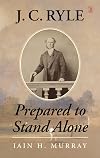
Summary: The biography of this nineteenth century evangelical Anglican, from his early student days, his conversion, the decision to enter ministry, and his growing national reputation and his different assignments, including his last years as the first Bishop of Liverpool.
Earlier this year, a reading group of which I am a part chose J. C. Ryle's Holiness (reviewed here) for our book discussions. Having read English writers of this era like John Henry Newman, I was bracing myself for highly show more convoluted sentences from which I would ferret meaning. Instead, I encountered a writer who was plain-spoken and a man of gracious, but uncompromising conviction. So when I came across notice of this new biography of Ryle, I acquired a copy, wanting to learn more of this man.
Ryle grew up the affluent son of a banker. He was tall, a gifted player of cricket, and seemed bound for a successful career, possibly in politics. During an illness in his last year at Oxford, he began to read his Bible and came to a personal faith in Christ, having previously been influenced by the conversion of his sister and a close relative.
A second turning point came when his father's banking interest collapsed and he found himself without the means to pursue the political career for which he seemed destined. Instead, he sought ordination in the Church of England, serving first at Exbury and then St. Thomas's Winchester. This was followed by a pastorate in Helmingham, during which he married twice, losing both wives, leaving him with five children. He wrote of this time, "There are anxieties in such cases which no one knows but he who has gone through them; anxieties which can crush the strongest spirit."
Yet during these years Murray describes the pattern of a ministry that was constant in pastoral care visiting people in their homes, saturated with study, of the scriptures and the best of the Puritans, marked by compelling preaching, and further propagated through the publishing of tracts and collections of sermons. It was a time when Newman, Pusey, Keble, Froude, and others were publishing Tracts for the Times and leading a movement toward Anglo-Catholicism emphasizing sacraments, ritual, and ties with Rome, that Ryle and others thought contrary both to the Thirty-Nine Articles and to an evangelical faith rooted in the scriptures and the saving work of Christ.
A move to Stradbroke in 1861 brought with it a third marriage that would last until Henrietta's death in 1889 and an increasingly national reputation as a voice for the evangelical wing of the Anglican Church. There were further publications, including his commentary on the Gospel of John. In 1872 he became Canon of Norwich and in 1880, at age 64, he became the first Bishop of Liverpool. He remained in this post until shortly before his death in 1900, establishing 44 new churches and mission halls, and becoming beloved among the working people, if not among a Church of England growing increasingly sacramental and tolerant of theological heterodoxy that moved away from evangelical conviction.
He was not able to stem the tide despite his efforts, even with his own son Herbert, who became a leader in the "broad" church. They differed but always remained charitable toward each other. One telling observation made however is that J.C. Ryle's work continues to be re-printed and read, Herbert's has not.
This makes me wonder about the subtitle, "prepared to stand alone." It appears that this may often have been the case for Ryle, especially later in life. Are there times when it may seem that many, even those most dear will desert "the faith once delivered?" Perhaps this is why some find the writing of Ryle of such comfort in a time where parts of the church are given over to political captivity and others to a latitudinarianism that considers matters of doctrine of little value. Ryle brings together in his life and preaching both clarity of conviction and charity toward those with whom he ministered as he sought to proclaim that transforming power of new life in Christ.
Murray's new biography explores the "long obedience" of this evangelical leader who never left the Church of England. He also includes two appendices, one with quotes from Ryle, and the other a brief profile of Herbert Ryle, his son. I'll close with one of those quotes, on the "new birth," a terminology that has undeservedly fallen into disrepute:
"The change which our Lord he declares needful to salvation is evidently no slight or superficial one. It is not merely reformation, or amendment, or moral change, or outward alteration of life. It is a thorough change of heart, will, and character. It is a resurrection. It is a new creation. It is a passing from death to life. It is the implanting in our dead hearts of a new principle from above. It is the calling into existence of a new creature, with a new nature, new habits of life, new tastes, new desires, new appetites, new judgments, new opinions, new hopes, and new fears. All this and nothing less than this is implied, when our Lord declares we all need a 'new birth'.... Heaven may be reached without money, or rank, or learning. But it is clear as daylight, if words have any meaning, that no one can enter heaven without a 'new birth.' "
_______________________________
Disclosure of Material Connection: I received this book free from the publisher . I was not required to write a positive review. The opinions I have expressed are my own. show less
Earlier this year, a reading group of which I am a part chose J. C. Ryle's Holiness (reviewed here) for our book discussions. Having read English writers of this era like John Henry Newman, I was bracing myself for highly show more convoluted sentences from which I would ferret meaning. Instead, I encountered a writer who was plain-spoken and a man of gracious, but uncompromising conviction. So when I came across notice of this new biography of Ryle, I acquired a copy, wanting to learn more of this man.
Ryle grew up the affluent son of a banker. He was tall, a gifted player of cricket, and seemed bound for a successful career, possibly in politics. During an illness in his last year at Oxford, he began to read his Bible and came to a personal faith in Christ, having previously been influenced by the conversion of his sister and a close relative.
A second turning point came when his father's banking interest collapsed and he found himself without the means to pursue the political career for which he seemed destined. Instead, he sought ordination in the Church of England, serving first at Exbury and then St. Thomas's Winchester. This was followed by a pastorate in Helmingham, during which he married twice, losing both wives, leaving him with five children. He wrote of this time, "There are anxieties in such cases which no one knows but he who has gone through them; anxieties which can crush the strongest spirit."
Yet during these years Murray describes the pattern of a ministry that was constant in pastoral care visiting people in their homes, saturated with study, of the scriptures and the best of the Puritans, marked by compelling preaching, and further propagated through the publishing of tracts and collections of sermons. It was a time when Newman, Pusey, Keble, Froude, and others were publishing Tracts for the Times and leading a movement toward Anglo-Catholicism emphasizing sacraments, ritual, and ties with Rome, that Ryle and others thought contrary both to the Thirty-Nine Articles and to an evangelical faith rooted in the scriptures and the saving work of Christ.
A move to Stradbroke in 1861 brought with it a third marriage that would last until Henrietta's death in 1889 and an increasingly national reputation as a voice for the evangelical wing of the Anglican Church. There were further publications, including his commentary on the Gospel of John. In 1872 he became Canon of Norwich and in 1880, at age 64, he became the first Bishop of Liverpool. He remained in this post until shortly before his death in 1900, establishing 44 new churches and mission halls, and becoming beloved among the working people, if not among a Church of England growing increasingly sacramental and tolerant of theological heterodoxy that moved away from evangelical conviction.
He was not able to stem the tide despite his efforts, even with his own son Herbert, who became a leader in the "broad" church. They differed but always remained charitable toward each other. One telling observation made however is that J.C. Ryle's work continues to be re-printed and read, Herbert's has not.
This makes me wonder about the subtitle, "prepared to stand alone." It appears that this may often have been the case for Ryle, especially later in life. Are there times when it may seem that many, even those most dear will desert "the faith once delivered?" Perhaps this is why some find the writing of Ryle of such comfort in a time where parts of the church are given over to political captivity and others to a latitudinarianism that considers matters of doctrine of little value. Ryle brings together in his life and preaching both clarity of conviction and charity toward those with whom he ministered as he sought to proclaim that transforming power of new life in Christ.
Murray's new biography explores the "long obedience" of this evangelical leader who never left the Church of England. He also includes two appendices, one with quotes from Ryle, and the other a brief profile of Herbert Ryle, his son. I'll close with one of those quotes, on the "new birth," a terminology that has undeservedly fallen into disrepute:
"The change which our Lord he declares needful to salvation is evidently no slight or superficial one. It is not merely reformation, or amendment, or moral change, or outward alteration of life. It is a thorough change of heart, will, and character. It is a resurrection. It is a new creation. It is a passing from death to life. It is the implanting in our dead hearts of a new principle from above. It is the calling into existence of a new creature, with a new nature, new habits of life, new tastes, new desires, new appetites, new judgments, new opinions, new hopes, and new fears. All this and nothing less than this is implied, when our Lord declares we all need a 'new birth'.... Heaven may be reached without money, or rank, or learning. But it is clear as daylight, if words have any meaning, that no one can enter heaven without a 'new birth.' "
_______________________________
Disclosure of Material Connection: I received this book free from the publisher . I was not required to write a positive review. The opinions I have expressed are my own. show less
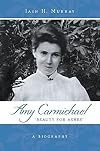
Like London buses so with biographies of Christian women it seems. This in is quite a contrast to that of Mrs Lloyd-Jones. Iain Murray commends the larger biographies by Houghton and Elliot but this little book is very useful in its ability not only to give the basic story but to attempt some perceptive theological analysis as well. A danger for those who are Reformed in their theology is to dismiss those who they do not know as being overtly on the same page theologically. In the case of show more Amy Carmichael, Murray argues, that would be a mistake, as despite some obvious issues, here is a woman who with great tenacity and commitment lived for God's glory and did a massive amount of good in her time. Do get hold of this very challenging little book and learn the story of one of God's servants. One of Murray's hopes is to produce an interest in her poetry and other works. It will be interesting to know if that happens. show less
Lists
You May Also Like


Statistics
- Works
- 351
- Also by
- 2
- Members
- 12,674
- Popularity
- #1,845
- Rating
- 4.4
- Reviews
- 64
- ISBNs
- 60
- Languages
- 5
- Favorited
- 9
