
Kyle R. Hughes
Author of Teaching for Spiritual Formation: A Patristic Approach to Christian Education in a Convulsed Age
Works by Kyle R. Hughes
Tagged
Common Knowledge
There is no Common Knowledge data for this author yet. You can help.
Members
Reviews
Much has been said and written about the Father and the Son in terms of the Godhead and the Trinity; comparatively far fewer studies exist in terms of the Spirit.
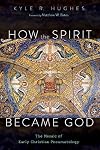
How the Spirit Became God: The Mosaic of Early Christian Pneumatology represents a great contribution to understanding the development in understanding of the role of the Holy Spirit and His divinity.
The author charted the development of “orthodox” pneumatology from the days after the Apostles until the “mature” conciliar show more pronouncements at the end of the fourth century.
Throughout he did well at demonstrating how the early Christian “church fathers” articulated and formulated their understanding of the Spirit based upon their reflection upon what the Spirit had made known in Scripture, in light of the various potential alternatives which arose from the Gnostics, Montanists, Pneumatomachians, etc, and in light of the perceived continued work and experience of the Spirit in and among Christians and the church.
He approached the development in terms of triads: he considered the original formulations and developments within the Gospel of John, the Epistle of Barnabas, and Justin Martyr. Then the perspectives of Irenaeus, Tertullian, and Origen, understanding their perspectives in light of what had come before and according to their own situations with the Montanists, Gnostics, etc. The third triad would be Athanasius, Didymus the Blind, and Basil of Caesarea, also in light of those who came before them, and in view of the resistance of the Pneumatomachians.
All of these lead to the synthesis which represents modern “orthodoxy”: the Spirit not as a created divine being but fully God, One with the Father and the Son, with His own place in the divine economy. The author well laid out how these conclusions developed yet remained faithful to the witness of Scripture.
A lot of what has developed as Christian “orthodox” doctrine developed in similar ways. Various aspects of the truth did not require the depth of investigation and explication until alternative ideas were advanced which were perceived to stand at variance with the way God made things known in Christ through the Spirit according to the witness of Scripture. We could find this development in understanding embarrassing, and can certainly concede and grant aspects in which some “developments” were really digressions or ways in which people turned aside from the apostolic standards of faith and practice. But it would be unwise to consider all such developments as intrinsically suspect because they developed over time.
A highly recommended read in order to come to a better understanding of why the Holy Spirit is best understood to be a full Person of the Godhead and how this understanding well developed through experience and understanding of the witness of the Spirit in Scripture. show less
How the Spirit Became God: The Mosaic of Early Christian Pneumatology represents a great contribution to understanding the development in understanding of the role of the Holy Spirit and His divinity.
The author charted the development of “orthodox” pneumatology from the days after the Apostles until the “mature” conciliar show more pronouncements at the end of the fourth century.
Throughout he did well at demonstrating how the early Christian “church fathers” articulated and formulated their understanding of the Spirit based upon their reflection upon what the Spirit had made known in Scripture, in light of the various potential alternatives which arose from the Gnostics, Montanists, Pneumatomachians, etc, and in light of the perceived continued work and experience of the Spirit in and among Christians and the church.
He approached the development in terms of triads: he considered the original formulations and developments within the Gospel of John, the Epistle of Barnabas, and Justin Martyr. Then the perspectives of Irenaeus, Tertullian, and Origen, understanding their perspectives in light of what had come before and according to their own situations with the Montanists, Gnostics, etc. The third triad would be Athanasius, Didymus the Blind, and Basil of Caesarea, also in light of those who came before them, and in view of the resistance of the Pneumatomachians.
All of these lead to the synthesis which represents modern “orthodoxy”: the Spirit not as a created divine being but fully God, One with the Father and the Son, with His own place in the divine economy. The author well laid out how these conclusions developed yet remained faithful to the witness of Scripture.
A lot of what has developed as Christian “orthodox” doctrine developed in similar ways. Various aspects of the truth did not require the depth of investigation and explication until alternative ideas were advanced which were perceived to stand at variance with the way God made things known in Christ through the Spirit according to the witness of Scripture. We could find this development in understanding embarrassing, and can certainly concede and grant aspects in which some “developments” were really digressions or ways in which people turned aside from the apostolic standards of faith and practice. But it would be unwise to consider all such developments as intrinsically suspect because they developed over time.
A highly recommended read in order to come to a better understanding of why the Holy Spirit is best understood to be a full Person of the Godhead and how this understanding well developed through experience and understanding of the witness of the Spirit in Scripture. show less
Statistics
- Works
- 3
- Members
- 43
- Popularity
- #352,015
- Rating
- 4.5
- Reviews
- 1
- ISBNs
- 6