

Ben Crystal
Author of Shakespeare's Words: A Glossary and Language Companion
About the Author
Disambiguation Notice:
Not same person as Crystal Ben, illustrator, female. From official homepage (accessed 2015-12-03; c2012): " I am an artist with a BFA in Illustration. I graduated from the University of the Arts in 2012. My focus is fantasy themed illustrations for books or entertainment (concept art). I am currently a freelance illustrator." http://www.crystalben.com/about/
Works by Ben Crystal
Shakespeare's Original Pronunciation: Speeches and Scenes Performed as Shakespeare Would Have Heard Them (2012) — Narrator — 19 copies, 1 review
Associated Works
Tagged
Common Knowledge
- Birthdate
- 1977
- Gender
- male
- Education
- Lancaster University
- Occupations
- actor
producer
writer - Agent
- Curtis Brown, Ltd.
- Relationships
- Crystal, David (father)
- Nationality
- UK
- Birthplace
- Ascot, Berkshire, England, UK
- Places of residence
- Wokingham, Berkshire, England, UK
Holyhead, Isle of Anglesey, Wales, UK - Disambiguation notice
- Not same person as Crystal Ben, illustrator, female. From official homepage (accessed 2015-12-03; c2012): " I am an artist with a BFA in Illustration. I graduated from the University of the Arts in 2012. My focus is fantasy themed illustrations for books or entertainment (concept art).
I am currently a freelance illustrator." http://www.crystalben.com/about/ - Associated Place (for map)
- England, UK
Members
Reviews
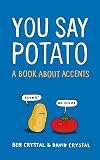
This "book about accents" is really mostly about UK accents, and I think is going to be of limited interest to most of my fellow Americans, unless they happen to be real Anglophiles or language nerds. Fortunately, I'm kind of both, so I found it at least mildly interesting, but not, I confess, nearly as interesting as I would have found a book about the accents of my home country. Even if we do have fewer of them.
Anyway, the authors are a father-and-son team of a linguist (David) and an show more actor (Ben), both of which have an obvious professional interest in the subject. It's written in a very breezy, informal style in which they pass the writing back and forth to each other, with David getting a little bit into the linguistic details of various accents, and Ben tossing out stories about his acting experiences, or sharing conversations he's had with other actors about using or not using their native accents. Both of them talk quite a bit about how various accents are perceived, and how those perceptions are changing.
Its all very light and readable, which isn't a bad thing. I've read some of David's solo books, and while they're interesting, they can get a bit dry. But I think it really goes a little bit far on the casual, chatty style and ends up feeling very slight. It's not bad, but it did leave me wishing for something a little meatier.
I was very interested, though, by Ben's impassioned discussion about performing Shakespeare using the pronunciation that the words would have had in Shakespeare's day. I got curious to hear some of this while I was reading about it, so I looked it up, and found a video of Ben Crystal himself doing Hamlet's most famous soliloquy in this fashion. I have to say, it wasn't at all what I expected, and it's weirdly appealing. show less
Anyway, the authors are a father-and-son team of a linguist (David) and an show more actor (Ben), both of which have an obvious professional interest in the subject. It's written in a very breezy, informal style in which they pass the writing back and forth to each other, with David getting a little bit into the linguistic details of various accents, and Ben tossing out stories about his acting experiences, or sharing conversations he's had with other actors about using or not using their native accents. Both of them talk quite a bit about how various accents are perceived, and how those perceptions are changing.
Its all very light and readable, which isn't a bad thing. I've read some of David's solo books, and while they're interesting, they can get a bit dry. But I think it really goes a little bit far on the casual, chatty style and ends up feeling very slight. It's not bad, but it did leave me wishing for something a little meatier.
I was very interested, though, by Ben's impassioned discussion about performing Shakespeare using the pronunciation that the words would have had in Shakespeare's day. I got curious to hear some of this while I was reading about it, so I looked it up, and found a video of Ben Crystal himself doing Hamlet's most famous soliloquy in this fashion. I have to say, it wasn't at all what I expected, and it's weirdly appealing. show less
This book aims to offer ways to make Shakespeare accessible to those who may have been put off reading him due to perceiving his works as too impenetrable or difficult. It aims to do this not by dumbing the works down, but by putting them into their historical context and explaining how the Bard's use of metre in composing the verse that forms the bulk of most of his plays offers clues to his choice of words and to the emotional and mental make up of the characters he portrays. I think he show more succeeds very well in this aim. One of the key points of historical context to remember is that the plays were not written to be read as texts; they were written to be watched on a single occasion, being performed by a regular group of players (the Lord Chamberlain's Men in Elizabeth's reign/the King's Men in James I's) who would have a couple of dozen plays on the go at any one time. The plays were effectively the soap operas of their day - definitely popular culture and not "high brow". Indeed the composition of the troupe of players changing very little across the years, Shakespeare was in practice writing for specific individuals who he knew would be playing those parts; for example, the character of the clown character in the plays apparently changed when a different player with a different approach took over those roles. This is fascinating stuff and a great read (just half a point deducted for the occasional irritating colloquialism and perhaps slightly too lengthy over analysis of the metrical form). show less
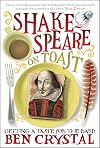
Crystal's book isn't exactly the entry level guide to Shakespeare that the blurbs bill it to be, since it spends much of its page count explaining how Shakespeare used Iambic Pentameter to portray not just his characters' words, but their state of mind, while including directions for the actors at the same time using missing beats in the 10 syllable line. For someone who has spent at least a little time with the Bard's works, Crystal's actor's perspective on how to read (and perform) show more Shakespeare is rather novel, but I found it convincing. After reading this book, you will agree with Crystal's initial premise: that Shakespeare needs to be experienced out loud, preferably in a theater, rather than read on your couch. He is an agreeable companion and a pretty good writer. Actually, anyone who can make you read page after page about iambic pentameter without falling asleep or going mad may be better than a pretty good writer.... show less
As a recent convert to Shakespeare, I found this book invaluable. I used to think Shakespeare was stuffy, boring and confusing. Ben Crystal LOVES Shakespeare; that much is evident from the way he writes about him in this book – but that wasn’t always the case – and to me, that made me feel confident about this book (he gets that people find Shakespeare unapproachable). I’m am still in the early stages of discovering the beauty of Shakespeare’s work, and I can honestly say that if I show more had had this book when I was at school, I probably would have discovered the beauty of it years ago!
Shakespeare on Toast is sort of like a key to unlocking the Bard’s work. As Crystal acknowledges, you don’t have to really analyse or study Shakespeare to enjoy his plays (or his sonnets, although this book concentrates more on the plays), but a bit of background knowledge and understanding will really enhance your enjoyment. Crystal states clearly that his book is not a full guide to Shakespeare, nor is it intended to be, but it will provide you with all the tools you need to understand his plays a bit better, and thus get more out of them. For example, the way Shakespeare uses ‘thou’ and ‘you’ to different effect; this had never occurred to me before, but once pointed out, the way in which he used these words, and his intention in doing so, become clear.
There is also a section of the book devoted to the dreaded iambic pentameter, the form of verse in which most of Shakespeare’s work is written. When I studied poetry, I LOATHED iambic pentameter – or rather, I loathed trying to get to grips with it. However, here it is laid out plainly, and it suddenly became clear to me.
The book is written in a chatty, laid back style, and as one of the quotes on the back says, it’s like going to the theatre with a knowledgeable friend. I would strongly recommend anyone with a even a passing interest in Shakespeare to read this book. Terrific! show less
Shakespeare on Toast is sort of like a key to unlocking the Bard’s work. As Crystal acknowledges, you don’t have to really analyse or study Shakespeare to enjoy his plays (or his sonnets, although this book concentrates more on the plays), but a bit of background knowledge and understanding will really enhance your enjoyment. Crystal states clearly that his book is not a full guide to Shakespeare, nor is it intended to be, but it will provide you with all the tools you need to understand his plays a bit better, and thus get more out of them. For example, the way Shakespeare uses ‘thou’ and ‘you’ to different effect; this had never occurred to me before, but once pointed out, the way in which he used these words, and his intention in doing so, become clear.
There is also a section of the book devoted to the dreaded iambic pentameter, the form of verse in which most of Shakespeare’s work is written. When I studied poetry, I LOATHED iambic pentameter – or rather, I loathed trying to get to grips with it. However, here it is laid out plainly, and it suddenly became clear to me.
The book is written in a chatty, laid back style, and as one of the quotes on the back says, it’s like going to the theatre with a knowledgeable friend. I would strongly recommend anyone with a even a passing interest in Shakespeare to read this book. Terrific! show less
Awards


You May Also Like


Associated Authors
Statistics
- Works
- 12
- Also by
- 1
- Members
- 1,445
- Popularity
- #17,791
- Rating
- 4.1
- Reviews
- 34
- ISBNs
- 30
- Favorited
- 1
