
Stanley W. Wells
Author of The Shakespeare Book: Big Ideas Simply Explained
About the Author
Works by Stanley W. Wells
Shakespeare and Co.: Christopher Marlowe, Thomas Dekker, Ben Jonson, Thomas Middleton, John Fletcher and the Other Players in His Story (2007) 316 copies, 6 reviews
William Shakespeare: A Very Short Introduction (Very Short Introductions) (2015) 75 copies, 1 review
Shakespeare Survey 40: Current Approaches to Shakespeare through Language, Text and Theatre (1987) 10 copies, 1 review
Modernizing Shakespeare's Spelling: With Three Studies of the Text of Henry V by Gary Taylor (1979) 7 copies
Re-editing Shakespeare for the Modern Reader: Based on Lectures Given at the Folger Shakespeare Library, Washington, D.C. (1984) 5 copies
The first annual Shakespeare Globe lecture: Staging Shakespeare's apparitions and dream visions 2 copies
History of King Lear 1 copy
'"O Rare Ben Jonson"' in NYRB 59/7, 26 April 2012 [review of Donaldson's 'Ben Jonson: a life'] 1 copy
Associated Works
4 Plays: Henry IV, Part I; Henry IV, Part II; Henry V; Richard II (1994) — Editor, some editions — 146 copies
Shakespeare Up Close: Reading Early Modern Texts (Arden Shakespeare Library) (2012) — Contributor — 15 copies
Tagged
Common Knowledge
- Legal name
- Wells, Stanley William
- Birthdate
- 1930-05-21
- Gender
- male
- Education
- University College London
University of Birmingham - Occupations
- Shakespearean scholar
writer
editor - Organizations
- University of Birmingham
Shakespeare Birthplace Trust - Nationality
- UK
- Birthplace
- Hull, Yorkshire, England, UK
- Places of residence
- Stratford-upon-Avon, Warwickshire, England, UK
- Associated Place (for map)
- England, UK
Members
Reviews
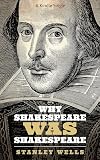
We live in an age of fake news and conspiracy theories. But, in this excellent (and often amusing) book, Shakespeare expert Stanley Wells shows that this is not a new phenomenon. The ridiculous conspiracy theory which claims that William Shakespeare did not really write the Shakespeare plays and poems dates back to the middle of the nineteenth century. Today, sadly, even the great “I, Claudius” actor, Derek Jacobi, is spouting this nonsense.
A lot of the case put forward by the show more “Shakespeare deniers” rests on elitism and snobbery. Shakespeare was born a commoner, but he received a very good grammar school education. However, that is not enough for those who think that someone talented enough to write such brilliant stuff must have been an aristocrat and/or university-educated.
Wells shows that, although there are things we do not know about Shakespeare, we certainly know enough to show that he DID write what is attributed to him. The evidence is conclusive.
Unfortunately, people who latch on to conspiracy theories are not interested in evidence. For example, the Trump supporters who believe that Biden stole the election from Trump are blind to the true facts: they believe what they WANT to believe.
Of course, the illusions of Trump supporters are more dangerous than those of Shakespeare deniers, so a better parallel might be those followers of the conspiracy theory which claims that Charles Darwin stole the credit for the theory of evolution by natural selection from Alfred Russel Wallace.
Wallace certainly deserves credit for coming up with the theory independently from Darwin. But there is written evidence that Darwin had developed his theory long before he published “On the Origin of Species” and long before Wallace had his brainwave. In fact, Wallace himself stated that “...the idea occurred to Darwin in October 1838, nearly twenty years earlier than to myself (in February 1858); and that during the whole of that twenty years he had been laboriously collecting evidence...”
But clear-cut evidence like this will not convince those who are wearing blinkers. Similarly, blinkered Shakespeare deniers will not want to be convinced by Wells.
In arguing against conspiracy theories, I am not saying that we should unquestioningly accept the dominant ideas of our times. When our rulers and politicians, as well as the media, are constantly being caught out in lies and distortions, it’s not surprising that many people doubt the established view on many topics. And I myself agree with Karl Marx’s view that “The ideas of the ruling class are in every epoch the ruling ideas."
But while challenging a dominant ideology is a good thing, following conspiracy theories (especially political ones, which usually come from the extreme right) is a diversion, and can be dangerous as well as unjust.
To challenge established ideas, critics need to come up with convincing EVIDENCE, and the “evidence” produced by the Shakespeare deniers is comprehensively shot down by Wells in this book. The contortions that the deniers often go through to justify their arguments is laughable. Wells also produces lots of evidence to show that the Stratford Shakespeare really WAS the Shakespeare who wrote the plays. For me, the short section on the First Folio alone is enough for Wells to win the argument hands down.
PS: After reading my review, a friend of mine has pointed out that, in addition to the points I have made, there is another possible factor motivating the deniers. Apparently, Jonathan Bate argues in his book “The Genius of Shakespeare” that it is the result of Shakespeare being built up into a such a “genius” figure: this makes some people want to knock him down. This same motivation could also apply to many of those who are drawn to the anti-Darwin conspiracy theory which I have mentioned above. show less
A lot of the case put forward by the show more “Shakespeare deniers” rests on elitism and snobbery. Shakespeare was born a commoner, but he received a very good grammar school education. However, that is not enough for those who think that someone talented enough to write such brilliant stuff must have been an aristocrat and/or university-educated.
Wells shows that, although there are things we do not know about Shakespeare, we certainly know enough to show that he DID write what is attributed to him. The evidence is conclusive.
Unfortunately, people who latch on to conspiracy theories are not interested in evidence. For example, the Trump supporters who believe that Biden stole the election from Trump are blind to the true facts: they believe what they WANT to believe.
Of course, the illusions of Trump supporters are more dangerous than those of Shakespeare deniers, so a better parallel might be those followers of the conspiracy theory which claims that Charles Darwin stole the credit for the theory of evolution by natural selection from Alfred Russel Wallace.
Wallace certainly deserves credit for coming up with the theory independently from Darwin. But there is written evidence that Darwin had developed his theory long before he published “On the Origin of Species” and long before Wallace had his brainwave. In fact, Wallace himself stated that “...the idea occurred to Darwin in October 1838, nearly twenty years earlier than to myself (in February 1858); and that during the whole of that twenty years he had been laboriously collecting evidence...”
But clear-cut evidence like this will not convince those who are wearing blinkers. Similarly, blinkered Shakespeare deniers will not want to be convinced by Wells.
In arguing against conspiracy theories, I am not saying that we should unquestioningly accept the dominant ideas of our times. When our rulers and politicians, as well as the media, are constantly being caught out in lies and distortions, it’s not surprising that many people doubt the established view on many topics. And I myself agree with Karl Marx’s view that “The ideas of the ruling class are in every epoch the ruling ideas."
But while challenging a dominant ideology is a good thing, following conspiracy theories (especially political ones, which usually come from the extreme right) is a diversion, and can be dangerous as well as unjust.
To challenge established ideas, critics need to come up with convincing EVIDENCE, and the “evidence” produced by the Shakespeare deniers is comprehensively shot down by Wells in this book. The contortions that the deniers often go through to justify their arguments is laughable. Wells also produces lots of evidence to show that the Stratford Shakespeare really WAS the Shakespeare who wrote the plays. For me, the short section on the First Folio alone is enough for Wells to win the argument hands down.
PS: After reading my review, a friend of mine has pointed out that, in addition to the points I have made, there is another possible factor motivating the deniers. Apparently, Jonathan Bate argues in his book “The Genius of Shakespeare” that it is the result of Shakespeare being built up into a such a “genius” figure: this makes some people want to knock him down. This same motivation could also apply to many of those who are drawn to the anti-Darwin conspiracy theory which I have mentioned above. show less
"I had a curious encounter with one of Rutland’s supporters many years ago. I received a phone call from a visitor from Vancouver telling me that he had a photograph of an Elizabethan portrait of the Earl in which he was holding a copy of Hamlet. Would I like to see it?
Naturally I would, and I invited the elderly gentleman to my office. On arrival he produced a photograph of a genuine portrait of Rutland. But I saw no book.
‘Where’, I asked, ‘is Hamlet?’
‘There’, he said, show more pointing to a spot in the middle of the photograph. It was empty. A somewhat embarrassed conversation ensued, during which my visitor revealed that he was the reincarnation of the Earl. As he departed he told me that he had written a musical on the topic, as yet unperformed."
I truly love Stanley Wells: He's made Shakespeare's life and works accessible for decades and I have yet to find a more passionate and to-the-point promoter of any work of what we now call a literary classic.
What I had not appreciated so far is how many complete and utter nutters Wells must encounter on a regular basis. No wonder he doesn't hold back in his refutations of whatever bogus and completely unfounded claims enter the public sphere with respect to Wells' field of expertise.
Why Shakespeare WAS Shakespeare was an article that was published by Wells in 2014, seemingly in response to two other works in particular: the Emmerich film Anonymous and Diana Price's revised edition of Shakespeare's Unorthodox Biography (2012).
In it Wells summarises the very fundamental flaws in the Anti-Stratfordian argument, and he does so in a riveting gallop of snark mixed with solid argument and referencing for further reading.
Brilliant. show less
Naturally I would, and I invited the elderly gentleman to my office. On arrival he produced a photograph of a genuine portrait of Rutland. But I saw no book.
‘Where’, I asked, ‘is Hamlet?’
‘There’, he said, show more pointing to a spot in the middle of the photograph. It was empty. A somewhat embarrassed conversation ensued, during which my visitor revealed that he was the reincarnation of the Earl. As he departed he told me that he had written a musical on the topic, as yet unperformed."
I truly love Stanley Wells: He's made Shakespeare's life and works accessible for decades and I have yet to find a more passionate and to-the-point promoter of any work of what we now call a literary classic.
What I had not appreciated so far is how many complete and utter nutters Wells must encounter on a regular basis. No wonder he doesn't hold back in his refutations of whatever bogus and completely unfounded claims enter the public sphere with respect to Wells' field of expertise.
Why Shakespeare WAS Shakespeare was an article that was published by Wells in 2014, seemingly in response to two other works in particular: the Emmerich film Anonymous and Diana Price's revised edition of Shakespeare's Unorthodox Biography (2012).
In it Wells summarises the very fundamental flaws in the Anti-Stratfordian argument, and he does so in a riveting gallop of snark mixed with solid argument and referencing for further reading.
Brilliant. show less
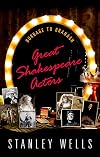
Stanley Wells’ Great Shakespeare Actors is a wonderful read for fans of theatre, literature, and history. Besides providing us with descriptions of some of history’s great actors at work, Wells gives readers a sense of the evolving understanding of Shakespeare’s works and of actors’ interpretations of them: “There is, we might say, no such thing as a play: there are only scripts which come to life in different ways each time they are performed.”
Wells is working with challenging show more material. We have very little documentary evidence regarding early performers of the plays, sometimes a single painting, sometimes not even that. He provides illustrations wherever possible, and the number of these increase as the book progresses.
Wells looks at the types of roles these early actors were known for and at first-person accounts of viewing plays in order to attempt a written portrait of their work. For example, given their differences as texts, it’s likely the roles of Falstaff and Macbeth’s porter were written for different actors: the first a clown (perhaps the era’s Will Ferrell); the second a much darker sort of comic (maybe a Lewis Black).
Wells also moves us from the era of men-only acting to today’s gender-inclusive theatre, and he pays attention to male roles mastered by women (Sarah Bernhardt’s Hamlet, for instance), as well as the historical use of boys to play female characters. Why do so many of Shakespeare’s female characters find themselves in situations that require cross-dressing? For the plot, yes, but also to get boy actors out of skirts whenever possible.
Given that Great Shakespeare Actors is a static text attempting to depict a highly plastic medium, at times the reader will have difficulty “seeing” what Wells sees as he writes. Nonetheless, the specificity of Wells’ writing brings to life performances that remain almost undocumented. show less
Wells is working with challenging show more material. We have very little documentary evidence regarding early performers of the plays, sometimes a single painting, sometimes not even that. He provides illustrations wherever possible, and the number of these increase as the book progresses.
Wells looks at the types of roles these early actors were known for and at first-person accounts of viewing plays in order to attempt a written portrait of their work. For example, given their differences as texts, it’s likely the roles of Falstaff and Macbeth’s porter were written for different actors: the first a clown (perhaps the era’s Will Ferrell); the second a much darker sort of comic (maybe a Lewis Black).
Wells also moves us from the era of men-only acting to today’s gender-inclusive theatre, and he pays attention to male roles mastered by women (Sarah Bernhardt’s Hamlet, for instance), as well as the historical use of boys to play female characters. Why do so many of Shakespeare’s female characters find themselves in situations that require cross-dressing? For the plot, yes, but also to get boy actors out of skirts whenever possible.
Given that Great Shakespeare Actors is a static text attempting to depict a highly plastic medium, at times the reader will have difficulty “seeing” what Wells sees as he writes. Nonetheless, the specificity of Wells’ writing brings to life performances that remain almost undocumented. show less
Wonderful, wonderful, and still more wonderful!
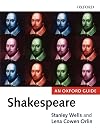
This is, for my money, the most readable, approachable, intelligent introduction to Shakespeare studies that I've yet found. Each of the book's 45 chapters is written by a different scholar, and edited by Stanley Wells and Lena Cowen Orlin. Over the course of this 45 chapters, readers are given a detailed but comprehensive introduction to the headline topics. This includes Shakespeare's life from birth to death; the theatres and culture of his show more time; how plays were written, performed, and printed; Shakespeare's genres; close readings of several of the plays; performance practice through the ages; some of the main branches of Shakespearean criticism, ranging from post-colonial and feminist to new historicism; Shakespeare on film and in translation; and Shakespeare online. While the last of those categories is hopelessly outdated, the rest remains invaluable.
What the editors get right is that each chapter is written with a scholarly air, rather than presenting "Shakespeare for Dummies!". At the same time, I wish that some of my Penguin or Arden editions chose to include a few of these morsels. The plain-speaking explanation of the difference between iambs, trochees and spondees will be of much use to someone approaching Shakespeare with trepidation. Each chapter also includes a bibliography for suggested reading, which should be able to direct the keen reader to a wealth of knowledge.
Of course, at the end of the day, most chapters are roughly 10 pages long. This is an overview, and a ground-level one at that. But, after all, the joy of Shakespeare is in the discovery. I recommend this book to all - even if you're fairly well-read - as you'll find many avenues to explore in the future. show less
This is, for my money, the most readable, approachable, intelligent introduction to Shakespeare studies that I've yet found. Each of the book's 45 chapters is written by a different scholar, and edited by Stanley Wells and Lena Cowen Orlin. Over the course of this 45 chapters, readers are given a detailed but comprehensive introduction to the headline topics. This includes Shakespeare's life from birth to death; the theatres and culture of his show more time; how plays were written, performed, and printed; Shakespeare's genres; close readings of several of the plays; performance practice through the ages; some of the main branches of Shakespearean criticism, ranging from post-colonial and feminist to new historicism; Shakespeare on film and in translation; and Shakespeare online. While the last of those categories is hopelessly outdated, the rest remains invaluable.
What the editors get right is that each chapter is written with a scholarly air, rather than presenting "Shakespeare for Dummies!". At the same time, I wish that some of my Penguin or Arden editions chose to include a few of these morsels. The plain-speaking explanation of the difference between iambs, trochees and spondees will be of much use to someone approaching Shakespeare with trepidation. Each chapter also includes a bibliography for suggested reading, which should be able to direct the keen reader to a wealth of knowledge.
Of course, at the end of the day, most chapters are roughly 10 pages long. This is an overview, and a ground-level one at that. But, after all, the joy of Shakespeare is in the discovery. I recommend this book to all - even if you're fairly well-read - as you'll find many avenues to explore in the future. show less
Lists
Awards

You May Also Like


Associated Authors
Statistics
- Works
- 75
- Also by
- 21
- Members
- 2,720
- Popularity
- #9,443
- Rating
- 4.1
- Reviews
- 38
- ISBNs
- 192
- Languages
- 6