
Marjorie Garber
Author of Shakespeare after All
About the Author
Marjorie Garber is William R. Kenan Jr. Professor of English and of Visual and Environmental Studies at Harvard University. Her many books include Loaded Words (Fordham); Symptoms of Culture; Quotation Marks; Shakespeare After All; Vested Interests: Cross-Dressing and Cultural Anxiety; and The Use show more and Abuse of Literature. show less
Image credit: Photo by Jodi Hilton, for the New York Times
Works by Marjorie Garber
The Turn to Ethics (CultureWork: A Book Series from the Center for Literacy and Cultural Studies at Harvard) (2000) — Editor — 23 copies
Media Spectacles (CultureWork: A Book Series from the Center for Literacy and Cultural Studies at Harvard) (1993) 23 copies
One Nation Under God?: Religion and American Culture (CultureWork: A Book Series from the Center for Literacy and Cultural Studies at Harvard) (1999) — Editor — 19 copies
A Manifesto for Literary Studies (Short Studies from the Walter Chapin Simpson Center for the Humanities) (2004) 14 copies, 1 review
Associated Works
Lieutenant Nun: Memoir of a Basque Transvestite in the New World (1829) — Foreword, some editions — 392 copies, 16 reviews
Shakespeare in Our Time: A Shakespeare Association of America Collection (2016) — Contributor — 17 copies
Research Opportunities in Renaissance Drama XXII (1979) — Contributor — 1 copy
Tagged
Common Knowledge
- Canonical name
- Garber, Marjorie
- Birthdate
- 1944-06-11
- Gender
- female
- Education
- Yale University (M.Phil|1969|Ph.D.|1969)
Swarthmore College (B.A.|1966) - Occupations
- literature professor
- Organizations
- Harvard University
Haverford College
Yale University - Awards and honors
- American Philosophical Society (2012)
- Relationships
- Johnson, Barbara (partner)
- Nationality
- USA
- Birthplace
- Rockville Centre, Long Island, New York, USA
- Places of residence
- Cambridge, Massachusetts, USA
Nantucket, Massachusetts, USA - Associated Place (for map)
- Massachusetts, USA
Members
Reviews
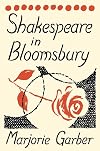
I had been eyeing this for a while, and snaffled it with a Christmas Book Token. What a delight for an acquaintance of Shakespeare and a friend of many dead friends (see below).
The Bloomsbury group where great lovers of Shakespeare's words. They read him for pleasure, and were on the reading/hearing side of the debate about reading or performance, although they did also attend performances, and Maynard Keynes ran a theatre and George 'Dadie' Rylands produced plays.
Many of the group were show more great readers out loud, or loved to be read out loud too. Shakespeare was discussed, debated and written about like a friend who had just left the room. Hence my comment about dead friends. Mine include. Virginia Woolf, James Baldwin, Vincent Van Gogh and Oscar Wilde. A friend said I spoke of them as if I knew them personally, and I feel I do. Shakespeare was a personal friend of the Bloomsbury Group, and a good acquaintance of mine who I hope will one day become a friend. show less
The Bloomsbury group where great lovers of Shakespeare's words. They read him for pleasure, and were on the reading/hearing side of the debate about reading or performance, although they did also attend performances, and Maynard Keynes ran a theatre and George 'Dadie' Rylands produced plays.
Many of the group were show more great readers out loud, or loved to be read out loud too. Shakespeare was discussed, debated and written about like a friend who had just left the room. Hence my comment about dead friends. Mine include. Virginia Woolf, James Baldwin, Vincent Van Gogh and Oscar Wilde. A friend said I spoke of them as if I knew them personally, and I feel I do. Shakespeare was a personal friend of the Bloomsbury Group, and a good acquaintance of mine who I hope will one day become a friend. show less
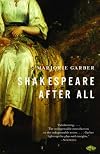
Articulated Shakespeare: "Shakespeare After All" by Marjorie Garber I've always tried to avoid judging a 16th-17th century playwright by 21st century standards. To truly appreciate Shakespeare's work one has to make the effort of being conversant with 16th-17th century ecosystem (literature, culture, etc.). In so many ways, Shakespeare’s characters created the archetypes that define who we are (or at least give us a language to understand ourselves). What I liked the most about Garber's show more book was her ability to reading into the plays in some plays and reading out of them in some others. At the end of the book, almost all of her choices seemed right to me. In some instances I didn't agree with her reading. "Pericles" ("The Incest Riddle" seemed far-fetched to say the least) and the "Winter's Tale" come to mind.
Read the rest on my blog if you feel so inclined. show less
Read the rest on my blog if you feel so inclined. show less
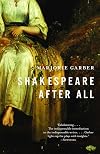
Really rather good, although - as with so many books of this type - its target audience is a little ... vague.
In terms of accessibility for a general reader, Garber gives us a neat precis of Shakespeare's life and times, followed by analyses of all the plays in the canon. No play misses out, and all are treated fairly. At the same time, this is not an "introduction to Shakespeare", no matter what the blurb may try to sell you. All of the chapters assume at least some familiarity with the show more play in question, or are obscure enough about plot that you'd need to have some detail to begin with. This is not an account of the play's sources, history, or fate on the stage and screen; it's a popular academic treatise. With that said, if you're building up an amateur's Shakespeare library, this is an interesting read. What may be frustrating is an inevitability: there is so much to talk about with each play that, like most books of "essays", Garber tends to pick a few points about each play and then discuss them. This is not anything like a comprehensive overview (after all, most chapters are about 30 pages), but it tackles some of the key questions academics and directors ask about each work.
For the academic reader, I'm not sure how I feel. It seems as if Garber got the commission for the book by promising a general introduction, but she can't quite keep her intelligence at bay. And, hey, I'm not complaining; her insights are valid and well-written. Unlike most Shakespeare writers, I almost never feel as if she's wandering down a rabbit-hole of philosophical ramblings. No, Garber's analyses are - although decidedly deskbound - certainly drawn from real examination of the plays in the context of William Shakespeare's time. There are a few niggles depending on your taste (for me, I dislike that old-school scholar thing of describing a character using dashes, e.g. "Lear is her father-king"), but each to their own.
The challenge is that I'm not sure if the book unites the two worlds very well. Some of the chapters are quite high-minded, and reveal little to the general reader about the play. At the same time, there were very few surprises in the book for me (and thus, I'd assume, even fewer for the full-time Shakespeare academic). It doesn't seem as if Garber is really adding to the hefty discussion on the Bard, but nor is she a Richard Dawkins, able to illuminate a fascinating-but-niche world for the general public.
I should note this is a positive review, indeed a 5-star review (well, 4.6) - in part because I admire Garber's writing, her intelligence, and her views, and in part because as a Shakespeare lover, I was engaged on every single damn page. I heartily recommend this book to people in an "in-between" stage of Shakespeare scholarship, but I'd champion the great populists like Stephen Greenblatt and Stanley Wells for those looking to get their head around the plays in an intellectual-but-understandable way. show less
In terms of accessibility for a general reader, Garber gives us a neat precis of Shakespeare's life and times, followed by analyses of all the plays in the canon. No play misses out, and all are treated fairly. At the same time, this is not an "introduction to Shakespeare", no matter what the blurb may try to sell you. All of the chapters assume at least some familiarity with the show more play in question, or are obscure enough about plot that you'd need to have some detail to begin with. This is not an account of the play's sources, history, or fate on the stage and screen; it's a popular academic treatise. With that said, if you're building up an amateur's Shakespeare library, this is an interesting read. What may be frustrating is an inevitability: there is so much to talk about with each play that, like most books of "essays", Garber tends to pick a few points about each play and then discuss them. This is not anything like a comprehensive overview (after all, most chapters are about 30 pages), but it tackles some of the key questions academics and directors ask about each work.
For the academic reader, I'm not sure how I feel. It seems as if Garber got the commission for the book by promising a general introduction, but she can't quite keep her intelligence at bay. And, hey, I'm not complaining; her insights are valid and well-written. Unlike most Shakespeare writers, I almost never feel as if she's wandering down a rabbit-hole of philosophical ramblings. No, Garber's analyses are - although decidedly deskbound - certainly drawn from real examination of the plays in the context of William Shakespeare's time. There are a few niggles depending on your taste (for me, I dislike that old-school scholar thing of describing a character using dashes, e.g. "Lear is her father-king"), but each to their own.
The challenge is that I'm not sure if the book unites the two worlds very well. Some of the chapters are quite high-minded, and reveal little to the general reader about the play. At the same time, there were very few surprises in the book for me (and thus, I'd assume, even fewer for the full-time Shakespeare academic). It doesn't seem as if Garber is really adding to the hefty discussion on the Bard, but nor is she a Richard Dawkins, able to illuminate a fascinating-but-niche world for the general public.
I should note this is a positive review, indeed a 5-star review (well, 4.6) - in part because I admire Garber's writing, her intelligence, and her views, and in part because as a Shakespeare lover, I was engaged on every single damn page. I heartily recommend this book to people in an "in-between" stage of Shakespeare scholarship, but I'd champion the great populists like Stephen Greenblatt and Stanley Wells for those looking to get their head around the plays in an intellectual-but-understandable way. show less
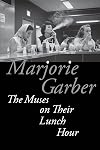
A collection of Garber’s essays on the humanities and Shakespeare in particular. The distinctive contribution of literary scholarship, she argues, is a way of asking questions “about the way something means, rather than what it means, or even why.” This requires “close and passionate attention to the rich allusiveness, deep ambivalence, and powerful slipperiness that is language in action.” On change over time, she argues that older authors read a “canon,” the works of show more accomplished predecessors, while more recent ones read “episodically and in a non-linear or non-historicized fashion, in part because there’s so much to read and ‘sampling’ it has no compelling direction.” Twentieth century authors read their peers, not their predecessors. Her discussion of the anxiety of influence, which might also be the anxiety of impotence, is too complex to summarize, but thought-provoking, bringing in big data and the lack of anxiety many authors have about the past.
Garber also discusses theater and postmodern theory as linked in their resistance to the idea of a full, complete character, rather than a fragment of identity, and then connects that to “projective identification” in current political thinking and the paranoid style. This discussion leads her, in her allusive way, to the current valorization of STEM fields over the humanities, as colleges’ ways of projecting that which is abject onto a small part of what is in fact the educational project as a whole. The humanities, “already prone to self-doubt and self devaluation (they are ‘useless,’ they are ‘old,’ they are ‘light,’ they are speculative rather than empirical, they take too long to produce degrees, they are hermetic rather than accessible), become readily complicit in the fantasy of the university that none of these attributes attach to it.”
She ends with discussing “Shakespeare” as the representative of these attitudes towards the humanities. Shakespeare is now understood as themes and plots, not language; the plays are “owned” by the humanities in general, not English departments. Garber urges a variant of “strategic essentialism” for the humanities, what she calls “strategic generalization”—affirmatively using the power of the best broad-based lecture courses (like hers, of which I am a veteran) to defend the value of the humanities. The Shakespeare lecture has, she contends, for a century been a central, memorable place for lectures and thus it is a site from which we can defend the pedagogical project of the humanities at large. (Garber recognizes that her history is a history of Harvard Shakespeare lectures, not community college or other lectures, but she sees it as a model to aspire to.) Some best practices of the past, she argues, should be understood as current best practices as well: “asking students to read the text twice through before, or perhaps instead of, reading critical essays; the memorization and recitation of passages; vivid classroom performance (by the instructor and not just the students); and indeed philology, if by that we might mean, today, among other things, an acquaintance with word history and derivation through the OED.” Grabbing onto the podium is literally a way to retake prominence in the coversation about good education. Today’s students “are often engaged by performance, more so sometimes than they are willing to admit. When performance is combined with personal commitment, an intimate knowledge of the work under discussion, and a manifest respect for intellectual exchange, the effects can be exhilarating. Add Shakespeare to the mix, and the odds for success increase, as it were, dramatically.” show less
Garber also discusses theater and postmodern theory as linked in their resistance to the idea of a full, complete character, rather than a fragment of identity, and then connects that to “projective identification” in current political thinking and the paranoid style. This discussion leads her, in her allusive way, to the current valorization of STEM fields over the humanities, as colleges’ ways of projecting that which is abject onto a small part of what is in fact the educational project as a whole. The humanities, “already prone to self-doubt and self devaluation (they are ‘useless,’ they are ‘old,’ they are ‘light,’ they are speculative rather than empirical, they take too long to produce degrees, they are hermetic rather than accessible), become readily complicit in the fantasy of the university that none of these attributes attach to it.”
She ends with discussing “Shakespeare” as the representative of these attitudes towards the humanities. Shakespeare is now understood as themes and plots, not language; the plays are “owned” by the humanities in general, not English departments. Garber urges a variant of “strategic essentialism” for the humanities, what she calls “strategic generalization”—affirmatively using the power of the best broad-based lecture courses (like hers, of which I am a veteran) to defend the value of the humanities. The Shakespeare lecture has, she contends, for a century been a central, memorable place for lectures and thus it is a site from which we can defend the pedagogical project of the humanities at large. (Garber recognizes that her history is a history of Harvard Shakespeare lectures, not community college or other lectures, but she sees it as a model to aspire to.) Some best practices of the past, she argues, should be understood as current best practices as well: “asking students to read the text twice through before, or perhaps instead of, reading critical essays; the memorization and recitation of passages; vivid classroom performance (by the instructor and not just the students); and indeed philology, if by that we might mean, today, among other things, an acquaintance with word history and derivation through the OED.” Grabbing onto the podium is literally a way to retake prominence in the coversation about good education. Today’s students “are often engaged by performance, more so sometimes than they are willing to admit. When performance is combined with personal commitment, an intimate knowledge of the work under discussion, and a manifest respect for intellectual exchange, the effects can be exhilarating. Add Shakespeare to the mix, and the odds for success increase, as it were, dramatically.” show less
Lists
Awards


You May Also Like


Associated Authors
Statistics
- Works
- 30
- Also by
- 8
- Members
- 2,866
- Popularity
- #8,946
- Rating
- 4.1
- Reviews
- 30
- ISBNs
- 113
- Languages
- 4
- Favorited
- 5