
Stephen Greenblatt
Author of The Swerve: How the World Became Modern
About the Author
Stephen Greenblatt is a literary critic, theorist and scholar. He is the author of Three Modern Satirists: Waugh, Orwell, and Huxley (1965); Renaissance Self-Fashioning: From More to Shakespeare (1980); Learning to Curse: Essays in Early Modern Culture (1990); Redrawing the Boundaries: The show more Transformation of English and American Literary Studies (1992); The Norton Shakespeare (1997); Will in the World: How Shakespeare Became Shakespeare (2004); Shakespeare's Freedom (2010); and The Swerve: How the World Became Modern (2011). (Bowker Author Biography) show less
Image credit: Bachrach
Works by Stephen Greenblatt
The Norton Anthology of English Literature, 8th Edition, Volume 1 (A, B, C) (2005) 975 copies, 3 reviews
The Norton Anthology of English Literature, 8th Edition, Volume 2 (D, E, F) (2005) 644 copies, 1 review
The Norton Anthology of English Literature, 9th Edition, Volume A (2005) — Editor — 518 copies, 1 review
The Norton Anthology of English Literature, volume F: The Twentieth Century and After (2005) 328 copies
Dark Renaissance: The Dangerous Times and Fatal Genius of Shakespeare's Greatest Rival (2025) 266 copies, 7 reviews
Shakespearean Negotiations: The Circulation of Social Energy in Renaissance England (New Historicism, Studies in Cultura (1988) 176 copies, 1 review
The Norton Anthology of English Literature - Vol C: The Restoration and the Eighteenth Century: The Restoration and the Eighteens Century (2018) 166 copies
Shakespeare's Montaigne: The Florio Translation of the Essays, A Selection (New York Review Books Classics) (2014) — Editor — 158 copies
Redrawing the Boundaries: The Transformation of English and American Literary Studies (1992) 90 copies
The Norton Anthology of English Literature. Volume F: The Twentieth Century and the Twenty-First Century (2018) 88 copies
The Norton Anthology of English Literature: The Major Authors (History of Modern Europe Ser.) 47 copies
The Norton Anthology of English Literature, Volume A: The Middle Ages through the Restoration and the Eighteenth Century (2006) 47 copies
The Norton Anthology of English Literature (Tenth Edition) (Vol. Package 1: Volumes A, B, C) 23 copies
The Norton Anthology of English Literature: The Sixteenth and Early Seventeenth Century (2024) 5 copies
The Norton Anthology of English Literature: The Restoration and the Eighteenth Century, 11th Edition, Volume C (2024) 3 copies
Die Erfindung der Intoleranz: Wie die Christen von Verfolgten zu Verfolgern wurden (Historische Geisteswissenschaften. Frankfurter Vorträge) (2019) 3 copies
The Norton Anthology of English Literature, Eighth Edition, Volume 2: The Romantic Period Through the Twentieth Century 8th (egith) edition (2007) 2 copies
TheSwerve 1 copy
The Uncoupling 1 copy
The Straight Way Lost 1 copy
Associated Works
Religio Medici and Urne-Buriall (New York Review Books Classics) (2002) — Editor, some editions — 301 copies, 6 reviews
Shakespeare in Our Time: A Shakespeare Association of America Collection (2016) — Contributor — 17 copies
Tagged
Common Knowledge
- Canonical name
- Greenblatt, Stephen
- Legal name
- Greenblatt, Stephen Jay
- Birthdate
- 1943-11-07
- Gender
- male
- Education
- Yale University (B.A.|1964|Ph.D|1969)
Pembroke College, Cambridge (M.Phil.|1966) - Occupations
- professor
literary critic
literature scholar - Organizations
- University of California, Berkeley
Harvard University
Modern Language Association of America - Awards and honors
- American Academy of Arts and Sciences (1987)
American Philosophical Society (2007)
American Academy of Arts and Letters (2008)
Erasmus Institute Prize (2002)
Mellon Distinguished Humanist Award (2002)
William Shakespeare Award for Classical Theater (2005) (show all 10)
Wilbur Cross Medal (2010)
Pulitzer Prize for General Non-Fiction (2012)
Holberg Prize (2016)
Accademia degli Arcadi - Agent
- Jill Kneerim
- Relationships
- Targoff, Ramie (wife)
- Short biography
- Stephen Greenblatt is the John Cogan University Professor of the Humanities at Harvard University as well as a finalist for the Pulitzer Prize and the National Book Award for Nonfiction. He is the General Editor of The Norton Shakespeare and the General Editor of The Norton Anthology of English Literature. He divided his tme between Cambridge, Massachusetts, and Vermont. [from The Swerve (2011)
- Nationality
- USA
- Birthplace
- Boston, Massachusetts, USA
- Places of residence
- Boston, Massachusetts, USA
Cambridge, Massachusetts, USA
Berkeley, California, USA - Associated Place (for map)
- Massachusetts, USA
Members
Discussions
Combination Request in Combiners! (November 2024)
Reviews
Dark Renaissance: The Dangerous Times and Fatal Genius of Shakespeare’s Greatest Rival, Christopher Marlowe by Stephen Greenblatt
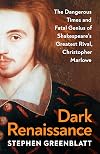
This informative biography is very much a “life and times,” although it is not as exhaustive as that characterization might suggest. From the outset, Greenblatt proceeds as if building a case for his proposed answer to the question of why young Christopher Marlowe’s life ended at knifepoint.
I read this immediately after Charles Nicholl’s book, The Reckoning, another answer to the same question. I was interested to see that Greenblatt praised Nicholl’s research but did not accept show more that author’s theory. Nicholl points the finger at the Earl of Essex, who was engaged in a desperate rivalry with another of Queen Elizabeth’s favorites, Sir Walter Ralegh, whose circle Marlowe frequented.
Greenblatt sees Marlowe’s fate as the culmination of the path he embarked on when, aged fourteen, this son of a struggling cobbler was awarded a scholarship to attend the King’s School in his native Canterbury. One of the many mysteries of Marlowe’s life is how his intellectual gifts were spotted, and by whom. How did he learn to read and write so that he could not only catch up with but surpass his classmates? His unlikely rise continued with another scholarship to Cambridge.
Education at that time meant drilling in Latin and Greek as training for serving the ruling class of England, whether as an attorney, government employee, or parish priest. But while most of his classmates viewed their exercises as an onerous burden, Marlowe fell in love with the texts and the classical world they opened to him. Heady stuff, for they conveyed a sceptical outlook that clashed with the rigid orthodoxy of the time. Looking back, it seems naive that students were expected to use these texts only to learn grammar and rhetoric, without the thoughts they embodied shaping a scholar’s mind.
But shape it they did in Marlowe’s case, as attested both by his daring plays and the free-thinking views he recklessly shared with others. It is because of these views, Greenblatt feels, that someone resolved to have Marlowe’s mouth stopped. Nicholls, too, notes these views and the charge of atheism attached to them, but seems not to find this serious enough to warrant death. Here Greenblatt, a leading Renaissance scholar, differs. He documents the horror that Marlowe and other free thinkers inspired. Greenblatt lays the ultimate responsibility for Marlowe’s killing on the queen herself. Not that she directly ordered it—a monarch rarely needs to. The order could have come from a zealous underling, confident that the queen would not be displeased.
We will likely never have a proven answer to this mystery. Still, these books—taken together—demonstrate that there is much consensus about the overall arc of Marlowe’s life, such as the overnight sensation of his Tamburlaine the Great with its innovative use of blank verse, which Marlowe’s contemporary Shakespeare employed with memorable skill. Moreover, there is near-certainty that Marlowe was recruited for government intelligence work while still a student at Cambridge, although it is naturally hard to document. The duplicitous world of spy, counter-spy, informer, and provocateur seems to have suited Marlowe. This doesn’t fully explain the presence of the three fellow denizens of the murky underworld of Elizabethan espionage at widow Bull’s house in Deptford on that May day in 1593, but it appears certain that Marlowe knew them.
There was much to interest me in this book. One chapter I particularly enjoyed was Chapter 10, Secret Sharers, exploring Marlowe’s acquaintance with Shakespeare, to the point of his likely contribution to the Henry VI trilogy. I never realized that, given the constant appetite for new plays, theater owners often teamed aspiring authors; authorship was more closely akin to screenwriting of our day than to writing for the modern theater.
Another one I enjoyed was Chapter 16, “Faustian Bargain,” which examines how Marlowe created the unforgettable character, Doctor Faustus, by drawing on his observations of Ralegh, Thomas Harriott, the Earl of Northumberland, and John Dee. Yet through it all, there is certainly more than a little self-reflection on his own Faustian bargain in joining the secret service.
I enjoyed reading this book, which depicts the dark side of the Renaissance. Best of all, it stirred my appetite to finally read Marlowe’s writing. Next stop, Doctor Faustus. show less
I read this immediately after Charles Nicholl’s book, The Reckoning, another answer to the same question. I was interested to see that Greenblatt praised Nicholl’s research but did not accept show more that author’s theory. Nicholl points the finger at the Earl of Essex, who was engaged in a desperate rivalry with another of Queen Elizabeth’s favorites, Sir Walter Ralegh, whose circle Marlowe frequented.
Greenblatt sees Marlowe’s fate as the culmination of the path he embarked on when, aged fourteen, this son of a struggling cobbler was awarded a scholarship to attend the King’s School in his native Canterbury. One of the many mysteries of Marlowe’s life is how his intellectual gifts were spotted, and by whom. How did he learn to read and write so that he could not only catch up with but surpass his classmates? His unlikely rise continued with another scholarship to Cambridge.
Education at that time meant drilling in Latin and Greek as training for serving the ruling class of England, whether as an attorney, government employee, or parish priest. But while most of his classmates viewed their exercises as an onerous burden, Marlowe fell in love with the texts and the classical world they opened to him. Heady stuff, for they conveyed a sceptical outlook that clashed with the rigid orthodoxy of the time. Looking back, it seems naive that students were expected to use these texts only to learn grammar and rhetoric, without the thoughts they embodied shaping a scholar’s mind.
But shape it they did in Marlowe’s case, as attested both by his daring plays and the free-thinking views he recklessly shared with others. It is because of these views, Greenblatt feels, that someone resolved to have Marlowe’s mouth stopped. Nicholls, too, notes these views and the charge of atheism attached to them, but seems not to find this serious enough to warrant death. Here Greenblatt, a leading Renaissance scholar, differs. He documents the horror that Marlowe and other free thinkers inspired. Greenblatt lays the ultimate responsibility for Marlowe’s killing on the queen herself. Not that she directly ordered it—a monarch rarely needs to. The order could have come from a zealous underling, confident that the queen would not be displeased.
We will likely never have a proven answer to this mystery. Still, these books—taken together—demonstrate that there is much consensus about the overall arc of Marlowe’s life, such as the overnight sensation of his Tamburlaine the Great with its innovative use of blank verse, which Marlowe’s contemporary Shakespeare employed with memorable skill. Moreover, there is near-certainty that Marlowe was recruited for government intelligence work while still a student at Cambridge, although it is naturally hard to document. The duplicitous world of spy, counter-spy, informer, and provocateur seems to have suited Marlowe. This doesn’t fully explain the presence of the three fellow denizens of the murky underworld of Elizabethan espionage at widow Bull’s house in Deptford on that May day in 1593, but it appears certain that Marlowe knew them.
There was much to interest me in this book. One chapter I particularly enjoyed was Chapter 10, Secret Sharers, exploring Marlowe’s acquaintance with Shakespeare, to the point of his likely contribution to the Henry VI trilogy. I never realized that, given the constant appetite for new plays, theater owners often teamed aspiring authors; authorship was more closely akin to screenwriting of our day than to writing for the modern theater.
Another one I enjoyed was Chapter 16, “Faustian Bargain,” which examines how Marlowe created the unforgettable character, Doctor Faustus, by drawing on his observations of Ralegh, Thomas Harriott, the Earl of Northumberland, and John Dee. Yet through it all, there is certainly more than a little self-reflection on his own Faustian bargain in joining the secret service.
I enjoyed reading this book, which depicts the dark side of the Renaissance. Best of all, it stirred my appetite to finally read Marlowe’s writing. Next stop, Doctor Faustus. show less
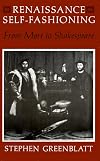
This is a collection of essays of Literary criticism of some of the seminal works of the 16th century. The book concerns itself in taking a holistic view of the texts and authors under discussion and so the culture in which the authors lived and worked becomes as important as the the works themselves. This is the sort of literary criticism that I find the most beneficial to a better understanding of literature from this period and is one of the reasons why I have chosen to absorb myself in show more all things sixteenth century. Greenblatt was on a winner with me from the start and I found his book very interesting, also his writing is lively, rich in detail and encourages his readers to take perhaps another look at the texts themselves. There are dangers in Greenblatt’s approach and the most significant one is that the criticism will place too much influence on the surrounding culture so that in an attempt to get inside the minds of the authors the critic may be misinterpreting the works, especially if he has set himself with a theme or new idea from the start and he tries to make the works fit into that: Greenblatt could be accused of this, but this is for the reader to decide.
“At the Table of the Great: Mores Self-fashioning and Self-Cancellation” takes as its central text Sir Thomas Mores Utopia. It asks the question of how Thomas More could write an idealised tract on an imaginary land that seemed so realistic, (it had people wondering how they could get there) and so different from Tudor England and yet ten years later he was enthusiastically torturing and burning protestant heretics who he saw as a challenge to everything fundamentally English. The Island of Utopia seems on first reading to demonstrate an enlightened view on a society, where every individual is encouraged to seek a work/life balance for himself and his community with a clear indication that togetherness and equality will reap the best rewards. For 21st century readers this first impression is offset by some very dark clouds indeed: for example the need for a system of slavery, and almost a complete absence of privacy. Greenblatt’s reading of the text shows that in some ways Utopia bore similarities to the culture of Tudor England and Tudor power and while it certainly could be interpreted at a critique of Tudor society it was also an attempt by More to fantasise on his own internal struggles.
“The Word of God in the Age of Mechanical Reproduction” takes as its central text Tyndale’s ‘Obedience of a Christian Man’ A text that benefited from being able to be printed relatively cheaply and celebrated as a seminal text given to Henry VIII by the protestant Anne Boleyn. The Obedience of a Christian Man was no less than a battleground for the soul of Christians and was answered by Thomas More from the catholic side first by a refutation in print and then by savage repression. Greenblatt is excellent in describing this battle of the religions in an understandable way for his modern readers, some examples from Obedience of a Christian Man are highlighted with some insightful commentary that really brings this intense struggle to life. Tudor power once again becomes a central issue with Tyndale’s works in Greenblatt’s opinion being no less than an attempt at a grab for power. He is able to build on his ideas from the first essay on Thomas More and in doing so produces my favourite essay of the six.
“Power, Sexuality, and Inwardness in Wyatt’s Poetry”. The central texts here are some examples from Sir Thomas Wyatt’s poems. The most notable are Wyatt’s translations of the Penitential Psalms which Greenblatt claims reveal much about Wyatt’s inner self and the culture of the times. He closes another excellent essay with close readings of Wyatt’s two most famous poems; “Whoso list to Hunt” and “They flee from me that sometimes did me seek.” Two of Wyatt’s poems that appeal to the modern reader, because of what can be read into them with our knowledge of Wyatt’s eventful life: Imprisoned twice in the Tower of London and once being suspected of being Anne Boleyn’s lover. Someone has said that for a woman, Wyatt would have been the most dangerous of lovers with his ability to charm and manipulate for his own ends and these poems are full of the inner Wyatt. However it may be unfair to judge the man from these two examples, because much of Wyatts poetry is for amusement in the courtly love tradition, he composed many of them as songs, he was by all accounts an excellent musician.
“To Fashion a Gentleman: Spenser and the Destruction of the Bower of Bliss”. In this chapter Greenblatt recaps on the previous three chapters and then launches into an episode from The Faerie Queen: Guyon the knight of Temperance and his complete destruction of the bower of Bliss. Spenser is portrayed by Greenblatt as the arch colonialist who carried out what today would be seen as horrendous crimes in Ireland. There is no doubt that The Faerie Queen is a homage to Gloriana (Queen Elizabeth I ) and so Greenblatt’s view on the idea of Spenser’s knight being involved in a struggle to assert the power of Queen Elizabeth is on safe ground. But as in all of these essays there is much more going on as Greenblatt guides us through the culture and society of the court of Queen Elizabeth I: for example there is an excellent section on the importance of rhetoric in the society and literature of the time.
“Marlowe and the Will to Absolute Play” takes as its central text Marlowe’s play “Tamburlaine the Great” I was at a disadvantage here because this is the only text that I had not read myself, but I still enjoyed Greenblatt’s discussion, however whether I agree with his views on Marlowe’s play will have to wait until I have read it. The title of the chapter with its reference to “Will” leads us nicely into the final chapter.
"The Improvisation of Power," which takes as its central text Othello. I was on safer ground here because Othello is one of my favourite Shakespeare plays and even though I know it fairly well I still found much that was insightful in Greenblatts commentary. I did not agree with everything he claimed to read into the text, but nevertheless enjoyed the discussion and noticed that Greenblatt had finally got the P word (that is power) into the title of his essay. Greenblatt is not very kind to Tudor society and culture. The impression he leaves is of a repressive absolute monarchy where image counts for almost everything and this had an effect on the literature that resulted from this culture of repression.
There is an introduction (and an epilogue) to these essays where Greenblatt explains why he has used the title “Renaissance Self fashioning.” I did not fully understand it on first reading and after going back to the introduction after reading the essays I was still not sure I understood the supposed glue that binds these essays together. No matter; the essays themselves are so rich in content that I will return to them from time to time. I have hardly been able to do them justice in this brief review. Excellent and 4.5 stars. show less
“At the Table of the Great: Mores Self-fashioning and Self-Cancellation” takes as its central text Sir Thomas Mores Utopia. It asks the question of how Thomas More could write an idealised tract on an imaginary land that seemed so realistic, (it had people wondering how they could get there) and so different from Tudor England and yet ten years later he was enthusiastically torturing and burning protestant heretics who he saw as a challenge to everything fundamentally English. The Island of Utopia seems on first reading to demonstrate an enlightened view on a society, where every individual is encouraged to seek a work/life balance for himself and his community with a clear indication that togetherness and equality will reap the best rewards. For 21st century readers this first impression is offset by some very dark clouds indeed: for example the need for a system of slavery, and almost a complete absence of privacy. Greenblatt’s reading of the text shows that in some ways Utopia bore similarities to the culture of Tudor England and Tudor power and while it certainly could be interpreted at a critique of Tudor society it was also an attempt by More to fantasise on his own internal struggles.
“The Word of God in the Age of Mechanical Reproduction” takes as its central text Tyndale’s ‘Obedience of a Christian Man’ A text that benefited from being able to be printed relatively cheaply and celebrated as a seminal text given to Henry VIII by the protestant Anne Boleyn. The Obedience of a Christian Man was no less than a battleground for the soul of Christians and was answered by Thomas More from the catholic side first by a refutation in print and then by savage repression. Greenblatt is excellent in describing this battle of the religions in an understandable way for his modern readers, some examples from Obedience of a Christian Man are highlighted with some insightful commentary that really brings this intense struggle to life. Tudor power once again becomes a central issue with Tyndale’s works in Greenblatt’s opinion being no less than an attempt at a grab for power. He is able to build on his ideas from the first essay on Thomas More and in doing so produces my favourite essay of the six.
“Power, Sexuality, and Inwardness in Wyatt’s Poetry”. The central texts here are some examples from Sir Thomas Wyatt’s poems. The most notable are Wyatt’s translations of the Penitential Psalms which Greenblatt claims reveal much about Wyatt’s inner self and the culture of the times. He closes another excellent essay with close readings of Wyatt’s two most famous poems; “Whoso list to Hunt” and “They flee from me that sometimes did me seek.” Two of Wyatt’s poems that appeal to the modern reader, because of what can be read into them with our knowledge of Wyatt’s eventful life: Imprisoned twice in the Tower of London and once being suspected of being Anne Boleyn’s lover. Someone has said that for a woman, Wyatt would have been the most dangerous of lovers with his ability to charm and manipulate for his own ends and these poems are full of the inner Wyatt. However it may be unfair to judge the man from these two examples, because much of Wyatts poetry is for amusement in the courtly love tradition, he composed many of them as songs, he was by all accounts an excellent musician.
“To Fashion a Gentleman: Spenser and the Destruction of the Bower of Bliss”. In this chapter Greenblatt recaps on the previous three chapters and then launches into an episode from The Faerie Queen: Guyon the knight of Temperance and his complete destruction of the bower of Bliss. Spenser is portrayed by Greenblatt as the arch colonialist who carried out what today would be seen as horrendous crimes in Ireland. There is no doubt that The Faerie Queen is a homage to Gloriana (Queen Elizabeth I ) and so Greenblatt’s view on the idea of Spenser’s knight being involved in a struggle to assert the power of Queen Elizabeth is on safe ground. But as in all of these essays there is much more going on as Greenblatt guides us through the culture and society of the court of Queen Elizabeth I: for example there is an excellent section on the importance of rhetoric in the society and literature of the time.
“Marlowe and the Will to Absolute Play” takes as its central text Marlowe’s play “Tamburlaine the Great” I was at a disadvantage here because this is the only text that I had not read myself, but I still enjoyed Greenblatt’s discussion, however whether I agree with his views on Marlowe’s play will have to wait until I have read it. The title of the chapter with its reference to “Will” leads us nicely into the final chapter.
"The Improvisation of Power," which takes as its central text Othello. I was on safer ground here because Othello is one of my favourite Shakespeare plays and even though I know it fairly well I still found much that was insightful in Greenblatts commentary. I did not agree with everything he claimed to read into the text, but nevertheless enjoyed the discussion and noticed that Greenblatt had finally got the P word (that is power) into the title of his essay. Greenblatt is not very kind to Tudor society and culture. The impression he leaves is of a repressive absolute monarchy where image counts for almost everything and this had an effect on the literature that resulted from this culture of repression.
There is an introduction (and an epilogue) to these essays where Greenblatt explains why he has used the title “Renaissance Self fashioning.” I did not fully understand it on first reading and after going back to the introduction after reading the essays I was still not sure I understood the supposed glue that binds these essays together. No matter; the essays themselves are so rich in content that I will return to them from time to time. I have hardly been able to do them justice in this brief review. Excellent and 4.5 stars. show less
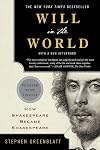
Gosh, this is good. Greenblatt, as I think has been pointed out elsewhere, wears his erudtion lightly -- you could be excused for not recognizing this as the work of a highly-respected scholar: it's written clearly, engagingly, and is -- at least for this reader -- very much "compulsively readable" if that is synonymous with "hard to put down."
Is it speculative? sure, it has to be. It's not, as the "Oxfordians" and other conspiracy theorist-types might argue, that there is NO (or show more suspiciously little) evidence for the Shakespeare who wrote all those plays -- it's just that the bulk of the evidence is so mundane. It's there -- it just doesn't necessarily speak the way we might want it to. That said, I find Greenblatt's army of "may have been"s quite well-grounded, and at their best they do illuminate the works that we have. My favorite chapter might be "Laughter at the Scaffold" which goes into Shakespeare's eternally-discomfiting exploration of Jewishness in "The Merchant of Venice," playing it off his probable-rival Marlowe's roughly contemporary effort "The Jew of Malta" and demonstrating how much further Shakespeare went -- and why he might have done so.
As I'd hoped it would, this book is filling me with a strong desire to return to the plays, which at one time were the center of my world and certainly deserve to be there once again. show less
Is it speculative? sure, it has to be. It's not, as the "Oxfordians" and other conspiracy theorist-types might argue, that there is NO (or show more suspiciously little) evidence for the Shakespeare who wrote all those plays -- it's just that the bulk of the evidence is so mundane. It's there -- it just doesn't necessarily speak the way we might want it to. That said, I find Greenblatt's army of "may have been"s quite well-grounded, and at their best they do illuminate the works that we have. My favorite chapter might be "Laughter at the Scaffold" which goes into Shakespeare's eternally-discomfiting exploration of Jewishness in "The Merchant of Venice," playing it off his probable-rival Marlowe's roughly contemporary effort "The Jew of Malta" and demonstrating how much further Shakespeare went -- and why he might have done so.
As I'd hoped it would, this book is filling me with a strong desire to return to the plays, which at one time were the center of my world and certainly deserve to be there once again. show less
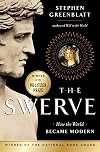
Rating: 5* of five
The Book Report: De rerum natura was a long narrative poem expounding Epicurean philosophy that was written in the first century before the common era. I am told by those possessed of sufficient Latin fluency that it is beautiful. I am not possessed of that level of fluency, and to me it seemed agonizingly impenetrable and obscurantist.
But author Greenblatt, in this fascinating Pulitzer Prize-winning history and analysis of the poem and its influence on the world, focuses show more not on the merits of the poem but on the genesis, development, survival, and influence of De rerum natura, arguably the foundation text for the mental construct that you and I share, and that diverges widely from the mental construct of earlier times.
Why is this so? Because we accept a material explanation of the existence of things as our prevailing orthodoxy, even in the face of religious challenges to the primacy of logic and evidence and just plain good sense. It's down to Lucretius's poem's astounding clarity of thought, persuasiveness of rhetoric, and miraculous survival and rebirth.
What Greenblatt did was to provide a brief history of Epicurus, his actual philosophy, and the cultural currents that distorted and misrepresented his philosophy, together with the whys and wherefores of that misrepresentation. Then Lucretius, a shadowy figure whose biography is unknown to modern readers except for a calumny heaped on his memory by a man who did not know him and in fact lived centuries after his death, wrote in poetry...a form of expression not to Epicurus's taste or, in his opinion, a good and useful tool of communication, he preferring plain and simple and direct prose...broke down the Epicurean vision of the world, and argued in support of it. Greenblatt then traces the survival of manuscripts from antiquity to the Middle Ages, the resurgent interest in their contents during the run-up to the Renaissance, and the incalculably valuable role of obsessive individuals in hunting down, copying, and disseminating the surviving antique texts to a world then, as now, hungry for more and better and different views and experiences and thoughts and ideas.
My Review: I give this book one of my rare five-star ratings because it has solved a problem of identity for me: I am, as Thomas Jefferson said before me, an Epicurean. Not the debased view held of that noble philosophy thanks to “Saint” Jerome, who in the course of ramming his ignorance-celebrating religion down the throats of humanity, hit on the perfect misstatement of Epicurus's actual materialist philosophy: Hedonism! Hedonism and vice and licentiousness and gluttony! The pursuit of pleasure can only mean these things, shouted Jerome, and the chorus of baying dogs was off after the fox.
We all know how that ends.
Chapter eight of The Swerve, “”The Way Things Are,” breaks out the point-by-point reality of Epicureanism, and is the prime motivating factor for my five-star rating. (In fact, I dislike Poggio Bracciolini, the discoverer of De rerum natura, quite intensely, and suspect that had I met him in life, I would have been repulsed by him.) I list here the bullet points Greenblatt is at pains to provide with clear, concise, and satisfying explication:
I have never seen in print or heard with my ears a clearer, more concise, or more complete statement of my own personal worldview than this. It rang me like a bell. It sounds like Lucretius was sitting inside my head and copying down my responses to the world.
In the brief explications Greenblatt attaches to the bullet points, he makes it clear that these ideas, while they never wholly vanished from the world, were seen by the dominant world-view as a challenge to the idiotic legendary nonsense that had come to replace them, and were thus strongly condemned, to the point of burning people alive as a punishment and a warning to others inclined to think for themselves, to view the world as it is instead of through a warped fantasy construct that demonstrably causes harm and pain and facilitates much evil-doing.
So on that basis...five stars, and a ringing huzzah, to Gentile Signor Poggio Bracciolini; to Greenblatt for digging deeply enough in the humus of scholarly debate and historical records to make these connections for us, in a less scholarly age than the Renaissance, to find and use for ourselves as we see fit (ie, to exercise the free will we've got); and to WW Norton for publishing the resultant text as an under-$30 course in humanism. I am also grateful to the Pulitzer Prize board for awarding this book its non-fiction encomium, and to the Catholic News Agency for remaining consistently wrong by grousing about the book's anti-Catholicism and misinterpretation of the Church's anti-intellectualism. It's kind of hard to misinterpret burning people at the stake, guys. Own up: Your religion requires ignorance and prefers stupidity in its adherents.
Books such as this one do nothing to enhance religion's role in human affairs. It is best avoided by those of religious bent. The primary reason: Religious faith cannot survive contact with Epicurus's Trilemma:
Anyone? Hello? I can hear breathing.... show less
The Book Report: De rerum natura was a long narrative poem expounding Epicurean philosophy that was written in the first century before the common era. I am told by those possessed of sufficient Latin fluency that it is beautiful. I am not possessed of that level of fluency, and to me it seemed agonizingly impenetrable and obscurantist.
But author Greenblatt, in this fascinating Pulitzer Prize-winning history and analysis of the poem and its influence on the world, focuses show more not on the merits of the poem but on the genesis, development, survival, and influence of De rerum natura, arguably the foundation text for the mental construct that you and I share, and that diverges widely from the mental construct of earlier times.
Why is this so? Because we accept a material explanation of the existence of things as our prevailing orthodoxy, even in the face of religious challenges to the primacy of logic and evidence and just plain good sense. It's down to Lucretius's poem's astounding clarity of thought, persuasiveness of rhetoric, and miraculous survival and rebirth.
What Greenblatt did was to provide a brief history of Epicurus, his actual philosophy, and the cultural currents that distorted and misrepresented his philosophy, together with the whys and wherefores of that misrepresentation. Then Lucretius, a shadowy figure whose biography is unknown to modern readers except for a calumny heaped on his memory by a man who did not know him and in fact lived centuries after his death, wrote in poetry...a form of expression not to Epicurus's taste or, in his opinion, a good and useful tool of communication, he preferring plain and simple and direct prose...broke down the Epicurean vision of the world, and argued in support of it. Greenblatt then traces the survival of manuscripts from antiquity to the Middle Ages, the resurgent interest in their contents during the run-up to the Renaissance, and the incalculably valuable role of obsessive individuals in hunting down, copying, and disseminating the surviving antique texts to a world then, as now, hungry for more and better and different views and experiences and thoughts and ideas.
My Review: I give this book one of my rare five-star ratings because it has solved a problem of identity for me: I am, as Thomas Jefferson said before me, an Epicurean. Not the debased view held of that noble philosophy thanks to “Saint” Jerome, who in the course of ramming his ignorance-celebrating religion down the throats of humanity, hit on the perfect misstatement of Epicurus's actual materialist philosophy: Hedonism! Hedonism and vice and licentiousness and gluttony! The pursuit of pleasure can only mean these things, shouted Jerome, and the chorus of baying dogs was off after the fox.
We all know how that ends.
Chapter eight of The Swerve, “”The Way Things Are,” breaks out the point-by-point reality of Epicureanism, and is the prime motivating factor for my five-star rating. (In fact, I dislike Poggio Bracciolini, the discoverer of De rerum natura, quite intensely, and suspect that had I met him in life, I would have been repulsed by him.) I list here the bullet points Greenblatt is at pains to provide with clear, concise, and satisfying explication:
--Everything is made of invisible particles. This is called “atomism.”
--The elementary particles of matter...are eternal.
--The elementary particles are infinite in number, but limited in shape and size.
--All particles are in motion in an infinite void.
--The universe has no creator or designer.
--Everything comes into being as a result of a swerve. (Another word for this is collision.)
--The swerve is the source of free will. If there is no preordained pattern, how can there be a preordained result?
--Nature ceaselessly experiments. Evolution by natural selection, anyone?
--The universe was not created for or about humans.
--Humans are not unique. We are animals, literally not figuratively, like all the others.
--Human society began, not in a Golden Age of tranquility and plenty, but in a primitive battle for survival.
--The soul dies. There is no afterlife.
--Death is nothing to us. It is merely a fact. There is no personal component to death.
--All organized religions are superstitious delusions. Religions are, invariably, cruel.
--There are no angels, demons, or ghosts.
--The highest goal of human life is the enhancement of pleasure and the reduction of pain.
--The greatest obstacle to pleasure is not pain, it is delusion.
--Understanding the true nature of things generates deep wonder.
I have never seen in print or heard with my ears a clearer, more concise, or more complete statement of my own personal worldview than this. It rang me like a bell. It sounds like Lucretius was sitting inside my head and copying down my responses to the world.
In the brief explications Greenblatt attaches to the bullet points, he makes it clear that these ideas, while they never wholly vanished from the world, were seen by the dominant world-view as a challenge to the idiotic legendary nonsense that had come to replace them, and were thus strongly condemned, to the point of burning people alive as a punishment and a warning to others inclined to think for themselves, to view the world as it is instead of through a warped fantasy construct that demonstrably causes harm and pain and facilitates much evil-doing.
So on that basis...five stars, and a ringing huzzah, to Gentile Signor Poggio Bracciolini; to Greenblatt for digging deeply enough in the humus of scholarly debate and historical records to make these connections for us, in a less scholarly age than the Renaissance, to find and use for ourselves as we see fit (ie, to exercise the free will we've got); and to WW Norton for publishing the resultant text as an under-$30 course in humanism. I am also grateful to the Pulitzer Prize board for awarding this book its non-fiction encomium, and to the Catholic News Agency for remaining consistently wrong by grousing about the book's anti-Catholicism and misinterpretation of the Church's anti-intellectualism. It's kind of hard to misinterpret burning people at the stake, guys. Own up: Your religion requires ignorance and prefers stupidity in its adherents.
Books such as this one do nothing to enhance religion's role in human affairs. It is best avoided by those of religious bent. The primary reason: Religious faith cannot survive contact with Epicurus's Trilemma:
If God is unable to prevent evil, then she is not all-powerful.
If God is not willing to prevent evil, then she is not all-good.
If God is both willing and able to prevent evil, then why does evil exist?
Anyone? Hello? I can hear breathing.... show less
Lists
Awards


You May Also Like


Associated Authors
Statistics
- Works
- 120
- Also by
- 9
- Members
- 18,882
- Popularity
- #1,158
- Rating
- 4.3
- Reviews
- 270
- ISBNs
- 292
- Languages
- 18
- Favorited
- 14
