
Frank Kermode (1919–2010)
Author of The Literary Guide to the Bible
About the Author
Sir John Frank Kermode, November 29, 1919 - August 17, 2010 John Kermode was a British literary critic best known for his work The Sense of an Ending: Studies in the Theory of Fiction, published in 1967 (revised 2000), and for his extensive book-reviewing and editing. He was the Lord Northcliffe show more Professor of Modern English Literature at University College London and the King Edward VII Professor of English Literature at Cambridge University. Kermode served during World War II with the Royal Navy. After the war, Kermode held positions at Manchester University, Bristol University, University College of London, and Cambridge University, all in England, and at Columbia University in New York City. He was Charles E. Norton Professor at Harvard University in 1977-78 and Henry Luce Professor at Yale University in 1994. Kermode wrote several books on literary figures, including D.H. Lawrence and Wallace Stevens. His works of criticism include An Appetite for Poetry and The Art of Telling. Kermode was also the editor of the cultural journal, Encounter and his memoir, Not Entitled, was published in 1995. Kermode serves on the editorial board of the London Review of Books and Common Knowledge and has acted as judge for the Booker Prize. He was knighted for his service to English literature and he was named a Foreign Honorary Member of the American Academy of Arts and Letters in 1999. He died in Cambridge on August 17, 2010. (Bowker Author Biography) Frank Kermode has written & edited many works, among them "Forms of Attention" & a memoir, "Not Entitled" (FSG, 1995). He lives in Cambridge, England, & has frequently taught in the United States. (Publisher Provided) show less
Works by Frank Kermode
The Oxford Anthology of English Literature, Volume I: The Middle Ages through the Eighteenth Century (1973) — Editor — 212 copies
The Oxford Anthology of English Literature, Volume II: 1800 to the Present (1973) — Editor — 192 copies
The Oxford Anthology of English Literature: Volume II: The Literature of Renaissance England (1973) — Editor — 189 copies
The Duchess of Malfi: Seven Masterpieces of Jacobean Drama (Modern Library Paperbacks) (2005) — Editor — 53 copies
The Metaphysical Poets: Key Essays on Metaphysical Poetry and the Major Metaphysical Poets (1969) 19 copies
The Waste Land 1 copy
The Defence of Poetry 1 copy
Associated Works
Paradise Lost [Norton Critical Edition] (1667) — Contributor, some editions — 2,432 copies, 14 reviews
McLuhan: Hot & Cool - A Primer for the Understanding and a Critical Symposium with a Rebuttal by McLuhan (1967) — Contributor — 171 copies, 1 review
The Dylan Companion: A Collection of Essential Writing About Bob Dylan (1990) — Contributor, some editions — 103 copies
A Mirror for Modern Scholars: Essays in Methods of Research In Literature (1966) — Contributor — 11 copies
Tagged
Common Knowledge
- Canonical name
- Kermode, Frank
- Legal name
- Kermode, John Frank
- Birthdate
- 1919-11-29
- Date of death
- 2010-08-17
- Gender
- male
- Education
- University of Liverpool (BA|1940|MA|1947)
- Occupations
- literary critic
university professor - Organizations
- King's College, Cambridge University
University College London
Bristol University
Manchester University
University of Reading
King's College, Newcastle (show all 7)
Royal Navy (WWII) - Awards and honors
- Knight Bachelor (1991)
American Academy of Arts and Letters (1999)
British Academy (Fellow, 1973)
Royal Society of Literature (Fellow, 1958)
American Academy of Arts and Sciences (Honorary Foreign Member, 1976)
Ordre des Arts et des Sciences (Officier) - Nationality
- UK
- Birthplace
- Douglas, Isle of Man
- Places of residence
- Isle of Man
Liverpool, England, UK
Cambridge, England, UK
London, UK
New York, New York, USA - Place of death
- Cambridge, Cambridgeshire, England, UK
- Map Location
- Isle of Man
Members
Reviews

his is a monography on the poet Wallace Stevens by the reknowned scholar Frank Kermode. It is a bit tricky to buy a critical work on a poet with whose work I am unfamiliar, and may likely not be interested in. However, this is a short work of almost essay-like length of just 126 pages.
Kermode makes some poignent observations about the role and nature of reality as seen by Wallace Stevens that struck me and stuck with me.
reality is what you see finely and imagine fully from where you are and show more as what you are. 'The Gods of China are always Chinese' is one of the fundamental ideas of Wallace Stevens (p.11). "I am what is around me" (p.35).
At least in his poetry, Stevens creates a divide between reality and the world of the imagination, effectively cutting himself off from life. To most people life is an affair of people and not of places. Instead, he says, life is an affair of places, and elsewhere Life is not people and scene but thought and feeling.
This culminates in the horrific observation that reality is in fact unbearable to us, that we cannot truly face it, and that we can only live with it through the overlay of our imagination. In The Snow Man "winter" is a metaphor for a "pure abstracted reality, a bare icy outline purged clean of all the accretions brought by the human mind to make it possible for us to conceive of reality and live our lives." In winter, things are seen as they are. (p. 31).
In the same context, Stevens wrote: "No doubt there is nothing more morbid in itself, more inimical to nature, than to see things as they are.... The real, in its pure state, stops the heart instantaneously .... O, Socrates, the universe cannot for one instant endure to be only what it is ... " (p. 32) from Stevens' introduction to Valéry's Dance and the Soul.
The imagination is described as a power to transform the environment and ensure comfort and survival. " Poets, with this power, once made gods and myths, but these are irrelevant to modern reality. Now the same power must be our defense against the poverty of fact" (p. 36) (Italics are mine).
This bleak view that pits the harsh world of Darwinian biology against culture as a soft blanket to delude ourselves by shying away from harsh reality is incredibly convincing to me.
I did not much care for the poetry of Wallace Stevens, but believe Kermode provides an excellent introduction to Stevens' overall output, mainly poetry, and dedicates one chapter to his prose works. To me, reading the critical sections underlying Stevens ideas was what made reading this book so valuable to me. show less
Kermode makes some poignent observations about the role and nature of reality as seen by Wallace Stevens that struck me and stuck with me.
reality is what you see finely and imagine fully from where you are and show more as what you are. 'The Gods of China are always Chinese' is one of the fundamental ideas of Wallace Stevens (p.11). "I am what is around me" (p.35).
At least in his poetry, Stevens creates a divide between reality and the world of the imagination, effectively cutting himself off from life. To most people life is an affair of people and not of places. Instead, he says, life is an affair of places, and elsewhere Life is not people and scene but thought and feeling.
This culminates in the horrific observation that reality is in fact unbearable to us, that we cannot truly face it, and that we can only live with it through the overlay of our imagination. In The Snow Man "winter" is a metaphor for a "pure abstracted reality, a bare icy outline purged clean of all the accretions brought by the human mind to make it possible for us to conceive of reality and live our lives." In winter, things are seen as they are. (p. 31).
In the same context, Stevens wrote: "No doubt there is nothing more morbid in itself, more inimical to nature, than to see things as they are.... The real, in its pure state, stops the heart instantaneously .... O, Socrates, the universe cannot for one instant endure to be only what it is ... " (p. 32) from Stevens' introduction to Valéry's Dance and the Soul.
The imagination is described as a power to transform the environment and ensure comfort and survival. " Poets, with this power, once made gods and myths, but these are irrelevant to modern reality. Now the same power must be our defense against the poverty of fact" (p. 36) (Italics are mine).
This bleak view that pits the harsh world of Darwinian biology against culture as a soft blanket to delude ourselves by shying away from harsh reality is incredibly convincing to me.
I did not much care for the poetry of Wallace Stevens, but believe Kermode provides an excellent introduction to Stevens' overall output, mainly poetry, and dedicates one chapter to his prose works. To me, reading the critical sections underlying Stevens ideas was what made reading this book so valuable to me. show less
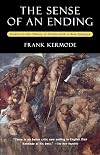
You might, as you read Frank Kermode’s famous book, imagine yourself in the audience at Bryn Mawr College in the autumn of 1965 as he delivered the Mary Flexner Lectures of which the book consists. Perhaps even in that first lecture, titled “The End,” you would have surreptitiously looked about the hall to see how many of those present were taking it in. A fair number would have nodded at mention of Yeats, or murmured at the quotes from Wallace Stevens. I might have felt comforted by show more an Aristotle name check. But would they all be smiling sanguinely when the talk moved on to the eschatological, on to Apocalypse, Revelation, and the end of things? And would they have been any more comforted when Kermode’s hermeneutical insights were applied to fiction in the form of Robbe-Grillet? My guess is that a lot of those in the hall would have been like me, relieved that Kermode’s lectures would later be issued in the form of a book so that they could go over the content again in their own time. Having read through the text in its entirety, however, like me you may still be in the position of firmly believing that it will all make sense on the next pass.
Kermode’s erudition is breathtaking. The six essays draw on texts from philosophy, religion, theology, fiction, poetry, literary criticism, and sociology. His argument is at once far-reaching and subtle. Recurrent apocalyptic movements, he might argue, are manifestations of our in-built need for the conferral of meaning, the consonance of meaning conveyed through the sense of an ending. This demand is as much an aspect of our religious and theological thought, as it is constitutive of our literary endeavours. ‘Tick’ anticipates ‘Tock’. The gap between those two serves as the model of narrative form and the source of our contestable relationship with time.
That’s a glancing shot at best at one of Kermode’s key points. The book as a whole, slim volume though it is, is filled with both philosophical or narratological insights (not all of which the reader may wish to take up) but the real treat is their application to the business of criticism. Kermode is a marvel when he reads Spencer’s Faerie Queene, or Shakespeare’s Lear, or Sartre’s La Nausée. Or maybe it was just that in those bits I imagined his audience perking up with the thought that here at last was something they could get their heads around.
I haven’t finished with this book. But I feel certain that another couple of reads will solidify its central points for me. I always feel that way, no sense that the ending is yet in sight. Always worth another read. show less
Kermode’s erudition is breathtaking. The six essays draw on texts from philosophy, religion, theology, fiction, poetry, literary criticism, and sociology. His argument is at once far-reaching and subtle. Recurrent apocalyptic movements, he might argue, are manifestations of our in-built need for the conferral of meaning, the consonance of meaning conveyed through the sense of an ending. This demand is as much an aspect of our religious and theological thought, as it is constitutive of our literary endeavours. ‘Tick’ anticipates ‘Tock’. The gap between those two serves as the model of narrative form and the source of our contestable relationship with time.
That’s a glancing shot at best at one of Kermode’s key points. The book as a whole, slim volume though it is, is filled with both philosophical or narratological insights (not all of which the reader may wish to take up) but the real treat is their application to the business of criticism. Kermode is a marvel when he reads Spencer’s Faerie Queene, or Shakespeare’s Lear, or Sartre’s La Nausée. Or maybe it was just that in those bits I imagined his audience perking up with the thought that here at last was something they could get their heads around.
I haven’t finished with this book. But I feel certain that another couple of reads will solidify its central points for me. I always feel that way, no sense that the ending is yet in sight. Always worth another read. show less
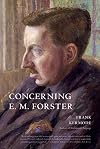
The subject here is a great deal larger than E.M. Forster, though it includes discussion of all his work. Even more it delineates the particular niche of English literary society he occupied, and for which was at pains to define the requirements for membership. It's not always a pretty story, but consistently informative and, for me, a new way to look at Forster and his circle. Frank Kermode's class approach, while verging on cruelty at some points in the story, is the only way to speak show more about this, and he was well positioned to be the one to do it.
Only four stars, because it's a particular view of Forster, but it couldn't have been done better. show less
Only four stars, because it's a particular view of Forster, but it couldn't have been done better. show less

The title phrase uses "'Romantic' in a restricted sense, as applicable to the literature of one epoch, beginning in the late years of the eighteenth century and not yet finished [in 1957], and as referring to the high valuation placed during this period upon the image-making powers of the mind at the expense of its rational powers, and to the substitution of organicist for mechanist modes of thinking about works of art." (43) Kermode's study, which he confesses to lie outside of his 'period' show more of historical specialty, is trained most especially on Yeats and his poetry. Besides the characteristics just listed, another keynote is the suffering isolation of the artist, as denoted by the figure of the Tower. In the first and longer of two parts, Kermode establishes the continuity of these concepts among Symbolism, English Romanticism, and their early modern antecedents.
In the second part, he shows how these concepts have been perpetuated through the first half of the 20th century, even when secularized and stripped of the Romantic mystique: the Great Memory and the noumenal world are reduced to the linguistic matrix, but the isolated artist and his revelation of the unparaphrasable image persist nonetheless. Kermode's ultimate goal here is that of "revising historical categories." (165) He is contemptuous of the arbitrariness and falsity of the nostalgic theories of history promoted by Symbolist criticism and its progeny. "The most deplorable consequence of the doctrine is that the periods and poets chosen to illustrate it are bound to receive perverse treatment; you must misrepresent them if you propose to make them justify a false theory." (146) (It's outside the scope of his study, but one might include the Traditionalist school of ideology in this same indictment, despite its diametric reversal of the values of image and rationality, although Symbolists and Traditionalists are fellow-travelers in the supernaturalist element.)
One of the features in this core Romantic view that set me back a little was the opposition of imagination and memory, which has a genealogy back to Blake. As a working magician, I see imagination and memory as mutually dependent and equally dignified, but evidently these theorists didn't. On reflection, perhaps what is at stake is two different sorts of memory. The kind I tend to think of is the spatial memory which accesses an interior world of heuristic images--this would be the antechamber of the "Great Memory" of Yeats. The memory derided by Blake must then be a linear memory of routine and rationalism. The two memories could perhaps correspond to the distinct mnemonic approaches of Giordano Bruno and Peter Ramus.
Kermode is entirely hip to "the whole sumberged magical system of Romantic aesthetic, about which Yeats and some Frenchmen were bold enough to be explicit." (44) The attentive reader will catch Kermode's acknowledgement throughout that "Magic came, in an age of science, to the defence of poetry." (110) Kermode doesn't seem to want to do away with magic, but he cheers a pendulum swing that he sees as just beginning in his time, away from the Romantic and modern neo-Symbolist critical perspectives. He looks forward to a reconsideration by which the mechanical craft of rhetoric may be again accorded its value, as contributing in its way to the true value of poetry.
This book's matter is not especially accessible; Kermode often references poets and critics who are not now--if they ever were--household names in the US. He never gives a full citation for his quotes, and sometimes it's hard to tell whom he's quoting. He provides long passages of untranslated French. (In only one case, a full page of text from Huysmann's A Rebours, I was fortunate enough to have a translation of his source on hand.) I'm sure that graduate students in English are sometimes made to read this book, those others of us capable of enjoying it are probably rather thin on the ground. show less
In the second part, he shows how these concepts have been perpetuated through the first half of the 20th century, even when secularized and stripped of the Romantic mystique: the Great Memory and the noumenal world are reduced to the linguistic matrix, but the isolated artist and his revelation of the unparaphrasable image persist nonetheless. Kermode's ultimate goal here is that of "revising historical categories." (165) He is contemptuous of the arbitrariness and falsity of the nostalgic theories of history promoted by Symbolist criticism and its progeny. "The most deplorable consequence of the doctrine is that the periods and poets chosen to illustrate it are bound to receive perverse treatment; you must misrepresent them if you propose to make them justify a false theory." (146) (It's outside the scope of his study, but one might include the Traditionalist school of ideology in this same indictment, despite its diametric reversal of the values of image and rationality, although Symbolists and Traditionalists are fellow-travelers in the supernaturalist element.)
One of the features in this core Romantic view that set me back a little was the opposition of imagination and memory, which has a genealogy back to Blake. As a working magician, I see imagination and memory as mutually dependent and equally dignified, but evidently these theorists didn't. On reflection, perhaps what is at stake is two different sorts of memory. The kind I tend to think of is the spatial memory which accesses an interior world of heuristic images--this would be the antechamber of the "Great Memory" of Yeats. The memory derided by Blake must then be a linear memory of routine and rationalism. The two memories could perhaps correspond to the distinct mnemonic approaches of Giordano Bruno and Peter Ramus.
Kermode is entirely hip to "the whole sumberged magical system of Romantic aesthetic, about which Yeats and some Frenchmen were bold enough to be explicit." (44) The attentive reader will catch Kermode's acknowledgement throughout that "Magic came, in an age of science, to the defence of poetry." (110) Kermode doesn't seem to want to do away with magic, but he cheers a pendulum swing that he sees as just beginning in his time, away from the Romantic and modern neo-Symbolist critical perspectives. He looks forward to a reconsideration by which the mechanical craft of rhetoric may be again accorded its value, as contributing in its way to the true value of poetry.
This book's matter is not especially accessible; Kermode often references poets and critics who are not now--if they ever were--household names in the US. He never gives a full citation for his quotes, and sometimes it's hard to tell whom he's quoting. He provides long passages of untranslated French. (In only one case, a full page of text from Huysmann's A Rebours, I was fortunate enough to have a translation of his source on hand.) I'm sure that graduate students in English are sometimes made to read this book, those others of us capable of enjoying it are probably rather thin on the ground. show less
Lists
Awards


You May Also Like


Associated Authors
Statistics
- Works
- 68
- Also by
- 84
- Members
- 4,873
- Popularity
- #5,158
- Rating
- 4.0
- Reviews
- 31
- ISBNs
- 187
- Languages
- 9
- Favorited
- 4

