
Derek Tidball
Author of The Message Of Leviticus: Free To Be Holy
About the Author
Derek Tidball is visiting scholar at Spurgeon's College, London. Previously he served as principal of the London School of Theology, where he lectured in pastoral theology. His books include The Reality of Christ: The Message of Colossians for Today and Skillful Shepherds: Explorations in Pastoral show more Theology, and he is series editor for the Bible Speaks Today Bible Themes Series. show less
Image credit: Derek Tidball
Works by Derek Tidball
The Message of the Cross: Wisdom Unsearchable, Love Indestructible (The Bible Speaks Today) (2001) 258 copies
The Atonement Debate: Papers from the London Symposium on the Theology of Atonement (2008) 93 copies, 1 review
Using the Bible in Evangelism: The Bible, Faith and Growth (Resources for growing churches) (1985) 11 copies
Revisioning, Renewing, Rediscovering the Triune Center: Essays in Honor of Stanley J. Grenz (2014) — Editor — 9 copies
Discovering Leviticus: Love God, Love Your Neighbour (Crossway Bible Guides) by Derek Tidball (16-Aug-1996) Paperback (1600) 2 copies
Matthew 1 copy
圣经点与线 1 copy
Evangelism: A Bibliography Prepared for the Theological Studies Group of the Graduates Fellowship 1 copy
Luke 1 copy
Associated Works
The Bible in Pastoral Practice: Readings in the Place and Function of Scripture in the Church (Using the Bible in Pastoral Practice) (2005) — Contributor — 59 copies
Tagged
Common Knowledge
- Gender
- male
- Organizations
- Baptisten
London School of Theology - Nationality
- UK
- Associated Place (for map)
- UK
Members
Reviews
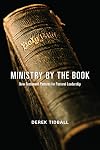
What is the model, or models, that one should use when engaged in church leadership? And how are those models to be shaped? These are the questions that Derek Tidball addresses in Ministry by the Book: New Testament Patterns for Pastoral Leadership.
Some people would say that the New Testament is primarily about Jesus and the Good News, and that it was never Jesus’ intent to establish anything like what we know as the church today. Tidball holds a different view, believing that throughout show more the New Testament there are things to learn about early believers in Jesus, how they lived and related to one another and their culture, and which can modeled by the church today. He works his way through the New Testament, identifying 14 different patterns that may be followed by pastors and other congregational leaders.
In most of the books he identifies both a specific circumstance of the church and then outlines an associated ministry pattern found in the local church. Examples are “Mark: ministry in an oppressed culture,” with “The ministry of kingdom emissaries” and “Hebrews: ministry in a faltering church” with “The ministry of a reflective practitioner.” Exceptions are for the letters attributed to Paul, which he subdivides with the themes “ministry in an infant church,” “ministry in a maturing church,” and “ministry in an aging church” and Jude and 2 Peter, which are combined as “ministry in an endangered church.” In the concluding chapter he discusses implications of the ministry patterns for individual pastors, congregations and denominations.
One of the strengths of Tidball’s approach is in identifying the characteristics of the church and then exploring the ministry pattern appropriate to it. In “Matthew: ministry in a divided church,” the pattern is “The ministry of wise instruction.” In particular, Tidball discusses the role of the scribe within the Jewish community and Matthew’s tendency to portray them negatively, following that with a discussion of how the knowledge of a scribe could be used more positively to build up a community of believers. He includes a word of caution on those characteristics that leaders could easily carry to excess, including ostentation, authoritarianism, fanaticism and legalism. (35-36)
Another strength is Tidball’s commitment to stay close to the biblical text and resist reading into it more than is actually there. This was particularly evident when talking about ministry gifts and the differing roles in which they may be used. He knows that the text gives a general description of certain roles, such as deacon, elder and bishop, but points out that it does not give a lot of specific information about particulars, such as the clear limits to those roles or the establishment of a church hierarchy, which as is found within nearly every Christian denomination.
I acquired this book by accident. It was on the early draft of a syllabus for a course on church leadership. I bought the book and when the final syllabus came out it was no longer among the required texts. And that, in a way, was a gift, for I was able to read it for my own learning, rather than reading an assigned portion of it and then completing a required project with the information.
I take from it a greater understanding of the circumstances of the early church and the different ways in which God was active in meeting those needs, and hope that I can discern some of those circumstances within my own congregation. And as I read of the different leadership patterns I recognize that I am stronger in some areas than in others, which perhaps will allow me to cultivate the varying gifts of the congregation, so that we can provide, to the best of our ability, the presence of God in the place where he has gathered us. show less
Some people would say that the New Testament is primarily about Jesus and the Good News, and that it was never Jesus’ intent to establish anything like what we know as the church today. Tidball holds a different view, believing that throughout show more the New Testament there are things to learn about early believers in Jesus, how they lived and related to one another and their culture, and which can modeled by the church today. He works his way through the New Testament, identifying 14 different patterns that may be followed by pastors and other congregational leaders.
In most of the books he identifies both a specific circumstance of the church and then outlines an associated ministry pattern found in the local church. Examples are “Mark: ministry in an oppressed culture,” with “The ministry of kingdom emissaries” and “Hebrews: ministry in a faltering church” with “The ministry of a reflective practitioner.” Exceptions are for the letters attributed to Paul, which he subdivides with the themes “ministry in an infant church,” “ministry in a maturing church,” and “ministry in an aging church” and Jude and 2 Peter, which are combined as “ministry in an endangered church.” In the concluding chapter he discusses implications of the ministry patterns for individual pastors, congregations and denominations.
One of the strengths of Tidball’s approach is in identifying the characteristics of the church and then exploring the ministry pattern appropriate to it. In “Matthew: ministry in a divided church,” the pattern is “The ministry of wise instruction.” In particular, Tidball discusses the role of the scribe within the Jewish community and Matthew’s tendency to portray them negatively, following that with a discussion of how the knowledge of a scribe could be used more positively to build up a community of believers. He includes a word of caution on those characteristics that leaders could easily carry to excess, including ostentation, authoritarianism, fanaticism and legalism. (35-36)
Another strength is Tidball’s commitment to stay close to the biblical text and resist reading into it more than is actually there. This was particularly evident when talking about ministry gifts and the differing roles in which they may be used. He knows that the text gives a general description of certain roles, such as deacon, elder and bishop, but points out that it does not give a lot of specific information about particulars, such as the clear limits to those roles or the establishment of a church hierarchy, which as is found within nearly every Christian denomination.
I acquired this book by accident. It was on the early draft of a syllabus for a course on church leadership. I bought the book and when the final syllabus came out it was no longer among the required texts. And that, in a way, was a gift, for I was able to read it for my own learning, rather than reading an assigned portion of it and then completing a required project with the information.
I take from it a greater understanding of the circumstances of the early church and the different ways in which God was active in meeting those needs, and hope that I can discern some of those circumstances within my own congregation. And as I read of the different leadership patterns I recognize that I am stronger in some areas than in others, which perhaps will allow me to cultivate the varying gifts of the congregation, so that we can provide, to the best of our ability, the presence of God in the place where he has gathered us. show less

Este livro busca abrir a sua imaginação sobre o ministério, esboçando vários modelos, todos eles com sua origem no Novo Testamento, e desafia a compreensão do ministério atrofiado que tantas vezes caracteriza igrejas de hoje.
The Atonement Debate: Papers from the London Symposium on the Theology of Atonement by Derek Tidball
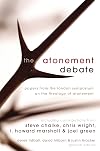
This book was basically in response to Steve Chalke's, "The Lost Message of Jesus." It is basically a critiique of Chalke's explanation of the Cross in terms of "inbreaking shalom" of God's kingdom against the Reformed "penal-substitutionary" theory. Each contribution is enlightening whether or not you agree with one or the other. Chapter six, for me, was especially enjoyable because of the more in-depth look at the Biblical text, particularly Isaiah 53. Chapter 10 challanged me to look at show more the Atonement in, what was for me, an unusual light. For example, Ms. Robbins, the contributor of this chapter, say, "And so God offers up himself as the word incarnate, the word imaged, knowing that in killing the perfect image, he will killl himself" (p.336). Being interested in the way the Bible presents the Cross of Christ, I found this book to offer many insights I had, until now, not considered. show less

I bought this book on sale many years ago, and it sat in a pile to books to be read until recently. I no longer remember what prompted me to buy it, but it probably was some life decision that I was struggling with and that I hoped this book would help me to figure out where God wanted my life to go.
Unfortunately, there is no one formula that we can always apply to life's decisions. This book does the best it can to show examples of how God has guided others in the BIble and to draw show more parallels which we can use in our lives. show less
Unfortunately, there is no one formula that we can always apply to life's decisions. This book does the best it can to show examples of how God has guided others in the BIble and to draw show more parallels which we can use in our lives. show less
You May Also Like


Associated Authors
Statistics
- Works
- 53
- Also by
- 2
- Members
- 1,744
- Popularity
- #14,746
- Rating
- 3.7
- Reviews
- 7
- ISBNs
- 83
- Languages
- 5