
Daniel Borzutzky
Author of The Performance of Becoming Human
About the Author
Daniel Borzutzky is the author of a collection of fiction entitled Arbitrary Tales and a poetry chapbook entitled Failure in the Imagination. He also published full-length volumes of poetry including The Ecstasy of Capitulation, The Book of Interfering Bodies, and The Performance of Becoming Human, show more which won the National Book Award for poetry in 2016. He has translated a number of works by Chilean writers including the poet Jaime Luis Huenún and the author Juan Emas. He has taught at the School of the Art Institute of Chicago, Koç University in Istanbul, and Wilbur Wright College of the City Colleges of Chicago. (Bowker Author Biography) show less
Image credit: via National endowment for the Arts
Works by Daniel Borzutzky
Associated Works
Tagged
Common Knowledge
- Gender
- male
Members
Reviews
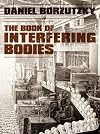
A book of alternating poems and prose. The prose pieces, usually one or two pages long, have titles reminiscent of Calvino or Jabès: "The Book of Forgotten Bodies," "The Book of Broken Bodies," "The Book of Echoes." It isn't clear why the two alternate, because the poems and the prose share a voice that is alternately disaffected, violent, academic, existential, disconsolate, ironic, surreal, activist, and conceptual. It's the strange alternation of voices--mirrored by the alternation of show more prose and poetry--that makes the book interesting.
At times Borzutsky writes language poetry or conceptual poetry, as in Charles Bernstein:
"This poem is firm in its convictions and compassionate at the same time.
This people-poem, not a political poem.
This poem is committed to public service.
This poem is simple, unobtrusive, and easy to use or ignore as the reader sees fit." (p. 20)
Passages like this are unconvincingly self-deprecating and openly academic in a way that is apparently meant to be simply honest, but sometimes appears trapped. Earlier in the same poem there are passages that are more surrealist, like mixtures of Burroughs and Neruda:
"Poets shit on this poem.
Babies and graduate students eat this poem.
There are bivalved mollusks in this poem, and hemorrhoids, and a dog named Chucho, and coyotes who kidnap immigrants." (p. 19)
Here I take it the excesses (as in the first line) are intended to be faux-shocking, a reminder of earlier kinds of poetry in which people had real convictions and could actually be shocking; and the surrealism (as in the third line) is meant to be ersatz surrealism, filtered through academic writing workshops. But the voices in the book seem not to be entirely under the author's control. In some poems his voice is consistently arch, media-savvy, and ironic, occasionally like George Saunders in its impeccable unaccountability. But the voice veers, and becomes ecstatic (p. 67), campy (p. 72), activist (p. 80), like early Merwin (p. 5), like Bernstein (p. 28).
Here is the end of "The Relevance of Poetry in Our Current Climate":
"...This poem is not capable of deception or transcendence. Additionally, this poem is perfect for the occasion of being strapped against your will to a fence or gurney, electrocuted, or for having your face shoved in excrement. This is a contemporary poem. This poem allows you to be young, and to shake and move with the times." (p. 62)
The last line is careless, knowing, and disaffected, like Frank O'Hara. But the line before it speaks with the voice of the military. The awkward "additionally," and the formal "excrement" sound like military documents about interrogation. And the first line I quoted is an entirely straightforward bit of theory: there, oddly, the voice is most transparent.
It is the veering voice that provides the book's real passion and conviction. Within any individual voice, it can seem unconvincing or unstable. It's a conundrum for a writer: normally over time, the strands of the voice come together, and the writing becomes more coherent. But here that may not be a good idea. The battling voices in Borzutsky's head are more interesting, I think, than the battles he describes from within individual voices. show less
At times Borzutsky writes language poetry or conceptual poetry, as in Charles Bernstein:
"This poem is firm in its convictions and compassionate at the same time.
This people-poem, not a political poem.
This poem is committed to public service.
This poem is simple, unobtrusive, and easy to use or ignore as the reader sees fit." (p. 20)
Passages like this are unconvincingly self-deprecating and openly academic in a way that is apparently meant to be simply honest, but sometimes appears trapped. Earlier in the same poem there are passages that are more surrealist, like mixtures of Burroughs and Neruda:
"Poets shit on this poem.
Babies and graduate students eat this poem.
There are bivalved mollusks in this poem, and hemorrhoids, and a dog named Chucho, and coyotes who kidnap immigrants." (p. 19)
Here I take it the excesses (as in the first line) are intended to be faux-shocking, a reminder of earlier kinds of poetry in which people had real convictions and could actually be shocking; and the surrealism (as in the third line) is meant to be ersatz surrealism, filtered through academic writing workshops. But the voices in the book seem not to be entirely under the author's control. In some poems his voice is consistently arch, media-savvy, and ironic, occasionally like George Saunders in its impeccable unaccountability. But the voice veers, and becomes ecstatic (p. 67), campy (p. 72), activist (p. 80), like early Merwin (p. 5), like Bernstein (p. 28).
Here is the end of "The Relevance of Poetry in Our Current Climate":
"...This poem is not capable of deception or transcendence. Additionally, this poem is perfect for the occasion of being strapped against your will to a fence or gurney, electrocuted, or for having your face shoved in excrement. This is a contemporary poem. This poem allows you to be young, and to shake and move with the times." (p. 62)
The last line is careless, knowing, and disaffected, like Frank O'Hara. But the line before it speaks with the voice of the military. The awkward "additionally," and the formal "excrement" sound like military documents about interrogation. And the first line I quoted is an entirely straightforward bit of theory: there, oddly, the voice is most transparent.
It is the veering voice that provides the book's real passion and conviction. Within any individual voice, it can seem unconvincing or unstable. It's a conundrum for a writer: normally over time, the strands of the voice come together, and the writing becomes more coherent. But here that may not be a good idea. The battling voices in Borzutsky's head are more interesting, I think, than the battles he describes from within individual voices. show less
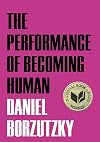
3.5 for originality and intelligence. If Walt Whitman lived in a global, urban, industrial time, this is what he would write. There is all the interconnectedness of humanity and nature, (though less pristine and optimistic here than Leaves of Grass) of common good, of the impact we have on each other and the earth. Borzutzky definitely has the pulse of our modern era and pop culture and the amazing capacity to zoom out and in to universal trends and truths to the tiny details that impact the show more individual. He doesn't shy away from what humans have wrought upon the earth and each other and it's very visceral at times, which kept me from loving it. I respect it, though. Mostly in prose poem form, the pieces provoke thought and reflection. Sample from Dream Song #423: "In the last verse we all sang a song about the Statue of Liberty, the fastest woman in all of Mexico/I love her, sing the generals and CEOs/I love her, sing the Bolivians and Peruvians/ I love her sing the beggars and bankers/I love her rusted body sing the pornographers and the doctors/I love her reverie, her darkness, her malleability, sing the professors/I love her, sings the poet because she reminds me of my mother and my mother reminds me of myself and I remind myself of my father and all the mouths he needs to feed." National Book Award winner 2016 and Chicago guy. show less
But we could really use some organizing principles, say the economists, because the lower classes, stuck eternally in their ugly lives, cannot make ethical decisions when they are starving.
I used this quote because this should have been the focus, instead of 150 pages of degradation and decomposition . Organic life is being reabsorbed human life is being reduced plastic reality and predatory practices.
The book opens with a measured look at Juan Rulfo and Marguerite Duras, each lending images show more to lingering, ghostly presence. The narrative then links images of internment camps and shopping malls; foreclosure looks pogrom in the eye. The themes bristle but the language used failed miserably, sitting in the shade along the highway, days from the destination. show less
I used this quote because this should have been the focus, instead of 150 pages of degradation and decomposition . Organic life is being reabsorbed human life is being reduced plastic reality and predatory practices.
The book opens with a measured look at Juan Rulfo and Marguerite Duras, each lending images show more to lingering, ghostly presence. The narrative then links images of internment camps and shopping malls; foreclosure looks pogrom in the eye. The themes bristle but the language used failed miserably, sitting in the shade along the highway, days from the destination. show less
A wonderful collection of poems that rage against the world as it is today. Every person that reads this might come to a totally different interpretation but that is the joy of it. To me the book is an indictment of conformity in which people are like slabs of meat. The government also is given the full force of Borzutsky's guns which burn brightly. Another theme is displaced people who are forced. to struggle with situations outside their control. A well deserved award winning collection.
Awards


You May Also Like


Associated Authors
Statistics
- Works
- 16
- Also by
- 4
- Members
- 211
- Popularity
- #105,255
- Rating
- 4.1
- Reviews
- 6
- ISBNs
- 13
- Languages
- 1
- Favorited
- 1