
Wanda Coleman (1946–2013)
Author of Wicked Enchantment: Selected Poems
About the Author
Wanda Coleman was born in Los Angeles, California on November 13, 1946. She attended Los Angeles Valley College and California State Los Angeles but did not earn a degree. In the early 1970s, she embarked on a journalism career with an assignment from the Los Angeles Free Press to write about a show more fundraiser for Black Panther supporter Angela Davis. However, her sarcastic coverage caused consternation in the Davis camp, and she was blackballed by the underground paper for a decade. In 1975 she landed a job writing for the NBC soap opera Days of Our Lives and won a daytime Emmy for her work the following year. She took writing workshops around Los Angeles. Her first book of poetry, Art in the Court of the Blue Fag, was published in 1977. During her lifetime, she wrote more than 20 books including Mad Dog, Black Lady; Imagoes; Heavy Daughter Blues; Mercurochrome; and The Riot Inside Me: More Trials and Tremors. She won the Lenore Marshall National Poetry Prize from the Academy of American Poets in 1999 for Bathwater Wine. In 2012, she received the Shelley Memorial Award from the Poetry Society of America. She died after a long illness on November 22, 2013 at the age of 67. (Bowker Author Biography) show less
Image credit: BEYOND BAROQUE
Works by Wanda Coleman
Poetry NZ (Volume XVIII) 1 copy
Buying Primo Time 1 copy
Associated Works
Breaking Ice: An Anthology of Contemporary African-American Fiction (1990) — Contributor — 304 copies, 1 review
African American Poetry: 250 Years of Struggle and Song (2020) — Contributor — 238 copies, 4 reviews
No More Masks: An Anthology of Twentieth-Century American Women Poets (1993) — Contributor, some editions — 226 copies, 3 reviews
In Search of Color Everywhere: A Collection of African-American Poetry (1994) — Contributor — 106 copies
The Poets' Grimm: 20th Century Poems from Grimm Fairy Tales (2003) — Contributor — 70 copies, 1 review
Revolutionary Tales: African American Women's Short Stories, from the First Story to the Present (1995) — Contributor — 54 copies
Angles of Ascent: A Norton Anthology of Contemporary African American Poetry (2013) — Contributor — 48 copies
The Geography Of Home: California's Poetry Of Place (California Poetry Series) (1999) — Contributor — 44 copies
The Strange History of Suzanne LaFleshe and Other Stories of Women and Fatness (2003) — Contributor — 31 copies, 1 review
The Unforgetting Heart: An Anthology of Short Stories by African American Women, 1859-1993 (1993) — Contributor — 22 copies
The New York quarterly : NYQ : Number 36, Summer 1988 — Contributor — 1 copy
Black Clock 7 — Contributor — 1 copy
Tagged
Common Knowledge
- Birthdate
- 1946-11-13
- Date of death
- 2013-11-22
- Gender
- female
- Occupations
- writer
performer
editor (production)
proofreader
editor (magazine)
waitress (show all 8)
recruiter (Peace Corps/Vista; 1968-75)
staff writer (Days of Our Lives, National Broadcasting Co. [1968]) - Organizations
- PEN
- Relationships
- Straus, Austin (husband)
- Nationality
- USA
- Birthplace
- Los Angeles, California, USA
- Place of death
- Los Angeles, California, USA
- Associated Place (for map)
- Los Angeles, California, USA
Members
Reviews

Wanda Coleman didn't live long enough to win Los Angeles' official poet laureate post first inaugurated by then-mayor Antonio Villaraigosa in 2012 -- she died in 2013 -- but to fans, her de facto advocates; and, I'd argue, to her haters also (how dare Wanda malign and/or mock their sacred bovines, Maya Angelou and MLK!), it was obvious she had long been Los Angeles' unofficial poet laureate, and it was obvious whether or not she was ever officially recognized (or officially snubbed) by any show more mayor or other elected dumb ass. She'll always be the reigning Poet Period ... of Watts.
Wanda Coleman's poetry was too dangerous, too daring, for a self-aggrandizing straight-laced politician to probably understand let alone endorse; too lunatic fringed for them; too edgy; too in-their-smarmy-fucking-faces; too strange; too estranged; too deranged; too ENRAGED; too I-don't-give-a-fuck-what-you-think-Assholes-how-I-relate-my-colloquial-street-slang-on-the-page-about-a-socioeconomically-squashed-place-you've-long-marginalized-ostracized-disenfranchised-with-your-MANifest-inequality-injustice-you-like-to-legislate, for any politician, no matter how well behaved, or well depraved, to publicly get behind. Politicians lack something, as well, the levity? the self awareness? the freedom? whatever it is, perhaps just the simple wherewithal to be quite so self-effacing -- or as self critical -- as a person like Wanda Coleman. Few critics were as unflinchingly honest in their critiquing or criticizing of Wanda Coleman as Wanda Coleman was of Wanda Coleman. But she also mocked the criticism. Also mocked her own rage while mocking those who criticized her for being enraged. She wrote many pieces that dealt with it head-on, like Wanda Why Aren't You Dead.
wanda when are you gonna wear your hair down
wanda. that's a whore's name
wanda why ain't you rich....
why don't you lose weight
wanda why are you so angry
how come your feet are so goddamn big
can't you afford to move out of this hell hole
if i were you were you were you
wanda what is it like being black
i hear you don't like black men
tell me you're ac/dc. tell me you're a nympho....
wanda you have no humor in you you too serious....
wanda you're ALWAYS on the attack....
Heavy Daughter Blues: Poems & Stories 1968-1986 showcases exceptionally well Wanda Coleman's development from a young, somewhat conventional poet, to the accomplished Poet she became with that instantly identifiable Voice as instantly identifiable as -- pick your favorite singer or celebrity criminal -- theirs: that black, female, persona non grata Voice of the dispossessed in the inner city, gushing out in relentless fury her characters' / her people's inarticulate and heretofore unheard individual outrage into one bitter, but beautiful, collective Voice of Outrage that could just as easily explain, poetically and powerfully, the explosions of August 11, 1965, as it could anticipate the sad helicopter closeup spectacles of April 29, 1992, at the corner of Florence and Normandie. Wanda Coleman's voice was often violent, and it was often vilified, yet few poets of her generation ever fused their Voice to the voices of the Voiceless Victimized with as savage fucking grace as she did. Read Roaches, The Arab Clerk, or April 15th 1985* sometime; they are all riveting (and sometimes revolting) examples of her intense gritty vignettes / short stories and visionary prose poems. Thank God Black Sparrow Press was there to faithfully champion her for three decades after Hollywood graced her with an Emmy and then gracelessly kicked "the loud" supposedly "self righteous bitch" out.
Wanda Coleman could just as soon mock (or let one of her many narrator's mock) the "bigoted old white bitches" in line at the San Francisco bank in April 15th 1985, as she could -- or as her possibly schizophrenic speaker could in the title prose-poem of the collection, Heavy Daughter Blues -- the political and socioeconomic insufficiency of the most celebrated Dream ever dreamed in U.S. history: "i dream i dream i dream / pass the pipe--please". I mean who but Wanda Coleman would've had the chutzpah to pass off MLKs "I Have a Dream" as a pipe dream? Or was she merely echoing aloud what a lot of people had already been thinking quietly about the man and his unrealized legacy? Or is equality among blacks and whites no longer a pipe dream in the U.S.? Maybe not if we're to believe that black, female, persona non grata Voice of Heavy Daughter Blues. Or, maybe, yes; maybe we do believe.
Difficult to decide what the Voice of Heavy Daughter Blues believes because her Voice is a multiplicity of voices, past and present. One second, a voice can "throw the symbols" and "make reverberations" and assert "the t.v. is teaching my children hibakusha**" and, the next, another voice proclaim with such absurd and delusional conviction "i am in love with a dopefiend who sleeps under freeways" and "the postman has put a hex on my P.O. box" that you almost palpably feel the atomic shockwaves of twisted logic in Coleman's nod to Langston Hughes ripple upward off the page with such relentless mushrooming force that even the bunker you may have built on the sly to hide your pettiest prejudice behind is vaporized, exposed. Heavy and nearly hopeless shit from Wanda Coleman, this late Blue Daughter of The American Pipe Dream.
Wanda Coleman was such an awesome enigma in life, such an absolute contradiction in so many interesting and appealing ways, is it really surprising then when in the short space of one of her most provocative poems, realities and fantasies and confabulations of both abruptly merge and blur line by line so that the only appropriate response to it is an equivocating "Yes" that boomerangs back at you its discombobulating "Nope"?
YesNo!NoYes! I know. I don't.
Though don't you love Wanda Coleman's response to the quandary better, when toward the end of Heavy Daughter Blues the voice of a nutty narrator "in love with a fuck freak" ruminates, turns streetwise-physicist / Ph.D. philosophy candidate, having risen from welfare to possible tenure, and, out of the palm-tree-breezy, South-Central-sleazy, tenemented-terminal-blue, ups her live-jive's ante and satirically pontificates in a deadpan delivery the dead-end lingo of her largely academic audience who regardless of Wanda's snarkyness would still no doubt most infinitely approve: "the constant preoccupation of a sphere / is in traversing the Möbius strip"? Shit. I know I do!
~~~~~
* Read the complete text of "April 15th 1985" right here.
** I recommend Googling the word show less
Wanda Coleman's poetry was too dangerous, too daring, for a self-aggrandizing straight-laced politician to probably understand let alone endorse; too lunatic fringed for them; too edgy; too in-their-smarmy-fucking-faces; too strange; too estranged; too deranged; too ENRAGED; too I-don't-give-a-fuck-what-you-think-Assholes-how-I-relate-my-colloquial-street-slang-on-the-page-about-a-socioeconomically-squashed-place-you've-long-marginalized-ostracized-disenfranchised-with-your-MANifest-inequality-injustice-you-like-to-legislate, for any politician, no matter how well behaved, or well depraved, to publicly get behind. Politicians lack something, as well, the levity? the self awareness? the freedom? whatever it is, perhaps just the simple wherewithal to be quite so self-effacing -- or as self critical -- as a person like Wanda Coleman. Few critics were as unflinchingly honest in their critiquing or criticizing of Wanda Coleman as Wanda Coleman was of Wanda Coleman. But she also mocked the criticism. Also mocked her own rage while mocking those who criticized her for being enraged. She wrote many pieces that dealt with it head-on, like Wanda Why Aren't You Dead.
wanda when are you gonna wear your hair down
wanda. that's a whore's name
wanda why ain't you rich....
why don't you lose weight
wanda why are you so angry
how come your feet are so goddamn big
can't you afford to move out of this hell hole
if i were you were you were you
wanda what is it like being black
i hear you don't like black men
tell me you're ac/dc. tell me you're a nympho....
wanda you have no humor in you you too serious....
wanda you're ALWAYS on the attack....
Heavy Daughter Blues: Poems & Stories 1968-1986 showcases exceptionally well Wanda Coleman's development from a young, somewhat conventional poet, to the accomplished Poet she became with that instantly identifiable Voice as instantly identifiable as -- pick your favorite singer or celebrity criminal -- theirs: that black, female, persona non grata Voice of the dispossessed in the inner city, gushing out in relentless fury her characters' / her people's inarticulate and heretofore unheard individual outrage into one bitter, but beautiful, collective Voice of Outrage that could just as easily explain, poetically and powerfully, the explosions of August 11, 1965, as it could anticipate the sad helicopter closeup spectacles of April 29, 1992, at the corner of Florence and Normandie. Wanda Coleman's voice was often violent, and it was often vilified, yet few poets of her generation ever fused their Voice to the voices of the Voiceless Victimized with as savage fucking grace as she did. Read Roaches, The Arab Clerk, or April 15th 1985* sometime; they are all riveting (and sometimes revolting) examples of her intense gritty vignettes / short stories and visionary prose poems. Thank God Black Sparrow Press was there to faithfully champion her for three decades after Hollywood graced her with an Emmy and then gracelessly kicked "the loud" supposedly "self righteous bitch" out.
Wanda Coleman could just as soon mock (or let one of her many narrator's mock) the "bigoted old white bitches" in line at the San Francisco bank in April 15th 1985, as she could -- or as her possibly schizophrenic speaker could in the title prose-poem of the collection, Heavy Daughter Blues -- the political and socioeconomic insufficiency of the most celebrated Dream ever dreamed in U.S. history: "i dream i dream i dream / pass the pipe--please". I mean who but Wanda Coleman would've had the chutzpah to pass off MLKs "I Have a Dream" as a pipe dream? Or was she merely echoing aloud what a lot of people had already been thinking quietly about the man and his unrealized legacy? Or is equality among blacks and whites no longer a pipe dream in the U.S.? Maybe not if we're to believe that black, female, persona non grata Voice of Heavy Daughter Blues. Or, maybe, yes; maybe we do believe.
Difficult to decide what the Voice of Heavy Daughter Blues believes because her Voice is a multiplicity of voices, past and present. One second, a voice can "throw the symbols" and "make reverberations" and assert "the t.v. is teaching my children hibakusha**" and, the next, another voice proclaim with such absurd and delusional conviction "i am in love with a dopefiend who sleeps under freeways" and "the postman has put a hex on my P.O. box" that you almost palpably feel the atomic shockwaves of twisted logic in Coleman's nod to Langston Hughes ripple upward off the page with such relentless mushrooming force that even the bunker you may have built on the sly to hide your pettiest prejudice behind is vaporized, exposed. Heavy and nearly hopeless shit from Wanda Coleman, this late Blue Daughter of The American Pipe Dream.
Wanda Coleman was such an awesome enigma in life, such an absolute contradiction in so many interesting and appealing ways, is it really surprising then when in the short space of one of her most provocative poems, realities and fantasies and confabulations of both abruptly merge and blur line by line so that the only appropriate response to it is an equivocating "Yes" that boomerangs back at you its discombobulating "Nope"?
YesNo!NoYes! I know. I don't.
Though don't you love Wanda Coleman's response to the quandary better, when toward the end of Heavy Daughter Blues the voice of a nutty narrator "in love with a fuck freak" ruminates, turns streetwise-physicist / Ph.D. philosophy candidate, having risen from welfare to possible tenure, and, out of the palm-tree-breezy, South-Central-sleazy, tenemented-terminal-blue, ups her live-jive's ante and satirically pontificates in a deadpan delivery the dead-end lingo of her largely academic audience who regardless of Wanda's snarkyness would still no doubt most infinitely approve: "the constant preoccupation of a sphere / is in traversing the Möbius strip"? Shit. I know I do!
~~~~~
* Read the complete text of "April 15th 1985" right here.
** I recommend Googling the word show less
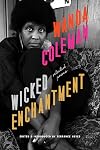
I picked this up just because it was on my favorite bookseller's rec shelf at Hooked. And I would like to know HOW HAD I NEVER HEARD OF WANDA COLEMAN BEFORE? Her frank writing, especially about the perpetually exploitive systems of poverty, blew me away.
I wrote down lots of favorite poems to return to and read again, but a few highlights were the anxiety/vulnerability of "Giving Birth," the heartbreak of "Emmett Till," the playfulness/wistfulness of "Thiefheart."
What people talk about when show more they call poetry powerful. show less
I wrote down lots of favorite poems to return to and read again, but a few highlights were the anxiety/vulnerability of "Giving Birth," the heartbreak of "Emmett Till," the playfulness/wistfulness of "Thiefheart."
What people talk about when show more they call poetry powerful. show less
This is a collection of short stories about working class African-Americans living in Los Angeles, and their daily struggles, loves, frustrations, and dreams. Ms. Coleman is an accomplished poet, and the best stories in this book were the shorter ones, especially "Joy Ride", "Pepper", and "Backcity Transit by Day", which were hauntingly beautiful, like a Billie Holiday solo.
However, I did not enjoy most of the longer pieces to the same degree, with the exception of "Winona's Choice", in show more which a struggling young woman is caught between an old flame and famous actor, who re-enters her life after her husband is tragically killed, and his running buddy from childhood, who the actor envies and uses the woman against him to even an old score. The characters in the other stories were not as well developed or compelling. show less
However, I did not enjoy most of the longer pieces to the same degree, with the exception of "Winona's Choice", in show more which a struggling young woman is caught between an old flame and famous actor, who re-enters her life after her husband is tragically killed, and his running buddy from childhood, who the actor envies and uses the woman against him to even an old score. The characters in the other stories were not as well developed or compelling. show less
National Books Awards Poetry Finalist 2001
This book was published in 2001, back when I did not follow poetry awards. That was also in my Years of Little Reading due to having small kids. I heard about Coleman because my son read some of her poems in his California Literature class this year. The kids in the class had not been born when this book was published. And one of the poems (which I marked but lost because my cat pulls markers out of books) is about academics not accepting her into show more the academy as a self-taught poet without even a BA. She has made it into high scho0ol curriculum.
My favorite part of this book was Part II, Twentieth Century Nod-Out. These poems largely focus on life in LA--especially as a black woman in Los Angeles, like Coleman herself. In many ways little-to-nothing has changed.
In other ways, everything has changed since she wrote this book. Coleman had a son who died of AIDS at the age of 32, c1990 if I understood the poetry. There is a lot about grief and memory. And a fair amount about "the virus". It was strange reading this in 2021, when "the virus" means something very very different. Meanwhile, AIDS in the US is no longer the death sentence it once was.
I am not saying this book is dated. It is an amazing snapshot of a time and place, that has changed and also not changed at all. I imagine reading this back in 2001 was a very different experience--something else that is gone forever. show less
This book was published in 2001, back when I did not follow poetry awards. That was also in my Years of Little Reading due to having small kids. I heard about Coleman because my son read some of her poems in his California Literature class this year. The kids in the class had not been born when this book was published. And one of the poems (which I marked but lost because my cat pulls markers out of books) is about academics not accepting her into show more the academy as a self-taught poet without even a BA. She has made it into high scho0ol curriculum.
My favorite part of this book was Part II, Twentieth Century Nod-Out. These poems largely focus on life in LA--especially as a black woman in Los Angeles, like Coleman herself. In many ways little-to-nothing has changed.
In other ways, everything has changed since she wrote this book. Coleman had a son who died of AIDS at the age of 32, c1990 if I understood the poetry. There is a lot about grief and memory. And a fair amount about "the virus". It was strange reading this in 2021, when "the virus" means something very very different. Meanwhile, AIDS in the US is no longer the death sentence it once was.
I am not saying this book is dated. It is an amazing snapshot of a time and place, that has changed and also not changed at all. I imagine reading this back in 2001 was a very different experience--something else that is gone forever. show less
Lists
Awards


You May Also Like


Associated Authors
Statistics
- Works
- 26
- Also by
- 27
- Members
- 440
- Popularity
- #55,640
- Rating
- 4.0
- Reviews
- 7
- ISBNs
- 48
- Languages
- 1