
Robert Kelly (1) (1935–)
Author of A Controversy of Poets: An Anthology of Contemporary American Poetry,
For other authors named Robert Kelly, see the disambiguation page.
About the Author
Robert Kelly is a director of the Writing Program in poetry at Bard College.
Image credit: photo by Charlotte Mandell
Works by Robert Kelly
A Controversy of Poets: An Anthology of Contemporary American Poetry, (1965) — Editor; Contributor — 83 copies
Finding the Measure 6 copies
Armed descent 4 copies
Her Body Against Time 3 copies
Devotions 3 copies
A California journal 3 copies
Samphire 1 copy
Sixteen Odes 1 copy
Round Dances 1 copy
Christmas Hymn 1 copy
The Logic Of The World 1 copy
Deasil & Widdershins. The Winthrop Sequence from The Fountains. Book VI of The Common Shore and A Daydreamt Fable (1969) 1 copy
Ralegh 1 copy
Associated Works
The Year's Best Fantasy and Horror: Second Annual Collection (1987) — Contributor — 207 copies, 1 review
The Serpent and the Fire: Poetries of the Americas from Origins to Present (2024) — Contributor — 15 copies
Caterpillar 19: Spring 1972 — Contributor — 3 copies
Vort #1, Fall 1972 — Contributor — 1 copy
Vort #4, Fall 1973 — Contributor — 1 copy
Tagged
Common Knowledge
- Birthdate
- 1935-09-24
- Gender
- male
- Education
- Columbia University
City University of New York - Occupations
- translator
teacher
poet
short story writer
novelist - Organizations
- Bard College
Wagner College
State University of New York, Buffalo
Tufts University - Awards and honors
- American Academy of Arts and Letters Academy Award (Literature, 1986)
- Relationships
- Mandell, Charlotte (wife)
- Short biography
- A good deal of Robert Kelly's prose can be read as science fiction. So far as I know, he is the only major American poet to have a character in the X-MEN universe named for him (Senator Robert Kelly).
- Nationality
- USA
- Birthplace
- Brooklyn, New York, New York, USA
- Associated Place (for map)
- New York, USA
Members
Reviews

An exuberant, lyrical and highly-literate first novel featuring a larger-than-life book-collecting occult psychoanalyst and his Nautilus-like Rolls Royce on the track of The Scorpions, an occult group of conspirators that may or may not exist. The book is one-of-a-kind but contains elements that are also successfully carried off in The Crying of Lot 49, A Confederacy of Dunces, early DeLillo novels, Mike Hammer novels and Pale Fire. Amazing and all too brief.
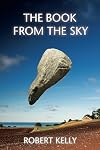
This is one of those books that made me think about genre. It's become quite common among authors of speculative fiction (SF, fantasy, horror, etc.) to claim that good SF is good literature and vice versa -- and on some level, I agree -- but the thing is, my experiences tells me that the various subgenres of SF, like poetry, are not like "mainstream" or "literary" fiction.
In some ways, of course, this is a blessing: once something has to exhibit its own literary worthiness, you find a show more certain tendency toward turgidity, towards what someone I knew online once diagnosed as "a serious case of serious." But it's more than that: it's the fact that in genre writing, if you don't know the genre or are unfamiliar with it, you're likely to start writing bad genre.
I think this is more true of some subgenres, and less true of others. Specifically, I think that the barriers to entry into SF are higher than they are into the subgenres of fantasy and horror. Fantasy writers might go up in arms when they hear me say this, but a simple moment of reflection will reveal that fantasy-like and horror-like writing has been around -- and widespread -- for ages, whilst SF is a much newer development. As well, there are no hard-and-fast rules of magic that need to be followed: an intelligent, imaginative fledgling author may happen to reproduce the same imaginary system of magical rules that some other author created in a book or series years before, but at least nobody can corner her for getting the rules "wrong," something to which SF authors are constantly subject.
As well, it seems to me that the high focus on the "neat idea" factor in SF -- the focus on what Darko Suvin calls "the novum," meaning whatever is newfangled and different from our present, but, at least in most of the SF I read, also plausible to soem degree -- is so much more pronounced than it is in fantasy. In fantasy or horror, you don't have people saying, "That's implausible!", or at least you don't have them saying that about your fantastical elements; you might have them say, "That's boring!" but a truly inspired or truly skilled writer can finesse that. It's much harder to finesse the problem when you're dealing with an audience that is not only, as mentioned above, likely to call you on it when you get the physics wrong, but also likely to compile a list of novels in which your so-called innovative idea was first tossed into the SF boxing ring.
That's not to say SF is harder to write than fantasy -- I find it much easier than any form of fantasy to write, because of the way my mind works through narratives and so on -- but it is to say that when people come at genre from without, they're probably swinging with a lower handicap in fantasy or horror than they are in SF. It's still hard for someone to come in from outside and write an outstanding fantasy novel, or an excellent horror novel, but I suspect that in SF, it's hard for someone to come into the genre from outside of it and write even a passable novel.
Robert Kelley is a poet and a professor at Bard College. I don't know if he reads SF regularly, much less if he's up-to-date on the field. HE has published more than fifty books, which means he obviously must be a competent writer. And in fact, there are a number of passages in The Book from the Sky that display his skill as a writer a poet. But if you look at the publisher's blurb, you might have some idea of why it didn't work for me:
“I’m on my way back. I was one of the first they took away.” So begins Robert Kelly’s remarkable science fiction novel about a literally divided self. “I” is Billy, the book’s protagonist, a boy who is captured by a group of aliens who take him to a cave and meticulously, if seemingly by caprice, remove his “young pure smokeless lungs” and other internal organs to replace them with two gray squirrels, a live hawk, a shoe, and a variety of other bizarre objects.
This is, it appears, a poet's idea of interesting biomodification. To me, though, it just rings hollow: it's a metaphor for something, I guess... or maybe it's just a list, one of those evocative lists that poets know they can rely on to build up a metaphorical field, a kind of tension and mood. To me, though, it falls flat compared with, oh, something that could actually happen. Not that Kelly seems to intend it to be read literalistically, or scientifically, or, well, in the way we tend to read SF; but rather, that his "aliens" could just as easily have been mythic Native American forest-spirits, or a band of fae come to kidnap him and hold him hostage in the UnSeelie Court. The two gray squirrels, the live hawk, the shoe, and other bizarre objects could as easily have been clockwork mechanisms and discarded music boxes, or fluids of different colors in various little perfume vials.
In other words, the SFnal content in the story -- up to where I could read no longer -- is wholly arbitrary and wholly interchangeable with any other fantastical content. The blurb goes on:
Billy’s body and mind are spun off into a curious twin, one whose adventures Billy is forced by his captors to watch and try to make sense of—not a simple task when he sees his doppelgänger stealing everything from him: body, name, family, his beloved Eileen. Complicating matters, and forcing Billy deeper into his ironic journey of self, is a mysterious pamphlet called “The Book from the Sky,” written by what may be yet another variation of Billy himself, Brother William. This stunningly imaginative work, echoing the late novels of Iris Murdoch and the fantasies of Robert Charles Wilson and Jonathan Stroud while remaining inimitably Kelly’s own, offers adventurous readers a “cabinet of wonders” not unlike the body of his beleaguered young hero.
What you really end up with, then, is the use of SF as a kind of mouthpiece for issues of literary obsession concern: a divided self, alien abduction, the act of writing itself in the form of the excerpts for which the book is named.
The problem, to me, might be that I am an SF reader (and writer). It may be that, knowing too much about the genre myself -- though I am not nearly as well-read as any number of fans -- I cannot help but hold this book up beside a tradition that it appears to attempt to mine, yet fails to reflect in any substantial manner; maybe this is unfair, as Kelly, a poet, surely believes he's turning these SFnal tropes in on themselves, using them in a poetical manner just as he might a modern retelling of ancient epics. Surely Kelly doesn't think he's written an SF novel? He doesn't describe it that way in the interview I found online. But as an SF reader, I can say that he skates quite close enough to come off as someone who really just doesn't get SF.
What I've noticed, looking around online, is that people who are actually into SF have tended not to say anything about this book, or to acknowledge Kelly's skill while complaining that the book is muddled, confusing, or just plain bad SF. Whereas people who seem to be into poetry, into mainstream literary fiction ( not just pretentious stuff, but the good stuff too) seem to be quite enthusiastic about it. If you're into both SF and poetry, like me, then you'll probably find yourself bouncing from one side -- Wow, this guy can write! -- to the other -- What the hell did the aliens put two live squirrels into his abdomen for?
So I guess that's a pretty good guide of who will like or dislike the book: if you're into SF, this is likely not your bag. If you're not so into SF, but like reading poetry, this might be a novel for you. This is SF the way a famous and pretty good poet would write it: which is to say, it's maybe not SF for anyone who reads SF. show less
In some ways, of course, this is a blessing: once something has to exhibit its own literary worthiness, you find a show more certain tendency toward turgidity, towards what someone I knew online once diagnosed as "a serious case of serious." But it's more than that: it's the fact that in genre writing, if you don't know the genre or are unfamiliar with it, you're likely to start writing bad genre.
I think this is more true of some subgenres, and less true of others. Specifically, I think that the barriers to entry into SF are higher than they are into the subgenres of fantasy and horror. Fantasy writers might go up in arms when they hear me say this, but a simple moment of reflection will reveal that fantasy-like and horror-like writing has been around -- and widespread -- for ages, whilst SF is a much newer development. As well, there are no hard-and-fast rules of magic that need to be followed: an intelligent, imaginative fledgling author may happen to reproduce the same imaginary system of magical rules that some other author created in a book or series years before, but at least nobody can corner her for getting the rules "wrong," something to which SF authors are constantly subject.
As well, it seems to me that the high focus on the "neat idea" factor in SF -- the focus on what Darko Suvin calls "the novum," meaning whatever is newfangled and different from our present, but, at least in most of the SF I read, also plausible to soem degree -- is so much more pronounced than it is in fantasy. In fantasy or horror, you don't have people saying, "That's implausible!", or at least you don't have them saying that about your fantastical elements; you might have them say, "That's boring!" but a truly inspired or truly skilled writer can finesse that. It's much harder to finesse the problem when you're dealing with an audience that is not only, as mentioned above, likely to call you on it when you get the physics wrong, but also likely to compile a list of novels in which your so-called innovative idea was first tossed into the SF boxing ring.
That's not to say SF is harder to write than fantasy -- I find it much easier than any form of fantasy to write, because of the way my mind works through narratives and so on -- but it is to say that when people come at genre from without, they're probably swinging with a lower handicap in fantasy or horror than they are in SF. It's still hard for someone to come in from outside and write an outstanding fantasy novel, or an excellent horror novel, but I suspect that in SF, it's hard for someone to come into the genre from outside of it and write even a passable novel.
Robert Kelley is a poet and a professor at Bard College. I don't know if he reads SF regularly, much less if he's up-to-date on the field. HE has published more than fifty books, which means he obviously must be a competent writer. And in fact, there are a number of passages in The Book from the Sky that display his skill as a writer a poet. But if you look at the publisher's blurb, you might have some idea of why it didn't work for me:
“I’m on my way back. I was one of the first they took away.” So begins Robert Kelly’s remarkable science fiction novel about a literally divided self. “I” is Billy, the book’s protagonist, a boy who is captured by a group of aliens who take him to a cave and meticulously, if seemingly by caprice, remove his “young pure smokeless lungs” and other internal organs to replace them with two gray squirrels, a live hawk, a shoe, and a variety of other bizarre objects.
This is, it appears, a poet's idea of interesting biomodification. To me, though, it just rings hollow: it's a metaphor for something, I guess... or maybe it's just a list, one of those evocative lists that poets know they can rely on to build up a metaphorical field, a kind of tension and mood. To me, though, it falls flat compared with, oh, something that could actually happen. Not that Kelly seems to intend it to be read literalistically, or scientifically, or, well, in the way we tend to read SF; but rather, that his "aliens" could just as easily have been mythic Native American forest-spirits, or a band of fae come to kidnap him and hold him hostage in the UnSeelie Court. The two gray squirrels, the live hawk, the shoe, and other bizarre objects could as easily have been clockwork mechanisms and discarded music boxes, or fluids of different colors in various little perfume vials.
In other words, the SFnal content in the story -- up to where I could read no longer -- is wholly arbitrary and wholly interchangeable with any other fantastical content. The blurb goes on:
Billy’s body and mind are spun off into a curious twin, one whose adventures Billy is forced by his captors to watch and try to make sense of—not a simple task when he sees his doppelgänger stealing everything from him: body, name, family, his beloved Eileen. Complicating matters, and forcing Billy deeper into his ironic journey of self, is a mysterious pamphlet called “The Book from the Sky,” written by what may be yet another variation of Billy himself, Brother William. This stunningly imaginative work, echoing the late novels of Iris Murdoch and the fantasies of Robert Charles Wilson and Jonathan Stroud while remaining inimitably Kelly’s own, offers adventurous readers a “cabinet of wonders” not unlike the body of his beleaguered young hero.
What you really end up with, then, is the use of SF as a kind of mouthpiece for issues of literary obsession concern: a divided self, alien abduction, the act of writing itself in the form of the excerpts for which the book is named.
The problem, to me, might be that I am an SF reader (and writer). It may be that, knowing too much about the genre myself -- though I am not nearly as well-read as any number of fans -- I cannot help but hold this book up beside a tradition that it appears to attempt to mine, yet fails to reflect in any substantial manner; maybe this is unfair, as Kelly, a poet, surely believes he's turning these SFnal tropes in on themselves, using them in a poetical manner just as he might a modern retelling of ancient epics. Surely Kelly doesn't think he's written an SF novel? He doesn't describe it that way in the interview I found online. But as an SF reader, I can say that he skates quite close enough to come off as someone who really just doesn't get SF.
What I've noticed, looking around online, is that people who are actually into SF have tended not to say anything about this book, or to acknowledge Kelly's skill while complaining that the book is muddled, confusing, or just plain bad SF. Whereas people who seem to be into poetry, into mainstream literary fiction ( not just pretentious stuff, but the good stuff too) seem to be quite enthusiastic about it. If you're into both SF and poetry, like me, then you'll probably find yourself bouncing from one side -- Wow, this guy can write! -- to the other -- What the hell did the aliens put two live squirrels into his abdomen for?
So I guess that's a pretty good guide of who will like or dislike the book: if you're into SF, this is likely not your bag. If you're not so into SF, but like reading poetry, this might be a novel for you. This is SF the way a famous and pretty good poet would write it: which is to say, it's maybe not SF for anyone who reads SF. show less
 This review was written for LibraryThing Early Reviewers.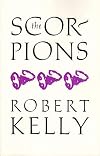
Ordinarily, when a book is full of unresolved puzzles and loose ends, when its narrator is sexually insinuating without detail or description and when a book fails to end in a conventional way, I hate the book. Much of the OuLiPo literature and the hyper-saturated symbolist literature that “The Scorpions” sometimes resembles is also, as far as I’m concerned, supremely irritating. But I’m a sucker for unconventional detective fiction and lethal, arrogant, philandering eccentrics.
Kelly show more is also a talented, deliberate and sensitive prose stylist. I enjoyed, “Now no memorial of her act was left besides my own rapidly blurring memory of the open-lipped tension of triumph in her face as she’d taken the steaks under her wing, her quick stiff-kneed sumptuous walk away.” & “Cat fanciers, dog breeders, parakeet tenders, goldfish feeders, little they knew or cared how much of themselves they alienated to the animals in their charge. Beasts crave souls from men, suck those souls.” Kelly’s solid physical humor is a perfect antidote to the potentially eye-glazing details about astrology and numerology, just as the narrator’s libido is an ideal counterbalance to his ritual, cerebralized paganism.
I’m still incredulous that I judge Kelly to be successful in attempting exactly the sort of closure that he describes in the afterword, which is an especially helpful lubricant and apology for the book’s uncompromising end. The shrug of a conclusion is a smashing commentary on all of the novel’s ploys and titillations. It could be taken as a fond dismissal of recently popular forms of over-precious and over-wrought American experimental fiction.
Worth mentioning: it feels, in its oddness and pace, like a Murakami novel with a toxic protagonist. show less
Kelly show more is also a talented, deliberate and sensitive prose stylist. I enjoyed, “Now no memorial of her act was left besides my own rapidly blurring memory of the open-lipped tension of triumph in her face as she’d taken the steaks under her wing, her quick stiff-kneed sumptuous walk away.” & “Cat fanciers, dog breeders, parakeet tenders, goldfish feeders, little they knew or cared how much of themselves they alienated to the animals in their charge. Beasts crave souls from men, suck those souls.” Kelly’s solid physical humor is a perfect antidote to the potentially eye-glazing details about astrology and numerology, just as the narrator’s libido is an ideal counterbalance to his ritual, cerebralized paganism.
I’m still incredulous that I judge Kelly to be successful in attempting exactly the sort of closure that he describes in the afterword, which is an especially helpful lubricant and apology for the book’s uncompromising end. The shrug of a conclusion is a smashing commentary on all of the novel’s ploys and titillations. It could be taken as a fond dismissal of recently popular forms of over-precious and over-wrought American experimental fiction.
Worth mentioning: it feels, in its oddness and pace, like a Murakami novel with a toxic protagonist. show less
This book begins with an intriguing and surreal alien abduction, setting up a David Lynch or X-Files-type split consciousness plot. It then moves through a loosely related set of incidents in which one narrator’s mental health is questioned (in a way that brings to mind Zen and the Art of Motor Cycle Maintenance). The book of the title, the focus of a new religion followed by some of the characters, makes up the last third of the novel. It is never clear, however, how much of that book’s show more content is meant to be tongue in cheek, and how much is meant to be truly profound. Along the way, the author loops and lopes through thought-provoking digressions on the linguistic power of naming and knowing. His skills at poetry shine through in those sections. Other digressions, however--ruminations by numerous characters on the emotional connections forged through sexual relationships--are poorly integrated. The story is ultimately one that questions how much we know about ourselves. Individually, a number of facets of the story stir up fascinating thoughts. But while the final scenes show attempts to tie up some of the more powerful images from the beginning of the novel, by then the power of the story has dwindled away. show less
This review was written for LibraryThing Early Reviewers.Awards

You May Also Like


Associated Authors
Statistics
- Works
- 71
- Also by
- 16
- Members
- 632
- Popularity
- #39,872
- Rating
- 3.7
- Reviews
- 17
- ISBNs
- 98
- Languages
- 2
- Favorited
- 2
