
Chinua Achebe's reputation earns too much exposure for his jaded and pessimistic stories about how the traditions, cultures and institutions of Africa inevitably destroy its most promising individuals.
"No Longer At Ease" frames the gradual undoing of a young man saddled with being the collective investment of his rural Nigerian community. Their fraternal society pay for his school fees and sponsor his European education so that he can return to Nigeria and use his credentials to acquire a government job that gives him leverage to advance the fraternal society his friends and his family.
Watch as financial pressures weaken the integrity and resolve of this young man who can't even enjoy the love of his favorite woman because she is tainted by the magical thinking of his tribe. A cast of stereotypes and caricatures accompany our protagonist through a demoralizing series of mundane misfortunes (Oh no! I didn't realize that I had to pay for car insurance! Hospital bills for my mother!). As these non-events unfold, a few representatives of white civilization shake their heads over cold beers in the country club, so disappointed in the lost potential.
The book lacks imagination, it lacks joy, it lacks style and it lacks importance. It's ripe for a generic high school essay; but it doesn't merit an unforced reading. Skip.
"No Longer At Ease" frames the gradual undoing of a young man saddled with being the collective investment of his rural Nigerian community. Their fraternal society pay for his school fees and sponsor his European education so that he can return to Nigeria and use his credentials to acquire a government job that gives him leverage to advance the fraternal society his friends and his family.
Watch as financial pressures weaken the integrity and resolve of this young man who can't even enjoy the love of his favorite woman because she is tainted by the magical thinking of his tribe. A cast of stereotypes and caricatures accompany our protagonist through a demoralizing series of mundane misfortunes (Oh no! I didn't realize that I had to pay for car insurance! Hospital bills for my mother!). As these non-events unfold, a few representatives of white civilization shake their heads over cold beers in the country club, so disappointed in the lost potential.
The book lacks imagination, it lacks joy, it lacks style and it lacks importance. It's ripe for a generic high school essay; but it doesn't merit an unforced reading. Skip.
Every page I turn to of "In Arcadia" justifies my decision to spare myself a close reading of the last 160 pages. All of my forays into the later parts and books and chapters lead me smack into the exhausting, uninvested, list-making and cranky ranting that this too self-involved novel obsessively churns out.
Okri can't seem to tell a story anymore--his threadbare shrug towards narrative is only a convenient vehicle for his reflections on modern life, on meaning, on art, on film--anything mentioned in the text is then discoursed upon, tiresomely or sometimes with anger that is neither sharp nor important.
What is this staccato rubbish: "Strangest creature I ever saw. Don’t quite know how to describe her. Small, wiry, full of a mad quirrel-like ampheteamine-driven panic-charged vaguely neurotic energy. Nice eyes. I hate to admit it, but nice eyes. I like them. I adore them. Charming, sweet, pretty eyes. Can’t make out how a weirdo gets to have such nice eyes."
What sort of hip, chatty tone is Okri hoping to approximate? Is it supposed to soften us up for passages like:
"They gained in menace, in untrustworthiness, in depth. These were thorough failures, desperate media people, haunted by the marvelous and crushing contempt that the great goddess of fame had heaped on them, haunted by their complete inability to make any sort of mark on the vile fabric of their age. They were, therefore, willing accomplices of the corporation of the devil, desperadoes of fame and urban show more fortune. I had no reason to think them incapable of anything." Or . . .
"Jim sensed their journey was an arcane voyage, the interviewsw and places forming an inner script, a sacred script even. He felt that they were all unwitting parts of a sublime riddle, a mystican conundrum, a travelling cryptograph."?
The novel changes its narrative perspective and form and still manages not to evolve: "I live in a permanent existential condition: most things conspire to deny me existence and historical validity. Sometimes I wonder if I exist or whether I am not an invention, a nightmare invention, a regrettable invention, in the mind of society . . . Don’t dehumanize me or insult my intelligence by trying to make up for the vile invisible laws that try to fuck up my pleasant existence."
"Death spoke from the design, from the attempt to create Acrcadia according to one’s image and command. Death spoke through the geometry of it. Death spoke through the excess of symbolism. Death spoke through the labyrinths. Death spoke through the mathematics."
It's sad that Okri's fiction has become an overwritten, underproven, conceptual pageantry. There's not a lick of authenticity anywhere. I think it may be time for me to give up on this man. show less
Okri can't seem to tell a story anymore--his threadbare shrug towards narrative is only a convenient vehicle for his reflections on modern life, on meaning, on art, on film--anything mentioned in the text is then discoursed upon, tiresomely or sometimes with anger that is neither sharp nor important.
What is this staccato rubbish: "Strangest creature I ever saw. Don’t quite know how to describe her. Small, wiry, full of a mad quirrel-like ampheteamine-driven panic-charged vaguely neurotic energy. Nice eyes. I hate to admit it, but nice eyes. I like them. I adore them. Charming, sweet, pretty eyes. Can’t make out how a weirdo gets to have such nice eyes."
What sort of hip, chatty tone is Okri hoping to approximate? Is it supposed to soften us up for passages like:
"They gained in menace, in untrustworthiness, in depth. These were thorough failures, desperate media people, haunted by the marvelous and crushing contempt that the great goddess of fame had heaped on them, haunted by their complete inability to make any sort of mark on the vile fabric of their age. They were, therefore, willing accomplices of the corporation of the devil, desperadoes of fame and urban show more fortune. I had no reason to think them incapable of anything." Or . . .
"Jim sensed their journey was an arcane voyage, the interviewsw and places forming an inner script, a sacred script even. He felt that they were all unwitting parts of a sublime riddle, a mystican conundrum, a travelling cryptograph."?
The novel changes its narrative perspective and form and still manages not to evolve: "I live in a permanent existential condition: most things conspire to deny me existence and historical validity. Sometimes I wonder if I exist or whether I am not an invention, a nightmare invention, a regrettable invention, in the mind of society . . . Don’t dehumanize me or insult my intelligence by trying to make up for the vile invisible laws that try to fuck up my pleasant existence."
"Death spoke from the design, from the attempt to create Acrcadia according to one’s image and command. Death spoke through the geometry of it. Death spoke through the excess of symbolism. Death spoke through the labyrinths. Death spoke through the mathematics."
It's sad that Okri's fiction has become an overwritten, underproven, conceptual pageantry. There's not a lick of authenticity anywhere. I think it may be time for me to give up on this man. show less
Ever since I was caught completely off-guard by the brilliance of "Grapes of Wrath," I have had my eyes on "East of Eden." Several times the overblown pastoral beginning delayed a full reading by months or years--I don't care about "warm foothills," "beckoning mountains" or "five-fingered ferns and goldy-backs."
I should have remembered those distracting set pieces that punctuate the arresting drama of "Grapes of Wrath" and pushed through until the characters got started. Steinbeck has the discipline, craft and insight required to rewrite Genesis while weighing in on just about every major grappling point in the self-actualization of a thoughtful human being. He also has enough respect for working people to ground himself in loyalty, vengeance, debauchery and facts.
Critically, Steinbeck can aerate his novel with dialogue as unpretentious and wonderful as:
"You never wrote much what you were doing," said Charles.
"I guess I didn't want to think about it. It was pretty bad, most of it."
"I read about the campaigns in the papers. Did you go on those?"
"Yes. I didn't want to think about them. Still don't."
"Did you kill Injuns?"
"Yes, we killed Injuns."
"I guess they're real ornery."
"I guess so."
"You don't have to talk about it if you don't want to."
"I don't want to."
They ate their dinner under the kerosene lamp. "We'd get more light if I would only get around to washing that lampshade."
Reading Steinbeck can feel like participating in history. His characters are giant; they develop show more over decades and through drawn-out, thoroughly-explored conflicts. He also has a misogynistic streak that produces some amusingly crabby one-liners about the women in his book: all of whom are deeply flawed in one way or another--both as characters and as inventions.
What Steinbeck should I read next? (Assuming that I don't want to get anywhere near shit like "Of Mice and Men.") show less
I should have remembered those distracting set pieces that punctuate the arresting drama of "Grapes of Wrath" and pushed through until the characters got started. Steinbeck has the discipline, craft and insight required to rewrite Genesis while weighing in on just about every major grappling point in the self-actualization of a thoughtful human being. He also has enough respect for working people to ground himself in loyalty, vengeance, debauchery and facts.
Critically, Steinbeck can aerate his novel with dialogue as unpretentious and wonderful as:
"You never wrote much what you were doing," said Charles.
"I guess I didn't want to think about it. It was pretty bad, most of it."
"I read about the campaigns in the papers. Did you go on those?"
"Yes. I didn't want to think about them. Still don't."
"Did you kill Injuns?"
"Yes, we killed Injuns."
"I guess they're real ornery."
"I guess so."
"You don't have to talk about it if you don't want to."
"I don't want to."
They ate their dinner under the kerosene lamp. "We'd get more light if I would only get around to washing that lampshade."
Reading Steinbeck can feel like participating in history. His characters are giant; they develop show more over decades and through drawn-out, thoroughly-explored conflicts. He also has a misogynistic streak that produces some amusingly crabby one-liners about the women in his book: all of whom are deeply flawed in one way or another--both as characters and as inventions.
What Steinbeck should I read next? (Assuming that I don't want to get anywhere near shit like "Of Mice and Men.") show less
“Out of Poverty” is a workshop; it’s an evangelical seminar and an infomercial. It’s subdivided ruthlessly. It’s full of lists. It’s incredibly repetitive. There is absolutely no way to read it at an academic remove because Paul Polak is beating his readers over the head with the urgent simplicity of his thinking and with the exasperation of a pragmatist who is regularly accused of idealism.
Polak wants to encourage a modest paradigm shift in development. He’s convinced that donations will not alleviate poverty; that a country’s economic growth will not necessarily help the poor and that big businesses cannot be trusted to do so either. He champions design for the other 90%--the increasingly popular effort to engineer products for the billions of people making do with about $1 a day. And he is a powerful advocate of small-scale thinking: the one-acre farm is great: grow pumpkins on your roof and a raspberry patch! He wants to create wafer thin profit margins; but to spread those margins across a billion people. Why not?
Polak is giving it away. “Out of Poverty” repeatedly challenges entrepreneurs to take his ideas and to profit by them. Why isn’t anyone making cheap eye glasses like he proposes? How about his treadle pumps and low-cost drip irrigation systems? Or his lockers for homeless people?
He’s convincing. Whenever my own professional work overlaps with what he discusses, I’ll pick up his book and make sure I’m paying attention to his show more advice. Others in the development community will do their jobs better if they do the same—especially those people involved in agriculture and subsistence farming.
And if you are far removed from the developing world and from development work in general, this is still a useful book for orienting yourself in such matters. Polak makes sure that his readers all know what he would like for them to do upon completing “Out of Poverty.” Such clarity of purpose makes for a rather graceless and pushy book; but the man’s got rock solid ideas. show less
Polak wants to encourage a modest paradigm shift in development. He’s convinced that donations will not alleviate poverty; that a country’s economic growth will not necessarily help the poor and that big businesses cannot be trusted to do so either. He champions design for the other 90%--the increasingly popular effort to engineer products for the billions of people making do with about $1 a day. And he is a powerful advocate of small-scale thinking: the one-acre farm is great: grow pumpkins on your roof and a raspberry patch! He wants to create wafer thin profit margins; but to spread those margins across a billion people. Why not?
Polak is giving it away. “Out of Poverty” repeatedly challenges entrepreneurs to take his ideas and to profit by them. Why isn’t anyone making cheap eye glasses like he proposes? How about his treadle pumps and low-cost drip irrigation systems? Or his lockers for homeless people?
He’s convincing. Whenever my own professional work overlaps with what he discusses, I’ll pick up his book and make sure I’m paying attention to his show more advice. Others in the development community will do their jobs better if they do the same—especially those people involved in agriculture and subsistence farming.
And if you are far removed from the developing world and from development work in general, this is still a useful book for orienting yourself in such matters. Polak makes sure that his readers all know what he would like for them to do upon completing “Out of Poverty.” Such clarity of purpose makes for a rather graceless and pushy book; but the man’s got rock solid ideas. show less
I read William T. Vollmann because he occasionally gets everything right, all at once. Tucked between pages of overwritten and sometimes annoying prose, he'll pull everything together for a few sentences that are crass, ethical, devastating, beautiful and true. I wonder if he will ever be constrained by himself or an editor to pack his finest moments into a novel all their own; it would be a formidable work.
13 Stories and 13 epitaphs, like a few other Vollmann "short story collections" is awfully close to being a shredded novel (perhaps another place where an editor less overwhelmed by Vollmann's fame might have made some suggestions). Characters recur throughout and the narrative voice is more of a presence and more of a character than, say, Anderson is in "Winesburg, Ohio."
A longer excerpt from the beginning of the eighth story offers a particularly unobscured example of Vollmann's subject matter and point of view:
"Admittedly, whatever help I offered has rarely succeeded in accomplishing anything; yet I myself have benefited so much from the generosity of friends and strangers that I have never seen reason to be pessimistic about what one human being can do for another. There are always instances, good and bad, that prove that the world does not work the way we expect it to. I remember the case of Sheet-Rock Mark, who went with my friend Ken to a Vietnamese restaurant, and Mark kept yelling what the fuck do you want to take me to this gook place for? why do you want show more this goddamned gook food? and I imagine that the Vietnamese lady who served them understood very well the drift of Mark's words and feared and hated Mark, and then after lunch Mark saw that the door was broken and he said to her oh you want me to fix your door? He got his tools and worked on that door for a good hour, and when he was finished the door was fixed and the Vietnamese lady was happy. It seems to me that Mark did more good than one of the people who have despised Mark for calling her a gook, who would have been polite to her and smiled at her encouragingly when she tried to speak English, but who would never in a million years have repaired the door."
This is Vollmann, matter-of-fact and confrontational, sitting amongst the people who concern him. At another point, also concerned with a war veteran, Vollmann writes with more intensity:
"Nonetheless, he had kept the dog tags of the last German that he'd killed, one minute before Hitler committed suicide. They were two cold black strips of metal, joined by a chain; they were heavy and slick with gun-oil; they had the smell of handcuffs about them. Sometimes, when the rest of the family was watching the blue adventures of Lone Shen on the old television and everybody got killed in action all over again, he went out to the garage to hold them in his hands. It was strange, the way they could suck the warmth out of him. He told no one about them, least of all his wife, because they had power and were magic. A houselight from across the featurlessly white-walled driveway shone green in the window, which was grey and of a varying texture, like pond ice. He held the dog tags up to the light and watched them glow. but they sucked him dry somehow. they left him so tired that when he pissed he could note even tell whether the ringing in his ears was piss striking the bowl or a sound in his head or maybe the ringing of a telephone."
Of course, within a minute's read, you can be mired in a twelve page, chopped up whore-dialogue of broken and accented English. Or your narrator might ask, "Which of the umpety-ump million flavors of pussy would he taste tonight?" But this multi-colored, unapologetic mess has characterized much of the Vollmann that I have read--and when I see that it characterizes another of his works (and when I see that I am not about to read a mythologized book about an icelandic power vest), I will read it.
Sometimes you are embarrassed for Vollmann and sometimes he embarrasses you. He is earnest, thoughtful, far away from what you know and allergic to the cheap laughs and the garbagey referential humor of his contemporary American novelists. show less
13 Stories and 13 epitaphs, like a few other Vollmann "short story collections" is awfully close to being a shredded novel (perhaps another place where an editor less overwhelmed by Vollmann's fame might have made some suggestions). Characters recur throughout and the narrative voice is more of a presence and more of a character than, say, Anderson is in "Winesburg, Ohio."
A longer excerpt from the beginning of the eighth story offers a particularly unobscured example of Vollmann's subject matter and point of view:
"Admittedly, whatever help I offered has rarely succeeded in accomplishing anything; yet I myself have benefited so much from the generosity of friends and strangers that I have never seen reason to be pessimistic about what one human being can do for another. There are always instances, good and bad, that prove that the world does not work the way we expect it to. I remember the case of Sheet-Rock Mark, who went with my friend Ken to a Vietnamese restaurant, and Mark kept yelling what the fuck do you want to take me to this gook place for? why do you want show more this goddamned gook food? and I imagine that the Vietnamese lady who served them understood very well the drift of Mark's words and feared and hated Mark, and then after lunch Mark saw that the door was broken and he said to her oh you want me to fix your door? He got his tools and worked on that door for a good hour, and when he was finished the door was fixed and the Vietnamese lady was happy. It seems to me that Mark did more good than one of the people who have despised Mark for calling her a gook, who would have been polite to her and smiled at her encouragingly when she tried to speak English, but who would never in a million years have repaired the door."
This is Vollmann, matter-of-fact and confrontational, sitting amongst the people who concern him. At another point, also concerned with a war veteran, Vollmann writes with more intensity:
"Nonetheless, he had kept the dog tags of the last German that he'd killed, one minute before Hitler committed suicide. They were two cold black strips of metal, joined by a chain; they were heavy and slick with gun-oil; they had the smell of handcuffs about them. Sometimes, when the rest of the family was watching the blue adventures of Lone Shen on the old television and everybody got killed in action all over again, he went out to the garage to hold them in his hands. It was strange, the way they could suck the warmth out of him. He told no one about them, least of all his wife, because they had power and were magic. A houselight from across the featurlessly white-walled driveway shone green in the window, which was grey and of a varying texture, like pond ice. He held the dog tags up to the light and watched them glow. but they sucked him dry somehow. they left him so tired that when he pissed he could note even tell whether the ringing in his ears was piss striking the bowl or a sound in his head or maybe the ringing of a telephone."
Of course, within a minute's read, you can be mired in a twelve page, chopped up whore-dialogue of broken and accented English. Or your narrator might ask, "Which of the umpety-ump million flavors of pussy would he taste tonight?" But this multi-colored, unapologetic mess has characterized much of the Vollmann that I have read--and when I see that it characterizes another of his works (and when I see that I am not about to read a mythologized book about an icelandic power vest), I will read it.
Sometimes you are embarrassed for Vollmann and sometimes he embarrasses you. He is earnest, thoughtful, far away from what you know and allergic to the cheap laughs and the garbagey referential humor of his contemporary American novelists. show less
During the long anticlimax of this book, when all three authors start writing their final reports, Ken summarizes their effort: “Collectively we experienced—maybe represent—all the exultation and catastrophe of a decade spent trying and failing to do well by doing good in a new world.” He and his role model Andrew can’t shake this tragic tone; instead, they use their respective religions to contextualize themselves as martyr heroes in a brutally flawed machine that converts youth, trust and idealism into bureaucracy, buck-passing and corpses.
Heidi, the secretary from New Jersey, regularly criticizes her co-authors for exactly this failing and effectively carries their book with her energy and authenticity. With the exception of maybe four paragraphs of abstracted and awkward love making contributed by the men, Heidi is also responsible for almost all of the “Emergency Sex.” I’m pretty sure there’s a whole incredibly popular genre of tell-all memoires written by sexually liberated women (for sale near the cash register, at the airport). I haven’t read any of these. So, I don’t know if Heidi’s prose is derivative and I was prepared, instead, to find her sections of the book totally refreshing. In the midst of the grim ethical calculations being made by the two male leads, it’s a treat to find Heidi writing:
“I’ll have to act all earnest and somber too and nod my head a lot. I’ll have to ask relevant questions, and the whole time Ken will be show more nervously waiting for me to use foul language, and when I do, he’ll smile and make that little coughing sound to show everyone he’s disassociating himself from me.”
All of the authors foreground their thoughts about one another and their tendency to rank and rate themselves against their colleagues. This depiction of the credibility culture of hard core aid workers was particularly fun to oversee. “Emergency Sex” is, as the title would suggest, a voyeuristic book. It’s an all access pass to a very exclusive club: board that helicopter, enter that dank secret prison, jump into the mass grave, or kick your daiquiri’s back poolside with the do-gooding jet set.
But amidst this formidable momentum, the book is also polemical. With first-hand experience, Cain and Thomson argue (not originally) that following the U.S. Military casualties in Somalia, both the U.S. and the U.N. failed spectacularly at their mandates and humanitarian objectives and, worse, betrayed the trust of the vulnerable people to whom they promised safety and protection. Their disillusionment at being part of these failures effectively balances the heady self-satisfaction that makes the first part of the book seem like a recruiting advertisement for the UN.
This would be a rewarding book to teach to high school students and it would be easy to read while traveling or on vacation. It is enjoyable but not essential. show less
Heidi, the secretary from New Jersey, regularly criticizes her co-authors for exactly this failing and effectively carries their book with her energy and authenticity. With the exception of maybe four paragraphs of abstracted and awkward love making contributed by the men, Heidi is also responsible for almost all of the “Emergency Sex.” I’m pretty sure there’s a whole incredibly popular genre of tell-all memoires written by sexually liberated women (for sale near the cash register, at the airport). I haven’t read any of these. So, I don’t know if Heidi’s prose is derivative and I was prepared, instead, to find her sections of the book totally refreshing. In the midst of the grim ethical calculations being made by the two male leads, it’s a treat to find Heidi writing:
“I’ll have to act all earnest and somber too and nod my head a lot. I’ll have to ask relevant questions, and the whole time Ken will be show more nervously waiting for me to use foul language, and when I do, he’ll smile and make that little coughing sound to show everyone he’s disassociating himself from me.”
All of the authors foreground their thoughts about one another and their tendency to rank and rate themselves against their colleagues. This depiction of the credibility culture of hard core aid workers was particularly fun to oversee. “Emergency Sex” is, as the title would suggest, a voyeuristic book. It’s an all access pass to a very exclusive club: board that helicopter, enter that dank secret prison, jump into the mass grave, or kick your daiquiri’s back poolside with the do-gooding jet set.
But amidst this formidable momentum, the book is also polemical. With first-hand experience, Cain and Thomson argue (not originally) that following the U.S. Military casualties in Somalia, both the U.S. and the U.N. failed spectacularly at their mandates and humanitarian objectives and, worse, betrayed the trust of the vulnerable people to whom they promised safety and protection. Their disillusionment at being part of these failures effectively balances the heady self-satisfaction that makes the first part of the book seem like a recruiting advertisement for the UN.
This would be a rewarding book to teach to high school students and it would be easy to read while traveling or on vacation. It is enjoyable but not essential. show less
Ordinarily, when a book is full of unresolved puzzles and loose ends, when its narrator is sexually insinuating without detail or description and when a book fails to end in a conventional way, I hate the book. Much of the OuLiPo literature and the hyper-saturated symbolist literature that “The Scorpions” sometimes resembles is also, as far as I’m concerned, supremely irritating. But I’m a sucker for unconventional detective fiction and lethal, arrogant, philandering eccentrics.
Kelly is also a talented, deliberate and sensitive prose stylist. I enjoyed, “Now no memorial of her act was left besides my own rapidly blurring memory of the open-lipped tension of triumph in her face as she’d taken the steaks under her wing, her quick stiff-kneed sumptuous walk away.” & “Cat fanciers, dog breeders, parakeet tenders, goldfish feeders, little they knew or cared how much of themselves they alienated to the animals in their charge. Beasts crave souls from men, suck those souls.” Kelly’s solid physical humor is a perfect antidote to the potentially eye-glazing details about astrology and numerology, just as the narrator’s libido is an ideal counterbalance to his ritual, cerebralized paganism.
I’m still incredulous that I judge Kelly to be successful in attempting exactly the sort of closure that he describes in the afterword, which is an especially helpful lubricant and apology for the book’s uncompromising end. The shrug of a conclusion is a smashing show more commentary on all of the novel’s ploys and titillations. It could be taken as a fond dismissal of recently popular forms of over-precious and over-wrought American experimental fiction.
Worth mentioning: it feels, in its oddness and pace, like a Murakami novel with a toxic protagonist. show less
Kelly is also a talented, deliberate and sensitive prose stylist. I enjoyed, “Now no memorial of her act was left besides my own rapidly blurring memory of the open-lipped tension of triumph in her face as she’d taken the steaks under her wing, her quick stiff-kneed sumptuous walk away.” & “Cat fanciers, dog breeders, parakeet tenders, goldfish feeders, little they knew or cared how much of themselves they alienated to the animals in their charge. Beasts crave souls from men, suck those souls.” Kelly’s solid physical humor is a perfect antidote to the potentially eye-glazing details about astrology and numerology, just as the narrator’s libido is an ideal counterbalance to his ritual, cerebralized paganism.
I’m still incredulous that I judge Kelly to be successful in attempting exactly the sort of closure that he describes in the afterword, which is an especially helpful lubricant and apology for the book’s uncompromising end. The shrug of a conclusion is a smashing show more commentary on all of the novel’s ploys and titillations. It could be taken as a fond dismissal of recently popular forms of over-precious and over-wrought American experimental fiction.
Worth mentioning: it feels, in its oddness and pace, like a Murakami novel with a toxic protagonist. show less
I read this book a year ago and have hesitated to review it because of a weariness at the idea of picking it up again; the humor, the plot, the references, the second person narrative: it's all so heavy. It takes less than thirty seconds to accumulate representative groaners.
"How typical of your luck that when you finally arrived in a position to poach your golden eggs, the goose had a hysterectomy."
"Thus, instead of a strong, nutritious broth, pungent with the aromatic spices of labor and success, America has become a plop of separate little lumps of undigested stuff. Kind of like--vomit. Good-bye, melting pot, hello, chamber pot."
"Showed us a plastic jar full of something that looked like the spinal fluid of a scarecrow. The enema elixir. The anal ambrosia."
"A moment later, his face--glistening with the bring of the portable tide pool--is above your face, kissing your eyelids open, and you feel his stiffness, slowly, slowly, inch by impudent inch, sliding into you, pushing rapture ahead of it like an embolus."
What convinces his legion of fans to slog through this overwritten, neck-deep morass of orifices and cheap cultural criticism? Is it the edgy counter-culture references? The stoner-satisfying randomness of it all? I know poop is funny and so is fucking; but not in the hands of Tom Robbins. (Well, actually, poop in his hands might be funny.)
While his plot is original in its absurd and rambling fashion, the way that he crafts his metaphors and the way that he tries show more to approximate dead pan, extra-witty coolness is incredibly formulaic. I feel like you could write a Tom Robbins book with ad libs, or like that might be how he writes his books in the first place.
This was my second try at one of his books and it's going to be my last. If you need an English language humorist for young people, stick with Douglas Adams. show less
"How typical of your luck that when you finally arrived in a position to poach your golden eggs, the goose had a hysterectomy."
"Thus, instead of a strong, nutritious broth, pungent with the aromatic spices of labor and success, America has become a plop of separate little lumps of undigested stuff. Kind of like--vomit. Good-bye, melting pot, hello, chamber pot."
"Showed us a plastic jar full of something that looked like the spinal fluid of a scarecrow. The enema elixir. The anal ambrosia."
"A moment later, his face--glistening with the bring of the portable tide pool--is above your face, kissing your eyelids open, and you feel his stiffness, slowly, slowly, inch by impudent inch, sliding into you, pushing rapture ahead of it like an embolus."
What convinces his legion of fans to slog through this overwritten, neck-deep morass of orifices and cheap cultural criticism? Is it the edgy counter-culture references? The stoner-satisfying randomness of it all? I know poop is funny and so is fucking; but not in the hands of Tom Robbins. (Well, actually, poop in his hands might be funny.)
While his plot is original in its absurd and rambling fashion, the way that he crafts his metaphors and the way that he tries show more to approximate dead pan, extra-witty coolness is incredibly formulaic. I feel like you could write a Tom Robbins book with ad libs, or like that might be how he writes his books in the first place.
This was my second try at one of his books and it's going to be my last. If you need an English language humorist for young people, stick with Douglas Adams. show less
If you were to take one of Haruki Murakami's riveting, longer and more experimental works and put it into a magical chamber that would drain it of all color, odor and texture, while simultaneously compressing it to one third of its original size by removing all of its emotional charge and interpresonal tension you might end up with something like "After Dark." And if you could mist the air with some amnesia-inducing claminess, you'd be even closer.
This is an exercise in atmospherics: in mood setting. It feels like a draft or a sketch. By Murakami's standards it feels incomplete, uninvested, undeveloped and pat. Head towards his longer fiction and if you like it, don't come here looking for more of the same.
This is an exercise in atmospherics: in mood setting. It feels like a draft or a sketch. By Murakami's standards it feels incomplete, uninvested, undeveloped and pat. Head towards his longer fiction and if you like it, don't come here looking for more of the same.
I purchased this book because Michella Wrong endorses it emphatically and because she is a lioness and a scholar with an incredible talent for writing about Africa. I had my doubts during the first seventy pages, wherein the humor has a fast looming expiration date because of how time-bound and referential it is. Suspecting that Bussmann would not have insider status in Uganda made it hard to believe that she could get the same traction with her jokes in a foreign context. Plus, it isn't easy to make the transition from massive stationary targets like Paris Hilton and Hollywood agents to the relatively unhilarious reality of abused Ugandan children and their sociopathic predators. My doubts, however, were never too serious because her most consistent target, in one of the world's better comic traditions, is herself. Bussmann, also quickly demonstrates that she has the tenacity and social intelligence to gain access in stressful East African circumstances, which frees her from having to take digs at herself for the whole book.
Arriving in Africa for the first time with a tendency to self-deprecate paves the way for a worthwhile book, while arriving in Africa with a tendency to deprecate one's surroundings paves the way to infuriating trash (c.p. Jeffrey Tayler). Bussmann is refreshingly unoffensive in her posture towards Africa, which means that it is easy to recommend her without a bunch of caveats.
I usually feel unkind recommending my favorite books about Africa (or show more novels from Africa) to my friends and family members who haven't lived in any of its countries. "The Worst Date Ever" is the only true exception. I could recommend this to a total one state redneck without worrying that he would develop any new unsavory prejudices (and without worrying that he would never finish it). Bussmann targets the people who deserve it and humanizes the people who don't, all while engaging her readers with the interwove sub-plot of her exaggerated crush on a notable globe-trotting humanitarian. This courtship cum desire to earn development cred was an extremely effective hook and kept her from seeming self-righteous or shmarmy.
While I will not delve back into Bussmann's previous comic writings, I will look forward to anything else that she writes while traveling in difficult contexts. Save this book for a long airplane ride, for a time when you are sick or for whenever you need a good dose of someone else's good energy. show less
Arriving in Africa for the first time with a tendency to self-deprecate paves the way for a worthwhile book, while arriving in Africa with a tendency to deprecate one's surroundings paves the way to infuriating trash (c.p. Jeffrey Tayler). Bussmann is refreshingly unoffensive in her posture towards Africa, which means that it is easy to recommend her without a bunch of caveats.
I usually feel unkind recommending my favorite books about Africa (or show more novels from Africa) to my friends and family members who haven't lived in any of its countries. "The Worst Date Ever" is the only true exception. I could recommend this to a total one state redneck without worrying that he would develop any new unsavory prejudices (and without worrying that he would never finish it). Bussmann targets the people who deserve it and humanizes the people who don't, all while engaging her readers with the interwove sub-plot of her exaggerated crush on a notable globe-trotting humanitarian. This courtship cum desire to earn development cred was an extremely effective hook and kept her from seeming self-righteous or shmarmy.
While I will not delve back into Bussmann's previous comic writings, I will look forward to anything else that she writes while traveling in difficult contexts. Save this book for a long airplane ride, for a time when you are sick or for whenever you need a good dose of someone else's good energy. show less
"Using oral histories to illuminate human rights crises" is both noble and practical. While it is automatically a political or ethical undertaking, it is not necessarily a literary one. To reach as many people as possible--especially with a message that is difficult to absorb--it is probably best to avoid polarizing flourishes of style or structural manipulations.
"Zeitoun" reads like a captain's log: simple, chronological, factual. It also follows the extremely familiar structure of a Hollywood disaster movie: introduction to sympathetic characters (utilizing flashbacks), intermittent forebodings of disaster, onslaught of disaster and dramatic separation of protagonists, recovery/reunion.
"Zeitoun" is much more accessible than "What is the What," much clearer in purposes and more likely to have an impact. You could teach it to seventh graders or give it to a Republican grandfather. But you would be passing around an historical artifact and piece of investigative journalism rather than a novel or a beautifully written story.
You have to wonder what sort of exposure and readership this would have received if it wasn't part of the Eggers stable. Regardless of my curiosity on that front, I'm grateful that this book was written and in spite of my feeling that I already knew the story of Hurricane Katrina, "Zeitoun" contained information that I did not know and will not soon forget.
"Zeitoun" reads like a captain's log: simple, chronological, factual. It also follows the extremely familiar structure of a Hollywood disaster movie: introduction to sympathetic characters (utilizing flashbacks), intermittent forebodings of disaster, onslaught of disaster and dramatic separation of protagonists, recovery/reunion.
"Zeitoun" is much more accessible than "What is the What," much clearer in purposes and more likely to have an impact. You could teach it to seventh graders or give it to a Republican grandfather. But you would be passing around an historical artifact and piece of investigative journalism rather than a novel or a beautifully written story.
You have to wonder what sort of exposure and readership this would have received if it wasn't part of the Eggers stable. Regardless of my curiosity on that front, I'm grateful that this book was written and in spite of my feeling that I already knew the story of Hurricane Katrina, "Zeitoun" contained information that I did not know and will not soon forget.
Al Aswany prefaces his novel by explaining that it is a novel about place, about the Yacoubian Building and what it reveals about Cairo over time. I am pleased to report that this claim is misleading: "The Yacoubian Building" may contain brief forays into the past and various asides about certain establishments and customs; but it is primarily concerned with the nuances of infatuation, courtship and transactional sex in age disparate Cairo relationships.
Three affluent and independent men (all at least fifty years old and all, conveniently, apartment holders in the Yacoubian Buildnig) create drama by exercising their power to initiate relationships with much younger Egyptians, whether male or female. The novel is pleasantly villain-free; though there are plenty of misled, meddling and ill-intentioned characters.
"The Yacoubian Building" is interspersed with Al Aswany's contribution to the "What makes them do it?" sub-genre of humanizing jihadists. This sub-plot, while slightly predictable and a little grim, is balanced, detailed and not particularly manipulative. The only other young man in the novel (who doesn't want to shoot the infidels) is a poor Nubian with wife and child who serves to illustrate the vaguely tragic plight of sensitive and cultured Cairo homosexuals. Al Aswany deals with gayness in Egypt in an unabashed and almost affectionate way, going out of his way to explain how the larger community adapts to the presence of homosexuals in their midst.
The whole show more composition works quiet well and is propelled by a series of creative and comical power grabs and sexual stratagems set against the struggle between secularists and fundamentalists, wealthy power holders and aspirants. Al Aswany's careful attention to the psychology of his characters sustains the novel and prevents it from becoming an overblown parade of stereotypes. His ability to slow down and pinpoint, often with a pleasantly dark humor, the precise motivations and tactics of his characters is what elevates this from story-telling to literature.
For instance, "Right now, in bed with Hagg Azzam, she is playing out a scene--that of the woman who, taken unawares by her husband's virility, surrenders to him so that he may do with her body whatever his extraordinary strength may demand, her eyes closed, panting, and sighing--while in reality she feels nothing except rubbing, just the rubbing of two naked bodies, cold and annoying."
And, "There lay between the two old people all the irritability, impatience and obstinance that go with old age, plus that certain tension that develops when two individuals live in too close a proximity to one another--from using the bathroom for a long time when the other wants it, from one seeing the sullen face the other wears when he wakes from sleeping, from one wanting silence while the other insists on talking, from the mere presence of another person who never leaves you day and night, who stares at you, who interrupts you, who picks on everything you say, and the grating of whose molars when he chews sets you on edge and the ringing noise of whose spoon striking the dishes disturbs your quiet every time he sits down to eat with you."
I find it easier to be patient with an author who is constantly introducing new characters if he will at least take the time to put them forward in such a clear light. I will read Al Aswany's subsequent novel. (And this is definitely one of the two best Arabic language novels that I have ever read.) show less
Three affluent and independent men (all at least fifty years old and all, conveniently, apartment holders in the Yacoubian Buildnig) create drama by exercising their power to initiate relationships with much younger Egyptians, whether male or female. The novel is pleasantly villain-free; though there are plenty of misled, meddling and ill-intentioned characters.
"The Yacoubian Building" is interspersed with Al Aswany's contribution to the "What makes them do it?" sub-genre of humanizing jihadists. This sub-plot, while slightly predictable and a little grim, is balanced, detailed and not particularly manipulative. The only other young man in the novel (who doesn't want to shoot the infidels) is a poor Nubian with wife and child who serves to illustrate the vaguely tragic plight of sensitive and cultured Cairo homosexuals. Al Aswany deals with gayness in Egypt in an unabashed and almost affectionate way, going out of his way to explain how the larger community adapts to the presence of homosexuals in their midst.
The whole show more composition works quiet well and is propelled by a series of creative and comical power grabs and sexual stratagems set against the struggle between secularists and fundamentalists, wealthy power holders and aspirants. Al Aswany's careful attention to the psychology of his characters sustains the novel and prevents it from becoming an overblown parade of stereotypes. His ability to slow down and pinpoint, often with a pleasantly dark humor, the precise motivations and tactics of his characters is what elevates this from story-telling to literature.
For instance, "Right now, in bed with Hagg Azzam, she is playing out a scene--that of the woman who, taken unawares by her husband's virility, surrenders to him so that he may do with her body whatever his extraordinary strength may demand, her eyes closed, panting, and sighing--while in reality she feels nothing except rubbing, just the rubbing of two naked bodies, cold and annoying."
And, "There lay between the two old people all the irritability, impatience and obstinance that go with old age, plus that certain tension that develops when two individuals live in too close a proximity to one another--from using the bathroom for a long time when the other wants it, from one seeing the sullen face the other wears when he wakes from sleeping, from one wanting silence while the other insists on talking, from the mere presence of another person who never leaves you day and night, who stares at you, who interrupts you, who picks on everything you say, and the grating of whose molars when he chews sets you on edge and the ringing noise of whose spoon striking the dishes disturbs your quiet every time he sits down to eat with you."
I find it easier to be patient with an author who is constantly introducing new characters if he will at least take the time to put them forward in such a clear light. I will read Al Aswany's subsequent novel. (And this is definitely one of the two best Arabic language novels that I have ever read.) show less
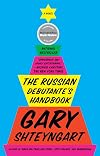
Shteyngart reminds me of Michael Chabon or Jonathon Safron Foer, which isn't good. These authors are passably clever, very up to date, committed to including only comic-booklike characters in their improbable retro chic plots and, I think, tiresome. I find that their stories have a solid amount of momentum . . . until you put them down.
(I should add that I appreciate Shteyngart's lack of earnestness, especially when dealing with his concentration camp visit; it was a very deliberate rejection of manipulative victim prose and, when juxtaposed with the more modern threat of occasional jack-ass skinheads, it was rather effective.)
However, and in general, and finally, making fun of hipsters, and trust-fund babies, and fat girls and euro-trash is easy and useless. If I wasn't stuck on a very long bus ride, I'm not sure I would've made it through.
(I should add that I appreciate Shteyngart's lack of earnestness, especially when dealing with his concentration camp visit; it was a very deliberate rejection of manipulative victim prose and, when juxtaposed with the more modern threat of occasional jack-ass skinheads, it was rather effective.)
However, and in general, and finally, making fun of hipsters, and trust-fund babies, and fat girls and euro-trash is easy and useless. If I wasn't stuck on a very long bus ride, I'm not sure I would've made it through.
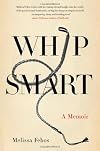
Febos writes about becoming a dominatrix with maturity and compassion--prerequisites, as far as I'm concerned, for deserving a readership in spite of using sex to sell your prose. She avoids taking cheap shots at the men who she dominates and avoids using her book as a condemnation or an apology. This is largely because she is preoccupied with herself and with what impact her decisions are having on her own life and identity.
If you've got low tolerance for extremely self-aware and process-oriented stories of drug addiction, her grappling with heroin and sundry narcotics may put you off the primary material. Febos's personal struggle often relegates the titillating anecdotes about her New York fantasy dungeon to the second stage; and I found that a bit disappointing. That's because I read this book as a voyeur; but so did everybody else.
"Whip Smart" is best when Febos elucidates the power dynamics between her and her regular customers and when these are snapped into focus by the parallel descriptions of how her confidence and power impact her sexual relationships outside of work.
I haven't read any of the other self-exploiting, sex-worker autobiographies that have grabbed headlines in the last decade; but I suspect that amongst such a crowd, Febos would have a noteworthy poise and incisiveness of vision. It will be interesting to see whether or not (and with what) she chooses to follow this book.
If you've got low tolerance for extremely self-aware and process-oriented stories of drug addiction, her grappling with heroin and sundry narcotics may put you off the primary material. Febos's personal struggle often relegates the titillating anecdotes about her New York fantasy dungeon to the second stage; and I found that a bit disappointing. That's because I read this book as a voyeur; but so did everybody else.
"Whip Smart" is best when Febos elucidates the power dynamics between her and her regular customers and when these are snapped into focus by the parallel descriptions of how her confidence and power impact her sexual relationships outside of work.
I haven't read any of the other self-exploiting, sex-worker autobiographies that have grabbed headlines in the last decade; but I suspect that amongst such a crowd, Febos would have a noteworthy poise and incisiveness of vision. It will be interesting to see whether or not (and with what) she chooses to follow this book.
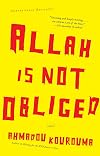
This is like Pere Ubu traipsing through the jungles of West Africa seeking riches: the ribald and absurdist journey of a ten year old hired gun and his bullshit-talking, witch doctor guardian, both surviving their way through Sierra Leone, Ivory Coast and Liberia during their most violent years. Unlikely captures and escapes propel the narrator and his cohort from one camp of fighters to another and from one key moment of the wars to the next. Their movements give Kourouma the opportunity to tell the history of the wars that ravaged West Africa at the end of the twentieth century, though this strains the believability of his ten year old narrator--whose own needs and concerns disappear for many pages at a time, giving way to Kourouma's caustic history:
"The Black Nigger Natives worked as hard as wild beasts. The creoles got all the jobs as civil servants in the government and managers of the commercial businesses. And the colonial English colonists and the thieving double-crossing Lebanese pocketed all the money.";
"Foday Sankoh isn't duped by the democracy game. No sir. He doesn't want anything to do with any of it. He doesn't want a National Conference, he doesn't want free and fair elections. He doesn't want anything. He controls the part of the country with diamonds; he controls the useful part of Sierra Leone. He doesn't give a fuck."
"Allah is Not Obliged" moves quickly and unfolds like an oral history with numerous refrains and repetitions which are, in this case, show more largely profane. Kourouma seeks to explain the precociousness of his narrator as the result of a gift of numerous dictionaries from a deceased translator and these produce a much overused trope:
"Nobody can be obliged to do anything because no one's got the time to go round putting rebel fighters on trial for perjury in the fucked-up four-star chaos of tribal wars in Liberia ('perjury', according to my Larousse, means 'the deliberate, willful giving of false testimony under oath')."
These parenthetical definitions (which accompany the initial arrival of nearly 50% of larger words) are rather annoying and while Kourouma set himself up to underscore the inherent political bias of different dictionaries (since Birahima possesses at least four), he doesn't actually succeed on this mission. The choice of dictionary always seems random and unrevealing; so the one potentially interesting aspect of reminding his readers what words mean is lost.
I've avoided reading some of the denser histories of the conflict that serves as the context of this book, so I'm actually grateful to Kourouma's history and I enjoyed the pure ridiculousness of the narrator and his friends. The book's dark humor gives it a certain charm as do the funeral orations delivered by Birahima for his tiny dead friends.
It's hard for me not to like a book that treats the subject of child soldiers with *none* of the sentimentality and manipulation that the subject has received from other quarters. A small passage that seems to contain a bit of Kourouma's contempt for the plaintive (and I would argue, totally insincere) hand-wringing about young killers:
"The dead child-soldier was called Kid, Captain Kid. Now and again in his beautiful song, Colonel Papa le Bon chanted 'Captain Kid' and the whole cortege howled after him 'Kid, Kid'. You should have heard it. They sounded like a bunch of retards." show less
"The Black Nigger Natives worked as hard as wild beasts. The creoles got all the jobs as civil servants in the government and managers of the commercial businesses. And the colonial English colonists and the thieving double-crossing Lebanese pocketed all the money.";
"Foday Sankoh isn't duped by the democracy game. No sir. He doesn't want anything to do with any of it. He doesn't want a National Conference, he doesn't want free and fair elections. He doesn't want anything. He controls the part of the country with diamonds; he controls the useful part of Sierra Leone. He doesn't give a fuck."
"Allah is Not Obliged" moves quickly and unfolds like an oral history with numerous refrains and repetitions which are, in this case, show more largely profane. Kourouma seeks to explain the precociousness of his narrator as the result of a gift of numerous dictionaries from a deceased translator and these produce a much overused trope:
"Nobody can be obliged to do anything because no one's got the time to go round putting rebel fighters on trial for perjury in the fucked-up four-star chaos of tribal wars in Liberia ('perjury', according to my Larousse, means 'the deliberate, willful giving of false testimony under oath')."
These parenthetical definitions (which accompany the initial arrival of nearly 50% of larger words) are rather annoying and while Kourouma set himself up to underscore the inherent political bias of different dictionaries (since Birahima possesses at least four), he doesn't actually succeed on this mission. The choice of dictionary always seems random and unrevealing; so the one potentially interesting aspect of reminding his readers what words mean is lost.
I've avoided reading some of the denser histories of the conflict that serves as the context of this book, so I'm actually grateful to Kourouma's history and I enjoyed the pure ridiculousness of the narrator and his friends. The book's dark humor gives it a certain charm as do the funeral orations delivered by Birahima for his tiny dead friends.
It's hard for me not to like a book that treats the subject of child soldiers with *none* of the sentimentality and manipulation that the subject has received from other quarters. A small passage that seems to contain a bit of Kourouma's contempt for the plaintive (and I would argue, totally insincere) hand-wringing about young killers:
"The dead child-soldier was called Kid, Captain Kid. Now and again in his beautiful song, Colonel Papa le Bon chanted 'Captain Kid' and the whole cortege howled after him 'Kid, Kid'. You should have heard it. They sounded like a bunch of retards." show less
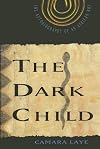
In the first 90 pages of this book, the great drama involves influential parents intervening to stop schoolyard bullying and in the second 90 pages of this book, the great drama involves the foreskin being chopped from the author's penis. ("Later on, I went through an ordeal much more frightening than Konden Diara, a really dangerous ordeal, and no game: circumcision." Oh my god!!)
And in case you were worried that your pulse might slow in the dying chapters of the "novel," in the last fifteen pages, there is some canned hand-wringing about hurting a mother's feelings by traveling to another country to pursue your education. I have never read an African novel with less substance or less style.
It boggles my mind that Laye wrote this book in his twenties. It has no youth in it whatsoever: no playfulness; no striving; no struggle and no love. It felt like the sanitized nostalgic reminiscences of an old man who reached his age without acquiring wisdom or wit and whose primary concern is making the circumstances around his youth seem as pure, well-designed and dignified as possible.
The persistent non-happening of this book might have been elevated if the author was insightful or reflective; but the closest thing he offers are perhaps a dozen scattered rhetorical questions like, "Do we still have secrets?" "Are we not always consumed with longing?" "Do our hearts ever rest?"
Um? Our protagonist has a heart? He longs for something? Could've fooled me. Closest we come to show more experiencing that longing is his rhetorical question, which has no power whatsoever.
There are so many wonderful books about growing up in Africa and there are some pretty decent ones romanticizing village life and traditional crafts. This is not one of them. It would be a shame if this was even one of the first twenty books that you read by an African author. I swear by the five yours I wasted that there is nothing between the covers but ink.
If you set out to write a book that is designed to make your parents feel better about your exile and the role they had in shaping your destiny; perhaps the product is inevitably doomed to an earnest and artless one-dimensionality. show less
And in case you were worried that your pulse might slow in the dying chapters of the "novel," in the last fifteen pages, there is some canned hand-wringing about hurting a mother's feelings by traveling to another country to pursue your education. I have never read an African novel with less substance or less style.
It boggles my mind that Laye wrote this book in his twenties. It has no youth in it whatsoever: no playfulness; no striving; no struggle and no love. It felt like the sanitized nostalgic reminiscences of an old man who reached his age without acquiring wisdom or wit and whose primary concern is making the circumstances around his youth seem as pure, well-designed and dignified as possible.
The persistent non-happening of this book might have been elevated if the author was insightful or reflective; but the closest thing he offers are perhaps a dozen scattered rhetorical questions like, "Do we still have secrets?" "Are we not always consumed with longing?" "Do our hearts ever rest?"
Um? Our protagonist has a heart? He longs for something? Could've fooled me. Closest we come to show more experiencing that longing is his rhetorical question, which has no power whatsoever.
There are so many wonderful books about growing up in Africa and there are some pretty decent ones romanticizing village life and traditional crafts. This is not one of them. It would be a shame if this was even one of the first twenty books that you read by an African author. I swear by the five yours I wasted that there is nothing between the covers but ink.
If you set out to write a book that is designed to make your parents feel better about your exile and the role they had in shaping your destiny; perhaps the product is inevitably doomed to an earnest and artless one-dimensionality. show less
Bessie Head manages to saturate “When Rain Clouds Gather” with a thoroughly winning concoction of generous bitterness. Though numerous antagonists, injustices and misfortunes beset the sympathetic characters of her book, they don’t sour the atmosphere or poison the narrative—this is refreshingly different from some of the continent’s unrepentantly sourpuss authors like Achebe and Coetzee.
The balance of discontent and gratitude that carries the novel also exists within some of the more nuanced characters, such as Makhaya and Paulina. Though a few stock characters of the African village drama (like gossipy clutches of socially hostile women or the fawning chief’s toady) still wander through “When Rain Clouds Gather,” Head has made an effort to fill her fictional village with misfits, thinkers and eccentrics: the sort of characters that add depth to their surroundings.
Considering that the book’s subject matter (the combination of human energy and ideas that are necessary to transform a traditional village’s attitude towards agriculture and subsistence farming) might seem a bit dry (complete with droughts), Head’s sense of humor (also dry) is quite an asset:
“Never mind if the rain was no longer what it used to be in the good old days when the rivers ran the whole year round and dams were always full. You just could not see beyond tradition and its safety to the amazing truth you were starving—and that tough little plants existed that were easy to show more grow and well able to stand up to rigorous conditions and could provide you with food.”
“Inside the fat, overstuffed body was a spirit that fiercely resisted intense, demanding, vicious people.”
Or, “It was as though a whole society had connived at producing a race of degenerate men by stressing their superiority in the law and overlooking how it affected them as individuals.”
I’ll be reading more of Bessie Head because of her ability to produce such precise and comical characterizations and because of her ability to keep social justice at the front of her mind without contracting a discouragement-induced attitude problem. show less
The balance of discontent and gratitude that carries the novel also exists within some of the more nuanced characters, such as Makhaya and Paulina. Though a few stock characters of the African village drama (like gossipy clutches of socially hostile women or the fawning chief’s toady) still wander through “When Rain Clouds Gather,” Head has made an effort to fill her fictional village with misfits, thinkers and eccentrics: the sort of characters that add depth to their surroundings.
Considering that the book’s subject matter (the combination of human energy and ideas that are necessary to transform a traditional village’s attitude towards agriculture and subsistence farming) might seem a bit dry (complete with droughts), Head’s sense of humor (also dry) is quite an asset:
“Never mind if the rain was no longer what it used to be in the good old days when the rivers ran the whole year round and dams were always full. You just could not see beyond tradition and its safety to the amazing truth you were starving—and that tough little plants existed that were easy to show more grow and well able to stand up to rigorous conditions and could provide you with food.”
“Inside the fat, overstuffed body was a spirit that fiercely resisted intense, demanding, vicious people.”
Or, “It was as though a whole society had connived at producing a race of degenerate men by stressing their superiority in the law and overlooking how it affected them as individuals.”
I’ll be reading more of Bessie Head because of her ability to produce such precise and comical characterizations and because of her ability to keep social justice at the front of her mind without contracting a discouragement-induced attitude problem. show less
Successful journalists are allowed to publish books with the word “dispatches” in the title, wherein they simply reprint the most popular of their published journalistic pieces, possibly strung together by a few calculated autobiographical reflections, a prologue, an afterword and decorated, perhaps, with amateur, black and white photographs they have taken on their travels.
“Small Wars Permitting: Dispatches from Foreign Lands” is a desultory anthology with a prevalence of writing about conflicts in Pakistan and Afghanistan. Lamb is most focused and committed when risking her life to approach gunfire in these two countries, where she accumulates enough contacts and strategies to find herself in intriguing positions. Her stories amount to a lively refresher course on the history of that region in the last decade of the twentieth century and the first decade of the twenty first.
In contrast, her random assignments around Africa feel superficial and under-thought: here’s a piece about Nigerians sending their skinny girls to specialists who promise to transform them into marriageable heifers; here’s twenty pages meant to summarize the downward trajectory of Zimbabwe; or a jaunt around Ivory Coast hunting the slave drivers of children. These pieces pad Lamb’s book; but seem arbitrary and a bit canned—little snapshots of absurdity or atrocity—especially compared to the more involved and sustained coverage of power plays around the training grounds of Al show more Qaeda.
The third sort of content available in “Small Wars Permitting” involves Lamb’s courtship, marriage and negotiation of family obligations. These passages feel as if there were demanded by an editor because Lamb doesn’t bring to them even half of her investigative tenacity. She offers a zoomed out scarcely-emotional summary of what must have been a tumultuous and intriguing relationship. And that’s fine; I don’t need her to write an expose about her own vulnerabilities; but if she’s going to include her personal life at all, it would be better to do so whole-heartedly.
Lamb has had some memorable adventures and has unique and sometimes shocking answers to the mainstay, dick-sizing questions of war-mongering journalists: Who did you meet in their youth before they attained a powerful position? What exotic, dangerous or illegal things did people try to sell you? What are your best death-cheating experiences? What are your most outrageous disguises or ruses? How did you talk your way out of prison?
And these sorts of details can propel you through a book of this variety if you’re on an airplane or a subway; but if you’ve got the time and inclination to focus on what you’re reading, I wouldn’t put this book at the front of the line. I like to have my history refreshed now and then by primary source documents and that’s about what this book is good for. show less
“Small Wars Permitting: Dispatches from Foreign Lands” is a desultory anthology with a prevalence of writing about conflicts in Pakistan and Afghanistan. Lamb is most focused and committed when risking her life to approach gunfire in these two countries, where she accumulates enough contacts and strategies to find herself in intriguing positions. Her stories amount to a lively refresher course on the history of that region in the last decade of the twentieth century and the first decade of the twenty first.
In contrast, her random assignments around Africa feel superficial and under-thought: here’s a piece about Nigerians sending their skinny girls to specialists who promise to transform them into marriageable heifers; here’s twenty pages meant to summarize the downward trajectory of Zimbabwe; or a jaunt around Ivory Coast hunting the slave drivers of children. These pieces pad Lamb’s book; but seem arbitrary and a bit canned—little snapshots of absurdity or atrocity—especially compared to the more involved and sustained coverage of power plays around the training grounds of Al show more Qaeda.
The third sort of content available in “Small Wars Permitting” involves Lamb’s courtship, marriage and negotiation of family obligations. These passages feel as if there were demanded by an editor because Lamb doesn’t bring to them even half of her investigative tenacity. She offers a zoomed out scarcely-emotional summary of what must have been a tumultuous and intriguing relationship. And that’s fine; I don’t need her to write an expose about her own vulnerabilities; but if she’s going to include her personal life at all, it would be better to do so whole-heartedly.
Lamb has had some memorable adventures and has unique and sometimes shocking answers to the mainstay, dick-sizing questions of war-mongering journalists: Who did you meet in their youth before they attained a powerful position? What exotic, dangerous or illegal things did people try to sell you? What are your best death-cheating experiences? What are your most outrageous disguises or ruses? How did you talk your way out of prison?
And these sorts of details can propel you through a book of this variety if you’re on an airplane or a subway; but if you’ve got the time and inclination to focus on what you’re reading, I wouldn’t put this book at the front of the line. I like to have my history refreshed now and then by primary source documents and that’s about what this book is good for. show less
Vollmann’s guided tour through a highly personal experience of Thai and Cambodian prostitution is operated neither for the benefit of lusty travelers nor for the righteously indignant. He deploys neither statistics nor sob stories to manipulate his readers, nor does he pander to voyeurists and perverts. However, his project is still manipulative—especially because of the tacked on narrative frame.
The bulk of the novel (at least 80% of it) transpires in chapters three and four. These can (and should) stand on their own as the full text of Vollmann’s effort. The novel would exercise far more raw power without the sloppy and stereotypical fragments and short stories that he has packed around the edges.
The first chapter follows the grade school protagonist through the process of being humiliated in the playground, misunderstood by his parents and sheltered by little girls willing to show him their underpants. The selection of details is irritatingly limited to those sorts of events that might “explain” the “deviousness” of a grownup sex tourist.
The second chapter falls into the same trap, showing the protagonist in his early twenties grappling with suicide, substances and relational inhibitions. Are we supposed to take these forty anemic pages as the cause for the protagonist’s drive to start his third chapter with the sentence, “Once upon a time a journalist (the protagonist) and a photographer set out to whore their way across Asia?” A throwaway chapter show more is sort of excusable; but not if it is meant to work as an interpretive key.
The final four chapters, each less than ten pages of fragmentary narrative snippets, dream sequences and hallucination, are presented as a sort of verdict or moral. It seems like all six less substantive chapters might have been requested by an editor who was trying to render the book more digestible for popular audiences—to defend the rottenness of the two core chapters by offering a justification and a punishment. These tactics should be beneath William Vollmann; they cheapen what he accomplishes in the sour guts of his novel. “Butterfly Stories” does not in any way deserve the comparison; but imagine if “Fear and Loathing in Las Vegas” started with thirty pages about how tough it was to be a young Hunter S. Thompson and then ended with him reconstituting in a rehabilitation program—that is how affected the periphery of Vollmann’s novel seems.
Now, what about the two hundred pages in between? They come from the mirthless perspective of someone almost adolescent in his willful refusal to acknowledge just how self-pitying he is. The photographer who travels with the journalist is not ever humanized. He is just a more promiscuous, hurtful and opportunistic person than the journalist, someone so jaded and emotionally detached that he will always make the journalist seem dimensional and interesting by comparison—if he didn’t seem somehow like a realistic companion to the journalist, I would accuse him of being a cheap plot device.
Vollmann’s writing veers unexpectedly between crass artlessness and attempts at denser, more poetic and even experimental fiction. So, a reader encounters something as gradeschool as “Eventually, she rubbed against him in just the right way, and then he knew he’d have to do it. What a chore! But life isn’t always a bed of guacamole. He squeezed K-Y into her cunt, handed her the rubber, and then she said she didn’t know how to put it on . . . Wasn’t that SOMETHING?” And just a few pages later, Vollmann may start unleashing sentences like the following (which I will not excerpt in full): “Then Cambodia again, slopping over him like the cold wetness on your belly when you bushwhack up a rainy jungle hillside; he went to the disco, sank knee-deep into the carpet of girl-ferns because the tables were closer together than ever before, trapping him in narrow sharp-edged lanes down which the other prostitutes hunted him, seizing his hand, pulling him down to sticky chairs beside them where he had to buy them a Tiger beer, the darkness hotter and louder as the music blared so pervasively and unintelligibly that he had to breathe it in like all the smoke from the other men’s cigarettes that rose in great pillared trunks flanged with leaves that stuck out like shelf-fungus . . . etc.”
I’m not sure that Vollmann actually succeeds with his less conventional dream/hallucination prose; but he doesn’t totally fail and I appreciate his trying. I also found the two primary chapters addictive in spite of their faults and honest in spite of their manipulative self-defenses.
“Atlas” was a better and more memorable book—and certainly the place to start. But, “Butterfly Stories” was worth reading as a sort of faux-memoire/travel literature offering. Vollmann’s work that falls in those genres will continue to interest me. I haven’t been able to make any headway into his massive myth/history/shirt series. If anyone can suggest the path of least resistance, I’d be willing to give it another attempt. show less
The bulk of the novel (at least 80% of it) transpires in chapters three and four. These can (and should) stand on their own as the full text of Vollmann’s effort. The novel would exercise far more raw power without the sloppy and stereotypical fragments and short stories that he has packed around the edges.
The first chapter follows the grade school protagonist through the process of being humiliated in the playground, misunderstood by his parents and sheltered by little girls willing to show him their underpants. The selection of details is irritatingly limited to those sorts of events that might “explain” the “deviousness” of a grownup sex tourist.
The second chapter falls into the same trap, showing the protagonist in his early twenties grappling with suicide, substances and relational inhibitions. Are we supposed to take these forty anemic pages as the cause for the protagonist’s drive to start his third chapter with the sentence, “Once upon a time a journalist (the protagonist) and a photographer set out to whore their way across Asia?” A throwaway chapter show more is sort of excusable; but not if it is meant to work as an interpretive key.
The final four chapters, each less than ten pages of fragmentary narrative snippets, dream sequences and hallucination, are presented as a sort of verdict or moral. It seems like all six less substantive chapters might have been requested by an editor who was trying to render the book more digestible for popular audiences—to defend the rottenness of the two core chapters by offering a justification and a punishment. These tactics should be beneath William Vollmann; they cheapen what he accomplishes in the sour guts of his novel. “Butterfly Stories” does not in any way deserve the comparison; but imagine if “Fear and Loathing in Las Vegas” started with thirty pages about how tough it was to be a young Hunter S. Thompson and then ended with him reconstituting in a rehabilitation program—that is how affected the periphery of Vollmann’s novel seems.
Now, what about the two hundred pages in between? They come from the mirthless perspective of someone almost adolescent in his willful refusal to acknowledge just how self-pitying he is. The photographer who travels with the journalist is not ever humanized. He is just a more promiscuous, hurtful and opportunistic person than the journalist, someone so jaded and emotionally detached that he will always make the journalist seem dimensional and interesting by comparison—if he didn’t seem somehow like a realistic companion to the journalist, I would accuse him of being a cheap plot device.
Vollmann’s writing veers unexpectedly between crass artlessness and attempts at denser, more poetic and even experimental fiction. So, a reader encounters something as gradeschool as “Eventually, she rubbed against him in just the right way, and then he knew he’d have to do it. What a chore! But life isn’t always a bed of guacamole. He squeezed K-Y into her cunt, handed her the rubber, and then she said she didn’t know how to put it on . . . Wasn’t that SOMETHING?” And just a few pages later, Vollmann may start unleashing sentences like the following (which I will not excerpt in full): “Then Cambodia again, slopping over him like the cold wetness on your belly when you bushwhack up a rainy jungle hillside; he went to the disco, sank knee-deep into the carpet of girl-ferns because the tables were closer together than ever before, trapping him in narrow sharp-edged lanes down which the other prostitutes hunted him, seizing his hand, pulling him down to sticky chairs beside them where he had to buy them a Tiger beer, the darkness hotter and louder as the music blared so pervasively and unintelligibly that he had to breathe it in like all the smoke from the other men’s cigarettes that rose in great pillared trunks flanged with leaves that stuck out like shelf-fungus . . . etc.”
I’m not sure that Vollmann actually succeeds with his less conventional dream/hallucination prose; but he doesn’t totally fail and I appreciate his trying. I also found the two primary chapters addictive in spite of their faults and honest in spite of their manipulative self-defenses.
“Atlas” was a better and more memorable book—and certainly the place to start. But, “Butterfly Stories” was worth reading as a sort of faux-memoire/travel literature offering. Vollmann’s work that falls in those genres will continue to interest me. I haven’t been able to make any headway into his massive myth/history/shirt series. If anyone can suggest the path of least resistance, I’d be willing to give it another attempt. show less
Burroughs can introduce himself:
"The usual costume is boots and chaps, bare ass and crotch. Some have tight-fitting chamois pants up to midthigh and shirts that come to the navel. Many are naked except for boots, gun belts, and hang-noose scarves. Nooses dangle every ten feet from a beam down the center of the room."
"Streaks of phosphorescent shit, a smell like rotten solder, burning shivering sick, he needs the Blue Stuff. Dry blue crystals of snow on the floor stir in an eddy of wind and a crystal spark boy takes shape, naked, radiant, his long needle fingertips dripping the deadly Joy Juice, bright red hair floating about his head, disk eyes flashing erogenous luminescence, his erect phallus smooth as seashell with a tip of pink crystal, he is like some dazzlingly beautiful undersea creature dripping deadly venom."
"Cities of the Red Night" is perpetually climaxing. Whereas, for other authors, it might prove a diverting or comical (unwritten) pastime to imagine what it might be like if all of their characters--from every time and space--were to meet over drinks, Burroughs can't seem to resist transporting his entire cast into hallucinatory, ritualistic, gay bacchanals, frequently spiced up with hangings or gun play and always featuring copious technicolor (and sometimes poisonous) ejaculations. During and in between these sensory explosions, his sex-ready, fringe-inhabiting adolescents wage war against the establishments that Burroughs doesn't like, for instance, the show more church, imperial forces and women.
The stories that drive the first two "books" of this novel are both gripping (and comparatively light on the orgies). A detective involves himself more and more deeply in the globe-trotting hunt for a missing rich boy and a trio of young men join a collective of revolutionaries in Central America who are fighting in the name of freedom (sexual and otherwise) to expel Spain and the Catholic church from the hemisphere.
Burroughs' prose is totally appropriate to the tough guy detective and the military strategizing of his commundards. But then, in book three, from which the novel takes its name, drugs start writing the book, which shifts into a world of five (entirely fictional) dueling cities. The anchors of the first 243 pages come loose and swirl around with fever victims, imaginary drugs, vendettas, hangings and sodomy. For a Burroughs purist, this might be quite satisfactory, since his dissociative methods and provocative subject matter trump representative story-telling. But, I was let down and disengaged.
Still, this was worth the read for the simple fact that Burroughs pulled together more than 200 consecutive pages of relatively logical and linear prose and he is a skillful, imaginative writer with an entirely decadent sense of humor. For anyone who wishes to continue from where this book leaves off, "The Place of Dead Roads" offers a sequel in the same vein that is not at all disappointing. show less
"The usual costume is boots and chaps, bare ass and crotch. Some have tight-fitting chamois pants up to midthigh and shirts that come to the navel. Many are naked except for boots, gun belts, and hang-noose scarves. Nooses dangle every ten feet from a beam down the center of the room."
"Streaks of phosphorescent shit, a smell like rotten solder, burning shivering sick, he needs the Blue Stuff. Dry blue crystals of snow on the floor stir in an eddy of wind and a crystal spark boy takes shape, naked, radiant, his long needle fingertips dripping the deadly Joy Juice, bright red hair floating about his head, disk eyes flashing erogenous luminescence, his erect phallus smooth as seashell with a tip of pink crystal, he is like some dazzlingly beautiful undersea creature dripping deadly venom."
"Cities of the Red Night" is perpetually climaxing. Whereas, for other authors, it might prove a diverting or comical (unwritten) pastime to imagine what it might be like if all of their characters--from every time and space--were to meet over drinks, Burroughs can't seem to resist transporting his entire cast into hallucinatory, ritualistic, gay bacchanals, frequently spiced up with hangings or gun play and always featuring copious technicolor (and sometimes poisonous) ejaculations. During and in between these sensory explosions, his sex-ready, fringe-inhabiting adolescents wage war against the establishments that Burroughs doesn't like, for instance, the show more church, imperial forces and women.
The stories that drive the first two "books" of this novel are both gripping (and comparatively light on the orgies). A detective involves himself more and more deeply in the globe-trotting hunt for a missing rich boy and a trio of young men join a collective of revolutionaries in Central America who are fighting in the name of freedom (sexual and otherwise) to expel Spain and the Catholic church from the hemisphere.
Burroughs' prose is totally appropriate to the tough guy detective and the military strategizing of his commundards. But then, in book three, from which the novel takes its name, drugs start writing the book, which shifts into a world of five (entirely fictional) dueling cities. The anchors of the first 243 pages come loose and swirl around with fever victims, imaginary drugs, vendettas, hangings and sodomy. For a Burroughs purist, this might be quite satisfactory, since his dissociative methods and provocative subject matter trump representative story-telling. But, I was let down and disengaged.
Still, this was worth the read for the simple fact that Burroughs pulled together more than 200 consecutive pages of relatively logical and linear prose and he is a skillful, imaginative writer with an entirely decadent sense of humor. For anyone who wishes to continue from where this book leaves off, "The Place of Dead Roads" offers a sequel in the same vein that is not at all disappointing. show less
"I was not so much meditating as stirring together in my mind the cold, acid flavors of the various feelings, all of them disagreeable, that agitated me." "I was all nerves and imagination, morbidly sensitive and complex."
Molteni, your narrator, never more accurately describes both his personal weaknesses and his narrative style. There are no rays of light in "Contempt." This novel incarcerates a reader within the arrogant and insecure psyche of an unsatisfied man. Molteni is incredibly self-conscious without being self-aware and certainly without being aware of his wife. "Contempt" centers around the total breakdown of his relationship with Emilia, who he introduces as follows: "I had not married a woman who could understand and share my ideas, tastes and ambitions; instead I had married, for her beauty, an uncultivated, simple typist, full, it seemed to me, of all the prejudices and ambitions of the class from which she came."
That "seemed to me" clause is rather important. It should not be surprising that Molteni's classist portrait of his love-object should fall short as a true characterization. While Moravia succeeds in making Molteni's obsessions and anxieties seem plausible and addictive, he doesn't convince me, entirely, that someone could have his head buried so far up his ass as Molteni. A jealous and insecure man would be more aware of the implications of subjecting his wife to the courtship of another man and he would certainly be more reluctant to let her show more alone with any of her dashing suitors.
However, the relentlessness of Molteni's self-sabotage makes for a riveting account and his wife, when she chooses to defend herself, is a more engaging character than I expected. "Contempt" could probably have done without the rather tedious parallel interpretations of "The Odyssey" with all of the psychoanalysis of Ulysses and the doubting of Penelope. The themes were relevant; but a bit heavy-handed and far too prevalent. Additionally, the dream/hallucination/ghost nonsense towards the book's conclusion clashed in real pin-the-tail-on-the-donkey sort of fashion with the rest of Moravia's work.
If someone gave me specific reasons for reading another of Moravia's novels, I wouldn't object; but I'd make sure I knew what I was in for. show less
Molteni, your narrator, never more accurately describes both his personal weaknesses and his narrative style. There are no rays of light in "Contempt." This novel incarcerates a reader within the arrogant and insecure psyche of an unsatisfied man. Molteni is incredibly self-conscious without being self-aware and certainly without being aware of his wife. "Contempt" centers around the total breakdown of his relationship with Emilia, who he introduces as follows: "I had not married a woman who could understand and share my ideas, tastes and ambitions; instead I had married, for her beauty, an uncultivated, simple typist, full, it seemed to me, of all the prejudices and ambitions of the class from which she came."
That "seemed to me" clause is rather important. It should not be surprising that Molteni's classist portrait of his love-object should fall short as a true characterization. While Moravia succeeds in making Molteni's obsessions and anxieties seem plausible and addictive, he doesn't convince me, entirely, that someone could have his head buried so far up his ass as Molteni. A jealous and insecure man would be more aware of the implications of subjecting his wife to the courtship of another man and he would certainly be more reluctant to let her show more alone with any of her dashing suitors.
However, the relentlessness of Molteni's self-sabotage makes for a riveting account and his wife, when she chooses to defend herself, is a more engaging character than I expected. "Contempt" could probably have done without the rather tedious parallel interpretations of "The Odyssey" with all of the psychoanalysis of Ulysses and the doubting of Penelope. The themes were relevant; but a bit heavy-handed and far too prevalent. Additionally, the dream/hallucination/ghost nonsense towards the book's conclusion clashed in real pin-the-tail-on-the-donkey sort of fashion with the rest of Moravia's work.
If someone gave me specific reasons for reading another of Moravia's novels, I wouldn't object; but I'd make sure I knew what I was in for. show less

"The Sponger" foregrounds the sort of character that has often slunk through the pages of greater and more ambitious novels, a character type that, to my knowledge, has not previously been awarded his own sustained spotlight anywhere else in the world of quality books. Henri, the titular parasite, sets out to take advantage of the bourgeois sympathy towards and incomprehension of poetic types. The novel is his account, peppered with irritating crocodile tears, of his total infiltration of the Vernet household.
Often, "The Sponger" tickles with strange, dry descriptions such as, "His cigarette keeps going out. He relights it. It dies again. It is a struggle, and he appears to be eating matches." Or, "M. Vernet spoke of his cellar. Since there was wine in it, I considered that natural." Renard's prose is crisp and efficient without being frivolous or hasty.
But the story is uni-polar and Henri gets a bit tiresome, especially with his stalling and hand-wringing. His "scruples" were probably meant to give him depth; but they were so forced that they have almost the opposite effect.
This was a singular portrait and a decent read. I'll enjoy holding this character in my memory to serve as an extra in the background of other novels and plays from the period.
Often, "The Sponger" tickles with strange, dry descriptions such as, "His cigarette keeps going out. He relights it. It dies again. It is a struggle, and he appears to be eating matches." Or, "M. Vernet spoke of his cellar. Since there was wine in it, I considered that natural." Renard's prose is crisp and efficient without being frivolous or hasty.
But the story is uni-polar and Henri gets a bit tiresome, especially with his stalling and hand-wringing. His "scruples" were probably meant to give him depth; but they were so forced that they have almost the opposite effect.
This was a singular portrait and a decent read. I'll enjoy holding this character in my memory to serve as an extra in the background of other novels and plays from the period.
This book is soft, tentative and predictable. It is 85% Helene Cooper and 15% Liberia. Though Cooper is a reputable journalist, this is her memoir; it lingers on her girlish crushes, her favorite dresses and the troubled marriage of her aristocratic parents. The second part is an unexceptional account of Cooper's semi-assimilation into American culture, starting midway through her high school years and tracing her deliberate mission to become an influential foreign correspondent. Throughout this book, her training as a journalist shows; everything is seen from a distance and presented with efficiency in a context made historical with a few statistics and anecdotes.
Owing to Cooper's immensely privileged upbringing and her early departure form Liberia, it seems that she didn't have that much raw material to work with when trying to conjure up the realities of her motherland. Her note at the end makes it sound like she would not have shared one single sensory impression of the country if her supportive family and friends hadn't peppered the narrative with their own remembrances. Ultimately, Helene is too humorless, earnest and insecure for my tastes and while she was,in one sense, the ultimate insider, she was also extremely far removed from the pulse of her country.
She rightly faults herself for "papering over seismic moment(s) in (her) life by focusing on the superficial." That tendency shows throughout the narrative. It would have been much stronger if Cooper had brought show more other voices into her story, if she had inhabited the perspective of anyone else in her age group or generation in order to introduce her readers to a more complex portrait of her country. Her perspective is tiring.
I expected her to fill the niche of "Liberian Memoirist" and she didn't. This is an adequate autobiography with a bit of hand-wringing about how the author didn't become as aware of Liberia as she could have and didn't invest as much of herself in bettering her country as she could have.
If you still read this book, know that you will be presented with a number of executions and rapes that may prove disturbing. Cooper treats them in the lightest and most sanitized way; but the reader does not escape them entirely. show less
Owing to Cooper's immensely privileged upbringing and her early departure form Liberia, it seems that she didn't have that much raw material to work with when trying to conjure up the realities of her motherland. Her note at the end makes it sound like she would not have shared one single sensory impression of the country if her supportive family and friends hadn't peppered the narrative with their own remembrances. Ultimately, Helene is too humorless, earnest and insecure for my tastes and while she was,in one sense, the ultimate insider, she was also extremely far removed from the pulse of her country.
She rightly faults herself for "papering over seismic moment(s) in (her) life by focusing on the superficial." That tendency shows throughout the narrative. It would have been much stronger if Cooper had brought show more other voices into her story, if she had inhabited the perspective of anyone else in her age group or generation in order to introduce her readers to a more complex portrait of her country. Her perspective is tiring.
I expected her to fill the niche of "Liberian Memoirist" and she didn't. This is an adequate autobiography with a bit of hand-wringing about how the author didn't become as aware of Liberia as she could have and didn't invest as much of herself in bettering her country as she could have.
If you still read this book, know that you will be presented with a number of executions and rapes that may prove disturbing. Cooper treats them in the lightest and most sanitized way; but the reader does not escape them entirely. show less
"The novel arose as a bet between Vian and his friend the publisher Jean d'Halluin of Editions du Scorpions. D'Halluin needed a bestseller and Vian declared that he could construct for him a piece with just the right admixture of sex, violence and race relations. I Spit on Your Graves, Vian's first novel, subsequently became a runaway success - and landed Vian a 100,000 franc fine for an 'affront to public morals'."http://www.readysteadybook.com/Article.aspx?page=borisvianI think he also bet that he could complete the book within a week or two. He won the bet. And died in "a fit of apoplexy" (same source as above) when watching the film adaptation.This is not a representative Vian book; but it is decent subway fare.
I read Coetzee after going on a binge of African literature. Given his world-historical and cultural position, I couldn't help being bothered to the point of acute aggravation by the fact that "Disgrace" seems like propaganda--excellently disguised, subtle, hand-wringing propaganda against the good hopes of his country. The whole time I was in South Africa it was impossible to avoid being besieged by white people who sought to poison my own conception of their black countrymen. This was especially irksome because white or wealthy people from other countries are more ready to absorb the judgments (and prejudices) of white South Africans than other Africans with whom they do not identify so easily. My own sense of the continent could not be more different from the prevailing sense of that demographic. I never forget Richard Rorty's explanation (I think it's in "contingency, irony and solidarity" or "philosophy and social hope") that we should replace dickering about ethics with a commitment to expanding people's circles of empathy and that the most expedient and respectful way to do this is through narrative and story-telling. Coetzee impacts the global perception of South Africa whenever he writes or speaks. And "Disgrace" for all of its craft and merit, is a hopeless and back-broken book that feeds into stereotypes and cynicism that are better left unfed.
Conover wrote this book while he was still an undergraduate at Amherst; but it establishes his method as an author. He is a combination of cultural chameleon (spy), investigative journalist, anthropologist, autobiographer and social commentator. He pulls off this combination nicely. Paul Theroux, at his best and least obnoxious has a similar style of telling true stories; but Conover is more political and engaged--in his action and focus. I haven't read John Howard Griffin's "Black Like Me"--the story of Griffin's experiences as a white man, painted to look like a black man, in the American South of the early 20th century--but it seems that Griffin's book had the most profound impact on Conover's methodology and concerns.
Conover's style has matured a great deal since "Rolling Nowhere", as has the sharpness of his perception and the importance of his research. It might grate some people when Conover's pampered background prances into the foreground, especially when he seems so pleased with himself for managing the transition from rich kid to railway tramp; but those moments do provide readers with a much clearer understanding of the nature and limitations of their narrator. I'm thinking about moments like, "I had dismissed the church as simply the place in whose lot my dad used to park his sports car. Looking again, I saw a number of young men lounging around on the lawn outside the place, and all of a sudden remembered similar scenes from days when I had passed the church show more with Dad. He worried about the safety of his car with guys like those around, and had intentionally looked away from them. That had frightened me. Tonight, though, I exchanged greetings with some." Balancing out some of the hokier, doctors in Aspen type references, is the perspective Conover develops of his own background. For instance, "Being suddenly among the Stanford students was less a solace than a shock. Most of them were from wealthy backgrounds, had seen few hard times, and appeared to be suffering the maladies that an overdose of comfort can cause: self-indulgence, self-pity, self-absorption." It was a clear sign of the talented and significant author that Conover turned out to be, that he managed to write this book at the dawn of his twenties without being self-indulgent, self-pitying or self-absorbed. show less
Conover's style has matured a great deal since "Rolling Nowhere", as has the sharpness of his perception and the importance of his research. It might grate some people when Conover's pampered background prances into the foreground, especially when he seems so pleased with himself for managing the transition from rich kid to railway tramp; but those moments do provide readers with a much clearer understanding of the nature and limitations of their narrator. I'm thinking about moments like, "I had dismissed the church as simply the place in whose lot my dad used to park his sports car. Looking again, I saw a number of young men lounging around on the lawn outside the place, and all of a sudden remembered similar scenes from days when I had passed the church show more with Dad. He worried about the safety of his car with guys like those around, and had intentionally looked away from them. That had frightened me. Tonight, though, I exchanged greetings with some." Balancing out some of the hokier, doctors in Aspen type references, is the perspective Conover develops of his own background. For instance, "Being suddenly among the Stanford students was less a solace than a shock. Most of them were from wealthy backgrounds, had seen few hard times, and appeared to be suffering the maladies that an overdose of comfort can cause: self-indulgence, self-pity, self-absorption." It was a clear sign of the talented and significant author that Conover turned out to be, that he managed to write this book at the dawn of his twenties without being self-indulgent, self-pitying or self-absorbed. show less

This collection starts strong, then it starts to seem like this guy's instrument doesn't have too many strings and then he tries to write about Africans.The first three stories are memorable and rewarding, pleasantly removed from day-to-day circumstances and romantically committed to unlikely pairings and second shots--"So Many Chances" I might read again just for pleasure. But, Doerr is hung up on female characters who aren't human (or female)--one dimensional fantasy objects for boy poets who haven't come to terms with loving anyone that doesn't act, move and think like a man. They are too captivating and convenient, magical and false.
And he can't write about Africans for shit. In fact, his attempts were almost offensive. If this was 1700 and Africa was still the unknown, he could people it with barbarians and alienated semi-adapted, cerebral metaphors; but it isn't and his African stories ("The Caretaker" and "Mkondo"), while perhaps well structured and rewarding to interpret, use foreignness as a blocking device to protect characters who act in unlikely but memorable ways. When he lightens up, ("July Fourth"--oily feel to it, and "For a Long Time This Was Griselda's Story") he can sound a bit like a more self-conscious Lewis Nordan, which is weird but good. Doerr has potential; but he needs to branch out and stop projecting his fantasies on real things.
Lastly, you must like fishing and people isolated in the back country in an Annie Dillard sort of way to get show more enjoyment from this at all. There are no cities or social settings that involve more than two people in conversation at once (pretty much). show less
And he can't write about Africans for shit. In fact, his attempts were almost offensive. If this was 1700 and Africa was still the unknown, he could people it with barbarians and alienated semi-adapted, cerebral metaphors; but it isn't and his African stories ("The Caretaker" and "Mkondo"), while perhaps well structured and rewarding to interpret, use foreignness as a blocking device to protect characters who act in unlikely but memorable ways. When he lightens up, ("July Fourth"--oily feel to it, and "For a Long Time This Was Griselda's Story") he can sound a bit like a more self-conscious Lewis Nordan, which is weird but good. Doerr has potential; but he needs to branch out and stop projecting his fantasies on real things.
Lastly, you must like fishing and people isolated in the back country in an Annie Dillard sort of way to get show more enjoyment from this at all. There are no cities or social settings that involve more than two people in conversation at once (pretty much). show less

Amado is an excellent story-teller. "Gabriela" has enough drama and pace to be readable amidst noisy distractions and does not waste time with throw-away characters or descriptive flourish. The turn of the century, back country Brazil is ribald, gossipy, comical, obsessed with political intrigue and prepared for great violence. The book is on a mission to praise open-handed, casual and lusty sex—not just because of its frequent reference to brothel/cabarets but at its structural core and in its own method of bringing resolution (very much in opposition to the standard marriage-brings-closure model). Jealousy, pride and possession get blasted throughout.
Amado’s case was perfectly convincing for me; though Gabriela’s simple childishness is a little bit overdone. Some readers will get irritated when Amado drops his normal prose style in an attempt to convey the “I don’t get it” inner monologue of an otherwise magnetic and seductive character. For instance, “Why did he have to marry her? It was awful being married, she didn’t like it at all . . . she couldn’t do any of the things she liked. She couldn’t play merry-go-round in the square . . . she couldn’t walk barefoot on the sidewalk in front of the house. She couldn’t run on the beach . . . she mustn’t do such things. It was bad to be married.” Giving Gabriela idiot diction and seven word sentences, deploying obvious bird in cage, tight shoe, flower in a vase metaphors to suggest her show more free-spiritedness and referring to her as a child was simply not convincing.
But, I still enjoyed every minute of reading this book. The attention to generations and whole-town atmosphere is not unlike Garcia Marquez; but this book is lighter, less deliberate and totally rooted in reality. show less
Amado’s case was perfectly convincing for me; though Gabriela’s simple childishness is a little bit overdone. Some readers will get irritated when Amado drops his normal prose style in an attempt to convey the “I don’t get it” inner monologue of an otherwise magnetic and seductive character. For instance, “Why did he have to marry her? It was awful being married, she didn’t like it at all . . . she couldn’t do any of the things she liked. She couldn’t play merry-go-round in the square . . . she couldn’t walk barefoot on the sidewalk in front of the house. She couldn’t run on the beach . . . she mustn’t do such things. It was bad to be married.” Giving Gabriela idiot diction and seven word sentences, deploying obvious bird in cage, tight shoe, flower in a vase metaphors to suggest her show more free-spiritedness and referring to her as a child was simply not convincing.
But, I still enjoyed every minute of reading this book. The attention to generations and whole-town atmosphere is not unlike Garcia Marquez; but this book is lighter, less deliberate and totally rooted in reality. show less
Unlike much of the other African travel writing and reportage that I have read, French's book is uncompromisingly fact-laden and dense. There are a few moments when the history that he lived through gathers enough speed around certain imperiled individuals or groups to make the book gripping and fast-paced; but, on average, it requires careful attention that borders on note-taking to keep track of the motivations and backgrounds of the different players in French's account (unless you have already committed the recent history of Central Africa to memory).
The pace of the book is not helped by the random, loosely structured way that it leaps across decades and continents from one chapter to another. It could definitely have used smoother transitions and it would have benefited from a more thought out structure; it is really a collection of essays and an opportunity for French to air some of the grievances and experiences that (I imagine) he was not allowed to share with readers of The New York Times, for which he worked.
I also got the sense that because he was granted such unparalleled journalistic access and because he was always aware of representing the New York Times, he didn't engage as much with African people and African culture as authors like Aidan Hartley or Paul Theroux. French seemed, at times, to be above the real situations and distanced from the real people, constantly hopping onto safe transport for a timely exit--and, more importantly, while he remained on show more the ground, he seemed more likely to spend his time at the hotels that served as the nexus of western reporting or to lounge about with various privileged people who wished to appear in his writings than to fraternize with random, non-influential Africans for the sake of better understanding their culture and ways.
That said, I feel like I understand the last two decades in Central Africa MUCH better than I did before this book, especially as regards the wars in Congo and the appallingly two-faced and negligent foreign policy decisions of the Clinton Administration, which has somehow escaped prominent or consistent blame and accusation for the giant drop kick away from democracy that it managed to offer Africa in the nineties.
Lastly, it was refreshing to encounter those rare moments when French shows his own attitude and frustration, lashing out, for instance at the "Big Man" stereotype used to explain some of Africa's governance failures, "Africa's dictators had been supported for decades by East and West, and were often handpicked by outside powers. their misrule had placed the continent in the deep hole it now found itself in, not some congenital incapacity for modern governance, as decades of shallow analyses about Big Men and ancient tribal animosities' often insinuated." French doesn't share such blunt conclusions very often; but when he does, he has more than proven himself correct in the preceding pages. show less
The pace of the book is not helped by the random, loosely structured way that it leaps across decades and continents from one chapter to another. It could definitely have used smoother transitions and it would have benefited from a more thought out structure; it is really a collection of essays and an opportunity for French to air some of the grievances and experiences that (I imagine) he was not allowed to share with readers of The New York Times, for which he worked.
I also got the sense that because he was granted such unparalleled journalistic access and because he was always aware of representing the New York Times, he didn't engage as much with African people and African culture as authors like Aidan Hartley or Paul Theroux. French seemed, at times, to be above the real situations and distanced from the real people, constantly hopping onto safe transport for a timely exit--and, more importantly, while he remained on show more the ground, he seemed more likely to spend his time at the hotels that served as the nexus of western reporting or to lounge about with various privileged people who wished to appear in his writings than to fraternize with random, non-influential Africans for the sake of better understanding their culture and ways.
That said, I feel like I understand the last two decades in Central Africa MUCH better than I did before this book, especially as regards the wars in Congo and the appallingly two-faced and negligent foreign policy decisions of the Clinton Administration, which has somehow escaped prominent or consistent blame and accusation for the giant drop kick away from democracy that it managed to offer Africa in the nineties.
Lastly, it was refreshing to encounter those rare moments when French shows his own attitude and frustration, lashing out, for instance at the "Big Man" stereotype used to explain some of Africa's governance failures, "Africa's dictators had been supported for decades by East and West, and were often handpicked by outside powers. their misrule had placed the continent in the deep hole it now found itself in, not some congenital incapacity for modern governance, as decades of shallow analyses about Big Men and ancient tribal animosities' often insinuated." French doesn't share such blunt conclusions very often; but when he does, he has more than proven himself correct in the preceding pages. show less

If you have read everything else of Walser's that has been translated into English, this book will not add much to your understanding of the author. At its best, for a few paragraphs at a time, it sustains the light touch and playfulness of his short stories. But the rest of the time, it reworks the idea of an impotent servant framed by the decay of the institution that sustains him--something familiar to "Jakob von Gunten" fans. "The Assistant", however, lacks the engaging interactions between underlings that set "Jakob von Gunten" apart. The characters in this novel, once set in motion, seem to plod towards their obvious fate all too mechanically.
You definitely do not read Walser for plot and while this is longer than anything else he wrote, it is no exception. Fans enjoy being situated beneath and alongside the characters who would ordinarily be the protagonists; but the less patient will tire of the disengaged, dawdling uselessness of the lead.
You definitely do not read Walser for plot and while this is longer than anything else he wrote, it is no exception. Fans enjoy being situated beneath and alongside the characters who would ordinarily be the protagonists; but the less patient will tire of the disengaged, dawdling uselessness of the lead.