
Robert Frost (1) (1874–1963)
Author of The Poetry of Robert Frost
For other authors named Robert Frost, see the disambiguation page.
About the Author
Robert Frost, the quintessential poet of New England, was born in San Francisco in 1874. He was educated at Dartmouth College and Harvard University. Although he managed to support himself working solely as a poet for most of his life and holding various posts with a number of universities, as a show more young man he was employed as a bobbin boy in a mill, a cobbler, a schoolteacher, and a farmer. Frost, whose poetry focuses on natural images of New England, received the Pulitzer Prize for Poetry four times for: New Hampshire, Collected Poems, A Further Range, and A Witness Tree. His works are noted for combining characteristics of both romanticism and modernism. He also wrote A Boy's Will, North of Boston, Mountain Interval, and The Gift Outright, among others. Frost married Elinor Miriam White in 1895, and they had six children--Elliott, Lesley, Carol, Irma, Marjorie, and Elinor Bettina. He died in Boston in 1963. (Bowker Author Biography) show less
Works by Robert Frost
Come In By Robert Frost Selected and with a Commentary and Biographical Introduction By Louis Untermeyer (1943) 33 copies
Poems of Robert Frost. Large Collection, includes A Boy's Will, North of Boston and Mountain Interval (2011) 19 copies, 1 review
Robert Frost, Edger Allan Poe, Carl Sandburg, W.B. Yeats (The Library of Classic Poets, 4 Volumes) (1992) 15 copies
Complete Works of Robert Frost 8 copies
Selected Poems of Robert Frost 5 copies
Frost Poetry 5 copies
“Acquainted With the Night” 4 copies
Poemas 3 copies
HARD NOT TO BE KING 3 copies
Robert Frost: Collection of 90 Poems with analysis of works and historical background (Annotated and Illustrated) (Annotated Classics) (2014) 3 copies
The Early Works of Robert Frost: Featuring The Road Not Taken, Birches, After Apple-Picking, Mending Wall and more! (2012) 3 copies
"Design" (in Detective Fiction: C&C) 3 copies
The prophets really prophesy as mystics, the commentators merely by statistics : a new poem 3 copies
Robert Frost: Early Poetical Works 3 copies
Stopping by Woods on a Snowy Evening, a poem by Robert Frost with illustrations by Nannette Smith (2022) 3 copies
Some science fiction 3 copies
Mowing [poem] 3 copies
The Pasture 2 copies
Accidentally on purpose 2 copies
Robert Frost - New Hampshire, A Poem; with Notes and Grace Notes: “We love the things we love for what they are” (2020) 2 copies
Nothing Gold Can Stay 2 copies
Bereft [poem] 2 copies
“After Apple-Picking” 2 copies
Robert Frost, a remembrance. 2 copies
A cabin in the clearing 2 copies
Into My Own 2 copies
50 Best Loved Christmas Stories and Poems for All Ages (Cambridge World Classics Edition) (Christmas Books Classic Literature Book 1) (2010) 2 copies
Neither Out Far nor in Deep [poem] 2 copies
The Gift Outright [poem] 2 copies
Stars 2 copies
A Late Walk 2 copies
Poetry for Kids: Robert Frost 2 copies
Ghost House 2 copies
The Essential Robert Frost: Collected Poems 1913-1923 (Warbler Classics Annotated Edition) (2025) 2 copies
Stopping By Woods on a Snowy Evening (Unison or Two-part Choral Sheet Music) (1991) — Lyrics — 1 copy
“Directive” 1 copy
“The Most of It” 1 copy
“The Draft Horse” 1 copy
The Steeple Bush 1 copy
“Come In” (Video) 1 copy
“Desert Places” 1 copy
In Neglect 1 copy
Prosa 1 copy
“The Wood-Pile” 1 copy
“The Pasture” 1 copy
Poems selected by himself 1 copy
A Dream Pang 1 copy
Robert Frost?s Poems 1 copy
“Mowing” 1 copy
Illustrated Poets, The 1 copy
Art of Poetry, No. 2, The 1 copy
Rose Pogonias 1 copy
The wood-pile 1 copy
A soldier: A poem 1 copy
Waiting 1 copy
In a Vale 1 copy
“The Span of Life” 1 copy
“Gathering Leaves” 1 copy
“A Star in a Stoneboat” 1 copy
Out, Out 1 copy
“Putting in the Seed” 1 copy
The Oven Bird [poem] 1 copy
A Minor Bird [poem] 1 copy
(Into My Own) 100 Page Lined Journal: Blank 100 page lined journal for your thoughts, ideas, and inspiration (2014) 1 copy
The Silken Tent 1 copy
The Armful 1 copy
Revelation 1 copy
The Secret Sits 1 copy
Prosa de Robert Frost 1 copy
Bring A Torch 1 copy
Poemas escolhidos 1 copy
The Fear [poem] 1 copy
The Figure a Poem Makes 1 copy
The Span of Life 1 copy
A-Wishing Well 1 copy
Eight selections 1 copy
Wind and Window Flower 1 copy
From a milkweed pod 1 copy
Nine poems by Robert Frost 1 copy
Away; [poem.] 1 copy
Robert Frost's Poems 1 copy
Doom to bloom 1 copy
The Wood-Pile [poem] 1 copy
Miscellaneous Poems 1 copy
Flower-Gathering 1 copy
Poesie scelte 1 copy
The lone striker 1 copy
55 wierszy 1 copy
Desert Places [poem] 1 copy
To Earthward [poem] 1 copy
Hyla Brook [poem] 1 copy
To the Thawing Wind 1 copy
Associated Works
The Making of a Poem: A Norton Anthology of Poetic Forms (2000) — Contributor — 1,474 copies, 9 reviews
The Best Poems of the English Language: From Chaucer Through Robert Frost (2004) — Contributor — 1,249 copies, 3 reviews
Literature: An Introduction to Fiction, Poetry, and Drama (1995) — Contributor, some editions — 1,017 copies, 7 reviews
A Book of Luminous Things: An International Anthology of Poetry (1996) — Contributor — 945 copies, 12 reviews
World Poetry: An Anthology of Verse from Antiquity to Our Time (1998) — Contributor — 499 copies, 2 reviews
American Poetry: The Twentieth Century, Volume One: Henry Adams to Dorothy Parker (2000) — Contributor — 482 copies, 1 review
Poems Bewitched and Haunted (Everyman's Library Pocket Poets Series) (2005) — Contributor — 231 copies
World War I and America: Told by the Americans Who Lived It (1918) — Contributor — 227 copies, 1 review
Teaching with Fire: Poetry That Sustains the Courage to Teach (2003) — Contributor — 226 copies, 1 review
From Totems to Hip-Hop: A Multicultural Anthology of Poetry Across the Americas 1900-2002 (2002) — Contributor — 181 copies
The Children's Treasury: Best Loved Stories and Poems from Around the World (1987) — Contributor — 163 copies, 2 reviews
Poetry Speaks Expanded: Hear Poets Read Their Own Work from Tennyson to Plath (2007) — Contributor — 158 copies, 2 reviews
An American Album: One Hundred and Fifty Years of Harper's Magazine (2000) — Contributor — 145 copies, 1 review
The Norton Anthology of American Literature, Volume 2: 1865 to Present (1979) — Contributor, some editions — 137 copies
Poems to See By: A Comic Artist Interprets Great Poetry (2020) — Contributor — 130 copies, 33 reviews
Leading from Within: Poetry That Sustains the Courage to Lead (2007) — Contributor — 116 copies, 3 reviews
The Heath Anthology of American Literature, Concise Edition (2003) — Contributor — 73 copies, 1 review
Gentlemen, Scholars and Scoundrels: A Treasury of the Best of Harper's Magazine from 1850 to the Present (1972) — Contributor — 62 copies
Buzz Words: Poems About Insects (Everyman's Library Pocket Poets Series) (2021) — Contributor — 56 copies
Antaeus No. 61, Autumn 1988 - Journals, Notebooks & Diaries (1988) — Contributor — 39 copies, 2 reviews
Out of the Best Books: An Anthology of Literature, Vol. 2: Love, Marriage, and the Family (1966) — Contributor — 36 copies
THE GRANDMA MOSES STORYBOOK for Boys and Girls. A Treasure Trove of Stories and Poems By 28 Outstanding Writers (1961) — Contributor — 34 copies
Out of the Best Books: An Anthology of Literature, Vol. 3: Intelligent Family Living (1967) — Contributor — 34 copies
Out of the Best Books: An Anthology of Literature, Vol. 5: Community Responsibility (1969) — Contributor — 30 copies
Six Great American Poets: Poems by Poe, Dickinson, Whitman, Longfellow, Frost and Millay (Dover Thrift Editions) (1992) — Contributor — 16 copies
American poets : an anthology of contemporary verse — Contributor — 4 copies
Cricket Magazine, Vol. 4, No. 6, February 1977 — Contributor — 3 copies
Conversations on the craft of poetry — Contributor — 1 copy
The Ethnic Image in Modern American Literature, 1900-1950, Volumes 1-2 (1984) — Contributor — 1 copy
Direction, Vol 1 No 1 (Autumn 1934) — Contributor — 1 copy
Tagged
Common Knowledge
- Legal name
- Frost, Robert Lee
- Birthdate
- 1874-03-26
- Date of death
- 1963-01-29
- Gender
- male
- Education
- Lawrence High School (valedictorian)
Dartmouth College
Harvard University - Occupations
- poet
teacher
farmer
United States Poet Laureate - Organizations
- National Institute of Arts and Letters
American Academy of Arts and Letters
American Philosophical Society
International PEN
Bread Loaf School of English
Amherst College (show all 9)
University of Michigan
Theta Delta Chi
Bread Loaf Writers' Conference - Awards and honors
- American Academy of Poets Award
Bollingen Prize in Poetry
Gold Medal of the National Institute of Arts and Letters
Gold Medal of the Poetry Society of America
Gold Medal, Limited Editions Club
Gold Medal, U.S. Senate (show all 25)
Congressional Gold Medal
Medal of Honor, New York University
Mark Twain medal
Emerson-Thoreau Medal (1958)
Edward MacDowell Medal
Poet Laureate of Vermont
Golden Rose Trophy, New England Poetry Club
Huntington Hartford Foundation Award
Read "Dedication" and "The Gift Outright" at President John F. Kennedy's inauguration
Inducted into American Poet's Corner at Cathedral of St. John the Divine
More than forty honorary degrees from colleges and universities
Phi Beta Kappa poet
The Frost Place
The Robert Frost Farm in Derry, New Hampshire
Fellow in Letters, lifetime appointment, University of Michigan
Robert Frost Ann Arbor home
Only person to receive two honorary degrees from Dartmouth College
Named after Robert E. Lee
Valedictorian of his high-school class - Relationships
- Santayana, George (teacher)
James, William (teacher)
Pound, Ezra (friend) - Nationality
- USA
- Birthplace
- San Francisco, California, USA
- Places of residence
- Lawrence, Massachusetts, USA
Derry, New Hampshire, USA
Plymouth, New Hampshire, USA
Glasgow, Lanarkshire, Scotland, UK
Beaconsfield, Buckinghamshire, England, UK
Franconia, New Hampshire, USA (show all 7)
Ripton, Vermont, USA - Place of death
- Boston, Massachusetts, USA
- Burial location
- Old Bennington Cemetery, Bennington, Vermont
- Associated Place (for map)
- USA
Members
Reviews

Stopping by Woods on a Snowy Evening, illustrated by P.J. Lynch.
The words of the classic poem from Robert Frost, Stopping by Woods on a Snowy Evening, written in 1922 and first published in the poet's 1923 New Hampshire collection, are paired in this gorgeous picture book with the watercolor and gouache artwork of Irish illustrator P.J. Lynch. Here the narrator of the poem is a young woman, riding her horse through a snowbound world, and briefly stopping to gaze at a beautiful wood...
I have show more loved this poem since childhood, when I first encountered it in a volume of Frost's poetry taken from my father's shelves, and I have also loved the picture book made of it in 1978 by American artist Susan Jeffers, whose illustrations are a thing of beauty, amplifying the mystery and wonder of these words. That said, I am also a great admirer of P.J. Lynch's work, so when I heard that he had also recently produced a new picture book presentation of this poem, I immediately set out to track it down. I am so glad I did, as I found this new presentation just as (if not slightly more) beautiful than the Jeffers—which is quite an achievement! I think the two artists do something rather different, in their visual interpretations, and I appreciate that difference. Whereas the Jeffers has a rather cheerful "dashing through the snow" feeling, complete with a figure that looks suspiciously like Santa Claus, the Lynch captures an individual who, save for her horse, is truly along in a frozen world. One gets the sense, in some of these illustrations, of the feeling of being frozen, not just in the landscape, but in the young woman, who is momentarily transfixed by the deep and dark beauty of the woods. Recommended to anyone looking for picture book presentations of this poem—I recommend reading both it and the Jeffers—as well as to fellow fans of P.J. Lynch. show less
The words of the classic poem from Robert Frost, Stopping by Woods on a Snowy Evening, written in 1922 and first published in the poet's 1923 New Hampshire collection, are paired in this gorgeous picture book with the watercolor and gouache artwork of Irish illustrator P.J. Lynch. Here the narrator of the poem is a young woman, riding her horse through a snowbound world, and briefly stopping to gaze at a beautiful wood...
I have show more loved this poem since childhood, when I first encountered it in a volume of Frost's poetry taken from my father's shelves, and I have also loved the picture book made of it in 1978 by American artist Susan Jeffers, whose illustrations are a thing of beauty, amplifying the mystery and wonder of these words. That said, I am also a great admirer of P.J. Lynch's work, so when I heard that he had also recently produced a new picture book presentation of this poem, I immediately set out to track it down. I am so glad I did, as I found this new presentation just as (if not slightly more) beautiful than the Jeffers—which is quite an achievement! I think the two artists do something rather different, in their visual interpretations, and I appreciate that difference. Whereas the Jeffers has a rather cheerful "dashing through the snow" feeling, complete with a figure that looks suspiciously like Santa Claus, the Lynch captures an individual who, save for her horse, is truly along in a frozen world. One gets the sense, in some of these illustrations, of the feeling of being frozen, not just in the landscape, but in the young woman, who is momentarily transfixed by the deep and dark beauty of the woods. Recommended to anyone looking for picture book presentations of this poem—I recommend reading both it and the Jeffers—as well as to fellow fans of P.J. Lynch. show less
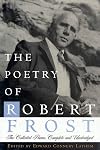
It's not that I have a favourite Robert Frost poem -- he's not that kind of fellow. Yes, there are many "quotable quotes" that people bandy about; but again, he's not that kind of fellow. I dip into this collection again and again, when I want the world to slow down a little, and I just want to dream away a few hours, an afternoon. These are especially good on snowy, blustery, mid-winter afternoons when there is nothing to do, and nowhere to go. And in the evening, you stop by a wood, ... show more lovely, dark, and deep.
He's the kind of fellow with whom you could have had long, interesting conversations, whether or not the discourse took you anywhere on that particular day; but to never make the mistake, in that conversation, of confusing his simplicity of language with simplicity of thought -- for he is more than "a considerable speck" in the universe and he has allowed me to take many roads, in my mind, not taken in the physical world.
This is a well-thumbed, well-loved collection. show less
He's the kind of fellow with whom you could have had long, interesting conversations, whether or not the discourse took you anywhere on that particular day; but to never make the mistake, in that conversation, of confusing his simplicity of language with simplicity of thought -- for he is more than "a considerable speck" in the universe and he has allowed me to take many roads, in my mind, not taken in the physical world.
This is a well-thumbed, well-loved collection. show less

Spent my morning with these trying to find RF's critical assessment of fame, how his neighbors come last to recognize him. Turns out, it's not in the Complete, since he was elected Poet Laureate of Vermont (where he'd moved from N.H. forty years before) in 1961, at age 85. Year after he recited from memory at JFK's Inauguration. Wryly, Frost responds "On Being Chosen Poet of Vermont," "Breathes there a bard who isn't moved/ When he finds his verse is understood…By his country and his show more neighborhood." And that IS the order, friends: The Country will recognize you before your neighbors do, especially yankees, mebbe.
I found this stunning, despite almost five decades of familiarity, many of them teaching certain poems like "Home Burial" and "A Servant to Servants," and of course property feeling in "Stopping by Woods", as well as the role of Edward Thomas and England in the universally misunderstood and admired "Road not Taken," with the most famous aposiopesis in English and American lit, "and I--/ …I took…."
My perusal this morning suggested I had neglected a dozen bird poems I should have noted in my "Birdtalk", like "Never again would Birds' Sounds be the Same," "Directive" about the Phoebes weeping to those not versed in country things, "Minor Bird" possibly about Titmouses or Phoebes, and others. Then, for this Amtrak rider, Boston to Colorado six times, some poems start from trains, "A Passing Glimpse," "Figure in the Doorway," and "On the Heart's Beginning to Cloud the Mind."(One, a train in Utah.) And several on wells, from the prolog "Pasture" to "For Once, then, Something." And even old shoes, "A Record Stride."
Above these subjects looms the writer's flexible, ironic, undercutting voice and tone, still uncommon in American poetry, so often elevated, sublime, the "I" growing as s/he speaks.
And may I say, as a lifelong "liberal," community college teacher, supporter of the American Dream and fulfillment thereof, I was amused at RF's parodic political satire mostly from the R--Rep or Right. His "Departmental" could be a satire on Hillary anthill: "Death's come to Jerry McCormick,/ Our selfless forager Jerry" (372); as could "A Roadside Stand" be a satire on my whole political and professional life, "Where they won't have to think for themselves anymore;/ While greedy good-doers, beneficent beasts of prey,/ Swarm over their lives enforcing benefits/ That are calculated to soothe them out of their wits…"(370).
Frost famously conflicted with the Amherst College liberal President Meiklejohn, whose policies RF termed at the time, "Micklejaundice." But later in life, Frost conceded, "Meiklejohn was right."
Well…I find Frost's poetry filled with nuggets, turns of phrase, sometimes parodic turns, and especially quick changes in tone--rare in any but cummings and Dickinson, who lived down the street from where Frost taught in 1919, and whose life overlapped his by eleven years. Bill Pritchard's literary biography is unsurpassed as a poetic reading, and it contains a photo of Frost regaling my two great, witty Amherst College teachers, Baird (Shakespeare) and Craig (In Freshman Comp, he asked my class, staring out the window, if any of us saw drumlins out there? No-one did. Craig, "You can't see them if you don't know the word." See RF, "Drumlin Woodcock.") and Craig's upperclass Seminar on Dickens and James). Both Baird and Craig endorsed my senior honors thesis on Renaissance prosody and tone, directed by the learned and witty Richard Cody.
I rejoice in having had such teachers, but I do wonder at all that I have missed through decades of familiarity. As Baird once wrote me of my grad subject, Andrew Marvell, his "To His Coy Mistress' is much better than familiarity suggests. I would say, this goes for most of Frost--though may I add, his neighbor down the street, of another gender, surpasses him…and all but one or two poets. But both ED and RF expand our New England dialect vocabulary, like "aftermath" for the second mowing. show less
I found this stunning, despite almost five decades of familiarity, many of them teaching certain poems like "Home Burial" and "A Servant to Servants," and of course property feeling in "Stopping by Woods", as well as the role of Edward Thomas and England in the universally misunderstood and admired "Road not Taken," with the most famous aposiopesis in English and American lit, "and I--/ …I took…."
My perusal this morning suggested I had neglected a dozen bird poems I should have noted in my "Birdtalk", like "Never again would Birds' Sounds be the Same," "Directive" about the Phoebes weeping to those not versed in country things, "Minor Bird" possibly about Titmouses or Phoebes, and others. Then, for this Amtrak rider, Boston to Colorado six times, some poems start from trains, "A Passing Glimpse," "Figure in the Doorway," and "On the Heart's Beginning to Cloud the Mind."(One, a train in Utah.) And several on wells, from the prolog "Pasture" to "For Once, then, Something." And even old shoes, "A Record Stride."
Above these subjects looms the writer's flexible, ironic, undercutting voice and tone, still uncommon in American poetry, so often elevated, sublime, the "I" growing as s/he speaks.
And may I say, as a lifelong "liberal," community college teacher, supporter of the American Dream and fulfillment thereof, I was amused at RF's parodic political satire mostly from the R--Rep or Right. His "Departmental" could be a satire on Hillary anthill: "Death's come to Jerry McCormick,/ Our selfless forager Jerry" (372); as could "A Roadside Stand" be a satire on my whole political and professional life, "Where they won't have to think for themselves anymore;/ While greedy good-doers, beneficent beasts of prey,/ Swarm over their lives enforcing benefits/ That are calculated to soothe them out of their wits…"(370).
Frost famously conflicted with the Amherst College liberal President Meiklejohn, whose policies RF termed at the time, "Micklejaundice." But later in life, Frost conceded, "Meiklejohn was right."
Well…I find Frost's poetry filled with nuggets, turns of phrase, sometimes parodic turns, and especially quick changes in tone--rare in any but cummings and Dickinson, who lived down the street from where Frost taught in 1919, and whose life overlapped his by eleven years. Bill Pritchard's literary biography is unsurpassed as a poetic reading, and it contains a photo of Frost regaling my two great, witty Amherst College teachers, Baird (Shakespeare) and Craig (In Freshman Comp, he asked my class, staring out the window, if any of us saw drumlins out there? No-one did. Craig, "You can't see them if you don't know the word." See RF, "Drumlin Woodcock.") and Craig's upperclass Seminar on Dickens and James). Both Baird and Craig endorsed my senior honors thesis on Renaissance prosody and tone, directed by the learned and witty Richard Cody.
I rejoice in having had such teachers, but I do wonder at all that I have missed through decades of familiarity. As Baird once wrote me of my grad subject, Andrew Marvell, his "To His Coy Mistress' is much better than familiarity suggests. I would say, this goes for most of Frost--though may I add, his neighbor down the street, of another gender, surpasses him…and all but one or two poets. But both ED and RF expand our New England dialect vocabulary, like "aftermath" for the second mowing. show less

Stopping by Woods on a Snowy Evening, illustrated by Susan Jeffers.
Robert Frost's classic winter poem, Stopping By Woods On a Snowy Evening, which was composed in 1922 and first published in 1923 as part of his New Hampshire volume, provides the text for this beautiful picture-book. His evocative words are paired with Susan Jeffers' beautiful artwork, which amplifies the story to be found in the poem, depicting the travelling narrator as a kindly soul who leaves good things for the forest show more residents as he passes through.
As someone who has loved this poem since the day I first encountered it, as a young girl reading through the collected works of Robert Frost to be found on my father's shelves, I was pretty much guaranteed to enjoy this book, but I found that I was unexpectedly moved by Jeffers' artwork. The illustrations, which capture both the pale beauty of a snow-covered world, as well as the more colorful elements brought into that world by the man in his snow-drawn carriage, have quite a few surprises hidden in them. From the hares hiding in the brush on one page, to the deer watching as the man lays down the food he has brought for the woodland animals, there is plenty going on in the illustrations that add to the 'basic' story-line of the poem. Highly recommended to anyone looking for picture-book presentations of classic poems intended for children, as well as to fans of Ms. Jeffers' artwork. show less
Robert Frost's classic winter poem, Stopping By Woods On a Snowy Evening, which was composed in 1922 and first published in 1923 as part of his New Hampshire volume, provides the text for this beautiful picture-book. His evocative words are paired with Susan Jeffers' beautiful artwork, which amplifies the story to be found in the poem, depicting the travelling narrator as a kindly soul who leaves good things for the forest show more residents as he passes through.
As someone who has loved this poem since the day I first encountered it, as a young girl reading through the collected works of Robert Frost to be found on my father's shelves, I was pretty much guaranteed to enjoy this book, but I found that I was unexpectedly moved by Jeffers' artwork. The illustrations, which capture both the pale beauty of a snow-covered world, as well as the more colorful elements brought into that world by the man in his snow-drawn carriage, have quite a few surprises hidden in them. From the hares hiding in the brush on one page, to the deer watching as the man lays down the food he has brought for the woodland animals, there is plenty going on in the illustrations that add to the 'basic' story-line of the poem. Highly recommended to anyone looking for picture-book presentations of classic poems intended for children, as well as to fans of Ms. Jeffers' artwork. show less
Lists
Reading Rainbow (1)
Five in a Row (1)
Modernism (1)
Tom's Bookstore (1)
Favourite Books (1)
. (1)
Awards


You May Also Like


Associated Authors
Statistics
- Works
- 292
- Also by
- 105
- Members
- 26,951
- Popularity
- #766
- Rating
- 4.1
- Reviews
- 265
- ISBNs
- 436
- Languages
- 13
- Favorited
- 113


