
E. E. Cummings (1894–1962)
Author of 100 Selected Poems
About the Author
Image credit: Photograph of E. E. Cummings while serving as an Army Private at Fort Devens, Massachusetts, 1918
Works by E. E. Cummings
Poem 15 copies
Adventures in value 7 copies
& 5 copies
Gedichte 4 copies
Chimneys 3 copies
Three poems 3 copies
Complete poems 1913-1935 3 copies
40 poem(a)s 3 copies
Complete Poems, 1936-62 3 copies
Poesie e lettere 3 copies
30 poesie 2 copies
by E. E. Cummings 1 copy
10 poemas 1 copy
Collected Poems 1 copy
Selected Poems, 1923 1958 1 copy
él 1 copy
58 poèmes 1 copy
Poetry 1 copy
Complete poems, 1913-1962 1 copy
Selected Poems 1923-1958 1 copy
Opōs einai ē thalassa 1 copy
Poesie scelte 1 copy
Poèmes 1 copy
[Poem, untitled] 1 copy
Sipliss 1 copy
A little girl named I 1 copy
Undici poesie 1 copy
When god lets my body be 1 copy
What about it? 1 copy
CIOPW 1 copy
Christmas tree 1 copy
Ausgewählte Gedichte 1 copy
I sing of Olaf 1 copy
my sweet old etcetera [poem] 1 copy
poemas 1 copy
Tumblling-hair [poem] 1 copy
E.E. Cummings : œuvres 1 copy
Einleitung 1 copy
Kyodai na heya 1 copy
Foreword 1 copy
Four poems 1 copy
Associated Works
The Making of a Poem: A Norton Anthology of Poetic Forms (2000) — Contributor — 1,473 copies, 9 reviews
Literature: An Introduction to Fiction, Poetry, and Drama (1995) — Contributor, some editions — 1,017 copies, 7 reviews
World Poetry: An Anthology of Verse from Antiquity to Our Time (1998) — Contributor — 500 copies, 2 reviews
American Poetry: The Twentieth Century, Volume Two: E. E. Cummings to May Swenson (2000) — Contributor — 444 copies, 1 review
Against Forgetting: Twentieth-Century Poetry of Witness (1993) — Contributor — 376 copies, 2 reviews
World War I and America: Told by the Americans Who Lived It (1918) — Contributor — 227 copies, 1 review
Teaching with Fire: Poetry That Sustains the Courage to Teach (2003) — Contributor — 225 copies, 1 review
Poetry Speaks Expanded: Hear Poets Read Their Own Work from Tennyson to Plath (2007) — Contributor — 158 copies, 2 reviews
The Norton Anthology of American Literature, Volume 2: 1865 to Present (1979) — Contributor, some editions — 137 copies
Poems to See By: A Comic Artist Interprets Great Poetry (2020) — Contributor — 130 copies, 33 reviews
War No More: Three Centuries of American Antiwar and Peace Writing (2016) — Contributor — 112 copies, 3 reviews
The Heath Anthology of American Literature, Concise Edition (2003) — Contributor — 74 copies, 1 review
Buzz Words: Poems About Insects (Everyman's Library Pocket Poets Series) (2021) — Contributor — 56 copies
Years of Protest: A Collection of American Writings of the 1930's (1967) — Contributor — 44 copies, 1 review
The Serpent and the Fire: Poetries of the Americas from Origins to Present (2024) — Contributor — 18 copies
New World Writing: Eighth Mentor Selection - A New Adventure in Modern Reading (1955) — Contributor — 8 copies
Cricket Magazine, Vol. 1, No. 4, December 1973 — Contributor — 5 copies
Americans abroad an anthology — Contributor, some editions — 3 copies
The red front — Translator, some editions — 1 copy
Greenwich Village Poetry Anthology — Contributor — 1 copy
The Ethnic Image in Modern American Literature, 1900-1950, Volumes 1-2 (1984) — Contributor — 1 copy
Tagged
Common Knowledge
- Legal name
- Cummings, Edward Estlin
- Birthdate
- 1894-10-14
- Date of death
- 1962-09-03
- Gender
- male
- Education
- Harvard University (AB|1915)
Harvard University (MA|1916) - Occupations
- poet
painter
novelist
playwright
essayist
ambulance driver (WWI) (show all 7)
private (US Army) - Organizations
- Vanity Fair
Harvard Aesthetes
US Army (WWI)
Norton-Harjes Ambulance Corps (WWI) - Awards and honors
- Dial Award (1925)
Shelley Memorial Award (1944)
Bollingen Prize (1958)
Fellowship of the Academy of American Poets (1950)
Guggenheim Fellowship (1933)
Levinson Prize (1939) (show all 14)
Harriet Monroe Poetry Award (1950)
Eunice Teitjens Memorial Prize (1952)
Boston Arts Festival Award (1957)
Oscar Blumenthal Prize (1962)
Guggenheim Fellowship (1951)
National Academy of Arts and Letters
Ford Foundation grant (1959)
American Academy of Arts and Letters ( [1949]) - Relationships
- Dos Passos, John (friend)
Pound, Ezra (friend)
Brown, Slater (friend)
Shapiro, Harvey (friend)
Herriman, George (friend)
de Forêt, Nancy Cummings (daughter) - Cause of death
- stroke
- Nationality
- USA
- Birthplace
- Cambridge, Massachusetts, USA
- Places of residence
- New York, New York, USA
Paris, Île-de-France, France
Joy Farm, Silver Lake, New Hampshire, USA
Camp Devens, Massachusetts, USA
Dépôt de Triage, La Ferté-Macé, Orne, Normandy, France
Greenwich Village, New York, New York, USA (show all 7)
USSR - Place of death
- North Conway, New Hampshire, USA
- Burial location
- Forest Hills Cemetery, Boston, Massachusetts, USA
- Associated Place (for map)
- USA
Members
Discussions
Group Read, August 2022: The Enormous Room in 1001 Books to read before you die (August 2022)
Reviews
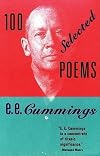
cummings isn't for everyone, I know, but really, he's more accessible than people think. This collection is a wonderful way to try out his poems for people who are new to him and a sheer delight for those of us who love him.
Not every poem here is marvelous, of course. There are some missing I'd have included and some included that I'd have left out, but that's merely personal preference. And frankly, with both "anyone lived in a pretty how town" and "my father walked through dooms of love" show more included, the other 98 could've been pure shite and this would still be a 5-star book. Fortunately, there are many, many more wonderful poems than just those two.
This was a perfect first read for the year--a reminder that no matter how badly humans may mess up the world, we are also capable of great hope and joy. show less
Not every poem here is marvelous, of course. There are some missing I'd have included and some included that I'd have left out, but that's merely personal preference. And frankly, with both "anyone lived in a pretty how town" and "my father walked through dooms of love" show more included, the other 98 could've been pure shite and this would still be a 5-star book. Fortunately, there are many, many more wonderful poems than just those two.
This was a perfect first read for the year--a reminder that no matter how badly humans may mess up the world, we are also capable of great hope and joy. show less

Written when Cummings was very young, this records his experience of internment in France towards the end of WW1. It is very conciously stylised, both in the writing (perhaps not too surprising given he went on to make his name as a poet) and in his approach to his subject matter. His constant elegantly constructed jibes at the stupidity and brutish pettiness of the system and those running it complement an expressed positive delight in his circumstances in spite of their unpleasantness. show more This in turn underpins his appreciation of those he finds himself imprisoned with. His vignettes of these characters form the core of the book and he achieves what might be thought impossible: to express what seems to be a genuine admiration and respect of his fellow prisoners without hiding the many challenging aspects of their character and behaviour. The skill with which he pulls together all these varying elements is what makes this book. The challenge is to follow all the different characters under their various - and varying - apellations through Cummings' intricately constructed sentances. Quite hard work but ultimately rewarding for its positive affirmation of humanity and the skill of the writing. 3 October 2018. show less
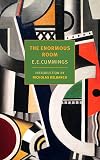
Let me start by saying that The Enormous Room is not exactly 'fun' to read, despite its youthful charms. This is the only extended work of prose that Cummings ever published, yet he so often blurs the line between verse and prose, making for a remarkably modernist flavor.
The Enormous Room is a fictitious retelling of Cummings' real life experience being incarcerated in a French military detention camp for vaguely defined traitorous behavior during the first World War. There is very little show more narrative structure or sequence of events, but rather a series of portraits of his fellow inmates, descriptions of the camp itself, and particular events that broke up his monotonous days of pain and drudgery.
It is through these whimsical, lively portraits that Cummings critiques his idiotic captors: the cops, the camp guards and bureaucratic leaders, and the French government as a whole. The hommes et femmes entombed in La Ferté-Macéhe have not actually be tried for anything. This is simply a way-station they are held in until their cases can be brought in front of a traveling board of judges. A dark cloud hangs over everyone, as they wonder if they will be released with little explanation, or be sent to an 'actual' prison for the duration of the war.
Despite these critiques, Cummings portrays this time as wildly fulfilling and joyous. Cummings can not think of a better group of people to spend the war with than the rejects and causalities of the military. The act of committing to his principles and sticking by his friend (only referred to as B) releases him from the expectations of a system he hates. Indeed, his rose colored glasses can be so powerful as to make the reader forget the grim reality of his circumstances: the overflowing buckets of human waste, the dank, cold, and dark solitary confinement cells, the greasy lukewarm soup, and the abusive guards. It is here the book shows its strongest ability: to take the hellscape of imprisonment and turn it into a farcical adventure story.
If nothing else, The Enormous Room's buoyant, youthful energy provides an unusual perspective on the horror of detention. That being said, the text itself is difficult to read. I'm sure you'd get more out of it if you had a rudimentary knowledge of French, because it's littered everywhere, whole paragraphs of it. It takes the wind out of Cummings' wry sense of humor when you are required to translate every other sentence. There's also tons of references to the The Pilgrims Progress, a work that I am unfamiliar with. It's entirely possible that my struggles with the The Enormous Room fall mostly upon my own ignorance of its style and substance. C'est la vie. show less
The Enormous Room is a fictitious retelling of Cummings' real life experience being incarcerated in a French military detention camp for vaguely defined traitorous behavior during the first World War. There is very little show more narrative structure or sequence of events, but rather a series of portraits of his fellow inmates, descriptions of the camp itself, and particular events that broke up his monotonous days of pain and drudgery.
It is through these whimsical, lively portraits that Cummings critiques his idiotic captors: the cops, the camp guards and bureaucratic leaders, and the French government as a whole. The hommes et femmes entombed in La Ferté-Macéhe have not actually be tried for anything. This is simply a way-station they are held in until their cases can be brought in front of a traveling board of judges. A dark cloud hangs over everyone, as they wonder if they will be released with little explanation, or be sent to an 'actual' prison for the duration of the war.
Despite these critiques, Cummings portrays this time as wildly fulfilling and joyous. Cummings can not think of a better group of people to spend the war with than the rejects and causalities of the military. The act of committing to his principles and sticking by his friend (only referred to as B) releases him from the expectations of a system he hates. Indeed, his rose colored glasses can be so powerful as to make the reader forget the grim reality of his circumstances: the overflowing buckets of human waste, the dank, cold, and dark solitary confinement cells, the greasy lukewarm soup, and the abusive guards. It is here the book shows its strongest ability: to take the hellscape of imprisonment and turn it into a farcical adventure story.
If nothing else, The Enormous Room's buoyant, youthful energy provides an unusual perspective on the horror of detention. That being said, the text itself is difficult to read. I'm sure you'd get more out of it if you had a rudimentary knowledge of French, because it's littered everywhere, whole paragraphs of it. It takes the wind out of Cummings' wry sense of humor when you are required to translate every other sentence. There's also tons of references to the The Pilgrims Progress, a work that I am unfamiliar with. It's entirely possible that my struggles with the The Enormous Room fall mostly upon my own ignorance of its style and substance. C'est la vie. show less

". . . it's no use trying to pretend that mostpeople and ourselves are alike," Cummings writes in his Introduction. "Mostpeople have less in common with ourselves than the squarerootofminusone. You and I are human beings;mostpeople are snobs."
Cummings is not for everyone, and thus as not-mostpeople, we are invited into a world where shedding logic and rules of grammar and punctuation are a necessary element in the dance into his world of deeply felt emotion.
"Miracles are to come," he show more promises. "With you I leave a remembrance of miracles:they are by somebody who can love and who shall be continually reborn,a human being;somebody who said to those near him, when his fingers would not hold a brush 'tie it into my hand' . . ."
Cummings paints vast word landscapes, bringing me to a quiet, thoughtful place, where my heart can rest -- or happily stirs my carnal yearnings. show less
Cummings is not for everyone, and thus as not-mostpeople, we are invited into a world where shedding logic and rules of grammar and punctuation are a necessary element in the dance into his world of deeply felt emotion.
"Miracles are to come," he show more promises. "With you I leave a remembrance of miracles:they are by somebody who can love and who shall be continually reborn,a human being;somebody who said to those near him, when his fingers would not hold a brush 'tie it into my hand' . . ."
Cummings paints vast word landscapes, bringing me to a quiet, thoughtful place, where my heart can rest -- or happily stirs my carnal yearnings. show less
Lists
Favourite Books (1)
Poetry Corner (1)
1920s (1)
Modernism (1)
Awards


You May Also Like


Associated Authors
Statistics
- Works
- 194
- Also by
- 76
- Members
- 14,633
- Popularity
- #1,573
- Rating
- 4.1
- Reviews
- 176
- ISBNs
- 339
- Languages
- 14
- Favorited
- 174


