
Walt Whitman (1819–1892)
Author of Leaves of Grass
About the Author
Walt Whitman was born on Long Island and raised in Brooklyn, New York, the son of a carpenter. He left school when he was 11 years old to take a variety of jobs. By the time he was 15, Whitman was living on his own in New York City, working as a printer and writing short pieces for newspapers. He show more spent a few years teaching, but most of his work was either in journalism or politics. Gradually, Whitman became a regular contributor to a variety of Democratic Party newspapers and reviews, and early in his career established a rather eccentric way of life, spending a great deal of time walking the streets, absorbing life and talking with laborers. Extremely fond of the opera, he used his press pass to spend many evenings in the theater. In 1846, Whitman became editor of the Brooklyn Eagle, a leading Democratic newspaper. Two years later, he was fired for opposing the expansion of slavery into the west. Whitman's career as a poet began in 1885, with the publication of the first edition of his poetry collection, Leaves of Grass. The book was self-published (Whitman probably set some of the type himself), and despite his efforts to publicize it - including writing his own reviews - few people read it. One reader who did appreciate it was essayist Ralph Waldo Emerson, who wrote a letter greeting Whitman at "the beginning of a great career." Whitman's poetry was unlike any verse that had ever been seen. Written without rhyme, in long, loose lines, filled with poetic lists and exclamations taken from Whitman's reading of the Bible, Homer, and Asian poets, these poems were totally unlike conventional poetry. Their subject matter, too, was unusual - the celebration of a free-spirited individualist whose love for all things and people seemed at times disturbingly sensual. In 1860, with the publication of the third edition on Leaves of Grass, Whitman alienated conventional thinkers and writers even more. When he went to Boston to meet Emerson, poet Henry Wadsworth Longfellow, essayist Oliver Wendell Holmes, and poet James Russell Lowell, they all objected to the visit. With the outbreak of the Civil War, Whitman's attentions turned almost exclusively to that conflict. Some of the greatest poetry of his career, including Drum Taps (1865) and his magnificent elegy for President Abraham Lincoln, "When Last in the Dooryard Bloom'd" (1865), was written during this period. In 1862, his brother George was wounded in battle, and Whitman went to Washington to nurse him. He continued as a hospital volunteer throughout the war, nursing other wounded soldiers and acting as a benevolent father-figure and confidant. Parts of his memoir Specimen Days (1882) record this period. After the war, Whitman stayed on in Washington, working as a government clerk and continuing to write. In 1873 he suffered a stroke and retired to Camden, New Jersey, where he lived as an invalid for the rest of his life. Ironically, his reputation began to grow during this period, as the public became more receptive to his poetic and personal eccentricities. Whitman tried to capture the spirit of America in a new poetic form. His poetry is rough, colloquial, sweeping in its vistas - a poetic equivalent of the vast land and its varied peoples. Critic Louis Untermeyer has written, "In spite of Whitman's perplexing mannerisms, the poems justify their boundless contradictions. They shake themselves free from rant and bombastic audacities and rise into the clear air of major poetry. Such poetry is not large but self-assured; it knows, as Whitman asserted, the amplitude of time and laughs at dissolution. It contains continents; it unfolds the new heaven and new earth of the Western world." American poetry has never been the same since Whitman tore it away from its formal and thematic constraints, and he is considered by virtually all critics today to be one of the greatest poets the country has ever produced. (Bowker Author Biography) show less
Image credit: Photo by G. Frank E. Pearsall
Courtesy of the NYPL Digital Gallery
(image use requires permission from the New York Public Library)
Courtesy of the NYPL Digital Gallery
(image use requires permission from the New York Public Library)
Works by Walt Whitman
Leaves of Grass and Other Writings [Norton Critical Edition, 2nd Edition] (2002) 299 copies, 1 review
Leaves of Grass, A Textual Variorum of the Printed Poems: Volume II: Poems: 1860-1867 (1959) 77 copies
Whitman's Men: Walt Whitman's Calamus Poems Celebrated by Contemporary Photographers (1996) — Author — 67 copies, 1 review
Walt Whitman Speaks: His Final Thoughts on Life, Writing, Spirituality, and the Promise of America: A Library of America Special Publication (2019) 58 copies, 2 reviews
The Complete Walt Whitman: Drum-Taps, Leaves of Grass, Patriotic Poems, Complete Prose Works, The Wound Dresser, Letters (2014) 37 copies
Complete Prose Works: Specimen Days and Collect, November Boughs and Good Bye My Fancy (2010) 31 copies
Walt Whitman 23 copies
A Most Jubilant Song: Inspiring Writings About the World Around Us (Hallmark Crown Editions) (1973) 19 copies
American Bard, the original preface to ÔLeaves of GrassÕ , arranged in verse by William Everson with a foreword by James D. Hart (1982) 16 copies
Leaves of grass including a fac-simile autobiography, variorum readings of the poems and a department of gathered leaves (1900) 16 copies
Leaves of Grass, A Textual Variorum of the Printed Poems: Volume I: Poems: 1855-1856 (1980) 15 copies
Walt Whitman Poetry Collection: Leaves of Grass, Various Works and Poems, and A Complete Biography of Walt Whitman (2020) 11 copies
Leaves of Grass, A Textual Variorum of the Printed Poems: Volume III: Poems: 1870-1891 (1980) 10 copies
Two prefaces 9 copies
To the Soul: Thomas Hampson Sings the Poetry of Walt Whitman [sound recording] (2006) — Author — 9 copies
Walt Whitman's Songs of Male Intimacy and Love: "Live Oak, with Moss" and "Calamus" (Iowa Whitman Series) (2011) 8 copies
Daybooks and Notebooks, Vol. 2: Daybooks, December 1881-1891 (Collected Writings of Walt Whitman) (1978) 8 copies
Walt Whitman's backward glances : A backward glance o'er travel'd roads, and two contributory essays hitherto uncollecte (1977) 6 copies
Digte 6 copies
Leaves of Grass a selection of Poems — Author — 6 copies
The Works of Walt Whitman: The Deathbed Edition in Two Volumes: The Collected Prose Volume II (The Works of Walt Whitman (1968) 5 copies
Works of Walt Whitman. Including Leaves of Grass, Specimen Days, Drum Taps & more (mobi) (2008) 5 copies
Crossing Brooklyn Ferry 5 copies
The Collected Writings of Walt Whitman: The Correspondence of Walt Whitman, Volume III, 1876-1885 (2007) 4 copies
Influential LGBTQ+ Works of the Nineteenth Century: Walt Whitman, Theodore Winthrop, Joseph Sheridan Le Fanu, Agnes Mary Frances Robinson, Oscar Wilde & Edward Carpenter (2026) 4 copies, 1 review
Walt Whitman's Poems; Selections With Critical Aids Edited By Gay Wilson Allen and Charles T. Davis (1959) 4 copies
Whitman, The Laurel Poetry Series 4 copies
Obras escogidas 4 copies
Leaves of Grass McKay, Phila ’91-2 3 copies
Canti d'addio 3 copies
Leaves of Grass McKay, Phila. ‘84 3 copies
The Song of the Open Road 3 copies
Starting from Paumanok 3 copies
Song of the broad-axe 3 copies
Leaves of Grass (Color Illustrations by Margaret Cook): Unabridged Deathbed Edition with 400 Poems 3 copies
Calamus : a series of letters written during the years 1868-1880 by Walt Whitman to a young friend (Peter Doyle) (2015) 3 copies
Manly Health and Training: With Off-Hand Hints Toward Their Conditions - New American Edition (2016) 3 copies
Every Hour, Every Atom: A Collection of Walt Whitman's Early Notebooks and Fragments (2020) 3 copies
An English and an American poet 2 copies
Calamus, letters to Peter Doyle 2 copies
The Million Dead, Too, Summ'd Up: Walt Whitman's Civil War Writings (Iowa Whitman Series) (2021) 2 copies
Short Stories 2 copies
Walt Whitman's poems 2 copies
The best of Whitman 2 copies
Selections from Whitman 2 copies
Two Rivulets 2 copies
Notebooks and Unpublished Prose Manuscripts: Volume II: Washington (The Collected Writings of Walt Whitman, 7) (2007) 2 copies
Folhas das folhas da relva 2 copies
Collected writings 2 copies
Notebooks and Unpublished Prose Manuscripts, Vol. 5: Notes (Collected Writings of Walt Whitman) (2007) 2 copies
The uncollected poetry and prose of Walt Whitman, much of which has been but recently discovered 2 copies
Notebooks and Unpublished Prose Manuscripts, Vol. 4: Notes (Collected Writings of Walt Whitman) (2007) 2 copies
Ich rufe Erde und Meer an 2 copies
Pictures : a poem 2 copies
Whitman Manuscripts at the University of Virginia (The Walt Whitman Archive, Vol 3, Pt. 1-2) (1993) 2 copies
Leaves of Grass Washington, D.C. ‘72 2 copies
Leaves of grass : the 1892 edition 2 copies
Notebooks and Unpublished Prose Manuscripts, Vol. 3: Camden (Collected Writings of Walt Whitman) (2007) 2 copies
Walt Whitman: A glorious collection from one of America’s best-loved and controversial poets (The Great Poets) (2023) 2 copies
Ruohoa : runoja 2 copies
Manahatta 1 copy
Leaves of Grass and Other Writings (Norton Critical Editions) by Whitman, Walt (2002) Paperback (1900) 1 copy
Sangen om migselv 1 copy
Canto del poeta 1 copy
Obras Escogidas, Ensayo biografico critico version, notas y bibliografia de Concha Zardoya (1960) 1 copy
Walt Whitman's Blue Book 1 copy
Complete Poetry And Collected Prose - Leaves Of Grass (1855 & 1891-92), Complete Prose Works (1892), Supplementary Prose (1982) 1 copy
Hymn on the Death of Lincoln 1 copy
Leaves of Grass 1ST Edition- Comprehensive Reader's Edition (The Collected Writings of Walt Whitman) 1 copy
Best poems of Walt Whitman 1 copy
Fire de iarba 1 copy
Poèmes 1 copy
Vlati trave respondez! 1 copy
Foglie d'erba e prose 1 copy
Cálamo 1 copy
Three Poems 1 copy
Φύλλα χλόης: Ανθολογία 1 copy
FIJE BARI 1 copy
SEÇME ŞİİRLER 1 copy
Prose Works 1892 Volume 2 1 copy
Prose Works 1892 Volume 1 1 copy
Whitman_Leaves_of_Grass.mobi 1 copy
DEMOKRACJA I PERSONALIZM 1 copy
Miracles (excerpt) 1 copy
diVersi 1 copy
Selections, Walt Whitman 1 copy
Vyhlídky demokracie 1 copy
Feuilles d’Herbe 1 copy
“Sparkles from the Wheel” 1 copy
Leaves of Gress 1 copy
Walt Whitman 1 copy
Seleted Poems 1 copy
Whitman Reader 1 copy
Obra poética 1 copy
Pages de Journal 1 copy
Walt Whitman notebook 1 copy
"A Woman Waits for Me" 1 copy
Canti scelti 1 copy
New York dissected : a sheaf of recently discovered newspaper articles by the author of Leaves of grass (1976) 1 copy
A Noiseless Patient Spider 1 copy
Whitman's Poems 1 copy
Fuldkomne Dage 1 copy
Complete Writings Vol. 5 1 copy
Complete Writings Vol. 4 1 copy
Complete Writings Vol. 2 1 copy
Complete Writings Vol. 1 1 copy
collected prose 1 copy
Ruohonlehtiä 1 copy
Freedom and Domination 1 copy
Canção da estrada larga 1 copy
Choix de poèmes 1 copy
Complete Writings Vol. 7 1 copy
Eidolons 1 copy
Selected poetry-list poems 1 copy
Werke 1 copy
a child's reminiscence 1 copy
Poems and prose 1 copy
A Wartime Whitman 1 copy
Prosaschriften 1 copy
Death of Abraham Lincoln 1 copy
Song of the Redwood Tree 1 copy
Hojas de Hierba - Tomo I 1 copy
A collection of poems. 1 copy
Fremtidens historie 1 copy
Complete Writings Vol. 6 1 copy
Complete Writings Vol. 8 1 copy
Poemas esenciales 1 copy
Prefácios a Folhas de Erva 1 copy
Song of the Exposition 1 copy
Leaves of Grass - First & Death-Bed Edition (Trade) (04) by Whitman, Walt [Paperback (2004)] (2004) 1 copy
Leaves of Grass C3 1 copy
“Sparkles from the Whell” 1 copy
“Broadway Pageant” 1 copy
"The Sleepers" 1 copy
“I Sing the Body Electric” 1 copy
“Starting from Paumanok” 1 copy
“I Hear America Singing” 1 copy
Two Rivulets 1 copy
Kosmos 1 copy
Complete Writings Vol. 9 1 copy
Leaves of grass, Democratic vistas, specimen days, with a biographical and critical introduction 1 copy
Demokratski vidici 1 copy
Los poemas "Calamus" 1 copy
Leaves of Grass: A Textual Variorum of the Printed Poems, 1855-1891 (3-Volume Set) (The collected writings of Walt Whitman) (1980) 1 copy
Canto di una vita immensa 1 copy
THREE POEMS BY WALT WHITMAN SET TO MUSIC BY R. VAUGHAN WILLIAMS 1. NOCTURNE - 2. A CLEAR MIDNIGHT - 3. JOY, SHIPMATE, JOY (1925) 1 copy
Complete Writings Vol. 10 1 copy
Poesías 1 copy
Poems by Walt Whitman 1 copy
Poèmes de Walt Whitman 1 copy
Cîntec despre mine 1 copy
Opere alese 1 copy
Lyrik und Prosa 1 copy
Walt Whitman, Conversaciones 1 copy
Associated Works
The Making of a Poem: A Norton Anthology of Poetic Forms (2000) — Contributor — 1,474 copies, 9 reviews
The Best Poems of the English Language: From Chaucer Through Robert Frost (2004) — Contributor — 1,253 copies, 3 reviews
Literature: An Introduction to Fiction, Poetry, and Drama (1995) — Contributor, some editions — 1,017 copies, 7 reviews
A Book of Luminous Things: An International Anthology of Poetry (1996) — Contributor — 945 copies, 12 reviews
A Patriot's Handbook: Songs, Poems, Stories, and Speeches Celebrating the Land We Love (2003) — some editions — 568 copies, 5 reviews
The Illustrated Treasury of Children's Literature, Volumes 1-2 (1955) — Contributor — 523 copies, 4 reviews
World Poetry: An Anthology of Verse from Antiquity to Our Time (1998) — Contributor — 499 copies, 2 reviews
The Civil War: The First Year Told By Those Who Lived It (2011) — Contributor — 269 copies, 2 reviews
The Heath Anthology of American Literature, Volume 1 (1990) — Contributor, some editions — 252 copies, 1 review
The Art of Fact: A Historical Anthology of Literary Journalism (1997) — Contributor — 226 copies, 1 review
Teaching with Fire: Poetry That Sustains the Courage to Teach (2003) — Contributor — 225 copies, 1 review
The Graphic Canon, Vol. 2: From "Kubla Khan" to the Brontë Sisters to The Picture of Dorian Gray (2012) — Contributor — 213 copies, 2 reviews
The Civil War: The Second Year Told By Those Who Lived It (2012) — Contributor — 194 copies, 1 review
The Lincoln Anthology: Great Writers on His Life and Legacy from 1860 to Now (2008) — Contributor — 172 copies, 1 review
The Civil War: The Third Year Told by Those Who Lived It (2013) — Contributor — 169 copies, 1 review
Poetry Speaks Expanded: Hear Poets Read Their Own Work from Tennyson to Plath (2007) — Contributor — 158 copies, 2 reviews
American Antislavery Writings: Colonial Beginnings to Emancipation (2012) — Contributor — 147 copies
An American Album: One Hundred and Fifty Years of Harper's Magazine (2000) — Contributor — 145 copies, 1 review
Answering Back: Living Poets Reply to the Poetry of the Past (2007) — Contributor — 119 copies, 1 review
The Glorious American Essay: One Hundred Essays from Colonial Times to the Present (2020) — Contributor — 119 copies
Leading from Within: Poetry That Sustains the Courage to Lead (2007) — Contributor — 116 copies, 3 reviews
War No More: Three Centuries of American Antiwar and Peace Writing (2016) — Contributor — 111 copies, 2 reviews
Writing New York: A Literary Anthology (Expanded 10th-Anniversary Edition) (2008) — Contributor — 101 copies, 1 review
The Heath Anthology of American Literature, Concise Edition (2003) — Contributor — 73 copies, 1 review
Queer: A Collection of LGBTQ Writing from Ancient Times to Yesterday (2021) — Contributor, some editions — 66 copies
Gentlemen, Scholars and Scoundrels: A Treasury of the Best of Harper's Magazine from 1850 to the Present (1972) — Contributor — 62 copies
Buzz Words: Poems About Insects (Everyman's Library Pocket Poets Series) (2021) — Contributor — 56 copies
Out of the Best Books: An Anthology of Literature, Vol. 2: Love, Marriage, and the Family (1966) — Contributor — 36 copies
Out of the Best Books: An Anthology of Literature, Vol. 3: Intelligent Family Living (1967) — Contributor — 34 copies
Out of the Best Books: An Anthology of Literature, Vol. 5: Community Responsibility (1969) — Contributor — 30 copies
Out of the Best Books: An Anthology of Literature, Vol. 4: The World Around Us (1968) — Contributor — 28 copies
"The Man Who Thought Himself a Woman" and Other Queer Nineteenth-Century Short Stories (Q19: The Queer American Nineteenth Century) (2017) — Contributor — 20 copies
The Serpent and the Fire: Poetries of the Americas from Origins to Present (2024) — Contributor — 18 copies
Grolier Classics: History of Tom Jones, Civilization of the Renaissance in Italy, Alice's Adventures in Wonderland, Leaves of Grass (1956) — Contributor — 18 copies
Six Great American Poets: Poems by Poe, Dickinson, Whitman, Longfellow, Frost and Millay (Dover Thrift Editions) (1992) — Contributor — 16 copies
Oogst Der Tijden. keur uit de werken van schrijvers en dichters aller volken en eeuwen (1940) — Contributor — 12 copies
Holst : The planets + The mystic trumpeter + Matthews : Pluto {sound recording} {Lloyd-Jones} (2001) — Poet — 12 copies
Mitt skattkammer. b.9 Gjennom tidene — Contributor — 9 copies
Onthebus No. 8 and 9 — Contributor — 6 copies
Sylvia Plath's Tomato Soup Cake: A Compendium of Classic Authors' Favourite Recipes (2024) — Contributor — 6 copies
Beletra Almanako 2 (BA2 - Literaturo en Esperanto) (Esperanto Edition) (2008) — Contributor — 6 copies, 1 review
Toward the unknown region [score] — Lyricist — 5 copies
MHQ: The Quarterly Journal of Military History — Summer 2016 (2016) — Author "Poetry: Hallowed Ground...in Brooklyn" — 4 copies
The Bibelot Volume XVIII: A Reprint of Poetry and Prose for Book Lovers, Chose in Part from Scarce Editions and Sources Not Generally Known. (1912) — Contributor — 4 copies
Vaughan Williams : Dona nobis pacem + Mass in G minor + O Clap your Hands {sound recording} — Text — 4 copies
Washington: a reader; the National Capital as seen through the eyes of Thomas Jefferson (1967) 3 copies
Great Poems from Chaucer to Whitman — Contributor — 3 copies
Ode to Boy: Vol. 2: An Anthology of Same-Sex Attraction in Literature from the 19th Century Through the First World War (2014) — Contributor — 2 copies
American Bible Vol. XII (Selected Writings of Elbert Hubbard, XII American Bible) (1998) — Contributor — 2 copies
Tonight's Concert : September to December 2025 : Tchaikovsky & Vaughan Williams : Sunday 7 December 2025 : Barbican {programme} (2025) — Text [Dona nobis pacem] — 1 copy
The California quarterly — Contributor, some editions — 1 copy
Tagged
Common Knowledge
- Canonical name
- Whitman, Walt
- Legal name
- Whitman, Walter
- Other names
- Whitman, Walter
Whitman, Walt - Birthdate
- 1819-05-31
- Date of death
- 1892-03-26
- Gender
- male
- Education
- self-educated
- Occupations
- poet
novelist
short story writer
essayist
editor
teacher (show all 12)
nurse
typesetter
apprentice printer
convention delegate
journalist
clerk (Bureau of Indian Affairs ∙ U.S. Department of the Interior) - Organizations
- The Patriot
Long Islander
Long Island Democrat
Brooklyn Eagle - Awards and honors
- The Hall of Fame for Great Americans (1930)
Gave Commencement Address at Dartmouth College (1872)
Walt Whitman Bridge - Short biography
- Walter Whitman Jr. (May 31, 1819 – March 26, 1892) was an American poet, essayist and journalist. A humanist, he was a part of the transition between transcendentalism and realism, incorporating both views in his works. Whitman is among the most influential poets in the American canon, often called the father of free verse. His work was controversial in his time, particularly his 1855 poetry collection Leaves of Grass, which was described as obscene for its overt sensuality.
Born in Huntington on Long Island, Whitman resided in Brooklyn as a child and through much of his career. At the age of 11, he left formal schooling to go to work. Later, Whitman worked as a journalist, a teacher, and a government clerk. Whitman's major poetry collection, Leaves of Grass, was first published in 1855 with his own money and became well known. The work was an attempt at reaching out to the common person with an American epic. He continued expanding and revising it until his death in 1892. During the American Civil War, he went to Washington, D.C. and worked in hospitals caring for the wounded. His poetry often focused on both loss and healing. On the death of Abraham Lincoln, whom Whitman greatly admired, he wrote his well known poems, "O Captain! My Captain!" and "When Lilacs Last in the Dooryard Bloom'd", and gave a series of lectures. After a stroke towards the end of his life, Whitman moved to Camden, New Jersey, where his health further declined. When he died at the age of 72, his funeral was a public event.
Whitman's influence on poetry remains strong. Mary Whitall Smith Costelloe argued: "You cannot really understand America without Walt Whitman, without Leaves of Grass ... He has expressed that civilization, 'up to date,' as he would say, and no student of the philosophy of history can do without him." Modernist poet Ezra Pound called Whitman "America's poet ... He is America." - Cause of death
- bronchial pneumonia
tuberculosis
nephritis - Nationality
- USA
- Birthplace
- West Hills, Huntington, Long Island, New York, USA
- Places of residence
- Washington, D.C., USA
Brooklyn, New York, New York, USA
Georgetown, Colorado, USA
Laurel Springs, New Jersey, USA
New Orleans, Louisiana, USA - Place of death
- Camden, New Jersey, USA
- Burial location
- Harleigh Cemetery, Camden, New Jersey, USA
- Map Location
- New York, USA
Members
Discussions
Whitman's Leaves of Grass illustrated by Weston (1942) in George Macy devotees (March 2024)
Walt Whitman in Someone explain it to me... (January 2024)
Victorian Era Abroad: Q1: Leaves of Grass by Walt Whitman in Club Read 2023 (March 2023)
Arion Press "Leaves of Grass" on ABE in Fine Press Forum (October 2022)
Reviews
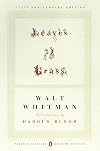
Wow. This book. It's an exultant ode to America, nature, love, sex, equality, class, justice, race, religion, relationships. Written in 1855, Whitman's ideas are still fresh and relevant, 170 years later. He writes like no one else. Elegiac and colloquial, Whitman weaves the plainspoken with the lyrical. It really took me out of my head, and maybe turned it upside down, or sideways, backwards, everything. Reading this book was an intensely immersive experience for me. It was pure poetry, show more joyful and challenging and eloquent and passionate. show less

Walt Whitman is the ultimate poet of the spirit. If after reading the Song of Myself you are not thoroughly and mystically aware that you are a spiritual being, your mind has been wandering elsewhere, instead of giving Walt due attention. While not every poem will reach the same exalted heights, those that do are a miraculous, ecstatic experience of being alive in a whole new way.
Random pick of Whitman goodness:
“I have no chair, no church, no philosophy,
I lead no man to a dinner-table, show more library, exchange,
But each man and each woman of you I lead upon a knoll,
My left hand hooking you round the waist,
My right hand pointing to landscapes of continents and the public road.
Not I, not any one else can travel that road for you,
You must travel it for yourself.
It is not far, it is within reach,
Perhaps you have been on it since you were born and did not know,
Perhaps it is everywhere on water and on land.“ show less
Random pick of Whitman goodness:
“I have no chair, no church, no philosophy,
I lead no man to a dinner-table, show more library, exchange,
But each man and each woman of you I lead upon a knoll,
My left hand hooking you round the waist,
My right hand pointing to landscapes of continents and the public road.
Not I, not any one else can travel that road for you,
You must travel it for yourself.
It is not far, it is within reach,
Perhaps you have been on it since you were born and did not know,
Perhaps it is everywhere on water and on land.“ show less

This anthology collects poems from Whitman’s Leaves of Grass, including a few poems Whitman excised from later editions. The selection was performed by Leslie A. Fiedler, who discusses the reasons for his choices in the introduction. Among them are blatant editorializing and what Fiedler calls the “bardic American strain.” In at least one case, he restored a phrase that an older, coyer Whitman had bowdlerized: An enthusiastic opera-goer, Whitman wrote of “the trained soprano—she show more convulses me to the climax of my love-grip,” then censored it to the incomprehensible “the train’d soprano (what work with hers is this?).”
Among the poems Fiedler omits is the much-anthologized “O Captain! My Captain!”, which he calls “infamous.” This poem, he writes, “is not only banal but banal in a way utterly untrue to Whitman.”
Nor does Fiedler present the poems in the final order of Leaves, “the poet’s last version of himself.”
Out of curiosity, I read Emory Holloway’s introduction to the 1947 Everyman’s Library edition immediately after finishing Fiedler’s. Holloway was the undisputed expert on Whitman in the first half of the twentieth century, but his text seemed much more old-fashioned than Fiedler’s. I checked publication dates: 1947 and 1959; twelve years is not a big difference. The two were born 32 years apart (1885/1917), so perhaps it was generational. I was struck by the tortured syntax of some of Holloway’s sentences, then realized the fog index was high whenever Holloway danced around what Fiedler calls “secrets long since out.” Holloway shies away from mentioning the graphic homoerotic nature of some of the poems.
How times change. Whitman is now a gay icon. Unfortunately, the focus seems biographical rather than literary (did he or didn’t he?).
But what about the poetry? I liked Whitman’s use of free verse and the way he combines the mystical and the concrete. His tone is intimate: He speaks directly to the reader, as “I” to “You.” More than once, he pictures the reader holding his book as if he were holding the poet. Once in a while, I found myself reading his characteristic catalogs superficially, as simply words on the page; whenever I did, the lists seemed tedious and long-winded. But when I slowed down and let each item evoke an image in my mind, they were surprisingly effective, even though he limits himself to naming without saying anything about what he names.
This book may be all the Whitman I need, although I won’t discard my complete edition, even if it does contain what Fiedler calls “too much bulk, too much of it soggy even for the indiscriminating appetite of the neophyte.” But this edition, from Dell’s Laurel Poetry Series (a boon to impoverished poetry lovers in the Sixties), smaller than a Kindle, is the one I slip into a pocket occasionally as I step out the door. show less
Among the poems Fiedler omits is the much-anthologized “O Captain! My Captain!”, which he calls “infamous.” This poem, he writes, “is not only banal but banal in a way utterly untrue to Whitman.”
Nor does Fiedler present the poems in the final order of Leaves, “the poet’s last version of himself.”
Out of curiosity, I read Emory Holloway’s introduction to the 1947 Everyman’s Library edition immediately after finishing Fiedler’s. Holloway was the undisputed expert on Whitman in the first half of the twentieth century, but his text seemed much more old-fashioned than Fiedler’s. I checked publication dates: 1947 and 1959; twelve years is not a big difference. The two were born 32 years apart (1885/1917), so perhaps it was generational. I was struck by the tortured syntax of some of Holloway’s sentences, then realized the fog index was high whenever Holloway danced around what Fiedler calls “secrets long since out.” Holloway shies away from mentioning the graphic homoerotic nature of some of the poems.
How times change. Whitman is now a gay icon. Unfortunately, the focus seems biographical rather than literary (did he or didn’t he?).
But what about the poetry? I liked Whitman’s use of free verse and the way he combines the mystical and the concrete. His tone is intimate: He speaks directly to the reader, as “I” to “You.” More than once, he pictures the reader holding his book as if he were holding the poet. Once in a while, I found myself reading his characteristic catalogs superficially, as simply words on the page; whenever I did, the lists seemed tedious and long-winded. But when I slowed down and let each item evoke an image in my mind, they were surprisingly effective, even though he limits himself to naming without saying anything about what he names.
This book may be all the Whitman I need, although I won’t discard my complete edition, even if it does contain what Fiedler calls “too much bulk, too much of it soggy even for the indiscriminating appetite of the neophyte.” But this edition, from Dell’s Laurel Poetry Series (a boon to impoverished poetry lovers in the Sixties), smaller than a Kindle, is the one I slip into a pocket occasionally as I step out the door. show less
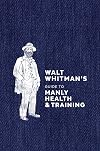
This horrid little book is an insult to Walt Whitman and readers alike. Ten Speed Press deceives us by promoting it as a worthwhile thing to buy or read. Is there a marketing plan here to attract unsuspecting gift givers?
Presented in the style of "Today's Spiritual Messages" bedside books, Ten Speed has taken a few sentences or paragraphs from Mr. Whitman's writing on men's health and fitness published in the newspaper "New York Atlas" in 1858, grouped them into 7 categories and presented show more them roughly one per page, accompanied by bloated black and white drawings. There are about 75 of these excerpts, some as short as a single sentence. Is this all that is interesting in 47,000 of Mr. Whitman's words about maleness and the care of male bodies? Does he not write of these things elsewhere?
What instructions did Ten Speed give to the artist, Matt Allen? As I started reading my eye was drawn to the strange little graphics beside some of the page numbers. After great scrutiny I decided that the long one is not a mustache. It is a canoe. Nor is are the roundish ones mice or a bedraggled scrotum, but rather a pair of cloth backpacks. Very odd, but Whitman walked. OK. But then, on a concluding page they are blown up to be a pair of boxing gloves! Crikey.
A quick online check suggests that in 1858 boxing gloves were used primarily for practice. The famous boxer John L. Sullivan, who was born in 1858, the year of these writings, fought bare-fisted. A patent for padded boxing gloves was issued in 1898. Does anyone know if Whitman used gloves? Is the matter discussed in any of the columns?
Other anachronisms: Baseball gloves were not used till the 1870s. Real men kept their hands bare, risking broken fingers. And why oh why is the male character sitting in the lotus position with his hands in Shuni Mudra?
I think I can safely say that I would be insulted if anyone gave me this book, even as a joke.
I received a review copy of "Walt Whitman's Guide to Manly Health and Training" by Walt Whitman (Ten Speed) through NetGalley.com. show less
Presented in the style of "Today's Spiritual Messages" bedside books, Ten Speed has taken a few sentences or paragraphs from Mr. Whitman's writing on men's health and fitness published in the newspaper "New York Atlas" in 1858, grouped them into 7 categories and presented show more them roughly one per page, accompanied by bloated black and white drawings. There are about 75 of these excerpts, some as short as a single sentence. Is this all that is interesting in 47,000 of Mr. Whitman's words about maleness and the care of male bodies? Does he not write of these things elsewhere?
What instructions did Ten Speed give to the artist, Matt Allen? As I started reading my eye was drawn to the strange little graphics beside some of the page numbers. After great scrutiny I decided that the long one is not a mustache. It is a canoe. Nor is are the roundish ones mice or a bedraggled scrotum, but rather a pair of cloth backpacks. Very odd, but Whitman walked. OK. But then, on a concluding page they are blown up to be a pair of boxing gloves! Crikey.
A quick online check suggests that in 1858 boxing gloves were used primarily for practice. The famous boxer John L. Sullivan, who was born in 1858, the year of these writings, fought bare-fisted. A patent for padded boxing gloves was issued in 1898. Does anyone know if Whitman used gloves? Is the matter discussed in any of the columns?
Other anachronisms: Baseball gloves were not used till the 1870s. Real men kept their hands bare, risking broken fingers. And why oh why is the male character sitting in the lotus position with his hands in Shuni Mudra?
I think I can safely say that I would be insulted if anyone gave me this book, even as a joke.
I received a review copy of "Walt Whitman's Guide to Manly Health and Training" by Walt Whitman (Ten Speed) through NetGalley.com. show less
Lists
bound (1)
. (1)
Awards


You May Also Like


Associated Authors
Statistics
- Works
- 629
- Also by
- 130
- Members
- 32,381
- Popularity
- #599
- Rating
- 4.1
- Reviews
- 278
- ISBNs
- 1,190
- Languages
- 26
- Favorited
- 175


