
David Rutledge (1)
Author of Do You Know What It Means to Miss New Orleans?
For other authors named David Rutledge, see the disambiguation page.
About the Author
Image credit: Faculty webpage at University of New Orleans website.
Works by David Rutledge
Tagged
Common Knowledge
- Gender
- male
Members
Reviews
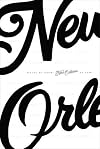
I see that am not the first Early Reviewer to note how physically beautiful this book is. The graphics include a stunning time-space map showing the physical locations and eras of each setting described in each essay - a must-see for graphic designers for its originality, compactness, and conveyance of information, and also vintage maps that mean little themselves but do a nice job of proving New Orleans has been here at all the time periods described in the book, and is there still.
But for show more me, the whole of the book's value comes from the essay written by Barbara Bodichon in 1867. It reads like a lost work of Jane Austen, pluckily bashing the moral depredations of slavery and also capturing with the finest brush the social history of the slaveholders in New Orleans. How stupid and grotesque they became trapped as they were inside their own peculiar institution. It is glorious. An Austen lover could savor that essay over multiple readings.
I carried my copy with me everywhere I went for a month. Though I read many pages at a time, I found myself reading at the same slow, humid cadence in which these stories were written. These are good writers going all-out to describe this very real, very important place. It's not Atlantis, though the authors here write about it as if it were. Each of these authors, writing as much as 300 years apart, found such deep meaning in the place they write about it as if it's gone, as if nothing they say about it can ever be witnessed again by another person, and they have to record it. I think they all feel that way because they became so emotionally involved in New Orleans while they were there. They are all not so much trying to record a disappearing city as trying to record themselves inside it. There's a lot of narcissus blooming in this book, though that's typically true for any first-person writing.
The vintage essays - many written by Europeans visiting the city - are all fantastic. The modern essays all have various flaws, as modern essays usually do. Many of the modern essays reveal the casual racism of their authors. One judges the property value of a neighborhood by how many wheelchair ramps she sees, inexplicably attributing the ramps to black people who survived shootings and smugly patting herself on the back for being such a clever armchair sociologist. It can't be because many of the people who were unable to leave are the immobile elderly (and the armies of do-gooders looking to help people fix up their houses), can it? Nor could it possibly be because houses that survived Katrina were probably elevated above ground, necessitating ramps more than a typical city would. Another is about a white couple that fashionably moved to the Lower Ninth Ward, and the essay is unintentionally (and hilariously) soaked with the author's dismay at having to actually live amongst the people there.
Within that light the two essays by Eve Troeh are fascinating. The first seems kind of light and exploitative (though the story she describes in it was national news at the time, making me wish Troeh had made this more detailed). But it becomes more meaningful when you read the second one and realize what changed for the author between the two. She had her own personal Before and After that had nothing - and, of course, everything - to do with Katrina.
In the end, the rest of the modern essays are written by well-educated and well-to-do people who escaped relatively unscathed (none was actually in the city during the hurricane, a mark of social class all on its own) and are now trying to feel sad for more than just themselves. Those are far more enjoyable to read if you imagine Anderson Cooper reading them to you in his Concerned Voice. Despite their flaws, they do a very good job describing the things and stuff in the city. I was just beginning to notice the lack of character and dialog when I reached Ray Shea's description of his friend, the Professor, on page 239. It reads like a script for David Simon's Treme, and really makes up for the lack of people in the rest of the book.
ETA: If my criticisms had a strong effect on you, please read janepriceestrada's review below mine before deciding not to get the book - her insights on the same parts I mention are a strong counterpoint to mine. show less
But for show more me, the whole of the book's value comes from the essay written by Barbara Bodichon in 1867. It reads like a lost work of Jane Austen, pluckily bashing the moral depredations of slavery and also capturing with the finest brush the social history of the slaveholders in New Orleans. How stupid and grotesque they became trapped as they were inside their own peculiar institution. It is glorious. An Austen lover could savor that essay over multiple readings.
I carried my copy with me everywhere I went for a month. Though I read many pages at a time, I found myself reading at the same slow, humid cadence in which these stories were written. These are good writers going all-out to describe this very real, very important place. It's not Atlantis, though the authors here write about it as if it were. Each of these authors, writing as much as 300 years apart, found such deep meaning in the place they write about it as if it's gone, as if nothing they say about it can ever be witnessed again by another person, and they have to record it. I think they all feel that way because they became so emotionally involved in New Orleans while they were there. They are all not so much trying to record a disappearing city as trying to record themselves inside it. There's a lot of narcissus blooming in this book, though that's typically true for any first-person writing.
The vintage essays - many written by Europeans visiting the city - are all fantastic. The modern essays all have various flaws, as modern essays usually do. Many of the modern essays reveal the casual racism of their authors. One judges the property value of a neighborhood by how many wheelchair ramps she sees, inexplicably attributing the ramps to black people who survived shootings and smugly patting herself on the back for being such a clever armchair sociologist. It can't be because many of the people who were unable to leave are the immobile elderly (and the armies of do-gooders looking to help people fix up their houses), can it? Nor could it possibly be because houses that survived Katrina were probably elevated above ground, necessitating ramps more than a typical city would. Another is about a white couple that fashionably moved to the Lower Ninth Ward, and the essay is unintentionally (and hilariously) soaked with the author's dismay at having to actually live amongst the people there.
Within that light the two essays by Eve Troeh are fascinating. The first seems kind of light and exploitative (though the story she describes in it was national news at the time, making me wish Troeh had made this more detailed). But it becomes more meaningful when you read the second one and realize what changed for the author between the two. She had her own personal Before and After that had nothing - and, of course, everything - to do with Katrina.
In the end, the rest of the modern essays are written by well-educated and well-to-do people who escaped relatively unscathed (none was actually in the city during the hurricane, a mark of social class all on its own) and are now trying to feel sad for more than just themselves. Those are far more enjoyable to read if you imagine Anderson Cooper reading them to you in his Concerned Voice. Despite their flaws, they do a very good job describing the things and stuff in the city. I was just beginning to notice the lack of character and dialog when I reached Ray Shea's description of his friend, the Professor, on page 239. It reads like a script for David Simon's Treme, and really makes up for the lack of people in the rest of the book.
ETA: If my criticisms had a strong effect on you, please read janepriceestrada's review below mine before deciding not to get the book - her insights on the same parts I mention are a strong counterpoint to mine. show less
 This review was written for LibraryThing Early Reviewers.
The Book Report: An anthology of writings, commissioned as well as previously publsihed, on the topic of New Orleans as one's homeplace, whether corporeal or spiritual.
My Review: Produced by Chin Music Press's Broken Levee imprint, you know from just that much information that this is a **gorgeous** book to look at, a deeply gruntling book to hold, and a pleasure to read. Hmmm...that pleasure to read bit? If you're not tied emotionally to New Orleans, this book will quite likely bore the show more socks right off your feet, shoes or no shoes.
I am tied to New Orleans, though, however unwillingly and with whatever angry, grumpy, "my car needs alignment AGAIN?!?!" caveats, tied I am. Once upon a time, I possessed a carriage house on Carondelet Street. It was tiny, but perfect for one person on vacation, which was me a few times here and there. It's still there, but I can't be...can't make the climate work for me for more than a day or two. Still, there is *no*place* like New Orleans. That's either the thing that makes you go back, or makes you late for the airport.
And reading this book? It's a lot like being there. It's gonna work, you just know it is, up until the moment it doesn't anymore, and for no obvious reason (Barbara Bodichon's 1867 selection felt like a glass-cutting tool gone wrong to me, Jennifer Kuchta's piece "Jennie's Grocery: R.I.P" was...well...oddly shaped). But there are more successes than failures (Lolis Elie's piece "Still Live, With Voices", good as always, hey Lolis! Long time no hear, the extraordinarily underknown Tracey Tangerine's loud "In My Face", which alone is worth your $16 purchase), and of course the sheer physical beauty of the thing makes it a must-covet-and-retain for any serious lover of bibliophilic curiosa. The maps...the belly-band...the strange, impractical, not-for-the-marts-of-commerce unlaminated WHITE cover (!!)...all are just, well, wondrous. I adore this press's books. I wish I would win the MegaMillions or whatever so I could give them a big, fat grant to stay in business and even grow some.
But enough. Be warned: Not bit by the Nawlins Vodoun Viper? Don't buy unless you simply can't resist the look of the thing. Already bit? Your soul is gone anyway. Buy it, no regrets. show less
My Review: Produced by Chin Music Press's Broken Levee imprint, you know from just that much information that this is a **gorgeous** book to look at, a deeply gruntling book to hold, and a pleasure to read. Hmmm...that pleasure to read bit? If you're not tied emotionally to New Orleans, this book will quite likely bore the show more socks right off your feet, shoes or no shoes.
I am tied to New Orleans, though, however unwillingly and with whatever angry, grumpy, "my car needs alignment AGAIN?!?!" caveats, tied I am. Once upon a time, I possessed a carriage house on Carondelet Street. It was tiny, but perfect for one person on vacation, which was me a few times here and there. It's still there, but I can't be...can't make the climate work for me for more than a day or two. Still, there is *no*place* like New Orleans. That's either the thing that makes you go back, or makes you late for the airport.
And reading this book? It's a lot like being there. It's gonna work, you just know it is, up until the moment it doesn't anymore, and for no obvious reason (Barbara Bodichon's 1867 selection felt like a glass-cutting tool gone wrong to me, Jennifer Kuchta's piece "Jennie's Grocery: R.I.P" was...well...oddly shaped). But there are more successes than failures (Lolis Elie's piece "Still Live, With Voices", good as always, hey Lolis! Long time no hear, the extraordinarily underknown Tracey Tangerine's loud "In My Face", which alone is worth your $16 purchase), and of course the sheer physical beauty of the thing makes it a must-covet-and-retain for any serious lover of bibliophilic curiosa. The maps...the belly-band...the strange, impractical, not-for-the-marts-of-commerce unlaminated WHITE cover (!!)...all are just, well, wondrous. I adore this press's books. I wish I would win the MegaMillions or whatever so I could give them a big, fat grant to stay in business and even grow some.
But enough. Be warned: Not bit by the Nawlins Vodoun Viper? Don't buy unless you simply can't resist the look of the thing. Already bit? Your soul is gone anyway. Buy it, no regrets. show less
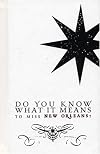
You have to read every word of this book. And I do mean every word. A tease from the copyright page: "All rights reserved. . . . Exceptions are made for book reviewers. By the way, there are no jokes here so you can stop reading if you are looking for them."
"This book was written and designed during three months in the fall of 2005." In the aftermath of Hurricane Katrina, Chin Music Press put together this slender, beautifully made anthology that will make you laugh and cry and rage. And show more cook. There are recipes, too. Interspersed throughout are engravings from the 1885 volume, Historical Sketch Book and Guide to New Orleans.
There are two ways to read this book. The first gathers the contributions into three sections: "The Dirge", "The Return" and "Lagniappe". But if it is too hard for you to read all those stories of ruin and devastation, one right after another, before reaching hope, there is an "Alternative Reading Order. Inspired by the many different versions of the song "Do You Know What It Means to Miss New Orleans?" I read it the second way and still shed more than one tear along the way. All over again, I saw the images of things that should never happen in this country, heard the stories of grace and generosity, stupidity and blindness.
Thank you to Toni McGee Causey for her eloquent essay, "Where Grace Lives". Thank you to Jason Berry, for his tale of evacuation, "The Holy City of New Orleans". Thank you to Colleen Mondor, who has never been to New Orleans for "Listen to the Second Line", about the music that I, too, love and cherish. Thank you to Ray Shea for the laughter and memories he shares in "I was a Teenage Float Grunt". Thank you to Rex (oh, appropriate first name!) Noone for his story of the power of celebration, "Professor Stevens Goes to Mardi Gras". Thank you to everyone who contributed to this book. But most of all, thank you to Chin Music Press, who gave it to us.
I don't usually link to reviews in my blog, but I am doing so for this book, as you really have to see the full title page, and I can't put it here, so check it out at: http://joansbooks.blogspot.com/2009/03/katrina-tales.html (There's also a link there to more Katrina voices.) show less
"This book was written and designed during three months in the fall of 2005." In the aftermath of Hurricane Katrina, Chin Music Press put together this slender, beautifully made anthology that will make you laugh and cry and rage. And show more cook. There are recipes, too. Interspersed throughout are engravings from the 1885 volume, Historical Sketch Book and Guide to New Orleans.
There are two ways to read this book. The first gathers the contributions into three sections: "The Dirge", "The Return" and "Lagniappe". But if it is too hard for you to read all those stories of ruin and devastation, one right after another, before reaching hope, there is an "Alternative Reading Order. Inspired by the many different versions of the song "Do You Know What It Means to Miss New Orleans?" I read it the second way and still shed more than one tear along the way. All over again, I saw the images of things that should never happen in this country, heard the stories of grace and generosity, stupidity and blindness.
Thank you to Toni McGee Causey for her eloquent essay, "Where Grace Lives". Thank you to Jason Berry, for his tale of evacuation, "The Holy City of New Orleans". Thank you to Colleen Mondor, who has never been to New Orleans for "Listen to the Second Line", about the music that I, too, love and cherish. Thank you to Ray Shea for the laughter and memories he shares in "I was a Teenage Float Grunt". Thank you to Rex (oh, appropriate first name!) Noone for his story of the power of celebration, "Professor Stevens Goes to Mardi Gras". Thank you to everyone who contributed to this book. But most of all, thank you to Chin Music Press, who gave it to us.
I don't usually link to reviews in my blog, but I am doing so for this book, as you really have to see the full title page, and I can't put it here, so check it out at: http://joansbooks.blogspot.com/2009/03/katrina-tales.html (There's also a link there to more Katrina voices.) show less
This is a beautifully made book, an anthology of surprising historical depth. Voices from the 19th and even the 18th century join pre- and post-Katrina writers. It's an honest book, full of deep affection for the city, but not a feel-good book. The contributions by Eve Troeh, especially, were desperately sad. For a long time, I simply couldn't bear to reopen the book and read the end of her second essay in which she spoke of leaving the city to which she had returned so hopefully, no longer show more able to cope with the violence, the murder of her dear friend and of others she knew, a brutal attack on herself. But there is more to the book than that.
The book includes some colour photographs, and one of the highlights is a selection from the photographic work of Sandra Burshell, who finds beauty in the debris and flotsam of the flood.
The essays are coded with tiny letters and numbers to indicate their location in time and space. I got the idea of the time line, but not being a New Orleanian I could not decode the tiny maps. show less
The book includes some colour photographs, and one of the highlights is a selection from the photographic work of Sandra Burshell, who finds beauty in the debris and flotsam of the flood.
The essays are coded with tiny letters and numbers to indicate their location in time and space. I got the idea of the time line, but not being a New Orleanian I could not decode the tiny maps. show less
This review was written for LibraryThing Early Reviewers.Lists
You May Also Like
Associated Authors
Statistics
- Works
- 2
- Members
- 146
- Popularity
- #141,735
- Rating
- 4.2
- Reviews
- 19
- ISBNs
- 9
