
This review was written for LibraryThing Member Giveaways.
A mother’s tale: A tree that grew with love - English - Arabic Bilingual Book: Bilingual children story book English - Arabic (with Harakat: Arabic vowels) by Nurah Deria
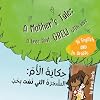
A sweet story for beginning readers of English or Arabic about a mother describing a mango seedling that she planted in her youth. The book’s drawings are rich and comforting. At the end of the story there are comprehension questions, a set of four word puzzles, and pages where young readers can color and draw their own tree. A gentle and enjoyable book.
 This review was written for LibraryThing Early Reviewers.
The plot runs at a breathless pace with a lot of description, including the height of every single character, each of whom has an alien name. It contains a lot of slaughter, which is meant to be funny because the kingdom of monsters orders big lots of humans for food. And the king habitually kills most citizens who come to court. But it’s mostly kind of nauseating. The king rewards his meat provider with a special rank which requires the butcher to take charge of the crown prince. But the prince is under a curse that makes him lethal to all who cross his path. And there’s a portal to a human world where a hunted child is being accused of witchcraft. It’s all possibly a commentary on slavery. Or on meat eating. Or possibly just a twisty very black sense of humor--a farce, but very bloody. It was not really my cup of tea, though the snarky sentient building was fun.
This review was written for LibraryThing Early Reviewers.
Though it starts with a sci-fi premise not unlike the series Travelers—that minds from the future can travel back to be placed into a human of the past—this novel is more of a straight action thriller. With cliff hanger chapters, a sly sense of humor, and a high body count, it deploys a fun accumulation of the options and limitations of mid-1980s technology. Protagonist Ray Caldwell crashes and shoots his way through suburban North Carolina trying to complete his assigned mission from the future, while being distracted by a series of entanglements involving the body that he’s borrowed.
This review was written for LibraryThing Early Reviewers.Dous by E. H. Lupton

A fun alternate-universe take on Sam and Ulysses’s relationship, and their network of friends and relatives. This time, shifted to the early 2000s and imbued with a shared love of philosophy. This is a short story that serves as an alternate bridge between the first and second book.

Starts out light, almost a noir parody, but also full of 1960s slang. But the story deepens in complex and authentically noir ways, with a marvelous ending, shocking, yet inevitable.
A fun, chaotic, slightly absurd novel that reveals layer after layer of connections between a group of souls that keep overlapping throughout time. It’s not really a retelling of 1001 Nights, but those tales are definitely the presupposed backbone of the discovered narratives. It starts from the perspective of a young couple in contemporary suburban New York and then loops back further and further in time as the members of the Qaraq recall more versions of their earlier lives that occurred across the globe. Earlier versions might show the point of view of different genders, or even species, as the group fills in details of the story of generations of treacherous queens, dueling gods, magical musical instruments, and in-vitro narrators. A rollicking tour de force.
This review was written for LibraryThing Early Reviewers.
An adventurous road trip through three cities in Spain during the 11th century. The novel provides a rich glimpse into that era’s mixing of cultures along part of the Silk Road. And offers a perceptive look at the range of regimes possible within both Muslim and Christian communities over time. While the book is steeped in Spanish history, its focus is the two main fictional characters, a thief and musician, whose back story and developing relationship we observe through alternating points of view. They are seeking to steal a rare manuscript that could be used to leverage a better future for them both. A fun sprinkling of Arabic words enriches these travels through Al-Andalus. The novel requires no major knowledge of either Islam or Christianity. The milieu is more in the spirit of the term “Islamicate”.
This review was written for LibraryThing Early Reviewers.
The topic of this book is fascinating. Although I’m a lifelong reader of the stories defined here as weird fiction, in reading this book I still learned a lot about some familiar authors as well as being introduced to new ones. I succeeded in reading all of the featured stories as I read through the book, as well as storing up for the future some other pieces by the authors who were discussed. The book identifies some useful themes that appear throughout weird fiction, including the use of liminal spaces, ways of being monstrous, and sources of uncanniness.
That said, this is a mixed review. One reservation I had is that the prose style of the book was quite casual, consisting of transcriptions of spoken material. I would have been a happier reader if this had been refined more solidly into prose for the printed modality. Not necessarily highly academic prose, but smoother, more edited writing. In my field there are a number of famous sets of “lectures” that are in fact edited versions of public talks in a form that is meant to be read. My complaint here is that the author seems undecided whether he's documenting the classroom experience or creating a distinct reader experience.
Organizationally, the chapters are arranged in the chronological order of the publication of the stories being discussed. However, the content of the lectures frequently talks about material that the class has already read that has not appeared in the previous chapters. So, it’s a bit show more unclear what the intended organizing principle is.
Regarding the use of AI—mentioned in other reviews--the AI illustrations were a point of frustration. My partner is a visual artist, and I have learned to be quite wary of prompt-driven art that steals images from an underlying base of other people’s work. But more crucially, the illustrations would have been stronger if they’d been based on real drawings from original publications, instead of exaggerated amalgams. For example, the final story by Neil Gaiman was originally a comic, a panel of which would have made a striking illustration. But on an issue separate from that of graphics, frankly, as it was a lecture, and meant to inform, the larger work would have benefited by some signposting of PowerPoint overviews and quotes that are mentioned in the talks. And crucially, readers would benefit from seeing the images that the author talked about, such as the monument to Lovecraft. Other mentioned visual examples include: “You can see from this highlight here” (p. 79). “As you can see here, I have a few paintings on the screen (p. 103). And “this slide gives us a little bit of interesting information” (p. 165). I can only assume that Strong did not have the copyright to share all these with a larger reading public, but if not, I would have not referenced them in the written version of the lectures.
Lastly, there are some inaccuracies about the stories. For Bradbury’s “The Crowd,” for example, Strong is mistaken about a secondary character dying.
All in all, the subject matter was intriguing, but the volume seems a bit thrown together. show less
That said, this is a mixed review. One reservation I had is that the prose style of the book was quite casual, consisting of transcriptions of spoken material. I would have been a happier reader if this had been refined more solidly into prose for the printed modality. Not necessarily highly academic prose, but smoother, more edited writing. In my field there are a number of famous sets of “lectures” that are in fact edited versions of public talks in a form that is meant to be read. My complaint here is that the author seems undecided whether he's documenting the classroom experience or creating a distinct reader experience.
Organizationally, the chapters are arranged in the chronological order of the publication of the stories being discussed. However, the content of the lectures frequently talks about material that the class has already read that has not appeared in the previous chapters. So, it’s a bit show more unclear what the intended organizing principle is.
Regarding the use of AI—mentioned in other reviews--the AI illustrations were a point of frustration. My partner is a visual artist, and I have learned to be quite wary of prompt-driven art that steals images from an underlying base of other people’s work. But more crucially, the illustrations would have been stronger if they’d been based on real drawings from original publications, instead of exaggerated amalgams. For example, the final story by Neil Gaiman was originally a comic, a panel of which would have made a striking illustration. But on an issue separate from that of graphics, frankly, as it was a lecture, and meant to inform, the larger work would have benefited by some signposting of PowerPoint overviews and quotes that are mentioned in the talks. And crucially, readers would benefit from seeing the images that the author talked about, such as the monument to Lovecraft. Other mentioned visual examples include: “You can see from this highlight here” (p. 79). “As you can see here, I have a few paintings on the screen (p. 103). And “this slide gives us a little bit of interesting information” (p. 165). I can only assume that Strong did not have the copyright to share all these with a larger reading public, but if not, I would have not referenced them in the written version of the lectures.
Lastly, there are some inaccuracies about the stories. For Bradbury’s “The Crowd,” for example, Strong is mistaken about a secondary character dying.
All in all, the subject matter was intriguing, but the volume seems a bit thrown together. show less
This review was written for LibraryThing Early Reviewers.The Fire Engine that Disappeared: A Martin Beck Police Mystery (5) (Martin Beck Police Mystery Series) by Maj Sjöwall
While reading this, I was noting down that it was a well captured snapshot of workplace camaraderie and boredom. But then that ending! This is the best one so far.
Olawu by P. J. Leigh
This rip-roaring YA novel was a delight. It’s chock full of the cultural history of multiple east African regions, feminism, warfare, medicine, engineering, romance, and suspense. It’s long, but the length works; it needs the tri-partite structure to get all the players on stage and then into their respective interconnecting roles in the final conflicts.
This review was written for LibraryThing Early Reviewers.
An interesting, wandering tale of the Kurdish narrator’s coming of age in Iran, Iraq, and England from the 1980s to 2000. The settings include small villages as well as his time working in Tehran, Baghdad, and London, ending with his struggles with the pandemic lockdown and Covid. The varied locales were interesting to learn about. And the people he hung out with and the adventures described gave insight into different classes and a range of traditional beliefs in the Kurdish community. But the narrative, often in flashbacks, was haphazard. And ultimately revealed some shocking behavior that is lightly glossed over later. Overall, the style could use some polishing e.g., it was clunky to have every noun modified by an adjective. And characters’ feelings would be more believable if they were revealed by their actions or their own words, rather than the narrator explaining that people were feeling happy. This is an awkward but intriguing and heartfelt first novel.
This review was written for LibraryThing Early Reviewers.
These essays are short, calm, finely detailed snapshots of regions in the Western U.S. that reveal the assortment of people who passed through them over the years. Often starting with her own present-day treks around a mountain or a park, the author delves into the history of the workers, investors, and immigrants who shaped the current parks, towns, museums, and universities in each region.
In the first section, she mixes in pieces of poetry from American, Mexican, and Cantonese authors who captured the daily conflicts that each group experienced. Later sections connect to visual art that has been positioned in these western regions, including plans for a Cristo piece across the Arkansas River in Colorado, a multi-part project of Ai Weiwei’s on Alcatraz, and an exhibit of WWI gas masks that brings reverberations of disasters visited while the author was simultaneously tracking the news of the Fukushima Daiichi nuclear power plan damage.
It's a personal and eclectic set of ruminations, which worked well to dip in and out of. I was pleased to learn so much about the history of the region from these thoughtful pieces.
In the first section, she mixes in pieces of poetry from American, Mexican, and Cantonese authors who captured the daily conflicts that each group experienced. Later sections connect to visual art that has been positioned in these western regions, including plans for a Cristo piece across the Arkansas River in Colorado, a multi-part project of Ai Weiwei’s on Alcatraz, and an exhibit of WWI gas masks that brings reverberations of disasters visited while the author was simultaneously tracking the news of the Fukushima Daiichi nuclear power plan damage.
It's a personal and eclectic set of ruminations, which worked well to dip in and out of. I was pleased to learn so much about the history of the region from these thoughtful pieces.
This review was written for LibraryThing Early Reviewers.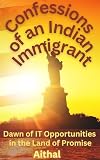
An amusing, anecdote-filled account of arriving in America from Mumbai in the early 1990s. The author interrupts himself with tangents along the way, as he relates his arrival in New York, move to Florida, and eventual residence in California. He relies on his growing network of friends and relatives as he navigates a new job in a new country. It's both corny and charming.
This review was written for LibraryThing Early Reviewers.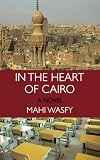
A wealthy Cairo high school in the late 1990s is an interesting time and place to capture. By presenting the points of view of both a veiled teacher and senior planning to study abroad, the novel describes the lives of Egyptians as they deal with yet another round of cultural domination, this time Western styles embodied by computers, fast food, pop music, money, and English. The details of daily life are great, but the slang is clunky, and the style is overearnest and preachy. But for those who find the two main characters compelling, there is a sequel: On the Brink of the Nile.
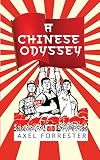
A light, sweet cross-cultural adventure in which photographer Grant Decker, having acclimated to the culture clash between Northern California and Cornwall, now finds himself encountering end-of-the-millennium China and its attempts to host tourists from the West. The novel has fun spoofing a sheltered group of California teachers, and the endurance of old China hands, but also taps into the role played by Chinese work units, and the family life of ethnic minorities across the country and the universal resonance created by meeting them.
This review was written for LibraryThing Early Reviewers.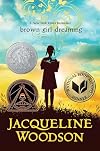
This is an autobiography in free-verse vignettes that presents the author’s family and her childhood in Ohio, South Carolina, and New York City. It presents a child’s first-hand view of larger events such as the civil rights activism occurring across America in the 60s and 70s. But also details her personal growth in making friends, bonding with relatives, learning to read, and learning to love writing. I’m from the same generation as Woodson, so the child’s perspective on the cultural events she described resonated perfectly with me. I also recognize the magic of visiting grandparents in the country, enjoying summer nights, home grown vegetables, and neighborly interactions. The book is a lovely mix of recollections of moments both national and individual that shaped the author. While it’s marketed for middle schoolers, probably because of the age of the narrator, the story would be appealing to adult readers, too.
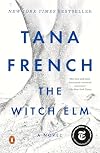
This long and moody novel has much in common with the Dublin Murder Squad novels taken as a whole. It presents a complex, continual reframing of events over time, in gorgeous, intricately plotted prose. In a lot of ways, it’s a revisioning of the components of In the Woods, with a tight perspective from one point of view that looks back and resamples key incidents from the past. I knew I should maintain suspicion, but of who, and for how long? It’s delightfully unsettling.
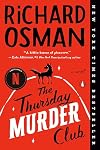
I mostly found this quite charming. The characters are fun, and--based on experiences with my own relatives in a similar retirement village--the social setting is on the mark. As the number of deaths accumulate (eight all told?) there’s perhaps too much romanticizing of those that were self-inflicted. But the overall setup is a blast. I’ll check out the sequels.
The Re-Attribution of the British Renaissance Corpus: Volume 1-2: British Renaissance Re-Attribution and Modernization Series by Anna Faktorovich
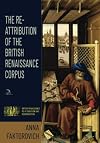
When comparing a single work to the clear-cut oeuvre of a single author, a computational take on stylistic analysis is possible. Factors such as punctuation and sentence length do come into play. See, for example, the cases of identifying the Unabomber from his manifesto, verifying whether a sonnet is by Shakespeare, identifying he author of Primary Colors, and other such projects detailed in Don Foster’s book Author Unknown. However, the premise of this book--that massive numbers of British works were in fact produced by a gang of six ghostwriters--is improbable. Just because a process involves a computer does not automatically mean that its results are valid.
This review was written for LibraryThing Early Reviewers.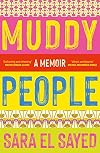
This memoir is a collection of anecdotes from the perspective of an adolescent girl observing her immigrant family during the first decade of the 21st century. El Sayed documents the family’s move from Egypt to Australia and her travails in middle school and high school as she tries to balance her Muslim family’s expectations, her school goals and pop culture interests, her tussles with her siblings and her grandmother, and her parent’s illnesses and marital stresses.
The story’s swift movement between humor and distress, and the vivid personal bodily details are reminiscent in tone to David Sedaris tales of family life. But El Sayed’s voice is distinct, presenting a fresh view of modern girlhood and the difficulties in trying to please multiple well-intentioned people who hold very different expectations.
The story’s swift movement between humor and distress, and the vivid personal bodily details are reminiscent in tone to David Sedaris tales of family life. But El Sayed’s voice is distinct, presenting a fresh view of modern girlhood and the difficulties in trying to please multiple well-intentioned people who hold very different expectations.
This review was written for LibraryThing Early Reviewers.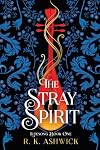
This is a sweet and well plotted fantasy tale about a musician, a scholar, and a tree spirit who become friends during a series of catastrophic, mythologically driven earthquakes. The culture of the region is well constructed, including riveting travel by subterranean river rafts, a believable system of spirits and shrines, and an intricate music guild. The story nicely balances the different characters’ worries and skills. Major events include a fraught music competition, a quest for historical interpretations of catastrophes in folktales, and multiple layers of new and rekindled relationships. It’s a light and enjoyable tale with compelling characters. I’ll keep an eye out for more of the saga.
This review was written for LibraryThing Early Reviewers.Beware of Railway-Journeys: A Scandinavian Mystery Classic (Scandinavian Mystery Classics) by Frank Heller
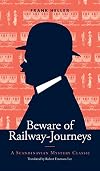
Fun, if sometimes meandering, story of a master thief and the circumstances that keep preventing him from pulling off a jewel heist in London. The story of the author himself was fascinating to learn about, and you can see why his first novel would involve a Swede on the run and his encounters with Americans abroad, London hospitality employees, and Muslim royalty, with all these character types having fun poked at them at some point. The plot contains all the genre elements of a classic 1920s European caper--disguises, chloroform, decadent private clubs, and endless hotel dining. An enjoyable romp.
This review was written for LibraryThing Early Reviewers.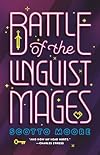
So fun! The lead character has a sustained, hilarious voice. The story playfully swirls together gaming, multiverses, linguistics, and politics. It offered a much more enticing case for anarchy than Doctorow’s pendantic Walkaway. By the time I finished this, my throat hurt, even while I longed to try out power morphemes.
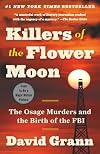
This was an informative and disturbing history of events in the 1920s in the state of Oklahoma. For readers who are stressed out by recent political fighting in the 21st century, this story shows that the intersection of racism, power, and corruption is a longstanding theme in American affairs--both locally and nationally. I’m happy to have learned about this history, though sad to have discovered the inner workings of how the Osage were treated for so long. Overall, I’d recommend this book. However, I found the writing style distracting. I think it’s the attempt to pack the collection of many details and sequences of deep research into a narrative. The stylistic effect is that it’s aimed too low. With all the transitions of “One day, two men were out hunting,” “One day, Hale’s pastures were set on fire,” I often felt like I was reading a 6th grade SRA card. I also found that a lot of key information was appended after the main narrative, and might have been hinted at earlier for a better impact.
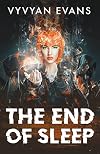
I’m a sucker for a pandemic novel. And there are lots of suspenseful escapades here as the characters race to fight the global spread of Fatal Insomnia. It’s set in a future with lots of high-tech gizmos, and some thinly veiled references to the 21st century’s political failings. The protagonist is a surly beauty with intriguing supernatural powers and a rape vengeance motivation who finds ways to connect better to humans even as she discovers that she herself is less than fully human. But there was far too much clunky exposition that prevented me from settling into this attempted blend of Out of Silent Planet and the Fifth Element. Worse yet, the book is laced with a lot of baked-in classism and long stretches with a pretty uncomfortable focus on different characters justifying murder and genocide.
This review was written for LibraryThing Early Reviewers.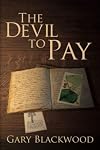
A very satisfying academic thriller. The well-detailed historical setting highlights an American college campus during the protests over the war in Viet Nam. The protagonist is hunting down and deciphering a coded Portuguese manuscript for his MA thesis. Meanwhile, he’s negotiating his social network--at school, with friends from home, and in his karate classes. Eventually he must deal with the fraught world of academic publishing as well as with the menacing actions of representatives from Big Pharma.
This review was written for LibraryThing Early Reviewers.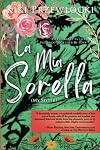
A sweet and moving story of an Italian woman coming of age during WWI, who learns to balance the value of family connections and the pressure of societal demands against her own intellectual strengths. It’s set in southern Italy, Brazil, and Boston as members of the family navigate their expanding family business, two world wars, and a sequence of births and deaths, including a couple major health scares. Throughout, there is lots of background on healing herbs and the key role that cooking together plays in strengthening the bonds of family life.
This review was written for LibraryThing Early Reviewers.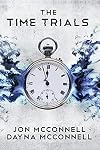
The YA novel The Time Trials has a boarding school setting that is reminiscent of Harry Potter and teams of adolescents competing in sometimes lethal contests that recalls the Hunger Games. The Time Trials, however, is more realistic in time and place then either of those. It’s a bit clunky in setting up all the necessary exposition, but the payoff is worth it in this suspenseful, time-travel story. The teen travelers and their advisor are distinct and well fleshed-out characters that we really worry about, and whose backgrounds vary in social class and level of disability. It has a fun 90s music theme. And the shady organizers of the event are mysteriously menacing. The prose of these new authors is at times a bit unwieldly, but I’d read more about this world.
This review was written for LibraryThing Early Reviewers.