
Richard Wells (2)
Author of Damnable Tales: A Folk Horror Anthology
For other authors named Richard Wells, see the disambiguation page.
Works by Richard Wells
Associated Works
Hellebore #2: The Wild Gods Issue — Illustrator — 12 copies
Witch In-Grain and The Basilisk — Designer; Illustrator — 1 copy
Tagged
Common Knowledge
- Gender
- male
- Occupations
- illustrator
- Nationality
- UK
- Associated Place (for map)
- UK
Members
Reviews
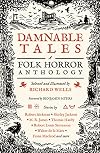
The genre of folk horror, in both film and print is a nebulous, cloudy genre in which many different tropes and themes can contribute. This is one of its’ strengths, as there is so much room for interpretation and different stories. What surprised me most was that my favorite story ended up being “All Hallows” by Walter de la Mare — it’s very unlike many of the others in content, but his spare, understated approach to the horrors in the church, combined with the abrupt ending and show more lack of explanation, made it linger in my mind long after I finished. I love short stories that trust the reader that way. I also really enjoyed “Thrawn Janet” by Robert Louis Stevenson, which felt rich with dialect and folklore, and “The Sin-Eater” by Fiona Macleod, which carried a deep sense of ritual, superstition, and quiet dread. What I believe to be the best quote in the book comes from Gavon's Eve, by E.F. Benson. One of the characters says "Superstition lingers here, and it's supposed she is a witch. To be quite candid with you, the thing interests me a good deal. Supposing you asked me, on oath, whether I believed in witches, I'd say no. But if you asked me again, on oath, whether I suspected I believed in them, I should, I think, say yes"
Altogether, this was exactly the kind of Gothic collection I like best — suggestive, atmospheric, and more interested in unease than explanation. This anthology, viewed in the lens of early writers that contributed to the folk horror genre, shows the depth and range of what can count as folk horror. Whether a story contributes a feeling of dread, or has outright horror, all these stories contain different elements that have led to the folk horror genre today. Damnable Tales is a strong anthology overall, with a well-balanced mix of authors and tones that kept it from feeling repetitive. show less
Altogether, this was exactly the kind of Gothic collection I like best — suggestive, atmospheric, and more interested in unease than explanation. This anthology, viewed in the lens of early writers that contributed to the folk horror genre, shows the depth and range of what can count as folk horror. Whether a story contributes a feeling of dread, or has outright horror, all these stories contain different elements that have led to the folk horror genre today. Damnable Tales is a strong anthology overall, with a well-balanced mix of authors and tones that kept it from feeling repetitive. show less
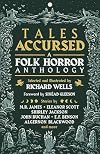
"A bold follow-up to the very popular Damnable Tales!" The stories are arranged "chronologically, with overlapping themes of isolation, existential journeys, secretive communities, rituals, and threats from unearthly sources."
In "The White Cat of Drumgunniol" (1870) the anthology starts out strong. It is a tale of the bean sidhe, of death and superstition, but in a way that is respectful of Irish culture and meant to be taken seriously by the reader.
In "No-Man's Land" (1899), a self-absorbed show more Oxford prof. travels to Scotland, but describes his host as unhinged after the man warns of creatures (brownies) in the hills. A commentary on English class-based prejudice after he returns an outcast!
The title of "Ancient Lights" (1912) comes from the doctrine that gives a long standing owner of a building a right to maintain an adequate level of illumination. A surveyor arrives to assess an old property, but cannot escape the ancient wood!
In "The Hand of Glory" (1919), the skeptical and sneering narrator arrives as executor for a friend who has hung himself but the man's right hand has been taken! Remember "The Wicker Man?" The traditional practice of "common ground" is also featured here.
In "Celui-La" (1929) the narrator is convalescing in Breton. While examining an old painting, he accidentally summons a creature that nearly drives him to madness! It doesn't say exactly, but I believe it is a korrigan!
These are just a few of my favorites! While some may not seem all that chilling to the modern reader, it's important to consider their cultural context. Paying close attention, you can see how folk horror evolved over time. Post-war female authors were emerging with more feminist undertones and the creatures of the woods became increasingly powerful yet more distant. The final story, "The Man in the Woods" definitely reflects this change! show less
In "The White Cat of Drumgunniol" (1870) the anthology starts out strong. It is a tale of the bean sidhe, of death and superstition, but in a way that is respectful of Irish culture and meant to be taken seriously by the reader.
In "No-Man's Land" (1899), a self-absorbed show more Oxford prof. travels to Scotland, but describes his host as unhinged after the man warns of creatures (brownies) in the hills. A commentary on English class-based prejudice after he returns an outcast!
The title of "Ancient Lights" (1912) comes from the doctrine that gives a long standing owner of a building a right to maintain an adequate level of illumination. A surveyor arrives to assess an old property, but cannot escape the ancient wood!
In "The Hand of Glory" (1919), the skeptical and sneering narrator arrives as executor for a friend who has hung himself but the man's right hand has been taken! Remember "The Wicker Man?" The traditional practice of "common ground" is also featured here.
In "Celui-La" (1929) the narrator is convalescing in Breton. While examining an old painting, he accidentally summons a creature that nearly drives him to madness! It doesn't say exactly, but I believe it is a korrigan!
These are just a few of my favorites! While some may not seem all that chilling to the modern reader, it's important to consider their cultural context. Paying close attention, you can see how folk horror evolved over time. Post-war female authors were emerging with more feminist undertones and the creatures of the woods became increasingly powerful yet more distant. The final story, "The Man in the Woods" definitely reflects this change! show less
'Damnable Tales is a worthy effort at a folk horror anthology. If it falls down, it is not in its intention but on the fact that historic literary folk horror (as opposed to its later television and cinematic versions) is not, in fact, very inspiring and rarely truly horrific.
Richard Wells has delivered, in broadly chronological sequence, 23 tales that might be regarded as within the genre but, while some are important in framing it, they are often rather disappointing in purely literary show more terms. It might have been better to refer to Folk Unease.
Yes, we have Machen's 'The Shining Pyramid' and M. R. James' 'The Ash Tree' but these are already much anthologised and, I argue below, may be outside authentic folk horror though rural witchery might reasonably be included in the genre.
Many of the remainder are rather weak potboilers by famous writers (Stevenson, Hardy) or stories that helped create the genre but are otherwise not remarkable. Others are more interested in the idea of Pan and the old gods or in historical survivals and ghosts.
This is mostly literary source material and so useful in defining the style (so worth having in the library) but it also reminds us that folk horror was a relatively minor part of English literature, a variant of the modernised folk tale, the ghost story and the fascination with Pan and rural mystery.
What does make a difference are Wells' illustrations. These are done in a rough woodcut style, one for each story. These help tell us that the book was a labour of love which is confirmed by the over 12 pages of small print 'supporters' who helped make the book happen.
The stories range from 1872 to 1964. The vast majority were written for periodicals which helps us to understand their often ephemeral nature and the tendency to entertain more than to explore what they are addressing in depth. There is nothing bad in here, just fairly ordinary and unsurprising.
Having said that, as in all anthologies, there are some works that stretch beyond being interesting just because they shape a now-established genre or as literary expansions of folk tales into horror. Of the latter, 'The Sin Eater' (1895) and 'The Black Reaper' (1899) may be the best.
Of the later works, Margery Lawrence's 'How Pan Came to Ingleton' (1926) has a charm to it that has nothing of the horrible, Walters De La Mare's 'All Hallows' (1926) exudes menace and Rolt's 'Cwm Garon' (1948) captures a common intuition that some landscapes can be evil by their very nature.
The problem here is that all three represent tales that drift away from folk horror. Lawrence's is not horror, De La Mare's is more about evil or the cosmic and is Gothick in tone and Rolt's, though it does have a legitimate folk element, concentrates on a landscape. The last probably counts.
Two of the three last works are superior. Shirley Jackson's 'The Summer People'(1950), an American addition, offers us the essence of folk horror which is the educated urban middle class out of place in the country. The horror is the insidious truth that summer visitors do not matter to locals.
Finally the inconclusive 'Bind Your Hair' (1964) by Robert Aikman is possibly the most interesting because of its realism in depicting its characters (too many protagonists in these stories are cardboard cut-out sterotypes). It leaves us with a sense of unease yet not quite knowing why we are uneasy.
Rolt and Aikman, Scott's 'Randall's Round' (1929) and the grim 'The First Sheaf' (1940) by Wakefield certainly pass muster. Others too perhaps but I should explain why I am reluctant to allow folk horror to be defined too broadly and be too inclusive.
As a compendium of themes to be plundered in popular culture by a full-blown genre as it stands today,'Damnable Tales' is useful but there is not a lot of true horror here. The folk aspect constantly feels like urban literary types inventing memes for their own type of person who reads periodicals.
If much of this does not persuade as horror and only a few works as 'unease', it does not persuade as authentically related to folk either. If the concern is to show the unease of the urban middle class, then some of the work does that but very few cut to the chase of an essential cultural clash.
To make folk horror work it either has to be set well within the 'other' (the rural world) and be horrible (like Nevill's 'The Reddening') or the incomer needs to show some emotional engagement with being at the margin of the 'other' that creates unease if not outright horror.
Telling a story about rum doings by peasants might be included as folk horror but not re-telling their own stories in literary ways. We also need to be clear that unease or horror at nature or 'rurality' (as Pan) is not the same as unease or horror at rum doings.
'The First Sheaf' is grim because the urban type is confronted not with nature but another type of person's relationship to nature. This is also the case with the unease in the Aickman story. Nature is a source of horror only indirectly as belief system. The nature of the 'folk' is what should interest us.
Folk horror should be anthropological horror first and existential or cosmic horror second. If it is historical horror, the folk must be like us and embedded in the knowable past but not Neanderthals or degenerate cave dwellers under the moors.
Even Adam Nevill in 'The Reddening' makes sure his story is centred on the realism of a corrupt folk on the surface of things that taps into something dark rather than having the primary focus being on something dark that erupts from below that is not human (though his ambiguities here are clever).
Unease or horror at some prehistoric atavistic and supernatural force (like the fairies) is thus a different kettle of fish from unease and horror at nature or the 'volk'. 'Ballinghurst Barrow' (1892) and 'The Shining Pyramid' (1895) fall into this category.
So, folk horror (in this anthology) seems to confuse three different 'others' under the same label- our past selves (which was very much a late Victorian post-Darwinian concern), nature as 'being' (Pan) and others who live a very different life closer to nature and often interpreting it through ritual.
Yes, these can be interconnected - the 'folk' seem to have a different relationship to 'nature' than us and this relationship may seem atavistic (again, Nevill's 'The Reddening' brilliantly merges these three conceptions) - but if they are not melded folk horror should just be about the 'folk' in its relations.
The cinematic and television variants of the genre tend to get this more right because things have moved on from the era of literary concerns with Pan and Darwinism. Atavism is now a matter for science fiction and the relationship with nature has become eco-horror (Vandermeer).
The atavistic branch of horror dragged on into the work of Nigel Kneale and Dr Who. Given 'Quatermass and the Pit' and 'Quatermass IV', Kneal was in the world of science fiction and not that of anthro-horror. A true folk horror film like 'The Wicker Man' is still about a (albeit fake) 'folk' cult.
Even 'The Children of the Stones' is set more in a science fiction environment though it scrapes in as folk horror because of the village atmosphere. We have to go to 'Blood on Satan's claw' or even 'Witchfinder General' to find again this concern with the horror that arises from the 'folk' out there.
Those stories that have an urban middle class type entering into the nearby unknown or which describe the behaviours of the unknowns in their own country must be regarded as authentic. Ghost stories, literary folk tales, 'Pan tales' or tales of degenerated or atavistic primitives need not apply. show less
Richard Wells has delivered, in broadly chronological sequence, 23 tales that might be regarded as within the genre but, while some are important in framing it, they are often rather disappointing in purely literary show more terms. It might have been better to refer to Folk Unease.
Yes, we have Machen's 'The Shining Pyramid' and M. R. James' 'The Ash Tree' but these are already much anthologised and, I argue below, may be outside authentic folk horror though rural witchery might reasonably be included in the genre.
Many of the remainder are rather weak potboilers by famous writers (Stevenson, Hardy) or stories that helped create the genre but are otherwise not remarkable. Others are more interested in the idea of Pan and the old gods or in historical survivals and ghosts.
This is mostly literary source material and so useful in defining the style (so worth having in the library) but it also reminds us that folk horror was a relatively minor part of English literature, a variant of the modernised folk tale, the ghost story and the fascination with Pan and rural mystery.
What does make a difference are Wells' illustrations. These are done in a rough woodcut style, one for each story. These help tell us that the book was a labour of love which is confirmed by the over 12 pages of small print 'supporters' who helped make the book happen.
The stories range from 1872 to 1964. The vast majority were written for periodicals which helps us to understand their often ephemeral nature and the tendency to entertain more than to explore what they are addressing in depth. There is nothing bad in here, just fairly ordinary and unsurprising.
Having said that, as in all anthologies, there are some works that stretch beyond being interesting just because they shape a now-established genre or as literary expansions of folk tales into horror. Of the latter, 'The Sin Eater' (1895) and 'The Black Reaper' (1899) may be the best.
Of the later works, Margery Lawrence's 'How Pan Came to Ingleton' (1926) has a charm to it that has nothing of the horrible, Walters De La Mare's 'All Hallows' (1926) exudes menace and Rolt's 'Cwm Garon' (1948) captures a common intuition that some landscapes can be evil by their very nature.
The problem here is that all three represent tales that drift away from folk horror. Lawrence's is not horror, De La Mare's is more about evil or the cosmic and is Gothick in tone and Rolt's, though it does have a legitimate folk element, concentrates on a landscape. The last probably counts.
Two of the three last works are superior. Shirley Jackson's 'The Summer People'(1950), an American addition, offers us the essence of folk horror which is the educated urban middle class out of place in the country. The horror is the insidious truth that summer visitors do not matter to locals.
Finally the inconclusive 'Bind Your Hair' (1964) by Robert Aikman is possibly the most interesting because of its realism in depicting its characters (too many protagonists in these stories are cardboard cut-out sterotypes). It leaves us with a sense of unease yet not quite knowing why we are uneasy.
Rolt and Aikman, Scott's 'Randall's Round' (1929) and the grim 'The First Sheaf' (1940) by Wakefield certainly pass muster. Others too perhaps but I should explain why I am reluctant to allow folk horror to be defined too broadly and be too inclusive.
As a compendium of themes to be plundered in popular culture by a full-blown genre as it stands today,'Damnable Tales' is useful but there is not a lot of true horror here. The folk aspect constantly feels like urban literary types inventing memes for their own type of person who reads periodicals.
If much of this does not persuade as horror and only a few works as 'unease', it does not persuade as authentically related to folk either. If the concern is to show the unease of the urban middle class, then some of the work does that but very few cut to the chase of an essential cultural clash.
To make folk horror work it either has to be set well within the 'other' (the rural world) and be horrible (like Nevill's 'The Reddening') or the incomer needs to show some emotional engagement with being at the margin of the 'other' that creates unease if not outright horror.
Telling a story about rum doings by peasants might be included as folk horror but not re-telling their own stories in literary ways. We also need to be clear that unease or horror at nature or 'rurality' (as Pan) is not the same as unease or horror at rum doings.
'The First Sheaf' is grim because the urban type is confronted not with nature but another type of person's relationship to nature. This is also the case with the unease in the Aickman story. Nature is a source of horror only indirectly as belief system. The nature of the 'folk' is what should interest us.
Folk horror should be anthropological horror first and existential or cosmic horror second. If it is historical horror, the folk must be like us and embedded in the knowable past but not Neanderthals or degenerate cave dwellers under the moors.
Even Adam Nevill in 'The Reddening' makes sure his story is centred on the realism of a corrupt folk on the surface of things that taps into something dark rather than having the primary focus being on something dark that erupts from below that is not human (though his ambiguities here are clever).
Unease or horror at some prehistoric atavistic and supernatural force (like the fairies) is thus a different kettle of fish from unease and horror at nature or the 'volk'. 'Ballinghurst Barrow' (1892) and 'The Shining Pyramid' (1895) fall into this category.
So, folk horror (in this anthology) seems to confuse three different 'others' under the same label- our past selves (which was very much a late Victorian post-Darwinian concern), nature as 'being' (Pan) and others who live a very different life closer to nature and often interpreting it through ritual.
Yes, these can be interconnected - the 'folk' seem to have a different relationship to 'nature' than us and this relationship may seem atavistic (again, Nevill's 'The Reddening' brilliantly merges these three conceptions) - but if they are not melded folk horror should just be about the 'folk' in its relations.
The cinematic and television variants of the genre tend to get this more right because things have moved on from the era of literary concerns with Pan and Darwinism. Atavism is now a matter for science fiction and the relationship with nature has become eco-horror (Vandermeer).
The atavistic branch of horror dragged on into the work of Nigel Kneale and Dr Who. Given 'Quatermass and the Pit' and 'Quatermass IV', Kneal was in the world of science fiction and not that of anthro-horror. A true folk horror film like 'The Wicker Man' is still about a (albeit fake) 'folk' cult.
Even 'The Children of the Stones' is set more in a science fiction environment though it scrapes in as folk horror because of the village atmosphere. We have to go to 'Blood on Satan's claw' or even 'Witchfinder General' to find again this concern with the horror that arises from the 'folk' out there.
Those stories that have an urban middle class type entering into the nearby unknown or which describe the behaviours of the unknowns in their own country must be regarded as authentic. Ghost stories, literary folk tales, 'Pan tales' or tales of degenerated or atavistic primitives need not apply. show less
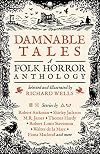
A handsomely designed and solid tome, this presents a couple of dozen short stories in chronological order by first publication.
The subtitle says 'A Folk Horror Analogy', and that description is kind of loose, since some of the tales are more folky than others, and a few are dubiously horrific at all.
The authors represented range from the generically famous (RL Stevenson, Thomas Hardy, E Nesbit [!], Saki, Walter de la Mare) through the obligatory for this subject matter (MR James, Arthur show more Machen, Algernon Blackwood, Shirley Jackson) to names unfamiliar (at least, to me).
Most are very English in style and setting (and for this reason, the very American Jackson feels a bit of an outlier, though her inclusion is an obvious 'big name' draw).
Throughout, the general themes are of 'modern/town/Christian' folk deposited in a rural setting, stumbling out of the comfortable, predictable, but perhaps somewhat unexciting worlds of the familiar into other, older, weirder goings-on that alternately attract, bamboozle, or terrify them.
Sometimes (more often in the older stories) these lead to a denouement in which the protagonist either witnesses or is drawn into a specific bizarre happening, but in others the point seems to be more to leave the reader with a general sense of foreboding or unease without any specific event at the conclusion. Personally, I found those less satisfying (in a 'Yes, but what of it?' kind of way), but your mileage may vary. show less
The subtitle says 'A Folk Horror Analogy', and that description is kind of loose, since some of the tales are more folky than others, and a few are dubiously horrific at all.
The authors represented range from the generically famous (RL Stevenson, Thomas Hardy, E Nesbit [!], Saki, Walter de la Mare) through the obligatory for this subject matter (MR James, Arthur show more Machen, Algernon Blackwood, Shirley Jackson) to names unfamiliar (at least, to me).
Most are very English in style and setting (and for this reason, the very American Jackson feels a bit of an outlier, though her inclusion is an obvious 'big name' draw).
Throughout, the general themes are of 'modern/town/Christian' folk deposited in a rural setting, stumbling out of the comfortable, predictable, but perhaps somewhat unexciting worlds of the familiar into other, older, weirder goings-on that alternately attract, bamboozle, or terrify them.
Sometimes (more often in the older stories) these lead to a denouement in which the protagonist either witnesses or is drawn into a specific bizarre happening, but in others the point seems to be more to leave the reader with a general sense of foreboding or unease without any specific event at the conclusion. Personally, I found those less satisfying (in a 'Yes, but what of it?' kind of way), but your mileage may vary. show less
Lists
You May Also Like
Associated Authors
Statistics
- Works
- 2
- Also by
- 5
- Members
- 278
- Popularity
- #83,542
- Rating
- 3.8
- Reviews
- 7
- ISBNs
- 10