
Karin Smirnoff (2) (1964–)
Author of The Girl in the Eagle's Talons
For other authors named Karin Smirnoff, see the disambiguation page.
Series
Works by Karin Smirnoff
The Girl with Ice in Her Veins: A Lisbeth Salander Novel (The Girl with the Dragon Tattoo Series) (2024) 166 copies, 8 reviews
Tagged
Common Knowledge
- Legal name
- Smirnoff, Karin Margareta
- Birthdate
- 1964-09-24
- Gender
- female
- Awards and honors
- Stig Sjödinpriset, 2020
- Nationality
- Sweden
- Birthplace
- Umeå, Sweden
- Places of residence
- Piteå
- Associated Place (for map)
- Umeå, Sweden
Members
Reviews
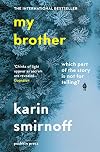
The Publisher Says: A Swedish publishing phenomenon: a literary noir of extraordinary power follows the discovery of a young woman’s body in the long grass behind the sawmill...
Which part of the story is not for telling?
Jana Kippo has returned to Smalånger to see her twin brother, Bror, still living in the small family farmhouse in the remote north of Sweden.
Within the isolated community, secrets and lies have grown silently, undisturbed for years.
Following the discovery of a young show more woman's body in the long grass behind the sawmill, the siblings, hooked by a childhood steeped in darkness, need to break free.
But the truth cannot be found in other people's stories. The question is: can it be found anywhere?
I RECEIVED A DRC FROM THE PUBLISHER VIA EDELWEISS+. THANK YOU.
My Review: First, read this:
You're now familiar with the author's voice in this, the first of three novels set it the Arctic Swedish town of Smalånger, where Bror and Jana are from...Jana has left...Bror hasn't bothered, he can drink himself to death in the comfort of what was the family's home. With, now, the company of his twin, as she chooses to come back to, to, help? Anyway, bear witness if not accelerate the crash. To keep herself in food (Bror worries about booze, nothing else) she starts working for the local social services department, which she calls smalångerhomecareservices, thus making herself useful while getting fully up on the local gossip from the people she works with and the ones she's helping to survive whatever time is left to them in a modicum of physical comfort. No one in Smalånger lives in psychic comfort, she discovers early, and often.
My idea of what I was in for was too weak-kneed. I thought I'd get something dark, but not my-eyes-my-poor-eyes dark! A woman suffers a dreadful childhood; returns to the scene of the crime to be there with the brother ("Bror" is Swedish for "brother"; unlike Jana, he has no personal name) whose life was stalled, stopped, and never had any particular reason to start it again. He drifts aimlessly, but reasonably harmlessly...yes, he sleeps with his best friend's wife, but it's not like he was the only one who did; he's drinking himself to death, sure, but when the woman he loved but who was murdered by person or persons unknown, what else is there to do except hang out with her widower and drink?
No, not chuckle one in this book. But there are two more in Swedish and I need to read them now!
What the heck? I need to read them? Yes, while I wouldn't have predicted that I'd get invested in this Nordic grimdark saga of terrible, sad, claustrophobic life in a tiny, remote, and dark (physically) place, that is exactly what happened. What more there is to learn I want to learn it.
It's that kind of a read, y'all. You won't leave the same as you entered. show less
Which part of the story is not for telling?
Jana Kippo has returned to Smalånger to see her twin brother, Bror, still living in the small family farmhouse in the remote north of Sweden.
Within the isolated community, secrets and lies have grown silently, undisturbed for years.
Following the discovery of a young show more woman's body in the long grass behind the sawmill, the siblings, hooked by a childhood steeped in darkness, need to break free.
But the truth cannot be found in other people's stories. The question is: can it be found anywhere?
I RECEIVED A DRC FROM THE PUBLISHER VIA EDELWEISS+. THANK YOU.
My Review: First, read this:
We were born just a few minutes apart and are alike in many ways. Especially in how we look. We are thin and gingery, with straggly unpigmented hair. We are so bleakly unremarkable that nobody used to remember either of us as somebody. Only as the twins.
–and–
So the police were looking into her death I said.
Of course they did. What did you expect. A dead woman found in the grass near the sawmill and it turns out she has slept with most of the married men in the village. And a number of others as well. On top of that one of the suspects is a convicted murderer.
Who I asked. Me of course he said.
You're now familiar with the author's voice in this, the first of three novels set it the Arctic Swedish town of Smalånger, where Bror and Jana are from...Jana has left...Bror hasn't bothered, he can drink himself to death in the comfort of what was the family's home. With, now, the company of his twin, as she chooses to come back to, to, help? Anyway, bear witness if not accelerate the crash. To keep herself in food (Bror worries about booze, nothing else) she starts working for the local social services department, which she calls smalångerhomecareservices, thus making herself useful while getting fully up on the local gossip from the people she works with and the ones she's helping to survive whatever time is left to them in a modicum of physical comfort. No one in Smalånger lives in psychic comfort, she discovers early, and often.
My idea of what I was in for was too weak-kneed. I thought I'd get something dark, but not my-eyes-my-poor-eyes dark! A woman suffers a dreadful childhood; returns to the scene of the crime to be there with the brother ("Bror" is Swedish for "brother"; unlike Jana, he has no personal name) whose life was stalled, stopped, and never had any particular reason to start it again. He drifts aimlessly, but reasonably harmlessly...yes, he sleeps with his best friend's wife, but it's not like he was the only one who did; he's drinking himself to death, sure, but when the woman he loved but who was murdered by person or persons unknown, what else is there to do except hang out with her widower and drink?
No, not chuckle one in this book. But there are two more in Swedish and I need to read them now!
What the heck? I need to read them? Yes, while I wouldn't have predicted that I'd get invested in this Nordic grimdark saga of terrible, sad, claustrophobic life in a tiny, remote, and dark (physically) place, that is exactly what happened. What more there is to learn I want to learn it.
It's that kind of a read, y'all. You won't leave the same as you entered. show less
The Girl in the Eagle's Talons: A Lisbeth Salander Novel (The Girl with the Dragon Tattoo Series) by Karin Smirnoff
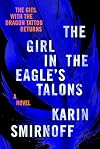
The Girl in the Eagle's Talons, by Karin Smirnoff, is the seventh book in the Millennium series and continues the story of Lisbeth Salander.
I think it might be useful to explain what I did and did not expect from this book, as well as why. I didn't expect the writing or characterization to be identical, or even very close, to Stieg Larsson’s. That means I chose not to read this with an eye toward comparing them, just as I didn't feel it was useful to compare Larsson and Lagercrantz. As show more long as the actions of the returning characters make sense as mature versions of the characters in the first books, I decided I wanted to concentrate on the story. Basically, as long as Lisbeth doesn't end up as a Jessica Fletcher type (as much as I enjoy those), I'm willing to read each volume with an open mind.
I found this to be an interesting continuation and I like the introduction of Lisbeth's niece, both to give this novel something new and, I hope, to play a part in future volumes (or her own series). I appreciate not being presented with characters that seem to neither age nor mature. It does give this a different feel from most of the others, but it worked for me.
I am torn a little about how I feel about the first quarter or third of the book. I think we needed to get to know the characters, both where the recurring characters are in their lives as well as meet the new ones, so I expected to not jump into too much action immediately. I also, once or twice, wanted to move a little faster. My problem is that I'm afraid if I had gotten my wish to move into the action quicker I would have lost some of the nuance in the characters. But those concerns quickly evaporated once I started seeing that we had twists and turns. I was definitely glad I knew more about them than just whether they were good or evil.
Bracketing any expectations, positive or negative, based on the earlier books in the series, I found this to be a very good addition. I'm not sure any volume will match Larsson's initial trilogy, but I also have to wonder how much of that is because it is "better" and how much is because as our introduction to Lisbeth it swept us off our feet.
Ultimately, I would recommend this to any fans of the series who understand that Smirnoff is not Larsson, so the writing is different. But the growth of the characters are plausible and the action and twists are compelling.
Reviewed from a copy made available by the publisher via NetGalley. show less
I think it might be useful to explain what I did and did not expect from this book, as well as why. I didn't expect the writing or characterization to be identical, or even very close, to Stieg Larsson’s. That means I chose not to read this with an eye toward comparing them, just as I didn't feel it was useful to compare Larsson and Lagercrantz. As show more long as the actions of the returning characters make sense as mature versions of the characters in the first books, I decided I wanted to concentrate on the story. Basically, as long as Lisbeth doesn't end up as a Jessica Fletcher type (as much as I enjoy those), I'm willing to read each volume with an open mind.
I found this to be an interesting continuation and I like the introduction of Lisbeth's niece, both to give this novel something new and, I hope, to play a part in future volumes (or her own series). I appreciate not being presented with characters that seem to neither age nor mature. It does give this a different feel from most of the others, but it worked for me.
I am torn a little about how I feel about the first quarter or third of the book. I think we needed to get to know the characters, both where the recurring characters are in their lives as well as meet the new ones, so I expected to not jump into too much action immediately. I also, once or twice, wanted to move a little faster. My problem is that I'm afraid if I had gotten my wish to move into the action quicker I would have lost some of the nuance in the characters. But those concerns quickly evaporated once I started seeing that we had twists and turns. I was definitely glad I knew more about them than just whether they were good or evil.
Bracketing any expectations, positive or negative, based on the earlier books in the series, I found this to be a very good addition. I'm not sure any volume will match Larsson's initial trilogy, but I also have to wonder how much of that is because it is "better" and how much is because as our introduction to Lisbeth it swept us off our feet.
Ultimately, I would recommend this to any fans of the series who understand that Smirnoff is not Larsson, so the writing is different. But the growth of the characters are plausible and the action and twists are compelling.
Reviewed from a copy made available by the publisher via NetGalley. show less
The Girl in the Eagle's Talons: A Lisbeth Salander Novel (The Girl with the Dragon Tattoo Series Book 7) by Karin Smirnoff
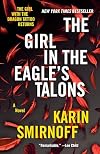
Lisbeth Salander & her Mini-Me
Review of the Knopf/Penguin Canada eBook obtained July 2023 as an ARC via Netgalley & to be published August 29, 2023 translated by Sarah Death from the Swedish language original Havsörnens skrik [The Sea Eagle’s Cry] (November 4, 2022)
[3.5 rating]
Writers of continuation series walk a fine line. If you diverge too much from the original characters and go in an entirely new direction, the old school fans might lament that diversion. If you repeat too much of the original, you may be accused of simplified pastiche and lack of originality. With The Girl in the Eagle's Talons, Swedish author Karin Smirnoff takes up the challenge and attempts to satisfy both old and new readers of the Millennium (aka The Girl with the Dragon Tattoo) series. This follows the original Stieg Larsson trilogy (2005-07) and David Lagercrantz's first continuation trilogy (2015-19).
Smirnoff sets her tale in Norbotten, the northernmost county of Sweden, in the fictional town of Gasskas. The book continues with Stieg Larsson's themes of criminal organizations tied in with corrupt authorities with actions often expressed through misogyny and racism. The landscape surrounding Gasskas is the planned site of a huge windfarm project, except that holdouts among the local population of Sami reindeer herders are refusing the sell their lands. A crime conglomerate hiding under a corporate umbrella is scheming to absorb the entire project for themselves and in anticipation has corrupted a local official and enlisted a motorcycle club as enforcers. The corporate/criminal mastermind is as grotesque a figure as can be imagined.
Into this scenario the leads of the previous books are separately brought north from their base in Stockholm. Journalist Mikael Blomkvist is attending the wedding of his daughter Pernilla to a Gasskas municipal official. He is at loose ends career wise, as the investigative journal Millenium has ended its print format and is now a podcast. The feisty hacker/security consultant Lisbeth Salander is being interviewed by local social workers in an attempt to convince her to become guardian to her 13-year-old niece Svala, the daughter of deceased half-brother Ronald Niedermann, whose indigenous Sami mother has gone missing. Svala has inherited the congenital analgesia of her father, making her impervious to pain. She also has a strain of recklessness not far removed from that of her aunt.
See photo at https://i.pinimg.com/originals/a7/98/c1/a798c1b0618c16ce081d898077718764.jpg
Swedish actor Noomi Rapace as Lisbeth Salander in the Swedish language trilogy of films adapting the original Stieg Larsson novels. Image sourced from Pinterest.
There was a sense in this book of the baton being passed. Blomkvist does gradually become involved with local Gasskas journalists, but he is in more of mentoring role rather than the investigator & writer of the exposes of the early books. Salander, although initially reluctant, does begin to accept some responsibility for her niece, even to the point of self-defense coaching. The idea of a Mini-Me Salander seems a bridge too far though. The Blomkvist/Salander partnership is held in reserve through much of the book so that this first of the new trilogy has the feel of a teaser for more to come. Certainly enough of the villains are left on the run at the end for further to be done. Old fans will certainly want to know what comes next.
See book cover at https://www.bokforlagetpolaris.se/_cover_media/270b/9789177959281.jpg
The cover of the original Swedish language edition as published by Bokförlaget Polaris in 2022. Image sourced from Bokförlaget Polaris.
I read this Advance Reading Copy of The Girl in the Eagle's Talons in eBook format thanks to the publisher Penguin Random House Canada and the Net Galley website in exchange for which I provide this honest review.
Soundtrack
Ok, even if it has nothing to do with the new book, I couldn't resist revisiting the initial teaser trailer for David Fincher's English language film adaptation of The Girl with the Dragon Tattoo (2011) with its cover of Led Zeppelin's "Immigrant Song" as performed by Karen O, Trent Reznor and Atticus Ross. Full song available here.
Other Reviews
The Cry of the Sea Eagle by Ingrid Elam, SVT Kultur, November 4, 2022. [Swedish language review]
Trivia and Links
I've avoided describing the earlier books above, but this new book's introductory section provides some brief character descriptions of the main earlier figures. For a summary of the publishing history of the earlier books with plot summaries (spoilers obviously) the Wikipedia article on the Millennium Series is quite helpful.
Author Karin Smirnoff has published an earlier Northern Sweden based trilogy known as the Jana Kippo (2018-20) series. The first of those has been translated into English as My Brother (2021). show less
Review of the Knopf/Penguin Canada eBook obtained July 2023 as an ARC via Netgalley & to be published August 29, 2023 translated by Sarah Death from the Swedish language original Havsörnens skrik [The Sea Eagle’s Cry] (November 4, 2022)
Lisbeth puts down the sun visor and adjusts the mirror slightly. Sticks her hand in her inner pocket. Produces a bit of blood, earth and ash and paints on the soul of a warrior.show more
"You look like Noomi Rapace," says
Svala.
"Who?"
"Doesn't matter," says Svala. - the author winks at the fans of the Swedish language films adapting the original Stieg Larsson novels.
[3.5 rating]
Writers of continuation series walk a fine line. If you diverge too much from the original characters and go in an entirely new direction, the old school fans might lament that diversion. If you repeat too much of the original, you may be accused of simplified pastiche and lack of originality. With The Girl in the Eagle's Talons, Swedish author Karin Smirnoff takes up the challenge and attempts to satisfy both old and new readers of the Millennium (aka The Girl with the Dragon Tattoo) series. This follows the original Stieg Larsson trilogy (2005-07) and David Lagercrantz's first continuation trilogy (2015-19).
Smirnoff sets her tale in Norbotten, the northernmost county of Sweden, in the fictional town of Gasskas. The book continues with Stieg Larsson's themes of criminal organizations tied in with corrupt authorities with actions often expressed through misogyny and racism. The landscape surrounding Gasskas is the planned site of a huge windfarm project, except that holdouts among the local population of Sami reindeer herders are refusing the sell their lands. A crime conglomerate hiding under a corporate umbrella is scheming to absorb the entire project for themselves and in anticipation has corrupted a local official and enlisted a motorcycle club as enforcers. The corporate/criminal mastermind is as grotesque a figure as can be imagined.
Into this scenario the leads of the previous books are separately brought north from their base in Stockholm. Journalist Mikael Blomkvist is attending the wedding of his daughter Pernilla to a Gasskas municipal official. He is at loose ends career wise, as the investigative journal Millenium has ended its print format and is now a podcast. The feisty hacker/security consultant Lisbeth Salander is being interviewed by local social workers in an attempt to convince her to become guardian to her 13-year-old niece Svala, the daughter of deceased half-brother Ronald Niedermann, whose indigenous Sami mother has gone missing. Svala has inherited the congenital analgesia of her father, making her impervious to pain. She also has a strain of recklessness not far removed from that of her aunt.
See photo at https://i.pinimg.com/originals/a7/98/c1/a798c1b0618c16ce081d898077718764.jpg
Swedish actor Noomi Rapace as Lisbeth Salander in the Swedish language trilogy of films adapting the original Stieg Larsson novels. Image sourced from Pinterest.
There was a sense in this book of the baton being passed. Blomkvist does gradually become involved with local Gasskas journalists, but he is in more of mentoring role rather than the investigator & writer of the exposes of the early books. Salander, although initially reluctant, does begin to accept some responsibility for her niece, even to the point of self-defense coaching. The idea of a Mini-Me Salander seems a bridge too far though. The Blomkvist/Salander partnership is held in reserve through much of the book so that this first of the new trilogy has the feel of a teaser for more to come. Certainly enough of the villains are left on the run at the end for further to be done. Old fans will certainly want to know what comes next.
See book cover at https://www.bokforlagetpolaris.se/_cover_media/270b/9789177959281.jpg
The cover of the original Swedish language edition as published by Bokförlaget Polaris in 2022. Image sourced from Bokförlaget Polaris.
I read this Advance Reading Copy of The Girl in the Eagle's Talons in eBook format thanks to the publisher Penguin Random House Canada and the Net Galley website in exchange for which I provide this honest review.
Soundtrack
Ok, even if it has nothing to do with the new book, I couldn't resist revisiting the initial teaser trailer for David Fincher's English language film adaptation of The Girl with the Dragon Tattoo (2011) with its cover of Led Zeppelin's "Immigrant Song" as performed by Karen O, Trent Reznor and Atticus Ross. Full song available here.
Other Reviews
The Cry of the Sea Eagle by Ingrid Elam, SVT Kultur, November 4, 2022. [Swedish language review]
Trivia and Links
I've avoided describing the earlier books above, but this new book's introductory section provides some brief character descriptions of the main earlier figures. For a summary of the publishing history of the earlier books with plot summaries (spoilers obviously) the Wikipedia article on the Millennium Series is quite helpful.
Author Karin Smirnoff has published an earlier Northern Sweden based trilogy known as the Jana Kippo (2018-20) series. The first of those has been translated into English as My Brother (2021). show less
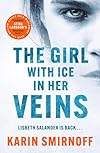
The second book of the third trilogy featuring Lisbeth Salander, genius sociopath hacker. The problem with novels which centre sociopaths as the hero is the villains have to be complete psychopaths in order to present some spectrum of good to bad. So, here, for example, a bad guy who infiltrates a group of eco-activists turns out to be a paedophile, because being on the bad guy’s side is not enough on its own. And when every villain is grotesque beyond plausibility, suspension of disbelief show more even, then you have to wonder what point the story is trying to make.
On the other hand, this is a deckare, a thriller, so I guess making a point is not, well, the point of the book. The Girl with Ice in her Veins is not a translation of the book’s original Swedish title, Lokattens klor, which means The Lynx’s claws, but neither of the titles is especially relevant to the plot - although there is a a newly-introduced character nicknamed Lo, lynx. She’s a baddy, of course.
Like the preceding novel, The Girl in the Eagle’s Talons, The Girl with Ice in her Veins is set mostly in the invented north Swedish town of Gasskas. It also features the same cast - not just Salander and Blomkvist from the original trilogy, but also Blomkist’s daughter and family, Salander’s niece, and the trilogy’s main villain, disabled white supremacist millionaire Branco. The ecological theme also continues, although this time it’s opencast mining rather than windfarms.
Salander’s niece, Svala, is interning at the local newspaper and has joined a local group of eco-activists. After discovering a local abandoned sanatorium is secretly in use, Svala’s mentor at the newspaper is murdered. A bomb explodes near a disused mine, which appears to be in the process of being re-opened. There’s also a consortium interested in opening a new mine in the area.
It’s all connected, of course, although the novel seems more interested in the depredations of the secondary cast, especially the villains. The Cleaner is hired to murder someone in Copenhagen, who turns out to have connections to the new mine in Gasskas, but instead he decides to help Svala. A visiting Greek/Chinese millionaire, who is interested in investing in re-opening the old mine (which is actually owned by Gaskass kommune), turns out to be the father of Blomkvist’s grandson. But because he’s a baddy, he’s also a domestic abuser and made his fortune through people trafficking. Branco pops up every now and again, but he’s after the harddisk containing billions in cryptocurrency which Svala was given by her mother and which she has hidden. He’s also less interested in business and more in his white supremacist political organisation.
The Girl with Ice in her Veins resolves its main plot-threads, but Branco once again escapes. So that’s the plot of book three - as yet untitled - sorted. The prose is present-tense again, and often choppy. It mostly works, but occasionally gets perilously close to the fourth wall. I did spot a couple of weird choices in translating Swedish words/culture, but fewer than in the previous book. The Girl with Ice in her Veins is not a great book, but then the series could hardly be called a great series. The first book, The Girl with the Dragon Tattoo/Män som hatar kvinnor, was a solid serial killer hunt thriller, but it’s been downhill since then. I must admit, I do wonder how far they plan to take the series. Blomkvist is now in his sixties, Salander is slowing down too… The Girl in the Eagle’s Talons and The Girl with Ice in her Veins do feel a little like they’re moving Svala to centre-stage, so who knows… show less
On the other hand, this is a deckare, a thriller, so I guess making a point is not, well, the point of the book. The Girl with Ice in her Veins is not a translation of the book’s original Swedish title, Lokattens klor, which means The Lynx’s claws, but neither of the titles is especially relevant to the plot - although there is a a newly-introduced character nicknamed Lo, lynx. She’s a baddy, of course.
Like the preceding novel, The Girl in the Eagle’s Talons, The Girl with Ice in her Veins is set mostly in the invented north Swedish town of Gasskas. It also features the same cast - not just Salander and Blomkvist from the original trilogy, but also Blomkist’s daughter and family, Salander’s niece, and the trilogy’s main villain, disabled white supremacist millionaire Branco. The ecological theme also continues, although this time it’s opencast mining rather than windfarms.
Salander’s niece, Svala, is interning at the local newspaper and has joined a local group of eco-activists. After discovering a local abandoned sanatorium is secretly in use, Svala’s mentor at the newspaper is murdered. A bomb explodes near a disused mine, which appears to be in the process of being re-opened. There’s also a consortium interested in opening a new mine in the area.
It’s all connected, of course, although the novel seems more interested in the depredations of the secondary cast, especially the villains. The Cleaner is hired to murder someone in Copenhagen, who turns out to have connections to the new mine in Gasskas, but instead he decides to help Svala. A visiting Greek/Chinese millionaire, who is interested in investing in re-opening the old mine (which is actually owned by Gaskass kommune), turns out to be the father of Blomkvist’s grandson. But because he’s a baddy, he’s also a domestic abuser and made his fortune through people trafficking. Branco pops up every now and again, but he’s after the harddisk containing billions in cryptocurrency which Svala was given by her mother and which she has hidden. He’s also less interested in business and more in his white supremacist political organisation.
The Girl with Ice in her Veins resolves its main plot-threads, but Branco once again escapes. So that’s the plot of book three - as yet untitled - sorted. The prose is present-tense again, and often choppy. It mostly works, but occasionally gets perilously close to the fourth wall. I did spot a couple of weird choices in translating Swedish words/culture, but fewer than in the previous book. The Girl with Ice in her Veins is not a great book, but then the series could hardly be called a great series. The first book, The Girl with the Dragon Tattoo/Män som hatar kvinnor, was a solid serial killer hunt thriller, but it’s been downhill since then. I must admit, I do wonder how far they plan to take the series. Blomkvist is now in his sixties, Salander is slowing down too… The Girl in the Eagle’s Talons and The Girl with Ice in her Veins do feel a little like they’re moving Svala to centre-stage, so who knows… show less
Lists
Awards


You May Also Like


Associated Authors
Statistics
- Works
- 8
- Members
- 1,127
- Popularity
- #22,789
- Rating
- 3.4
- Reviews
- 42
- ISBNs
- 120
- Languages
- 15
- Favorited
- 1