
Shelly Anand
Author of Laxmi's Mooch
Works by Shelly Anand
Tagged
Common Knowledge
There is no Common Knowledge data for this author yet. You can help.
Members
Reviews
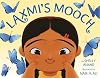
Laxmi has never thought about her mooch (mustache, in Hindi) before, but when a friend points it out on the playground, she becomes extremely self-conscious. At home, she talks to her parents, and both Mummy and Papa are reassuring about hair in general and mooches in particular, and Laxmi goes to school the next day able to point out that everyone has a mooch - and if they don't, well, she (and her markers) can help with that..."Pretty soon, everyone was showing off their mooches, real and show more drawn" - even the teacher (a woman wearing a hijab). Anand deftly turns body shame into body (and cultural) pride. show less
axmi, an Indian American elementary school student, has a mooch.
A mooch, Laxmi explains, is a sprinkling of hairs on her upper lip; it’s also the Hindi word for mustache. Laxmi is unaware of her mooch until her friends Zoe and Noah point it out during recess. At first, Laxmi is mortified—especially when she realizes she doesn’t have fine, dark hairs just on her top lip but all over her whole body. At the end of the day, she runs home to her parents, who react to her distress with humor show more and compassion. Mummy explains that Laxmi comes from generations of women with mooches. When Laxmi complains about the hair between her eyebrows, her parents compare her to feminist icon Frida Kahlo. Laxmi is still upset, but that night she dreams of tigers, and, appropriately, in the morning she has a whole new attitude—about herself and about her hair. Debut author Anand skillfully balances humor with sincerity, crafting a narrator who is both vulnerable and powerful, while Ali contributes sunny-humored illustrations that place the appealingly chubby, brown-skinned girl at the center of a diverse classroom headed by a hijabi teacher. Laxmi’s journey is both accessible and authentic, and it is a true pleasure to watch her not only embrace her own body, but also teach her classmates how to embrace theirs as well. A picture glossary of the Hindi vocabulary used appears on the endpapers. (This book was reviewed digitally with 8.5-by-22-inch spreads viewed at 22.5% of actual size.)
Fabulous, funny body positivity. (Picture book. 3-8)
-Kirkus Review show less
A mooch, Laxmi explains, is a sprinkling of hairs on her upper lip; it’s also the Hindi word for mustache. Laxmi is unaware of her mooch until her friends Zoe and Noah point it out during recess. At first, Laxmi is mortified—especially when she realizes she doesn’t have fine, dark hairs just on her top lip but all over her whole body. At the end of the day, she runs home to her parents, who react to her distress with humor show more and compassion. Mummy explains that Laxmi comes from generations of women with mooches. When Laxmi complains about the hair between her eyebrows, her parents compare her to feminist icon Frida Kahlo. Laxmi is still upset, but that night she dreams of tigers, and, appropriately, in the morning she has a whole new attitude—about herself and about her hair. Debut author Anand skillfully balances humor with sincerity, crafting a narrator who is both vulnerable and powerful, while Ali contributes sunny-humored illustrations that place the appealingly chubby, brown-skinned girl at the center of a diverse classroom headed by a hijabi teacher. Laxmi’s journey is both accessible and authentic, and it is a true pleasure to watch her not only embrace her own body, but also teach her classmates how to embrace theirs as well. A picture glossary of the Hindi vocabulary used appears on the endpapers. (This book was reviewed digitally with 8.5-by-22-inch spreads viewed at 22.5% of actual size.)
Fabulous, funny body positivity. (Picture book. 3-8)
-Kirkus Review show less
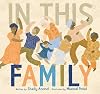
Afamily with roots in the “Land of Five Rivers and the Emerald Isle, the Swiss Alps and the Silk Road” makes its newest member feel welcome.
Speaking directly to the infant, the narrator says that this family speaks Hindi, English, and some Spanish. “My name is Narayan,” the young narrator says. “We have named you Uma.” The narratorial voice then appears to shift as other members share their perspectives, including maternal grandparents who call themselves Nana and Nani and love show more to tell riddles and serve boondi ki raita, a great-grandmother who lives in New Delhi, a paternal grandmother who enjoys gardening and making spaghetti and turkey meatballs, and a paternal grandfather who lives in Sister Bay, Wisconsin, and takes the child to Al Johnson’s for cherry-stuffed French toast. Uma’s dark-skinned mother explains that, although Uma’s lighter skin tone makes it hard for people to see the similarities between the two of them, they are still a family. And while strangers may call the family “half-and-half,” they are in fact a beautiful, diverse whole. Imbued with a frank, child-friendly sense of optimism, this lyrical tale conveys the challenges of being part of a multiracial family. Though the shifts between narrators can be confusing—a problem that’s sometimes aided by the illustrations—overall, it’s a wonderful tribute to family. Patel’s earth-toned artwork swirls with energetic linework as young Uma matures over the course of the story.
A rich and inviting portrait of a loving multiracial family. (Picture book. 3-6)
-Kirkus Review show less
Speaking directly to the infant, the narrator says that this family speaks Hindi, English, and some Spanish. “My name is Narayan,” the young narrator says. “We have named you Uma.” The narratorial voice then appears to shift as other members share their perspectives, including maternal grandparents who call themselves Nana and Nani and love show more to tell riddles and serve boondi ki raita, a great-grandmother who lives in New Delhi, a paternal grandmother who enjoys gardening and making spaghetti and turkey meatballs, and a paternal grandfather who lives in Sister Bay, Wisconsin, and takes the child to Al Johnson’s for cherry-stuffed French toast. Uma’s dark-skinned mother explains that, although Uma’s lighter skin tone makes it hard for people to see the similarities between the two of them, they are still a family. And while strangers may call the family “half-and-half,” they are in fact a beautiful, diverse whole. Imbued with a frank, child-friendly sense of optimism, this lyrical tale conveys the challenges of being part of a multiracial family. Though the shifts between narrators can be confusing—a problem that’s sometimes aided by the illustrations—overall, it’s a wonderful tribute to family. Patel’s earth-toned artwork swirls with energetic linework as young Uma matures over the course of the story.
A rich and inviting portrait of a loving multiracial family. (Picture book. 3-6)
-Kirkus Review show less
Adorable body positive picture book about Laxmi, who starts to worry when her school friends innocently point out that she has a small mooch, a mustache. After revealing her distress over her mooch to her parents, they explain to her that hair isn't just for the head, everyone has a mooch and regale her with stories of other women who have a mooch.
I especially loved the understated diversity supported in the illustrations (gender neutral bathrooms, their teacher wears hijab, classmates of show more various ethnicities, Laxmi's parents have different skin tones).
The inside covers also include vocabulary illustrated and written in English, Hindi and Urdu! show less
I especially loved the understated diversity supported in the illustrations (gender neutral bathrooms, their teacher wears hijab, classmates of show more various ethnicities, Laxmi's parents have different skin tones).
The inside covers also include vocabulary illustrated and written in English, Hindi and Urdu! show less
Lists
Awards


You May Also Like
Associated Authors
Statistics
- Works
- 3
- Members
- 194
- Popularity
- #112,876
- Rating
- 4.3
- Reviews
- 11
- ISBNs
- 13
- Languages
- 1