
David A. Robertson (1)
Author of When We Were Alone
For other authors named David A. Robertson, see the disambiguation page.
David A. Robertson (1) has been aliased into David Alexander Robertson.
About the Author
Image credit: David Robertson photographed in Montréal , Québec, Canada at the Jewish Public Library (thru a projection screen showing a live Skype webcast because he wasn't able to show up there) as part of the 2019 Ya Fest.
Series
Works by David A. Robertson
Works have been aliased into David Alexander Robertson.
Eloise {short story} 1 copy
Associated Works
Works have been aliased into David Alexander Robertson.
A Steady Brightness of Being: Truths, Wisdom, and Love from Celebrated Indigenous Voices (2025) — Contributor — 29 copies
Starstuff: Ten Science Fiction Stories to Celebrate New Possibilities (2025) — Contributor — 11 copies, 1 review
Tagged
Common Knowledge
- Occupations
- author
public speaker - Nationality
- Cree Nation
- Map Location
- Canada
Members
Reviews
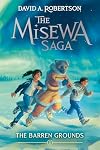
Even when I was a kid I was never into fantasy stories with anthropomorphized animals (magical creatures like dragons, etc don’t count, obv), so I definitely wouldn’t have been overly interested in picking this mid-grade book up, but somehow it was still a pretty compelling read! The story follows Indigenous foster kids Morgan and Eli as Morgan struggles to find her place in their new home and Eli tries to find an escape through his artwork. Eli’s drawings prove to be more than just a show more coping mechanism and way to connect with his heritage (he draws scenes reminiscent of where he grew up and which draw on traditional Cree teachings), when the pair staple one of his oversize drawings to the wall and it becomes a gateway to another land – the titular Barren Grounds that have taken over the alternate world of Askí. Morgan and Eli must help the animals who populate the land rescue the magical birds that keep the seasons turning and bring the land back to life, drawing on themes of environmentalism, greed, and community that are central to many Indigenous ways of life and storytelling. While the series doesn’t quite do it for me (sorry, talking animals), the characters are vibrant, the adventure is well narrated, and Robertson’s Indigneous grounding is just as well mythologized as any Euro-centric story in the same vein. show less
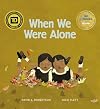
Nósisim loves to spend time with her kókom. Kókom wears bright colors, has long hair, and often speaks in Cree. One day, Nósisim asks why she does these things. Kókom explains how she was taken away to school and all these things were taken from her. Now she lives this way because she can. Her troubled past makes her cling tighter to these things now.
First, Nósisim asks Kókom why she wears so many colors. Kókom answers that when they were in school, their beautiful clothes were taken show more and they were forced to wear uniforms like everyone else. But the children secretly rebelled by rolling and covering themselves in colorful fall leaves. Kókom says, “And this made us happy.“
Second, Nósisim ask Kókom why she wears her hair so long. Kókom explains to her that the people at the school didn’t like how proud the Cree children were and so cut off their long hair to make them like everybody else. But against this too the children rebelled, for when they were alone in the field they would pick long blades of grass and weave them into each other’s hair, making it long. “And this made us happy.“
Next, Nósisim asks Kókom why she speaks in Cree. Kókom tells her how at school they wouldn’t let the children speak their own language but forced them all to use “their strange words“. The children refused to forget their language, however, and when they were alone in the fields they would speak it to each other so that they could remember. “And this made us happy.“
Finally, Nósisim asks Kókom why she and her brother always spend so much time together. Kókom tells her that when they were at the school they were separated, never allowed to be with each other. But sometimes, when they were alone, they would find each other and hold hands. “And this made us happy. ‘Now,’ Nókom said as she reached over and held my uncle’s hand, and mine, ‘I am always with my family.’“
[Content Warning: This book handles the subject of residential schools very gently, but it is still a hard subject. “When We Were Alone” is aimed at elementary school aged children, and, as such, will require some careful explanation of mature themes like the forced taking of family relationships, hair, and culture.]
David A. Robertson is the author of “When We Were Alone”, and he tenderly tells the tale of his people’s (the Swampy Cree) experience with residential schools. Being Cree himself, he speaks from a position of authority, and he tells the story with honesty and care for both the truth and for the age of his readers. Combined with Julie Flett’s (Métis-Cree) colorful and gentle illustrations, “When We Were Alone” is an excellent, dependable book on the residential school system for younger readers. Because of its accuracy and reliability and authorship by Native peoples, it is available for sale on Birchbark Books, a bookshop owned by acclaimed Ojibway authoress Louise Erdrich.
“When We Were Alone” is the perfect way to introduce your young child to the horrors of history slowly and gently. Our children need to know the truth about our histories, but their minds are impressionable and vulnerable and need to be treated with care. If I ever have children, I will want to use this book with its colorful pages and careful references to trauma as a first training ground for their young minds. The first book I want them to read is the Bible, and after that, it’s books like this that tell the truth of history while shaping their minds to fight for something better.
I really like this book. I love Julie Flett’s illustrations, especially the cover one where the children lay in a pile of many-hued fall leaves. I also love the illustration of the children braiding grass into each other’s hair to make it longer. I love that I can read about the truth without feeling myself overwhelmed by the trauma. I love the family relations and the determination to be strong and to be Cree and to love. Ultimately, that’s what this book is about. Finding the strength to fight to be human in the midst of inhumane treatment. And, ultimately, that’s what I love – the hope. This book is grounded on and immersed in hope. And it’s the hope that brings comfort and meaning. It’s the hope I need. And that’s why I love this book.
This book is good. This book is important. I highly recommend this book. show less
First, Nósisim asks Kókom why she wears so many colors. Kókom answers that when they were in school, their beautiful clothes were taken show more and they were forced to wear uniforms like everyone else. But the children secretly rebelled by rolling and covering themselves in colorful fall leaves. Kókom says, “And this made us happy.“
Second, Nósisim ask Kókom why she wears her hair so long. Kókom explains to her that the people at the school didn’t like how proud the Cree children were and so cut off their long hair to make them like everybody else. But against this too the children rebelled, for when they were alone in the field they would pick long blades of grass and weave them into each other’s hair, making it long. “And this made us happy.“
Next, Nósisim asks Kókom why she speaks in Cree. Kókom tells her how at school they wouldn’t let the children speak their own language but forced them all to use “their strange words“. The children refused to forget their language, however, and when they were alone in the fields they would speak it to each other so that they could remember. “And this made us happy.“
Finally, Nósisim asks Kókom why she and her brother always spend so much time together. Kókom tells her that when they were at the school they were separated, never allowed to be with each other. But sometimes, when they were alone, they would find each other and hold hands. “And this made us happy. ‘Now,’ Nókom said as she reached over and held my uncle’s hand, and mine, ‘I am always with my family.’“
[Content Warning: This book handles the subject of residential schools very gently, but it is still a hard subject. “When We Were Alone” is aimed at elementary school aged children, and, as such, will require some careful explanation of mature themes like the forced taking of family relationships, hair, and culture.]
David A. Robertson is the author of “When We Were Alone”, and he tenderly tells the tale of his people’s (the Swampy Cree) experience with residential schools. Being Cree himself, he speaks from a position of authority, and he tells the story with honesty and care for both the truth and for the age of his readers. Combined with Julie Flett’s (Métis-Cree) colorful and gentle illustrations, “When We Were Alone” is an excellent, dependable book on the residential school system for younger readers. Because of its accuracy and reliability and authorship by Native peoples, it is available for sale on Birchbark Books, a bookshop owned by acclaimed Ojibway authoress Louise Erdrich.
“When We Were Alone” is the perfect way to introduce your young child to the horrors of history slowly and gently. Our children need to know the truth about our histories, but their minds are impressionable and vulnerable and need to be treated with care. If I ever have children, I will want to use this book with its colorful pages and careful references to trauma as a first training ground for their young minds. The first book I want them to read is the Bible, and after that, it’s books like this that tell the truth of history while shaping their minds to fight for something better.
I really like this book. I love Julie Flett’s illustrations, especially the cover one where the children lay in a pile of many-hued fall leaves. I also love the illustration of the children braiding grass into each other’s hair to make it longer. I love that I can read about the truth without feeling myself overwhelmed by the trauma. I love the family relations and the determination to be strong and to be Cree and to love. Ultimately, that’s what this book is about. Finding the strength to fight to be human in the midst of inhumane treatment. And, ultimately, that’s what I love – the hope. This book is grounded on and immersed in hope. And it’s the hope that brings comfort and meaning. It’s the hope I need. And that’s why I love this book.
This book is good. This book is important. I highly recommend this book. show less
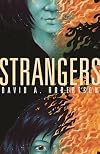
Strangers by David A. Robertson published by Highwater Press is an incredible tale and the first in The Reckoner series.
I could not put this book down. It haunted me when I was not reading. I had to know the story of Wounded Sky First Nation and Cole Harper. Cole left Wounded Sky after a grave accident. After losing both his father and mother, his Grandmother and his aunt moved him to Winnipeg to get away and keep him safe. When Cole receives urgent and somewhat mysterious text messages from show more an old friend back in Wounded Sky, he is compelled to go back home, against his aunt’s wishes. When he arrives, he doesn’t exactly get a warm and fuzzy welcome. While some believe Cole is a hero, many are resentful and hurt by Cole’s actions 10 years ago. When people begin to fall gravely ill upon Cole’s arrival back in Wounded Sky and others end up dead after their interactions with him, Cole sets out on a mission to figure out what is happening and help his people once again.
This was one of those books I could not put down. You know those books where you completely lose yourself in the story, ignoring the world around you. Fortunately, The Bear and The Bee were able to entertain themselves for just about an entire day while I strode off to Wounded Sky and fully immersed myself in Cole’s story. I am just itching for the next installment. I can only think of a handful of times where I have had to wait for the next installments in a series and cannot stop dreaming about what is to come. I need to know what happens to Cole and Wounded Sky First Nation, how all the different mysteries that arose during Strangers conclude. What was happening at the research facility? Who started the school fire? How did Cole’s father die and why? There are so many questions David A. Roberston leaves open. We can certainly make inferences and predictions but I have a feeling this story could go just about anywhere. With the story being quite intense, I loved the character of Choch. He adds much appreciated humour and asides. He also provides a vehicle in the story to learn more about the importance of oral culture and the stories of Cree and other First Nations mythology. Strangers is an incredibly important Own Voices story to add to the growing list of stories written by First Nations people. These stories reflect their experiences and their truths and provide a richness to the children’s literature landscape that was not available only a few short years ago. Own Voices stories lead to more learning. While reading I found myself wanting to know more about the story of Coyote or Wisakedjak to the Cree people. I wanted first to make sure that anything I wrote here was accurate but I was also curious about the stories. I love folktales and oral storytelling and know after reading Strangers and what will be the two follow up books in the series, I will seek out opportunities to hear Cree, Anishnabee, Métis, and other First Nation storytellers. show less
I could not put this book down. It haunted me when I was not reading. I had to know the story of Wounded Sky First Nation and Cole Harper. Cole left Wounded Sky after a grave accident. After losing both his father and mother, his Grandmother and his aunt moved him to Winnipeg to get away and keep him safe. When Cole receives urgent and somewhat mysterious text messages from show more an old friend back in Wounded Sky, he is compelled to go back home, against his aunt’s wishes. When he arrives, he doesn’t exactly get a warm and fuzzy welcome. While some believe Cole is a hero, many are resentful and hurt by Cole’s actions 10 years ago. When people begin to fall gravely ill upon Cole’s arrival back in Wounded Sky and others end up dead after their interactions with him, Cole sets out on a mission to figure out what is happening and help his people once again.
This was one of those books I could not put down. You know those books where you completely lose yourself in the story, ignoring the world around you. Fortunately, The Bear and The Bee were able to entertain themselves for just about an entire day while I strode off to Wounded Sky and fully immersed myself in Cole’s story. I am just itching for the next installment. I can only think of a handful of times where I have had to wait for the next installments in a series and cannot stop dreaming about what is to come. I need to know what happens to Cole and Wounded Sky First Nation, how all the different mysteries that arose during Strangers conclude. What was happening at the research facility? Who started the school fire? How did Cole’s father die and why? There are so many questions David A. Roberston leaves open. We can certainly make inferences and predictions but I have a feeling this story could go just about anywhere. With the story being quite intense, I loved the character of Choch. He adds much appreciated humour and asides. He also provides a vehicle in the story to learn more about the importance of oral culture and the stories of Cree and other First Nations mythology. Strangers is an incredibly important Own Voices story to add to the growing list of stories written by First Nations people. These stories reflect their experiences and their truths and provide a richness to the children’s literature landscape that was not available only a few short years ago. Own Voices stories lead to more learning. While reading I found myself wanting to know more about the story of Coyote or Wisakedjak to the Cree people. I wanted first to make sure that anything I wrote here was accurate but I was also curious about the stories. I love folktales and oral storytelling and know after reading Strangers and what will be the two follow up books in the series, I will seek out opportunities to hear Cree, Anishnabee, Métis, and other First Nation storytellers. show less
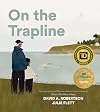
A boy and Moshom, his grandpa, take a trip together to visit a place of great meaning to Moshom. A trapline is where people hunt and live off the land, and it was where Moshom grew up. As they embark on their northern journey, the child repeatedly asks his grandfather, "Is this your trapline?" Along the way, the boy finds himself imagining what life was like two generations ago -- a life that appears to be both different from and similar to his life now. This is a heartfelt story about show more memory, imagination and intergenerational connection that perfectly captures the experience of a young child's wonder as he is introduced to places and stories that hold meaning for his family. show less
Lists
Autochtonie (1)
Awards


You May Also Like
Associated Authors
Statistics
- Works
- 38
- Also by
- 5
- Members
- 2,513
- Popularity
- #10,210
- Rating
- 4.1
- Reviews
- 202
- ISBNs
- 175
- Languages
- 4
