

About the Author
Dimitry Anastakis is an assistant professor in the Department of History at Trent University.
Works by Dimitry Anastakis
Death in the Peaceable Kingdom: Canadian History since 1867 through Murder, Execution, Assassination, and Suicide (2015) 12 copies
Montreal's Square Mile: The Making and Transformation of a Colonial Metropole (Themes in Business and Society) (2024) 1 copy
Montreal's Square Mile: The Making and Transformation of a Colonial Metropole (Themes in Business and Society) (2024) 1 copy
Dream Car: Malcolm Bricklin's Fantastic SV1 and the End of Industrial Modernity (2024) 1 copy, 1 review
Tagged
Common Knowledge
- Gender
- male
- Occupations
- professor
- Organizations
- Trent University
- Nationality
- Canada
- Associated Place (for map)
- Canada
Members
Reviews
Dream Car: Malcolm Bricklin's Fantastic SV1 and the End of Industrial Modernity by Dimitry Anastakis
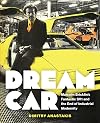
That this book wound up on my reading list is probably a comment on the insidious influence of the Amazon algorithm, as I'm not in the habit of perusing the webpage of the University of Toronto Press.
Also, it's not as though I'm lacking in familiarity with the chequered career of Malcolm Bricklin, but the cover of this book seems like a dare by Prof. Anastakis to the potential reader that the fiasco the Bricklin SV1 is usually presented as is worth serious reconsideration. So, challenge show more accepted.
Be that as it may, I have to admit that Anastakis did impress me with his analysis. The method to the madness is that he takes the Bricklin adventure as a case study in the pitfalls of the auto industry, particularly in a time of turbulence. The argument made winds up being that there is little more challenging than launching a new auto firm, due to the massive burn rate of financial capital required, and that Bricklin and the provincial leadership of New Brunswick badly underestimated those requirements. Tesla becomes a point of comparison, with Anastakis noting that for all Elon Musk's dubious personal behavior, he was able to wrangle entities with deep pockets to stay the course from prototype to large-scale production.
If there is a tragic figure in this book it isn't Bricklin, and it isn't Bricklin's car; images of the car have wound up on Canadian stamps and commemorative coins as an object of pride. Anastakis would seemingly have you shed a tear for Richard Hatfield, the premier of New Brunswick who bought wholeheartedly into Bricklin's vision as a way to elevated his home province, and who then had to terminate the dream when the real requirements of success became brutally apparent.
On the whole, I'm going to call this book a success, both as case study, and as a consideration of the auto and the automotive industry as drivers of social change. However, one angle that Anastakis might have considered is the whole British industrial phenomena of boutique sports cars (Lotus, Morgan, etc.), and whether that influenced Bricklin (whom Anastakis did interview several times over the years). The Delorean experience is alluded to in this book, but it's not noted that the nuts-and-bolts car guy involved in that endeavor was Colin Chapman of Lotus, who was a real expert in terms of playing shell games with money to keep his projects above water.
So, if you're interested in the business of cars, or Canadian history, this book is well-worth checking out. show less
Also, it's not as though I'm lacking in familiarity with the chequered career of Malcolm Bricklin, but the cover of this book seems like a dare by Prof. Anastakis to the potential reader that the fiasco the Bricklin SV1 is usually presented as is worth serious reconsideration. So, challenge show more accepted.
Be that as it may, I have to admit that Anastakis did impress me with his analysis. The method to the madness is that he takes the Bricklin adventure as a case study in the pitfalls of the auto industry, particularly in a time of turbulence. The argument made winds up being that there is little more challenging than launching a new auto firm, due to the massive burn rate of financial capital required, and that Bricklin and the provincial leadership of New Brunswick badly underestimated those requirements. Tesla becomes a point of comparison, with Anastakis noting that for all Elon Musk's dubious personal behavior, he was able to wrangle entities with deep pockets to stay the course from prototype to large-scale production.
If there is a tragic figure in this book it isn't Bricklin, and it isn't Bricklin's car; images of the car have wound up on Canadian stamps and commemorative coins as an object of pride. Anastakis would seemingly have you shed a tear for Richard Hatfield, the premier of New Brunswick who bought wholeheartedly into Bricklin's vision as a way to elevated his home province, and who then had to terminate the dream when the real requirements of success became brutally apparent.
On the whole, I'm going to call this book a success, both as case study, and as a consideration of the auto and the automotive industry as drivers of social change. However, one angle that Anastakis might have considered is the whole British industrial phenomena of boutique sports cars (Lotus, Morgan, etc.), and whether that influenced Bricklin (whom Anastakis did interview several times over the years). The Delorean experience is alluded to in this book, but it's not noted that the nuts-and-bolts car guy involved in that endeavor was Colin Chapman of Lotus, who was a real expert in terms of playing shell games with money to keep his projects above water.
So, if you're interested in the business of cars, or Canadian history, this book is well-worth checking out. show less

Great Collection of Essays
This group of essays edited by Dimitry Anastakis is proof that the writing of Canadian history is alive and well. It would be impossible for any collection, a short 190 page one at that, to capture the totality of the revolutionary epoch of the 1960s, even such periodization is problematic as Anastakis admits to in the introduction. But each essay addresses a particular issue in the postwar liberal consensus with academic rigor. I can't go through with a close show more analysis of each essay (you'll have to buy the book and read for yourself) but I will highlight the ones I felt had the most significance.
The first is Kristy A. Holmes essay "Negotiating Citizenship" which explores Trudeau's grand social experiments into bilingualism, multiculturalism, and feminism incorporated into the motto "Reason over Passion." Holmes problematizes the gendered notions of liberal citizenship through its universalizing tendencies and individualistic masculinity.
De Gaulle's "Vivre Le Quebec" speech is given a close contextual analysis by Olivier Courteaux who argues that de Gaulle's vision of a commonwealth of francophonie nations was too utopian and neglected the divergent paths that say Quebec and France had taken in the past 200+ years.
Finally, Krys Verrall's essay "Art and Urban Renewal" compares slum clearances in the U.S. with Canada with close attention to the racialized aspects in Africville in Halifax as they were in Harlem in New York. I could go on, but the other essays on automobiles and masculinity, social control over drug use, the legacy of the Quiet Revolution, and suburbanization are all prominently featured as well.
Ultimately, the over-arching theme is the ambiguous legacy of the 1960s. A time of great contradiction, and as Anastakis' fellow Trent Professor Bryan Palmer argues, great irony. We may never fully explore what the 1960s meant to Canadians, but this book is a good start. show less
This group of essays edited by Dimitry Anastakis is proof that the writing of Canadian history is alive and well. It would be impossible for any collection, a short 190 page one at that, to capture the totality of the revolutionary epoch of the 1960s, even such periodization is problematic as Anastakis admits to in the introduction. But each essay addresses a particular issue in the postwar liberal consensus with academic rigor. I can't go through with a close show more analysis of each essay (you'll have to buy the book and read for yourself) but I will highlight the ones I felt had the most significance.
The first is Kristy A. Holmes essay "Negotiating Citizenship" which explores Trudeau's grand social experiments into bilingualism, multiculturalism, and feminism incorporated into the motto "Reason over Passion." Holmes problematizes the gendered notions of liberal citizenship through its universalizing tendencies and individualistic masculinity.
De Gaulle's "Vivre Le Quebec" speech is given a close contextual analysis by Olivier Courteaux who argues that de Gaulle's vision of a commonwealth of francophonie nations was too utopian and neglected the divergent paths that say Quebec and France had taken in the past 200+ years.
Finally, Krys Verrall's essay "Art and Urban Renewal" compares slum clearances in the U.S. with Canada with close attention to the racialized aspects in Africville in Halifax as they were in Harlem in New York. I could go on, but the other essays on automobiles and masculinity, social control over drug use, the legacy of the Quiet Revolution, and suburbanization are all prominently featured as well.
Ultimately, the over-arching theme is the ambiguous legacy of the 1960s. A time of great contradiction, and as Anastakis' fellow Trent Professor Bryan Palmer argues, great irony. We may never fully explore what the 1960s meant to Canadians, but this book is a good start. show less
Some Good, Some Average
Another collection of Canadian history essays edited by Dimitry Anastakis and P.E. Bryden. In my opinion "The Sixties: Passion, Politics, and Style" was better because the periodization allowed for a tighter focus. Federalism is one of those fuzzy terms which can stand for just about anything you want it to be, and therefore the tendency for tangentalization is very high.
That said, there are still some good essays in here. The introduction actually does a good job with show more its definition of "federalism" -- as a nation-building ideology "propogating competing narratives of Canada's past to create imagined communities." In my opinion, the first essay titled "One Version of History" by R. Blake Brown is the best one of the lot. It describes the failure of the Supreme Court of Canada to fully appreciate the nuance of the BNA Act choosing instead to adopt a teleological method of historical analysis that sees constitutionalism as part of a Canadian tradition of evolutionary democracy, all in the attempt to challenge Quebec's right to unilateral secession.
Michael Behiel's essay "Canada and International Instruments of Human Rights" is an interesting analysis of the constant tension between federal and provincial power and the prickly issue of human rights. Trudeau of course figures prominently here in the discussion as does Quebec's "Quiet Revolution."
A couple of the latter essays focus on the automobile manufacturing industry and the "cooperative federalism" which helped to bring about the Auto Pact in 1965, requiring all parties to find common ground for the benefit of all.
In the last essay, Anastakis includes a deeply personal account of his experiences with the late Canadian historian John T. Saywell and chronicles his long academic career in the greater context of Canadian historiography overall.
Overall, I found at least half of the essays worth reading for sure. Even at that, I'm still recommending this collection especially for anyone who wants more background information on constitutional issues and that curious Canadian experiment we call "federalism." show less
Another collection of Canadian history essays edited by Dimitry Anastakis and P.E. Bryden. In my opinion "The Sixties: Passion, Politics, and Style" was better because the periodization allowed for a tighter focus. Federalism is one of those fuzzy terms which can stand for just about anything you want it to be, and therefore the tendency for tangentalization is very high.
That said, there are still some good essays in here. The introduction actually does a good job with show more its definition of "federalism" -- as a nation-building ideology "propogating competing narratives of Canada's past to create imagined communities." In my opinion, the first essay titled "One Version of History" by R. Blake Brown is the best one of the lot. It describes the failure of the Supreme Court of Canada to fully appreciate the nuance of the BNA Act choosing instead to adopt a teleological method of historical analysis that sees constitutionalism as part of a Canadian tradition of evolutionary democracy, all in the attempt to challenge Quebec's right to unilateral secession.
Michael Behiel's essay "Canada and International Instruments of Human Rights" is an interesting analysis of the constant tension between federal and provincial power and the prickly issue of human rights. Trudeau of course figures prominently here in the discussion as does Quebec's "Quiet Revolution."
A couple of the latter essays focus on the automobile manufacturing industry and the "cooperative federalism" which helped to bring about the Auto Pact in 1965, requiring all parties to find common ground for the benefit of all.
In the last essay, Anastakis includes a deeply personal account of his experiences with the late Canadian historian John T. Saywell and chronicles his long academic career in the greater context of Canadian historiography overall.
Overall, I found at least half of the essays worth reading for sure. Even at that, I'm still recommending this collection especially for anyone who wants more background information on constitutional issues and that curious Canadian experiment we call "federalism." show less
Awards

Statistics
- Works
- 10
- Members
- 39
- Popularity
- #376,656
- Rating
- 4.0
- Reviews
- 3
- ISBNs
- 27