

Jess Mowry
Author of Way Past Cool
About the Author
Image credit: Jess Mowry
Works by Jess Mowry
Associated Works
Children of the Night: The Best Short Stories by Black Writers, 1967 to the Present (1995) — Contributor — 126 copies
Tagged
Common Knowledge
- Canonical name
- Mowry, Jess
- Birthdate
- 1960-03-27
- Gender
- male
- Awards and honors
- PEN Josephine Miles Award
- Nationality
- USA
- Places of residence
- Oakland, California, USA
- Associated Place (for map)
- California, USA
Members
Reviews

Bones Become Flowers
by Jess Mowry
Windstorm Creative (2001)
Paperback, 392 pages
$18.95
ISBN 1883573912
Author of Way Past Cool, Phat Acceptance, Voodu Dawgz, When All Goes Bright, and Skeleton Key as well as other novels for and about black kids and teens, such as Six Out Seven, Babylon Boyz, Rats In The Trees, Ghost Train, Tyger Tales, and Children Of The Night. His novel Way Past Cool also available in film version.
After over thirty years of working with kids and raising four of my own, along show more with a few strays -- none of whom are in prison or collecting Welfare -- not to mention almost twenty years of writing books and stories for and about kids, I've found that it's a lot easier for people to be "pro-child" about some kids than it is for them to care about and champion "other" kids. Perhaps, like the animals in George Orwell's Animal Farm, some kids are more equal than others?
Jess Mowry
The quote above is from Jess’s LibraryThing profile. I might never have heard of him, or of Bones Become Flowers, if he hadn’t set up that account.
I’ve written of my fondness for LibraryThing. An important tool available there is the tag. Tag a book “social justice”, and when anyone in the vast LibraryThing system looks for books on that topic, the book you tagged will be among them.
I was glancing over my Tag Zeitgeist one day and noticed that my most common tag was Haiti. Clicking on it to see if there were any “Haiti” books I might want to read, I found Bones Become Flowers.
When I first received Bones Become Flowers, I entered the book in my catalogue and tagged it Haiti, Vodou, Voodoo. Now I’ve finished it I’ve expanded the list: Haiti, Vodou, Voodoo, religion, culture, social justice, social structure, history, children, boys, poverty, African-American.
“Almost all my stories and books are for and about black kids, who are not always cute and cuddly. My characters often spit, sweat and swear, as well as occasionally smoke or drink. Just like their real-world counterparts some are "overweight" and have no desire to get skinny, or they may look "too black," or are otherwise unacceptable by superficial American values... including some AFRICAN-American values. Like on-the-real kids, they often live in dirty, violent environments and are forced into sometimes unpleasant lifestyles.
“I have devoted my career, such as it is, to writing positive but realistic books and stories, not only for and about black kids, but also for "white" kids so they will understand that the negative stereotypes aren't true... that most black kids have other interests besides guns, gangs, drugs, violence, becoming rap stars, or playing basketball.”
Bones Become Flowers certainly falls into this category. No simple romp, it depicts dense and vivid cultures, both African-American and Haitian, reflects on mores and prejudice, plays on literary passages, and examines the politics of gender and sex. It is multi-layered, exciting, brutal, and kind.
Mowry knows well Haiti’s painful and provocative truths. He delivers a ground-level view of history in meaty, candid prose. Yet this history is not over-simplified; many sides of issues are represented, creating an ethical tension that only increases the truthfulness of the book.
Tracy Carter, a black American woman with some cash behind her and a lot of compassion for kids, travels to Haiti with the intention of donating a sum of money to an orphanage in the mountains near Jérèmie. She is a tough, impatient, self-aware woman who is critically aware of oppression, particularly the oppression of children. Yet her character is leavened with wry humour and gentle affection. Her resolute insistence on following the truth, however elusive or uncomfortable, makes her an uncompromising and merciful protagonist.
From start to finish her journey is anything but clear-cut. She encounters a horrifying ritual on a beach en route to Jérèmie, uncovers a painful mystery connected to the orphanage, and sets out to find a talented ex-resident of that institution, to encourage his art and bring him, perhaps, to America, where he could truly flower.
The story is carried by well drawn characters whose motivations are refreshingly free from stereotype. The children are scarred and insolent, reeking and scheming, playful and beautiful, greedy and tender. Tracy is determined, impulsive, and passionately caring. Her heart goes out to children many would deplore and fear; she sees beauty in ugliness, and cherishes all. If your aim is to aid humanity, her actions seem to say, you can’t stop with the people who please you. The shy, clean, obedient, and well-spoken. Mowry draws our attention to the children society turns away from, and puts our noses in their stink, holding us there long enough, perhaps, for us to stop reacting against what we dislike and fear and see who is really there. He offers us a chance to be more human than we were before.
Some of Tracy’s reactions seem strange to me, not because they are strange, but because they’re not my own. But in the main I’m able to follow where her thoughts lead, and even when I am disagreeing with a particular aim (such as bringing the young artist to America) or action, I am wholeheartedly in support of her underlying intentions and am rooting for her to see clearly and decide well.
There is much detail in this book about Haiti, about Tracy, and about the characters she comes to know – Father Avery, Remy the artist, his brain-damaged friends, Jingo and Jango, and the people of Cayes Squellette. There is never a risk of forgetting where you are. Each place becomes real, its textures and smells and nuances defined and heady. Not every detailed jived with my own experience of Haiti, but enough did that I could say, yes, I am there.
“The stream grew swifter and deeper as they descended through the twisting ravine. The water now looked like frothing chocolate. Other small streams were joining it, fed by the rain on the mountains above and leaping down rocks and through branches and vines. A muddy cascade poured over the Jeep from an outcropping, flooding the windshield with yellowish foam and roaring on the roof as they passed underneath. The rushing brook rattled like hail on the hood whenever a patch of gray sky showed through the leaves.” pg.162
Much of the book is inner dialogue. Tracy’s reflections on her own young life and the realities faced by black American youths are every bit as striking as her thoughts about Haiti’s children. She ponders issues at length, many and important issues, and her thoughts are irreverent, frank, and informed with a lack of prettiness and pretension that could in other writers’ hands devolve into stereotype and easy answers.
Mowry doesn’t allow himself or his protagonist easy answers. In a book so concerned with oppression, with a protagonist so aware of it, there is the danger that she will be portrayed as flawless, always noble, always right, a hero against the forces of evil. But Tracy is not free from oppressor patterns herself; she is not always able to see clearly between her First World certainties and Third World truths. Nor, as readers, are we certain what is right and what is wrong, anymore than she is. Is the priest, who we meet in the early part of the book, correct in his beliefs about what the children need and what they have to sacrifice? Is Tracy correct in her disagreement with him? Is her acquisition of a carving that serves a religious function in its community only selfish arrogance, or is it a thoughtful and caring act? Are the people of Cayes Squellette unnecessarily cruel or uncannily wise? One of the great values of Bones Become Flowers is the opportunities it offers to question our own assumptions and reactions, and to open ourselves to other possibilities.
At times I wished there was a little less detail or reflection, but it never became a problem. If I had my editor’s knife, I would have cut a bit here and there, would have suggested that a word or two (seminal being the major one) were used over-much and might be alternated with other words. But these are thin complaints for a book that has fearless vision and a relentless valuing of human beings, whatever their apparent value or role in society, and however they may screw up or simply not appeal.
Bones Become Flowers took me places I would never have guessed it would. Some of those places are not for the squeamish. The positive light that Vodou is cast in will alienate some readers, but for me it was a relief. After the plethora of fear-soaked depictions of zombies and houngans, it’s refreshing to be given a different angle on this religion.
The bit that made me squirm was the attention paid to the corpulence and sexuality of a number of the adolescent boys. Why did it make me squirm?
Partly because I hadn’t finished the book and was not trusting the writer’s ultimate understanding of those themes. Early descriptions of the fat children were unflattering, and fat oppression is an issue I feel strongly about. With my editor’s knife I would have suggested a word change or two. But would that have been necessary? Was I just reacting? I’m not sure. Because in fact the fatness of the children was never seen by the characters as a bad thing. In fact, it was seen as highly positive. I rubbed my mental eyes at not one, but several fat children in the book because I never once saw a fat child in Haiti, except one youngster visiting from Miami.
I was missing the point.
The young god Esu appears in conjunction with the Undertaker in Bones Become Flowers. The gaunt, tall Undertaker receives the dead, and the impish, hedonistic Esu inspires life. His huge tummy is a symbol of his good fortune and the love and care which the people bestow on him. The fat children in the book are linked to him.
The sexuality. It makes complete sense in terms of the story. It just comes up so darned often! These youngsters are randy as heck. And this is a problem why?
I don’t think it actually is. There’s nothing pornographic about the book. My discomfort arises when adults speak of children’s sexuality in any but the most scientific way. I fear they’ll fall into, or will be accused of, using it to pleasure themselves, that rather than a dispassionate depiction of the kids themselves, it could veer into pedophilia. I get nervous in the same way that elementary school teachers get nervous when unknown adults wander into a school. In a world where we’ve seen so much sexual abuse of children, we’ve become flighty at the mere thought of children’s own sexuality, let alone adults referring to it in a book. Nevertheless, however much I cringe when Mowry refers to kids having sex, I never experience it as titillation. Whether it always works completely with the plot – I am thinking of one scene of sex between two boys out on the street, something I can’t even imagine in the Haiti I know – is another matter. In the main, I think it does, and indeed adds something important to our understanding of the characters.
Bones Become Flowers is a fascinating, appealing, and encouraging story. Kudos to Mowry for gathering so many disparate strands of life in difficult lands, and for lifting the whole from sociology to self-awareness and art.
I’m grateful to have met Tracy, and travelled with her to a Haiti I can never encounter, myself. Mowry’s dream is a demonstration of his great thoughtfulness. To have followed Tracy from Jérèmie to Father Avery’s orphanage, to the rusty old Enfant Vagabond, to the island community of Cayes Squellette and their gods, was a pleasure and a gift.
“…a tiny, gentle, and isolated culture that loved its children as it loved itself…” pg. 366
Well done, Jess Mowry. And thanks.
Casey Wolf
Vancouver BC show less
by Jess Mowry
Windstorm Creative (2001)
Paperback, 392 pages
$18.95
ISBN 1883573912
Author of Way Past Cool, Phat Acceptance, Voodu Dawgz, When All Goes Bright, and Skeleton Key as well as other novels for and about black kids and teens, such as Six Out Seven, Babylon Boyz, Rats In The Trees, Ghost Train, Tyger Tales, and Children Of The Night. His novel Way Past Cool also available in film version.
After over thirty years of working with kids and raising four of my own, along show more with a few strays -- none of whom are in prison or collecting Welfare -- not to mention almost twenty years of writing books and stories for and about kids, I've found that it's a lot easier for people to be "pro-child" about some kids than it is for them to care about and champion "other" kids. Perhaps, like the animals in George Orwell's Animal Farm, some kids are more equal than others?
Jess Mowry
The quote above is from Jess’s LibraryThing profile. I might never have heard of him, or of Bones Become Flowers, if he hadn’t set up that account.
I’ve written of my fondness for LibraryThing. An important tool available there is the tag. Tag a book “social justice”, and when anyone in the vast LibraryThing system looks for books on that topic, the book you tagged will be among them.
I was glancing over my Tag Zeitgeist one day and noticed that my most common tag was Haiti. Clicking on it to see if there were any “Haiti” books I might want to read, I found Bones Become Flowers.
When I first received Bones Become Flowers, I entered the book in my catalogue and tagged it Haiti, Vodou, Voodoo. Now I’ve finished it I’ve expanded the list: Haiti, Vodou, Voodoo, religion, culture, social justice, social structure, history, children, boys, poverty, African-American.
“Almost all my stories and books are for and about black kids, who are not always cute and cuddly. My characters often spit, sweat and swear, as well as occasionally smoke or drink. Just like their real-world counterparts some are "overweight" and have no desire to get skinny, or they may look "too black," or are otherwise unacceptable by superficial American values... including some AFRICAN-American values. Like on-the-real kids, they often live in dirty, violent environments and are forced into sometimes unpleasant lifestyles.
“I have devoted my career, such as it is, to writing positive but realistic books and stories, not only for and about black kids, but also for "white" kids so they will understand that the negative stereotypes aren't true... that most black kids have other interests besides guns, gangs, drugs, violence, becoming rap stars, or playing basketball.”
Bones Become Flowers certainly falls into this category. No simple romp, it depicts dense and vivid cultures, both African-American and Haitian, reflects on mores and prejudice, plays on literary passages, and examines the politics of gender and sex. It is multi-layered, exciting, brutal, and kind.
Mowry knows well Haiti’s painful and provocative truths. He delivers a ground-level view of history in meaty, candid prose. Yet this history is not over-simplified; many sides of issues are represented, creating an ethical tension that only increases the truthfulness of the book.
Tracy Carter, a black American woman with some cash behind her and a lot of compassion for kids, travels to Haiti with the intention of donating a sum of money to an orphanage in the mountains near Jérèmie. She is a tough, impatient, self-aware woman who is critically aware of oppression, particularly the oppression of children. Yet her character is leavened with wry humour and gentle affection. Her resolute insistence on following the truth, however elusive or uncomfortable, makes her an uncompromising and merciful protagonist.
From start to finish her journey is anything but clear-cut. She encounters a horrifying ritual on a beach en route to Jérèmie, uncovers a painful mystery connected to the orphanage, and sets out to find a talented ex-resident of that institution, to encourage his art and bring him, perhaps, to America, where he could truly flower.
The story is carried by well drawn characters whose motivations are refreshingly free from stereotype. The children are scarred and insolent, reeking and scheming, playful and beautiful, greedy and tender. Tracy is determined, impulsive, and passionately caring. Her heart goes out to children many would deplore and fear; she sees beauty in ugliness, and cherishes all. If your aim is to aid humanity, her actions seem to say, you can’t stop with the people who please you. The shy, clean, obedient, and well-spoken. Mowry draws our attention to the children society turns away from, and puts our noses in their stink, holding us there long enough, perhaps, for us to stop reacting against what we dislike and fear and see who is really there. He offers us a chance to be more human than we were before.
Some of Tracy’s reactions seem strange to me, not because they are strange, but because they’re not my own. But in the main I’m able to follow where her thoughts lead, and even when I am disagreeing with a particular aim (such as bringing the young artist to America) or action, I am wholeheartedly in support of her underlying intentions and am rooting for her to see clearly and decide well.
There is much detail in this book about Haiti, about Tracy, and about the characters she comes to know – Father Avery, Remy the artist, his brain-damaged friends, Jingo and Jango, and the people of Cayes Squellette. There is never a risk of forgetting where you are. Each place becomes real, its textures and smells and nuances defined and heady. Not every detailed jived with my own experience of Haiti, but enough did that I could say, yes, I am there.
“The stream grew swifter and deeper as they descended through the twisting ravine. The water now looked like frothing chocolate. Other small streams were joining it, fed by the rain on the mountains above and leaping down rocks and through branches and vines. A muddy cascade poured over the Jeep from an outcropping, flooding the windshield with yellowish foam and roaring on the roof as they passed underneath. The rushing brook rattled like hail on the hood whenever a patch of gray sky showed through the leaves.” pg.162
Much of the book is inner dialogue. Tracy’s reflections on her own young life and the realities faced by black American youths are every bit as striking as her thoughts about Haiti’s children. She ponders issues at length, many and important issues, and her thoughts are irreverent, frank, and informed with a lack of prettiness and pretension that could in other writers’ hands devolve into stereotype and easy answers.
Mowry doesn’t allow himself or his protagonist easy answers. In a book so concerned with oppression, with a protagonist so aware of it, there is the danger that she will be portrayed as flawless, always noble, always right, a hero against the forces of evil. But Tracy is not free from oppressor patterns herself; she is not always able to see clearly between her First World certainties and Third World truths. Nor, as readers, are we certain what is right and what is wrong, anymore than she is. Is the priest, who we meet in the early part of the book, correct in his beliefs about what the children need and what they have to sacrifice? Is Tracy correct in her disagreement with him? Is her acquisition of a carving that serves a religious function in its community only selfish arrogance, or is it a thoughtful and caring act? Are the people of Cayes Squellette unnecessarily cruel or uncannily wise? One of the great values of Bones Become Flowers is the opportunities it offers to question our own assumptions and reactions, and to open ourselves to other possibilities.
At times I wished there was a little less detail or reflection, but it never became a problem. If I had my editor’s knife, I would have cut a bit here and there, would have suggested that a word or two (seminal being the major one) were used over-much and might be alternated with other words. But these are thin complaints for a book that has fearless vision and a relentless valuing of human beings, whatever their apparent value or role in society, and however they may screw up or simply not appeal.
Bones Become Flowers took me places I would never have guessed it would. Some of those places are not for the squeamish. The positive light that Vodou is cast in will alienate some readers, but for me it was a relief. After the plethora of fear-soaked depictions of zombies and houngans, it’s refreshing to be given a different angle on this religion.
The bit that made me squirm was the attention paid to the corpulence and sexuality of a number of the adolescent boys. Why did it make me squirm?
Partly because I hadn’t finished the book and was not trusting the writer’s ultimate understanding of those themes. Early descriptions of the fat children were unflattering, and fat oppression is an issue I feel strongly about. With my editor’s knife I would have suggested a word change or two. But would that have been necessary? Was I just reacting? I’m not sure. Because in fact the fatness of the children was never seen by the characters as a bad thing. In fact, it was seen as highly positive. I rubbed my mental eyes at not one, but several fat children in the book because I never once saw a fat child in Haiti, except one youngster visiting from Miami.
I was missing the point.
The young god Esu appears in conjunction with the Undertaker in Bones Become Flowers. The gaunt, tall Undertaker receives the dead, and the impish, hedonistic Esu inspires life. His huge tummy is a symbol of his good fortune and the love and care which the people bestow on him. The fat children in the book are linked to him.
The sexuality. It makes complete sense in terms of the story. It just comes up so darned often! These youngsters are randy as heck. And this is a problem why?
I don’t think it actually is. There’s nothing pornographic about the book. My discomfort arises when adults speak of children’s sexuality in any but the most scientific way. I fear they’ll fall into, or will be accused of, using it to pleasure themselves, that rather than a dispassionate depiction of the kids themselves, it could veer into pedophilia. I get nervous in the same way that elementary school teachers get nervous when unknown adults wander into a school. In a world where we’ve seen so much sexual abuse of children, we’ve become flighty at the mere thought of children’s own sexuality, let alone adults referring to it in a book. Nevertheless, however much I cringe when Mowry refers to kids having sex, I never experience it as titillation. Whether it always works completely with the plot – I am thinking of one scene of sex between two boys out on the street, something I can’t even imagine in the Haiti I know – is another matter. In the main, I think it does, and indeed adds something important to our understanding of the characters.
Bones Become Flowers is a fascinating, appealing, and encouraging story. Kudos to Mowry for gathering so many disparate strands of life in difficult lands, and for lifting the whole from sociology to self-awareness and art.
I’m grateful to have met Tracy, and travelled with her to a Haiti I can never encounter, myself. Mowry’s dream is a demonstration of his great thoughtfulness. To have followed Tracy from Jérèmie to Father Avery’s orphanage, to the rusty old Enfant Vagabond, to the island community of Cayes Squellette and their gods, was a pleasure and a gift.
“…a tiny, gentle, and isolated culture that loved its children as it loved itself…” pg. 366
Well done, Jess Mowry. And thanks.
Casey Wolf
Vancouver BC show less

Even those of us in our early teens are old enough to remember when there were basically four kind of kids if you wanted to describe how much they weighed. There were skinny kids, average kids, chubby kids, and fat kids. Sometimes there were REALLY fat kids, way fat kids, or hella fat kids, but nobody called them "obese," except doctors. If a kid called a kid "obese" most other kids would have called him weird or something. If somebody was being mean, they might call a fat kid "fatty, lardo, show more blubber tub," or something like that. But usually if a kid was cool and you liked him you didn't think about how much he weighed, or even really notice. But now every kid who weighs about 10 pounds more than anybody thinks they should is "obese." Like Jess Mowry says in his book, Phat Acceptance, "obese" has become the latest hate-speak. It's a word now used by closet-haters who used to be too scared to say the N-word about black people, or dis other people who were gay, brown, Asian or Jewish. Even worse is that this society says it's okay to dis anybody who weighs more than people think he or she should, especially kids. The idea seems to be that if fat kids don't like being dissed and hated-on then they should lose weight. So it is totally acceptable to hurt anybody's feelings if you think they weigh more than they should. Everybody has become an expert on heatlh and how much kids should weigh.
Here is a quote from the book:
"Formerly loving, caring parents had turned into anti-obesity priests beating their bibles of fat-hating rites. They made every meal a torment of guilt, and every snack a deadly sin. They set weight limits and lectured on health -- parroting TV, of course. They punished with doctors, diets or camps, and apologized to their neighbors and friends for the "fat little slob" their kid had become."
Another quote:
"Nobody wants to defend these kids. They gave up their rights by getting fat. No one cares if they're teased or bullied. Or even beaten up."
"Yeah," agreed Brandon. Like, 'your kids are fat, and if you loved them you'd make them lose weight.' So, if they're fat you don't love them. And if they don't like being teased, bullied, beat up and hated, then they should get skinny. Like, we've finally found some people to hate and nobody cares if we do. ...Like, open season on fat kids and nobody needs a hunting permit. Or has to prove they're qualified. Just get a gun and start shooting."
There is a multi-billion-dollar "heath" and diet industry that gets more obese every year buy selling diet and health plans and pills, most of which don't work. Most of the pills and "weight loss formulas" don't have to be tested to see if they are even safe, yet people who you would think were fairly smart put them in their mouths.
Another quote:
"...Every year," the teacher droned, "There are 300,000 deaths in America because of obesity. Furthermore..."
Travis raised his hand. Mr, Mortimer looked surprised. "...Yes?"
"Those statistics were never objectively proven," said Travis. "The original study never mentioned other health-risks fat people might have, like drinkin', smokin', an' drug use. Including diet drugs. Especially all those sold on TV that never have to be tested so nobody knows what's in `em. That study also never mentioned excessive dieting, yo-yo dieting, an' diet itself as contributing factors to health risks. Also not gettin' exercise. Or depression or stress... like from gettin' dissed all the time or havin' to listen to lectures like yours. None of those things were stuided, an' their effects on average size people were never compared to fat ones."
Mr. Mortimer blinked like a deer caught in headlights. Then he cleared his throat. "These are facts in your Science book," he said in an almost astonished voice, as if Travis had spit on a Bible."
These are some of the things that are talked about in this book. But this is not a book about whether it is bad to be fat or good to be skinny. Jess Mowry leaves that up to the so-called "experts." Instead, Phat Acceptance is a story about friendship that crosses all lines of race, color and size. It's a story about accepting other people for who they are, not what they look like. The main character is Brandon Williams. Brandon is an average size (or maybe a bit chubby) boy of 14. He has blond hair and blue eyes. Some people might say he is a rich kid because he lives in a million-dollar house by the ocean in Santa Cruz, California. Brandon has everything that most teens in America either have, want, or think they are entitled to. His room is stuffed with all of the newest and coolest gear, and there is even a maid to do his laundry. Brandon has gone to a private school from kindergarten to 8th grade. He is smart, but he has also had problems with dope and has basically wasted a year of his life staying high. One of Brandon's lifetime friends, Troy Durrant, mostly abandoned him during this year, and the only friend who stayed true was Tommy Turner, two years younger than Brandon and fat, who lives next door. Against his parent's wishes, Brandon decides to go to a public high school. Since nobody knows him there, and nobody knows if he is cool or not, he hooks up with the kind of kids who are usually outcasts in high school, and many of them are fat. There is Travis White who just moved down from Oakland. Travis is the school's fattest kid at over 500 pounds. He is also one of the few black kids in that school. There is Bosco Donatello, a word-class surfer dude who is very chubby. There is Danny Little-Wing, a Native-American dude who is the second fattest kid at school, and also Carlos a Latino gang kid. Brandon's other new friends include Zach, a pot-bellied gainer whose girlfriend feeds him, and Rex Watson, the school's smallest kid who skipped a grade. None of the fat kids call themselves "obese" except a dude named Jason Bray who hates being fat and is always talking about losing weight but who never does.
Most of the story takes place between the start of school in September and Halloween at the end of October. In these two months, Brandon not only learns all about being a fat kid in this society, including the world of gainers, feeders, admirers and encouragers, but he also learns about his multi-racial friends. This is not just a story about fat kids. There is surfing, skating and various adventures. We also learn how easily our minds are controlled by TV, movies, and the so-called news to make us hate anybody we are told to hate and never ask why. We are also conditioned to buy and consume from the minute we watch our first TV show. The big question is not whether it's always unhealthy to be chubby or fat, instead it is how far do we let ourselves be brainwashed into thinking that everybody has to be the same size and look like a Hollywood star? And if they don't, should me make them?
Adolph Hitler said, "A German boy should be lean and mean." The health-nazis today are saying the same thing. show less
Here is a quote from the book:
"Formerly loving, caring parents had turned into anti-obesity priests beating their bibles of fat-hating rites. They made every meal a torment of guilt, and every snack a deadly sin. They set weight limits and lectured on health -- parroting TV, of course. They punished with doctors, diets or camps, and apologized to their neighbors and friends for the "fat little slob" their kid had become."
Another quote:
"Nobody wants to defend these kids. They gave up their rights by getting fat. No one cares if they're teased or bullied. Or even beaten up."
"Yeah," agreed Brandon. Like, 'your kids are fat, and if you loved them you'd make them lose weight.' So, if they're fat you don't love them. And if they don't like being teased, bullied, beat up and hated, then they should get skinny. Like, we've finally found some people to hate and nobody cares if we do. ...Like, open season on fat kids and nobody needs a hunting permit. Or has to prove they're qualified. Just get a gun and start shooting."
There is a multi-billion-dollar "heath" and diet industry that gets more obese every year buy selling diet and health plans and pills, most of which don't work. Most of the pills and "weight loss formulas" don't have to be tested to see if they are even safe, yet people who you would think were fairly smart put them in their mouths.
Another quote:
"...Every year," the teacher droned, "There are 300,000 deaths in America because of obesity. Furthermore..."
Travis raised his hand. Mr, Mortimer looked surprised. "...Yes?"
"Those statistics were never objectively proven," said Travis. "The original study never mentioned other health-risks fat people might have, like drinkin', smokin', an' drug use. Including diet drugs. Especially all those sold on TV that never have to be tested so nobody knows what's in `em. That study also never mentioned excessive dieting, yo-yo dieting, an' diet itself as contributing factors to health risks. Also not gettin' exercise. Or depression or stress... like from gettin' dissed all the time or havin' to listen to lectures like yours. None of those things were stuided, an' their effects on average size people were never compared to fat ones."
Mr. Mortimer blinked like a deer caught in headlights. Then he cleared his throat. "These are facts in your Science book," he said in an almost astonished voice, as if Travis had spit on a Bible."
These are some of the things that are talked about in this book. But this is not a book about whether it is bad to be fat or good to be skinny. Jess Mowry leaves that up to the so-called "experts." Instead, Phat Acceptance is a story about friendship that crosses all lines of race, color and size. It's a story about accepting other people for who they are, not what they look like. The main character is Brandon Williams. Brandon is an average size (or maybe a bit chubby) boy of 14. He has blond hair and blue eyes. Some people might say he is a rich kid because he lives in a million-dollar house by the ocean in Santa Cruz, California. Brandon has everything that most teens in America either have, want, or think they are entitled to. His room is stuffed with all of the newest and coolest gear, and there is even a maid to do his laundry. Brandon has gone to a private school from kindergarten to 8th grade. He is smart, but he has also had problems with dope and has basically wasted a year of his life staying high. One of Brandon's lifetime friends, Troy Durrant, mostly abandoned him during this year, and the only friend who stayed true was Tommy Turner, two years younger than Brandon and fat, who lives next door. Against his parent's wishes, Brandon decides to go to a public high school. Since nobody knows him there, and nobody knows if he is cool or not, he hooks up with the kind of kids who are usually outcasts in high school, and many of them are fat. There is Travis White who just moved down from Oakland. Travis is the school's fattest kid at over 500 pounds. He is also one of the few black kids in that school. There is Bosco Donatello, a word-class surfer dude who is very chubby. There is Danny Little-Wing, a Native-American dude who is the second fattest kid at school, and also Carlos a Latino gang kid. Brandon's other new friends include Zach, a pot-bellied gainer whose girlfriend feeds him, and Rex Watson, the school's smallest kid who skipped a grade. None of the fat kids call themselves "obese" except a dude named Jason Bray who hates being fat and is always talking about losing weight but who never does.
Most of the story takes place between the start of school in September and Halloween at the end of October. In these two months, Brandon not only learns all about being a fat kid in this society, including the world of gainers, feeders, admirers and encouragers, but he also learns about his multi-racial friends. This is not just a story about fat kids. There is surfing, skating and various adventures. We also learn how easily our minds are controlled by TV, movies, and the so-called news to make us hate anybody we are told to hate and never ask why. We are also conditioned to buy and consume from the minute we watch our first TV show. The big question is not whether it's always unhealthy to be chubby or fat, instead it is how far do we let ourselves be brainwashed into thinking that everybody has to be the same size and look like a Hollywood star? And if they don't, should me make them?
Adolph Hitler said, "A German boy should be lean and mean." The health-nazis today are saying the same thing. show less
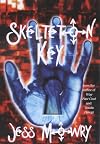
In Skeleton Key by Jess Mowry we meet Jarett Ross, a 13-year-old African-American boy in Oakland, California. Jarett has been living like a ghost for months, all alone in the darkness where no one can see or hear him. A drug-dealer put the moves on his mom, got her addicted to heroin, and now rules their small apartment in a rotting Victorian house. Jarett's only refuge from the man's brutality has been his tiny room, its door locked by a skeleton key. But, one rainy night, that protection show more fails him when the man breaks down the door. Jarett fights for his life, and the man falls to his death down a stairwell. Jarett knows that he must run away because the cops will never believe that he acted in self-defense. Bleeding and almost dead himself from the fight, Jarett stumbles through the rainy streets of West Oakland only to find himself at the rusty iron gates of an ancient graveyard. Jarett sits down and waits to die. This seems like his only escape from a world without hope. But he is saved by a homeless boy named Robbie who lives alone in the graveyard in a vine-covered crypt. Robbie seems to have given up on life outside the graveyard's walls, but he encourages Jarett to try to build a future. The cops are after Jarett, who is questioned and kept under surveillance by a white detective. But Jarett manages to get his mother into a rehab center, and with Robbie's help, Jarett begins to hope that he might live again. Meeting a girl named Martin Hawker also gives Jarett hope. Jarett finds that good people are all around, but only if you look for them. But the detective seems determined to bury Jarett in prison, and Jarett's life is not easy. He has to pay the rent and find enough to eat. But he can't legally work because he's only 13. The law won't let him work to make money, but he could always sell crack, which would make more money than any real job. On top of all his other problems he has to deal with that descision. Life for a poor black kid seems so hard. Why not just give up and join Robbie forever in a peaceful place of the dead?
This book begins with a violent scene of Jarett being attacked by a man and fighting for his life. But there are a lot of gentle scenes in the book, and Jarett learns how to love people. Learning to love can be hard when you haven't had much in your life. Jarett learns a lot of other things too. Like many black kids he hates cops, but he finds that not all cops are bad. There are many supernatural, spooky, and ghostly elements to this story. There is also a mysterious older boy who runs a funeral home. show less
This book begins with a violent scene of Jarett being attacked by a man and fighting for his life. But there are a lot of gentle scenes in the book, and Jarett learns how to love people. Learning to love can be hard when you haven't had much in your life. Jarett learns a lot of other things too. Like many black kids he hates cops, but he finds that not all cops are bad. There are many supernatural, spooky, and ghostly elements to this story. There is also a mysterious older boy who runs a funeral home. show less

In Voodu Dawgz by Jess Mowry, it is said that "evil always lingers in a land where men have enslaved other men." This evil is discovered by Kodi Carver, a 14-year-old African-American boy from Cleveland, Ohio, who spends his summers in the Old French Quarter of New Orleans. There with Raney Douglas, his alligator-wrestling, bayou cousin, he helps his magical Aunt Simone with Voodu ceremonies for tourists in his aunt's haunted house. By day, Kodi and Raney cruise the hot steamy streets of the show more Old French Quarter, where other kids sell Voodoo charms and vampire teeth, or dance for money. By night, Kodi and Raney become Voodoo boys in loincloths and bones. The audience thinks it's all showtime, but a lot of the magic is real. Kodi is his aunt's apprentice, but he doesn't always do his magic homework or study his Voodoo lessons, which sometimes gets him in trouble. On the earthly level, Kodi's father believes that his son is safer in New Orleans than in the violent neighborhoods of Cleveland. But Kodi is almost capped on his aunt's doorstep by an eight-year-old banger named Newton, who was sent out to kill to prove himself worthy of membership in a gang called The Skeleton Crew. Kodi and Raney capture Newton. For awhile they don't trust him and chain him to a bed with an ancient slave collar. But then Newton sees that gang-banging is stupid. Then, Kodi and his posse of Voodu Dawgz, including a young street dancer, a girl who works in an ice-cream shop, and a mysterious Vampire-boy, have to fight a ghost and real bullets to save themselves, as well as the thugs who are trying to kill them.
This is a fast-paced and exciting book that combines ghosts and magic with real world problems of innercity kids. The characters are real kids like you'd meet on the street. Besides fighting ghosts (not all ghosts are bad) they have all the usual problems of being young teens, like meeting girls and making money. There is also a lot of history in this book and you learn a lot without even knowing you did. The descriptions of the Old French Quarter make you see what it's like there, and you learn things like why oven tombs are called oven tombs, why people aren't buried underground in New Orleans, and why Marie Laveau still gets mail even though she's been dead for 200 years. show less
This is a fast-paced and exciting book that combines ghosts and magic with real world problems of innercity kids. The characters are real kids like you'd meet on the street. Besides fighting ghosts (not all ghosts are bad) they have all the usual problems of being young teens, like meeting girls and making money. There is also a lot of history in this book and you learn a lot without even knowing you did. The descriptions of the Old French Quarter make you see what it's like there, and you learn things like why oven tombs are called oven tombs, why people aren't buried underground in New Orleans, and why Marie Laveau still gets mail even though she's been dead for 200 years. show less
Awards


You May Also Like


Associated Authors
Statistics
- Works
- 31
- Also by
- 5
- Members
- 333
- Popularity
- #71,380
- Rating
- 4.1
- Reviews
- 11
- ISBNs
- 57
- Languages
- 5
- Favorited
- 2
