
Walter Mosley
Author of Devil in a Blue Dress
About the Author
Walter Mosley was born in Los Angeles, California on January 12, 1952. He graduated from Johnson State College in Vermont. His first book, Devil in a Blue Dress, was published in 1990, won a John Creasy Award for best first novel, and was made into a motion picture starring Denzel Washington in show more 1995. He is the author of the Easy Rawlins Mystery series, the Leonid McGill Mystery series, and the Fearless Jones series. His other works include Always Outnumbered, Always Outgunned, 47, Last Days of Ptolemy Grey, and Twelve Steps toward Political Revelation. He has received numerous awards, including an O. Henry Award, the Carl Brandon Society Parallax Award, and PEN America's Lifetime Achievement Award. (Bowker Author Biography) Walter Mosley is the author of the acclaimed Easy Rawlins series of mysteries, the novels "Blue Light" and "RL's Dream", and two collections of stories featuring Socrates Fortlow, "Always Outnumbered", "Always Outgunned", for which he received the Anisfield-Wolf Award, and "Walkin' the Dog". He is a member of the board of directors of the National Book Awards and the founder of the PEN American Center's Open Book Committee. At various times in his life he has been a potter, a computer programmer, & a poet. He was born in Los Angeles & now lives in New York. (Publisher Provided) show less
Image credit: Walter Mosley on June 25, 1997 at the Guild Theatre in New York City
Series
Works by Walter Mosley
The Right Mistake: The Further Philosophical Investigations of Socrates Fortlow (2008) — Author — 224 copies, 9 reviews
Workin' on the Chain Gang: Shaking Off the Dead Hand of History (Library of Contemporary Thought) (2000) — Author — 150 copies, 1 review
The Gift of Fire / On the Head of a Pin: Two Short Novels from Crosstown to Oblivion (2012) 88 copies, 4 reviews
Black Genius: African American Solutions to African American Problems (1999) — Editor, Introduction & Contributor — 72 copies
Folding the Red Into the Black: Developing a Viable Untopia for Human Survival in the 21st Century (2016) 30 copies, 2 reviews
Mosley Walter 2 copies
Black Dog {story} 2 copies
The Mask of Sanity 1 copy
Little Brother {story} 1 copy
Pet Fly {story} 1 copy
Associated Works
All I Did Was Ask: Conversations with Writers, Actors, Musicians, and Artists (2004) — Contributor — 602 copies, 13 reviews
Dark Matter: A Century of Speculative Fiction from the African Diaspora (2000) — Contributor — 595 copies, 11 reviews
Writers on Writing: Collected Essays from the New York Times (2001) — Contributor — 482 copies, 5 reviews
The Norton Anthology of African American Literature {2nd edition} (2003) — Contributor, some editions — 283 copies, 2 reviews
Why We Write: 20 Acclaimed Authors on How and Why They Do What They Do (2013) — Contributor — 211 copies, 10 reviews
Light the Dark: Writers on Creativity, Inspiration, and the Artistic Process (2017) — Contributor — 165 copies, 5 reviews
Black Panther HC Volume 01: A Nation Under Our Feet (2017) — Introduction, some editions — 95 copies, 4 reviews
Freedom: Stories Celebrating the Universal Declaration of Human Rights (2009) — Contributor — 85 copies, 2 reviews
Black Noir: Mystery, Crime, and Suspense Fiction by African-American Writers (2009) — Contributor — 61 copies, 1 review
Shades of Black: Crime and Mystery Stories by African-American Authors (2004) — Contributor — 47 copies
The Obama Inheritance: Fifteen Stories of Conspiracy Noir (2017) — Contributor — 41 copies, 4 reviews
The Year's 25 Finest Crime and Mystery Stories: Seventh Annual Edition (1998) — Contributor — 9 copies
Left Coast Crimes: A Collection of Short Stories — Contributor — 2 copies
Tagged
Common Knowledge
- Legal name
- Mosley, Walter Ellis
- Birthdate
- 1952-01-12
- Gender
- male
- Education
- Victory Baptist day school
Alexander Hamilton High School
Goddard College
Johnson State College (BA|1977) - Occupations
- novelist
- Organizations
- Crime Writers of Color (cofounder)
- Awards and honors
- Grammy Award for Best Album Notes (2001)
Carl Brandon Society Parallax Award (2006)
New York Writers Hall of Fame (2013)
Langston Hughes Medal (2014)
National Book Foundation Medal (2020)
NAACP Image Award for Outstanding Literary Work (2007, 2009, 2014, 2021) (show all 12)
Sankofa Freedom Award (2022)
Robert Kirsch Award (2019)
Anisfield Wolf Award (1998)
Mystery Writers of America Grand Master (2016)
National Book Foundation Medal for Distinguished Contribution to American Letters (2020)
Diamond Dagger (2023) - Nationality
- USA
- Birthplace
- Los Angeles, California, USA
- Places of residence
- New York, New York, USA
- Associated Place (for map)
- USA
Members
Reviews
Folding the Red Into the Black: Developing a Viable Untopia for Human Survival in the 21st Century by Walter Mosley

Before Walter Mosley became a writer of detective fiction, he spent several years working towards a graduate degree in political philosophy, giving up after coming to the conclusion that the ultimate end for that pursuit was to have a faculty position teaching some obscure and meaningless courses on some obscure subject, which, he realized was not something he wanted for himself.
But after establishing himself as a famous and well compensated fiction writer, he still had ideas from his show more coursework knocking around in his head, and took the opportunity to write this book to organize and share those ideas.
He introduces the term "untopia" to describe his vision for a more balanced society—rather than striving for an impossible utopian world, he suggests working toward a world that strengthens some "socialist" ideas, such as basic human rights (cf., the UN's Declaration of Human Rights), but adding in some basic universal income supports, government subsidy of basic foodstuffs, free education from K-12 and six additional years of university or trade school, free medical care, and access to decent and cheap public housing. Businesses would be expected to pay significant taxes and have limitations on their ability to export jobs to countries with lower wages, a flat tax would be imposed on everyone, rich or poor, and, simultaneously, budding capitalists would be encouraged to start businesses and protected from attempts by established businesses to crush them through legal means (he uses as an example kids selling candy outside stores selling the same candy for lower prices, or someone selling hot dogs in front of a restaurant).
His view of perfect socialism is some sort of hive species, such as termites, ants, or bees, where each member automatically works together for the good of the community, taking what they need to live and providing labor for whatever need arises, suppressing all individuality. He also defines perfect unfettered capitalism as a machine to produce profits from labor without any concern for the rights or well-being of the people providing that labor—too old or sick to work? Too bad for you. (Arguably, that's pretty close to what we have now, bolstered by the ability of capitalists to use their money and power to bend government policies to their benefit, and the prioritization of profit for the shareholders while ignoring any sort of responsibility for the well-being of employees or the communities where they operate.)
From my perspective, his view of socialism is far too limited and negative, and his ideas about moderating capitalism and the megarich are way too generous. I would hope that it's possible to maintain and even encourage communal ideals _and_ individuality and freedom of expression, but I'm much less sanguine that even his limited capitalism wouldn't continue the corruption and exploitation we see now, even if reforms change some of the specific mechanisms used.
In some ways his vision is similar to the one my friends and I came up with in our naïve way from reading Robert Anton Wilson and progressive science fiction in high school, but I think we posited a much more hopeful world than the one Mosley imagines, one where eliminating the need to work just to get the very basics to survive would give people the freedom to explore more satisfying pursuits.
These days I would lean heavily on Iain (M.) Banks's Culture, a mostly utopian society supported by machine intelligences and access to near unlimited resources. ("Mostly", of course, down to the Culture's interactions with other civilizations with different philosophies, some which are forced by direct conflict and some of which come from the incompatibility between the Culture's values and those of other societies.)
The Culture is fictional, of course, and relies on extrapolated and probably unattainable support systems, but even today many aspects of its world are attainable, if resources were fairly distributed rather than concentrated in the hands of a very few as they are now. Mosley's much lower aim seems to me to settle for much less than we all deserve. show less
But after establishing himself as a famous and well compensated fiction writer, he still had ideas from his show more coursework knocking around in his head, and took the opportunity to write this book to organize and share those ideas.
He introduces the term "untopia" to describe his vision for a more balanced society—rather than striving for an impossible utopian world, he suggests working toward a world that strengthens some "socialist" ideas, such as basic human rights (cf., the UN's Declaration of Human Rights), but adding in some basic universal income supports, government subsidy of basic foodstuffs, free education from K-12 and six additional years of university or trade school, free medical care, and access to decent and cheap public housing. Businesses would be expected to pay significant taxes and have limitations on their ability to export jobs to countries with lower wages, a flat tax would be imposed on everyone, rich or poor, and, simultaneously, budding capitalists would be encouraged to start businesses and protected from attempts by established businesses to crush them through legal means (he uses as an example kids selling candy outside stores selling the same candy for lower prices, or someone selling hot dogs in front of a restaurant).
His view of perfect socialism is some sort of hive species, such as termites, ants, or bees, where each member automatically works together for the good of the community, taking what they need to live and providing labor for whatever need arises, suppressing all individuality. He also defines perfect unfettered capitalism as a machine to produce profits from labor without any concern for the rights or well-being of the people providing that labor—too old or sick to work? Too bad for you. (Arguably, that's pretty close to what we have now, bolstered by the ability of capitalists to use their money and power to bend government policies to their benefit, and the prioritization of profit for the shareholders while ignoring any sort of responsibility for the well-being of employees or the communities where they operate.)
From my perspective, his view of socialism is far too limited and negative, and his ideas about moderating capitalism and the megarich are way too generous. I would hope that it's possible to maintain and even encourage communal ideals _and_ individuality and freedom of expression, but I'm much less sanguine that even his limited capitalism wouldn't continue the corruption and exploitation we see now, even if reforms change some of the specific mechanisms used.
In some ways his vision is similar to the one my friends and I came up with in our naïve way from reading Robert Anton Wilson and progressive science fiction in high school, but I think we posited a much more hopeful world than the one Mosley imagines, one where eliminating the need to work just to get the very basics to survive would give people the freedom to explore more satisfying pursuits.
These days I would lean heavily on Iain (M.) Banks's Culture, a mostly utopian society supported by machine intelligences and access to near unlimited resources. ("Mostly", of course, down to the Culture's interactions with other civilizations with different philosophies, some which are forced by direct conflict and some of which come from the incompatibility between the Culture's values and those of other societies.)
The Culture is fictional, of course, and relies on extrapolated and probably unattainable support systems, but even today many aspects of its world are attainable, if resources were fairly distributed rather than concentrated in the hands of a very few as they are now. Mosley's much lower aim seems to me to settle for much less than we all deserve. show less
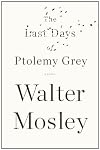
Ptolemy Grey is almost past the point of no return on a decline into poverty, dementia and filth. His mind doesn’t play straight with him, the nephew (or is it grandson?) who has taken minimal care of him by escorting him to the bank and the grocery store on a semi-regular basis hasn’t been seen now for three weeks (or is it longer?), his stock of canned tuna is nearly gone and his toilet doesn’t work. As if all that weren’t enough, whenever he ventures out of his apartment alone, a show more manic neighbor woman with a heavy habit attempts to mug him for his pension money. Just when this story seems to be too grim to continue with, Ptolemy Grey is visited by nothing less than an angel in the person of an 18-year-old orphan who has been staying with his niece. This beautiful young woman takes on the job of bringing Pitypapa Grey back to the world, to live in it fully for the time he has left. Is she too good to be true? Should we trust her, or does she have an ulterior motive? When she takes him to a doctor who is conducting an experimental drug trial, is she selling his body to the devil, or saving his soul? Oh, this is a fine piece of writing. If you don’t love Ptolemy Grey and hold your breath waiting to see if he will rise to the final challenge he sets up for himself, look to your own soul. It needs your attention. show less
 This review was written for LibraryThing Early Reviewers.
He only had one chair, and that had a book, a glass of water, and three stones he’d found that day at the park on it. They were blond stones, a color he’d never seen in rock and so he picked them up and brought them home, to be with them for a while.
That’s exactly why I read Walter Mosley -- to “be awhile” with his characters, whose situations and moral complexities I always think I haven’t seen, and whose unfamiliarity always softens into a fond recognition.
Here it’s 2006 and show more 91-year-old Ptolemy Grey lives alone in squalor in south-central LA. He has a small pension, he has a radio and a TV tuned 24/7 to a dueling background of classical music and cable news, and he has sporadic contact with extended family two and three generations down the line. But his home and mind have declined since his wife died decades ago, and now dementia keeps him obsessed about the ages-ago deaths of a childhood friend in a house fire and the lynching of a beloved mentor. So when another loved one dies in street violence, and a new young friend awakens Ptolemy's spirit, he embarks on a mission to protect his loved ones before his own time comes.
Mosley narrates almost completely in scenes here -- from Ptolemy’s perspective, a mix of confusion and distraction co-mingled with vestiges of philosopher and keen observer. A key plot point about experimental drugs did require a suspension of disbelief ... or maybe it just required me to fully enter a world where the rules don’t resemble the ones I know, and to appreciate the point of this book: being awhile with this man in that world. I loved every page of it.
(Review based on an advance reading copy provided by the publisher.) show less
That’s exactly why I read Walter Mosley -- to “be awhile” with his characters, whose situations and moral complexities I always think I haven’t seen, and whose unfamiliarity always softens into a fond recognition.
Here it’s 2006 and show more 91-year-old Ptolemy Grey lives alone in squalor in south-central LA. He has a small pension, he has a radio and a TV tuned 24/7 to a dueling background of classical music and cable news, and he has sporadic contact with extended family two and three generations down the line. But his home and mind have declined since his wife died decades ago, and now dementia keeps him obsessed about the ages-ago deaths of a childhood friend in a house fire and the lynching of a beloved mentor. So when another loved one dies in street violence, and a new young friend awakens Ptolemy's spirit, he embarks on a mission to protect his loved ones before his own time comes.
Mosley narrates almost completely in scenes here -- from Ptolemy’s perspective, a mix of confusion and distraction co-mingled with vestiges of philosopher and keen observer. A key plot point about experimental drugs did require a suspension of disbelief ... or maybe it just required me to fully enter a world where the rules don’t resemble the ones I know, and to appreciate the point of this book: being awhile with this man in that world. I loved every page of it.
(Review based on an advance reading copy provided by the publisher.) show less
Walter Mosley has two currents in which his books are found. One, the Easy Rawlins detective stories, have the funky elegance of Chandler; the other, in which black men have the names of ancient Greeks, is his own, and is the more valuable of the two. This book falls into the second group, and is difficult to speak of because the book itself disciplines one's language. It tells its story clearly but in a hushed rustle; it performs the terrible tricks of memory in an aging mind whose loved show more people have died. Not only do you believe this voice, this mind, you become it. A resonant book, whose resonance is achieved by what's left out as well as what's included. show less
Lists
to get (1)
Library TBR (1)
Page Turners (1)
Black Authors (2)
Edgar Award (1)
First Novels (1)
A Novel Cure (1)
Best Audiobooks (1)
Diverse Horror (1)
Awards


You May Also Like


Associated Authors
Statistics
- Works
- 106
- Also by
- 52
- Members
- 26,682
- Popularity
- #779
- Rating
- 3.7
- Reviews
- 835
- ISBNs
- 939
- Languages
- 16
- Favorited
- 87


