
Mary Elizabeth Braddon (1835–1915)
Author of Lady Audley's Secret
About the Author
Mary Elizabeth Braddon, the daughter of a solicitor, was educated privately. As a young woman, she acted under an assumed name for three years in order to support herself and her mother. In 1860 she met John Maxwell, a publisher of periodicals, whose wife was in an asylum for the insane. Braddon show more acted as stepmother to Maxwell's five children and bore him five illegitimate children before the couple married, in 1874, when Maxwell's wife died. Braddon's most famous novel, Lady Audley's Secret (1862), was first published serially in Robin Goodfellow and The Sixpenny Magazine. One of the earliest sensationalist novels, it sold nearly one million copies during Braddon's lifetime. Its plot involves bigamy, the protagonist's desertion of her child, her murder of her first husband, and her thoughts of poisoning her second husband. The novel shocked and outraged her contemporary, Margaret Oliphant, who said Braddon had invented "the fair-haired demon of modern fiction." Throughout her long literary career, during which she wrote more than 80 novels and edited several magazines, Braddon was often excoriated for her penchant for sensationalizing violence, crime, and sexual indiscretion. Nevertheless, Braddon had many well-known devotees, among them William Makepeace Thackeray, Edward Bulwer-Lytton, and Robert Louis Stevenson. Braddon died in 1915. (Bowker Author Biography) show less
Works by Mary Elizabeth Braddon
The Face in the Glass: The Gothic Tales of Mary Elizabeth Braddon (Tales of the Weird) (2014) 91 copies, 2 reviews
The Collected Supernatural and Weird Fiction of Mary Elizabeth Braddon: Volume 1 (2010) 7 copies, 1 review
Rupert Godwin 3 copies
Flower and Weed and Other Tales 2 copies
Like and Unlike 2 copies
The Works of Mary Elizabeth Braddon 2 copies
Joshua Haggard's Daughter 2 copies
Buio 2 copies
Strangers and Pilgrims 2 copies
Lost for Love 2 copies
Asphodel 2 copies
A Strange World 1 copy
An Open Verdict 1 copy
Hostages to Fortune 1 copy
All Along the River 1 copy
The Lady's Mile 1 copy
The White House 1 copy
The Little Woman in Black 1 copy
The Conflict 1 copy
The Day Will Come A Novel 1 copy
Vixen, Complete 1 copy
Wyllard's Weird: A Novel 1 copy
Only a Woman 1 copy
The doctor's wife, a NOVEL By: the author of "Lady Audley's secret". / Mary Elizabeth Braddon / 1 copy
The Blue Lenses / Eveline's Visitant — Author — 1 copy
Belgravia, Vol. 36: An Illustrated London Magazine; July to October, 1878 (Classic Reprint) (2018) 1 copy
Associated Works
Dracula's Guest: A Connoisseur's Collection of Victorian Vampire Stories (2010) — Contributor — 318 copies, 39 reviews
The Vampire Archives: The Most Complete Volume of Vampire Tales Ever Published (2007) — Contributor — 217 copies, 5 reviews
The Penguin Book of Ghost Stories: From Elizabeth Gaskell to Ambrose Bierce (2010) — Contributor — 188 copies, 4 reviews
The Mammoth Book of Victorian and Edwardian Ghost Stories (1995) — Contributor — 174 copies, 4 reviews
Queens of the Abyss: Lost Stories from the Women of the Weird (2020) — Contributor — 156 copies, 4 reviews
The Rivals of Sherlock Holmes: A Collection of Victorian Detective Tales (2008) — Contributor — 141 copies, 1 review
In the Shadow of Agatha Christie: Classic Crime Fiction by Forgotten Female Writers, 1850-1917 (2018) — Contributor — 108 copies, 8 reviews
Chamber of Horrors: Great Tales of Terror and the Supernatural (1984) — Contributor — 71 copies, 1 review
The Darker Sex: Tales of the Supernatural and Macabre by Victorian Women Writers (2009) — Contributor — 55 copies, 2 reviews
The Rivals of Sherlock Holmes: The Greatest Detective Stories: 1837-1914 (2019) — Contributor — 39 copies
The Gentlewomen of Evil: An Anthology of Rare Supernatural Stories from the Pens of Victorian Ladies (1967) — Contributor — 29 copies
Ladies of Horror: Two Centuries of Supernatural Stories by the Gentle Sex (1971) — Contributor — 29 copies
Sisters in Crime : Early Crime and Mystery Stories by Women (2013) — Contributor — 21 copies, 1 review
The Third Ghost Story Megapack: 26 Classic Ghost Stories (2013) — Contributor — 18 copies, 2 reviews
A Serious Occupation: Literary Criticism by Victorian Women Writers (2003) — Contributor — 15 copies
The Graphic Canon of Crime & Mystery, Vol. 2: From Salome to Edgar Allan Poe to The Silence of the Lambs (2021) — Contributor — 14 copies
Murder by Gaslight: Victorian Tales — Contributor — 4 copies
The Lady Chillers: Classic Ghost and Horror Stories by Women Authors (2014) — Contributor — 4 copies
The Wimbourne Book of Victorian Ghost Stories (Annotated): Volume 10 (2018) — Contributor — 3 copies
Tagged
Common Knowledge
- Canonical name
- Braddon, M.E.
- Legal name
- Braddon, Mary Elizabeth
- Other names
- White, Babington
- Birthdate
- 1835-10-04
- Date of death
- 1915-02-04
- Gender
- female
- Education
- privately educated
- Occupations
- actor
novelist
short story writer
editor - Relationships
- Maxwell, W. B. (son)
- Short biography
- Mary Elizabeth Braddon was born in London and her parents separated when she was five years old. Mary worked as an actress to support herself and her mother. In 1860, she met John Maxwell, a publisher, and began living with him despite the fact that he was married with five children; his wife was in an asylum in Ireland. Mary acted as a stepmother to the children until 1874, when Maxwell's wife died and they were able to marry. They had six children together, including the future writer William Babington (W.B.) Maxwell. Mary was an extremely prolific writer, producing more than 80 novels and numerous short stories. In 1866, she founded Belgravia, a lavishly illustrated magazine that published serialized novels, poems, travel narratives, and essays on fashion, history and science.
- Nationality
- UK
- Birthplace
- London, Middlesex, England, UK
- Places of residence
- London, Middlesex, England, UK
- Place of death
- Richmond, Surrey, England, UK
- Burial location
- Richmond Cemetery, Richmond, Surrey, England, UK
- Map Location
- England, UK
Members
Discussions
July 2025: Mary Elizabeth Braddon in Monthly Author Reads (July 2025)
June 2022: Mary Elizabeth Braddon in Monthly Author Reads (June 2022)
Victorian Q1 Read-Along: Lady Audley's Secret in Club Read 2022 (April 2022)
Group read: Lady Audley's Secret by Mary Elizabeth Braddon in Virago Modern Classics (May 2020)
The Trail Of The Serpent by Mary Elizabeth Braddon - lyzard tutoring SqueakyChu in 75 Books Challenge for 2013 (March 2015)
June: Reading Mary Elizabeth Braddon in Monthly Author Reads (June 2011)
Reviews

Judging by the title, it would be easy for a person to assume that the secret would remain one for the reader for most of the book. Usually that's how mystery novels are set up and it's what we've come to expect. Not so with this excellent example of the Victorian sensation novel. The real deal is the secret's effect on the people in Lady Audley's life and what will happen if it's discovered. For the reader, it's an obvious one, but for the characters (especially Robert Audley) it is far show more more incohate and proof lies just out of reach.
Before getting into plot/spoiler territory (although really, if you have any sense, nothing in this review will spoil the story for you, especially if you've read this type of novel before) I want to talk about the writing for a bit. I liked it and there are lots of highlighted passsages in my ebook copy. The way things are alluded to and hinted at is pretty masterful for a potboiler type novel; there's an old well, poison, a bruise, all wonderful hints of things to come if you can spot them. And then there's Braddon's characterizations. I loved some of her subtle and sly ways of showing how people really are. Here's one that combines both -
"If any one could at that moment have told the young barrister that so simple a thing as his cousin's brief letter would one day come to be a link in that terrible chain of evidence afterward to be slowly forged in the only criminal case in which he was ever to be concerned, perhaps Mr. Robert Audley would have lifted his eyebrows a little higher than usual."
Isn't that grand? Not only does it hint at the complex shenanigans to come, but draws Robert perfectly as a man who is not very excitable and plays things close to the vest. Lovely. Throughout the first few chapters, Lady A is described as childish and innocent, lovely and coquettish. Everyone is thoroughly captivated by her and she knows it.
"She had been the chief attraction of the race-course, and was wearied out by the exertion of fascinating half the county."
Even though the tale is told by some unknown third party who always refers to Lady A as my lady, we get a lot of Robert's unspoken thoughts. Most of them are quite revealing in the way he thinks about himself and although some of it is negative, he doesn't seem to have our modern self-loathing when admitting a character flaw.
"If the baker can't find her, how should I find her?" he thought, despairingly. "If a resolute, sanguine, active and energetic creature such as the baker, fail to achieve this business, how can a lymphatic wretch like me hope to accomplish it? Where the baker has been defeated, what preposterous folly it would be for me to try to succeed."
Ah Robert, our reluctant hero. How gallantly and doggedly he pursues the mystery of George Talboys's disappearance. Eventually he has to go see George's estranged father. It only takes a few lines for us to understand his character -
"He was a square, pale-faced man of almost forty, and had the appearance of having outlived every emotion to which humanity is subject."
"The man bowed and retired, opening and shutting the door as cautiously as if he were taking a liberty in doing it at all, or as if the respect due to Mr. Talboys demanded his walking straight through the oaken panel like a ghost in a German story."
Phew. No wonder the guy was so outraged when George married a pauper.
In the end though, Lady Audley is not quite the villain I expected. I kept hoping that she'd turn out to be really vicious and conniving underneath that sunny exterior. It's hinted that she is, but really she's just a manipulative girl who learned early that her beauty can be used as a weapon.
"Did she remember the day in which that fairy dower of beauty had first taught her to be selfish and cruel, indifferent to the joys and sorrows of others, cold-hearted and capricious, greedy of admiration, exacting and tyrannical with that petty woman's tyranny which is the worst of despotism? Did she trace every sin of her life back to its true source? and did she discover that poisoned fountain in her own exaggerated estimate of the value of a pretty face?"
That sums her up. Even her more evil deeds were nearly happenstance; like the fire at the Marks's inn. And really, who can blame her? George is cast as a hero of sorts for the unlikely combination of leaving his wife and child with only a curt note as goodbye, cutting off all communication with her and then returning to her with his fortune newly made. So what? What the hell was she supposed to do under those circumstances? Left with no money, no position, no support and a kid to raise, I'm not surprised she lit out for greener pastures. Having been deserted by her husband the only thing she could do was find another. Granted, she shouldn't have left her little boy, but then again, so did George and he wasn't the bad guy of the story.
In the end though, she's stripped of any will other than the pursuit of betrayal and lies and is branded as a madwoman (for the audacity to act to improve her station, oh the horror!) and sent to a refined institution where she can be locked up and made safe for the rest of the world. It's a fine testament to just how powerless and selectively dehuamanized women were in those times. I'm not going to dwell on that though because it makes an otherwise riveting and interesting story a maddeningly frustrating one. That would be an unfair assessment because I really liked the characters, setting, story and the way it was told. Yes, the whole thing arises from the dictates of (as someone else noted) an elaborate and artificial plot, but that's what makes it a terrific work of fiction. It's interesting, full of Victorian pop-culture and atmosphere, uses witty and insightful language, and ultimately ends with a somewhat saccharine scene of domestic bliss. What's not to like? I think there will be more Braddon novels in my future.
Read more: http://thebookmarque.blogspot.com/2012/08/lady-audleys-secret-by-me-braddon-1862... show less
Before getting into plot/spoiler territory (although really, if you have any sense, nothing in this review will spoil the story for you, especially if you've read this type of novel before) I want to talk about the writing for a bit. I liked it and there are lots of highlighted passsages in my ebook copy. The way things are alluded to and hinted at is pretty masterful for a potboiler type novel; there's an old well, poison, a bruise, all wonderful hints of things to come if you can spot them. And then there's Braddon's characterizations. I loved some of her subtle and sly ways of showing how people really are. Here's one that combines both -
"If any one could at that moment have told the young barrister that so simple a thing as his cousin's brief letter would one day come to be a link in that terrible chain of evidence afterward to be slowly forged in the only criminal case in which he was ever to be concerned, perhaps Mr. Robert Audley would have lifted his eyebrows a little higher than usual."
Isn't that grand? Not only does it hint at the complex shenanigans to come, but draws Robert perfectly as a man who is not very excitable and plays things close to the vest. Lovely. Throughout the first few chapters, Lady A is described as childish and innocent, lovely and coquettish. Everyone is thoroughly captivated by her and she knows it.
"She had been the chief attraction of the race-course, and was wearied out by the exertion of fascinating half the county."
Even though the tale is told by some unknown third party who always refers to Lady A as my lady, we get a lot of Robert's unspoken thoughts. Most of them are quite revealing in the way he thinks about himself and although some of it is negative, he doesn't seem to have our modern self-loathing when admitting a character flaw.
"If the baker can't find her, how should I find her?" he thought, despairingly. "If a resolute, sanguine, active and energetic creature such as the baker, fail to achieve this business, how can a lymphatic wretch like me hope to accomplish it? Where the baker has been defeated, what preposterous folly it would be for me to try to succeed."
Ah Robert, our reluctant hero. How gallantly and doggedly he pursues the mystery of George Talboys's disappearance. Eventually he has to go see George's estranged father. It only takes a few lines for us to understand his character -
"He was a square, pale-faced man of almost forty, and had the appearance of having outlived every emotion to which humanity is subject."
"The man bowed and retired, opening and shutting the door as cautiously as if he were taking a liberty in doing it at all, or as if the respect due to Mr. Talboys demanded his walking straight through the oaken panel like a ghost in a German story."
Phew. No wonder the guy was so outraged when George married a pauper.
In the end though, Lady Audley is not quite the villain I expected. I kept hoping that she'd turn out to be really vicious and conniving underneath that sunny exterior. It's hinted that she is, but really she's just a manipulative girl who learned early that her beauty can be used as a weapon.
"Did she remember the day in which that fairy dower of beauty had first taught her to be selfish and cruel, indifferent to the joys and sorrows of others, cold-hearted and capricious, greedy of admiration, exacting and tyrannical with that petty woman's tyranny which is the worst of despotism? Did she trace every sin of her life back to its true source? and did she discover that poisoned fountain in her own exaggerated estimate of the value of a pretty face?"
That sums her up. Even her more evil deeds were nearly happenstance; like the fire at the Marks's inn. And really, who can blame her? George is cast as a hero of sorts for the unlikely combination of leaving his wife and child with only a curt note as goodbye, cutting off all communication with her and then returning to her with his fortune newly made. So what? What the hell was she supposed to do under those circumstances? Left with no money, no position, no support and a kid to raise, I'm not surprised she lit out for greener pastures. Having been deserted by her husband the only thing she could do was find another. Granted, she shouldn't have left her little boy, but then again, so did George and he wasn't the bad guy of the story.
In the end though, she's stripped of any will other than the pursuit of betrayal and lies and is branded as a madwoman (for the audacity to act to improve her station, oh the horror!) and sent to a refined institution where she can be locked up and made safe for the rest of the world. It's a fine testament to just how powerless and selectively dehuamanized women were in those times. I'm not going to dwell on that though because it makes an otherwise riveting and interesting story a maddeningly frustrating one. That would be an unfair assessment because I really liked the characters, setting, story and the way it was told. Yes, the whole thing arises from the dictates of (as someone else noted) an elaborate and artificial plot, but that's what makes it a terrific work of fiction. It's interesting, full of Victorian pop-culture and atmosphere, uses witty and insightful language, and ultimately ends with a somewhat saccharine scene of domestic bliss. What's not to like? I think there will be more Braddon novels in my future.
Read more: http://thebookmarque.blogspot.com/2012/08/lady-audleys-secret-by-me-braddon-1862... show less
The Face in the Glass: The Gothic Tales of Mary Elizabeth Braddon (British Library Tales of the Weird Book 7) by Mary Elizabeth Braddon
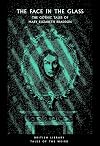
Mary Elizabeth Braddon is to my mind one of the most underrated 19th century writers. This is a collection of her ghost stories, a couple at least of which I have previously read in other anthologies. They are generally very well written and quite atmospheric, though some of them do get a bit repetitive when read in order in a collection like this, for example the idea of apparitions or sights appearing to people at the time when they or someone they love is at that moment or is shortly to show more be dying. I thought the most effective were probably The Shadow in the Corner, The Face in the Glass, The Island of Old Faces and Herself. show less
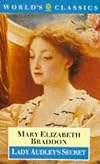
This isn’t by any means the most sensational of Braddon’s novels (her Trail of the Serpent, for instance, is much more infused with blood, menace, and general gothic yumminess) but it delivers plenty of entertainment for all that, while simultaneously managing to be a lot more thought-provoking.
Lady Audley’s “secret” is actually pretty tame by today’s standards, and is revealed early in the novel. The rest of the chapters then focus on how protecting her secret drives her to show more increasingly more sensational extremes, and the process by which her crimes are gradually revealed through a combination of investigation, coincidence, and plain bad luck. The “detective” of the piece is Lord Audley's nephew, a likeable but unapologetically lazy fellow who, over the course of the investigation, gradually becomes more decisive, proactive, and ambitious, a progression that readers of Braddon’s day would have found highly morally satisfying. The supporting cast includes a feisty cousin, a pair of scheming servants, smitten lovers, mad mothers, rascally husbands, and unprincipled fathers; the ambiance incorporates such satisfyingly gothic tropes as seedy inns, overgrown gardens, candlelit manor houses, and ominously unattended wells.
But Lady Audley is the true sensation of the story – the one non-stereotype among this host of sensational-fiction prerequisites. She’s beautiful, kind, and loving – but also sensual, greedy, scheming, and incredibly quick-witted … In other words, pretty much totally unlike any fictional female protagonist of the day. Her crimes, moreover, are relatively more manly (greed, self-preservation) than womanly (passion). It’s as if Braddon has deliberately set out to challenge the Victorian notion of women as either angels or whores by creating a villainess who possesses the qualities of both, and then posing the question: how do you appropriately judge and punish a woman whose crimes might be considered – if not justifiable – then at least understandable, predictable, if they were committed by a man?
In its original form, this was published as a serial, with new chapters released over time. This likely accounts for the structure of the tale, in which initial chapters stuffed with scandal and innuendo (designed to hook the reader) are followed by more meandering chapters in which the main investigation shares screen time with subplots involving blackmail and romance (designed to sustain interest), culminating in a denouement designed to deliver closure and satisfaction to the tale’s loyal readers. Except that “satisfactory” is a relative term in this instance, because Victorian literature doesn’t extend so far as suggesting “appropriate” consequences for a woman of Lady Audley’s innovations. Braddon’s solution at once challenges Victorian gender norms – especially the conventions that regard women as possessions, associate beauty with goodness, and hold women accountable to impossible standards of virtue and self-sacrifice - while simultaneously acknowledging the period’s legal and moral constraints.
In summary - if you're looking for over-the-top gothic horror, you may wish to give this a pass; but if you don't mind your sensational stories leavened by a bit of social commentary and seasoned with a generous measure of deliciously sly wit, then you've come to the right place. show less
Lady Audley’s “secret” is actually pretty tame by today’s standards, and is revealed early in the novel. The rest of the chapters then focus on how protecting her secret drives her to show more increasingly more sensational extremes, and the process by which her crimes are gradually revealed through a combination of investigation, coincidence, and plain bad luck. The “detective” of the piece is Lord Audley's nephew, a likeable but unapologetically lazy fellow who, over the course of the investigation, gradually becomes more decisive, proactive, and ambitious, a progression that readers of Braddon’s day would have found highly morally satisfying. The supporting cast includes a feisty cousin, a pair of scheming servants, smitten lovers, mad mothers, rascally husbands, and unprincipled fathers; the ambiance incorporates such satisfyingly gothic tropes as seedy inns, overgrown gardens, candlelit manor houses, and ominously unattended wells.
But Lady Audley is the true sensation of the story – the one non-stereotype among this host of sensational-fiction prerequisites. She’s beautiful, kind, and loving – but also sensual, greedy, scheming, and incredibly quick-witted … In other words, pretty much totally unlike any fictional female protagonist of the day. Her crimes, moreover, are relatively more manly (greed, self-preservation) than womanly (passion). It’s as if Braddon has deliberately set out to challenge the Victorian notion of women as either angels or whores by creating a villainess who possesses the qualities of both, and then posing the question: how do you appropriately judge and punish a woman whose crimes might be considered – if not justifiable – then at least understandable, predictable, if they were committed by a man?
In its original form, this was published as a serial, with new chapters released over time. This likely accounts for the structure of the tale, in which initial chapters stuffed with scandal and innuendo (designed to hook the reader) are followed by more meandering chapters in which the main investigation shares screen time with subplots involving blackmail and romance (designed to sustain interest), culminating in a denouement designed to deliver closure and satisfaction to the tale’s loyal readers. Except that “satisfactory” is a relative term in this instance, because Victorian literature doesn’t extend so far as suggesting “appropriate” consequences for a woman of Lady Audley’s innovations. Braddon’s solution at once challenges Victorian gender norms – especially the conventions that regard women as possessions, associate beauty with goodness, and hold women accountable to impossible standards of virtue and self-sacrifice - while simultaneously acknowledging the period’s legal and moral constraints.
In summary - if you're looking for over-the-top gothic horror, you may wish to give this a pass; but if you don't mind your sensational stories leavened by a bit of social commentary and seasoned with a generous measure of deliciously sly wit, then you've come to the right place. show less
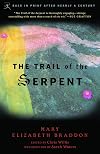
OMG - where has Mary Elizabeth Braddon been all my life? She was a contemporary of Dickens, the precursor of Wilkie Collins, and (the foreward argues) instrumental in establishing the detective fiction genre - so you'd think her works would be more widely available. Alas, no - female writers of "sensational fiction" weren't taken seriously back in the 19th century and didn't fare much better in the 20th century, so her works (excepting her "Lady Audley's Secret") gradually passed out of show more print. Thank you, Modern Library, for bringing back this gem!
"The Trail of the Serpent" has everything you could want in a "sensational novel" of the Victorian era: foundlings, wastrels, prodigal sons, identical twins separated at birth, bigamy, greed, love, hate, secret marriages, murder, madness, depravity, alchemy, secret societies, abject poverty, egregious wealth, a mute detective (how's that for "woke"?), and practically every other melodramatic trope you can imagine, all tied together by the machinations of a gloriously clever, deliciously evil villain determined to do whatever it takes to rise from obscurity to the heights of European society.
Which could be a hot mess in the hands of a schlock, but make no mistake about it - Braddon can write! She's intelligent, witty, and a gifted storyteller. Yes, her plot is sensational, but it's also stuffed with biting social commentary, delicious satire/irony, and laugh-out-loud comedic set-pieces.
Kirkus Review calls this "exuberantly campy" and it's hard to improve on this as a two-word summary. But Trail of the Serpent isn't just fun; it marks an important transition from the sensational, serialized novels of the day to the more serious literary writing of Dickens and his ilk. So go ahead and read it for the fun, then boast about reading it for the literary cred! show less
"The Trail of the Serpent" has everything you could want in a "sensational novel" of the Victorian era: foundlings, wastrels, prodigal sons, identical twins separated at birth, bigamy, greed, love, hate, secret marriages, murder, madness, depravity, alchemy, secret societies, abject poverty, egregious wealth, a mute detective (how's that for "woke"?), and practically every other melodramatic trope you can imagine, all tied together by the machinations of a gloriously clever, deliciously evil villain determined to do whatever it takes to rise from obscurity to the heights of European society.
Which could be a hot mess in the hands of a schlock, but make no mistake about it - Braddon can write! She's intelligent, witty, and a gifted storyteller. Yes, her plot is sensational, but it's also stuffed with biting social commentary, delicious satire/irony, and laugh-out-loud comedic set-pieces.
Kirkus Review calls this "exuberantly campy" and it's hard to improve on this as a two-word summary. But Trail of the Serpent isn't just fun; it marks an important transition from the sensational, serialized novels of the day to the more serious literary writing of Dickens and his ilk. So go ahead and read it for the fun, then boast about reading it for the literary cred! show less
Lists
Reading LIst (1)
el (1)
Awards


You May Also Like


Associated Authors
Statistics
- Works
- 153
- Also by
- 84
- Members
- 5,037
- Popularity
- #4,963
- Rating
- 3.7
- Reviews
- 168
- ISBNs
- 551
- Languages
- 8
- Favorited
- 27


