
Edyth Bulbring
Author of A Month With April-May
About the Author
Series
Works by Edyth Bulbring
Tagged
Common Knowledge
- Gender
- female
- Education
- University of Cape Town, South Africa
- Nationality
- South Africa
- Birthplace
- Boksburg, Transvaal, South Africa
- Associated Place (for map)
- Transvaal, South Africa
Members
Reviews

I wish Edyth Bulbring had been writing when I was young, but being a good 40 years older than her usual target market has not prevented me from enjoying her books thoroughly.
The Snitch takes us an environment at which Bulbring excels, the South African Middle school - that hive of teenagers, teachers and trouble.
Thirteen-year-old Ben Smith illustrates the 18 rules of surviving senior school, and the dire consequences of breaking Rule # 15: Never Tell Your Mom Stuff. The whole school turns show more against him when he is accused of being a snitch: a serious topic, but brilliantly written and laugh-out-loud funny show less
The Snitch takes us an environment at which Bulbring excels, the South African Middle school - that hive of teenagers, teachers and trouble.
Thirteen-year-old Ben Smith illustrates the 18 rules of surviving senior school, and the dire consequences of breaking Rule # 15: Never Tell Your Mom Stuff. The whole school turns show more against him when he is accused of being a snitch: a serious topic, but brilliantly written and laugh-out-loud funny show less

Edyth Bulbring is already South Africa's premier story-teller for young adults, and her previous books have had the ability to bring tears of laughter while tackling serious issues, all in a specifically South African context. The April May series are a sheer delight, and anyone wanting something older and darker must read The Club, an unsettling glimpse of what might happen behind the elegant stone walls of Johannesburg's private schools.
The Mark is something completely different: gone is show more the familiar sense of place, the particular flow of youthful South African English with it's trademark buzzwords and particular slang. The Mark is set in an unnamed place in an undated future, a post-neo-diluvian city divided by class and boasting massive inequalities.
Juliet - aka Ettie - is a teenage orphan: like her friends, she is bound to live in Slum City, and trained for purely manual labour - in her case, to be a household drudge, working in Mangeria City for The Posh. She will soon be paired with another Slum City denizen as life mates - divorce is unknown, and mates are chosen with no regard to love or compatability.
Like Apartheid South Africa, the poor of Slum City need passes, are regulated by a curfew, cannot live, love or work according to their own desires and all bear The Mark, an inerasable series of numbers like a tramp stamp at the base of their spines. Although The Posh in Mangeria City have a more comfortable existence, they too have a Mark, and their lives are also regulated as to what they may do and who they can marry.
Ettie discovers there is a resistance and thanks to being placed in the household of an influential member of the government, she is a valuable asset to them. She also falls in love with a 'locust', a policeman, chosen from the ranks of the rich and thus completely out of reach socially or romantically. Since the authorities use The Mark to track, record and coerce the population, the rebels have to destroy the system to bring freedom.
Bulbring uses a massive canvass and paints a believable society in which steam punk is married to advanced technology: although there is action and excitement, the primary focus is on the characters and their emotions, so this is never just another post-apocalyptic adventure story but something a lot deeper and more serious.
Different it may be and unexpected, but like the rest of her work it is very readable and thought provoking: teenagers will read it but it is a mistake to categorise the book as Young Adult because it has a universal appeal. show less
The Mark is something completely different: gone is show more the familiar sense of place, the particular flow of youthful South African English with it's trademark buzzwords and particular slang. The Mark is set in an unnamed place in an undated future, a post-neo-diluvian city divided by class and boasting massive inequalities.
Juliet - aka Ettie - is a teenage orphan: like her friends, she is bound to live in Slum City, and trained for purely manual labour - in her case, to be a household drudge, working in Mangeria City for The Posh. She will soon be paired with another Slum City denizen as life mates - divorce is unknown, and mates are chosen with no regard to love or compatability.
Like Apartheid South Africa, the poor of Slum City need passes, are regulated by a curfew, cannot live, love or work according to their own desires and all bear The Mark, an inerasable series of numbers like a tramp stamp at the base of their spines. Although The Posh in Mangeria City have a more comfortable existence, they too have a Mark, and their lives are also regulated as to what they may do and who they can marry.
Ettie discovers there is a resistance and thanks to being placed in the household of an influential member of the government, she is a valuable asset to them. She also falls in love with a 'locust', a policeman, chosen from the ranks of the rich and thus completely out of reach socially or romantically. Since the authorities use The Mark to track, record and coerce the population, the rebels have to destroy the system to bring freedom.
Bulbring uses a massive canvass and paints a believable society in which steam punk is married to advanced technology: although there is action and excitement, the primary focus is on the characters and their emotions, so this is never just another post-apocalyptic adventure story but something a lot deeper and more serious.
Different it may be and unexpected, but like the rest of her work it is very readable and thought provoking: teenagers will read it but it is a mistake to categorise the book as Young Adult because it has a universal appeal. show less
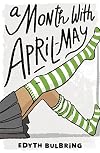
April-May [‘call me Bella’] February is one of those kids just too smart for her own good: a scholarship sees her leave her ‘rubbish school’ in Pretoria to enroll in Jozi’s larney ‘Trinity College’, but things go wrong from the start.
April lives with her dad Fluffy, is best friends with the adenoidal Melly, and just wants to be left alone to enjoy her polony rolls and “Twilight” but her new teacher Mrs Ho has other ideas, being obsessed with irrelevancies like wearing the show more correct uniform and the school curriculum.
I devoured it in one sitting but the book passed the acid test when my teenage daughter enjoyed it too, seduced initially by Bulbring’s wit and humour but compelled to keep reading even as the story got darker by the sheer excellence of the writing. show less
April lives with her dad Fluffy, is best friends with the adenoidal Melly, and just wants to be left alone to enjoy her polony rolls and “Twilight” but her new teacher Mrs Ho has other ideas, being obsessed with irrelevancies like wearing the show more correct uniform and the school curriculum.
I devoured it in one sitting but the book passed the acid test when my teenage daughter enjoyed it too, seduced initially by Bulbring’s wit and humour but compelled to keep reading even as the story got darker by the sheer excellence of the writing. show less

Move over Jacqueline Wilson – Edyth Bulbring is the new queen of fiction for today’s pubescent, and the best news is that she is South African.
With two teenage daughters, I spend a fortune on ‘teen titles’: Phillip Pullman, Debi Gliori, Ioin Colfer, Anthony Horowitz, Jacqueline Wilson, JK Rowling – you name it, I’ve probably bought it, read it, and passed it on to my girls.
I worked with Edyth Bulbring some years ago and confess to having read her first book more out of show more curiosity than anything else: reading a book by an author you know is always something of a gamble, so I was delighted to find myself absolutely hooked after just a few pages.
This is a witty tale of catholic appeal which should bewitch teenagers everywhere despite being uniquely South African: as a refreshing change, the story does not rely on the usual clichéd props [veldt, wild animals, crime, race and history] to give it a vibrant sense of place.
Our intrepid young heroine Beatrice Wellbeloved, an independent, techno-savvy, witty and clever young Gauteng sophisticate, is the daughter of single mum Georgia, who owns a successful advertising agency.
Georgia, an unreliable, chain-smoking alcoholic, is a failure as a mother and the story begins with Beatrice scraping her mum’s vomit off the carpet on the first day of the Christmas holidays.
“The plan had been to go to Mom’s new holiday home in some trendy dorp near Cape Town for four weeks” but plans change. “It’s back to rehab for mom. I don’t know why she doesn’t buy shares in that clinic. She’s their most loyal customer. Correction: Mom is Dunkeld West Drankwinkel’s best customer.”
Beatrice is still going to spend Christmas is the new holiday home, but with her recently widowed grandmother Mavis, from ‘Pee-Eee’. “I’ve seen her like seven times in my life and half of those were when I was a baby.”
Mavis – Grummer – is a technophobe, old fashioned and a committed Christian who has nothing in common with her granddaughter. To make matters worse, when they arrive at the new house, they find it completely swamped, thanks to an overflowing geyser.
Not an auspicious start. The plumber, Art Appel, arrives with his plump nephew: “Loser’s name is Cristoffel, but I must call him Toffee. Yip! Toffee Appel, get it?” His uncle’s name is Art and his dad is Pine. “I don’t think I need to spell it out. Are these people for real?”
To add insult to injury, ‘fat kid’ Toffee adopts Beatrice as his best friend, and calls her Beat… “Beat? Like, who’s Beat? I’ll beat his head in.”
Beatrice decides her mission is to find a new husband for her grandmother, with the assistance of the adoring Toffee. “I want a sober, professional, God-fearing geriatric for Grummer so I’ll never have to see her again.”
Her first choice for Mr Perfect is book club member Alan Rodderick who “dresses like a Markham’s model. He speaks like a cell phone advert. He eats nice and neat. He’s the librarian in Hermanus…”
But Alan is gay and Beatrice has to cast her net wider. Grummer herself is no help at all, being more concerned with fighting over garden plans with Karel du Plooy the landscape gardener.
“Mr du Plooy… does hair in a big way. It sticks out of the top of his long socks. It glares at me in bristling tufts through the buttonholes of his khaki shirt and climbs all the way to the top of his neck. Can’t wait to see his back.”
The candid narrative could be called bitter-sweet, except the story is rarely bitter, and much funnier than sweet: it does deal with universal issues however and while local in context, is of international relevance.
Bulbring does not emphasis the negative, she simply presents it. Georgia is an alcoholic, who loves her daughter, and her daughter loves her, but the drinking causes problems that impact on Beatrice.
Toffee is fat while Beatrice is thin – too thin: she has control issues and is anorexic. The Group Areas Act, the water situation and the still existing Colonial intolerance also guest-star in this story.
I don’t think it is a spoiler to reveal the book has a happy ending, concluding with new beginnings and renewed hope for all the characters: witty and wonderful, The Summer of Toffee and Grummer is a rare treat. show less
With two teenage daughters, I spend a fortune on ‘teen titles’: Phillip Pullman, Debi Gliori, Ioin Colfer, Anthony Horowitz, Jacqueline Wilson, JK Rowling – you name it, I’ve probably bought it, read it, and passed it on to my girls.
I worked with Edyth Bulbring some years ago and confess to having read her first book more out of show more curiosity than anything else: reading a book by an author you know is always something of a gamble, so I was delighted to find myself absolutely hooked after just a few pages.
This is a witty tale of catholic appeal which should bewitch teenagers everywhere despite being uniquely South African: as a refreshing change, the story does not rely on the usual clichéd props [veldt, wild animals, crime, race and history] to give it a vibrant sense of place.
Our intrepid young heroine Beatrice Wellbeloved, an independent, techno-savvy, witty and clever young Gauteng sophisticate, is the daughter of single mum Georgia, who owns a successful advertising agency.
Georgia, an unreliable, chain-smoking alcoholic, is a failure as a mother and the story begins with Beatrice scraping her mum’s vomit off the carpet on the first day of the Christmas holidays.
“The plan had been to go to Mom’s new holiday home in some trendy dorp near Cape Town for four weeks” but plans change. “It’s back to rehab for mom. I don’t know why she doesn’t buy shares in that clinic. She’s their most loyal customer. Correction: Mom is Dunkeld West Drankwinkel’s best customer.”
Beatrice is still going to spend Christmas is the new holiday home, but with her recently widowed grandmother Mavis, from ‘Pee-Eee’. “I’ve seen her like seven times in my life and half of those were when I was a baby.”
Mavis – Grummer – is a technophobe, old fashioned and a committed Christian who has nothing in common with her granddaughter. To make matters worse, when they arrive at the new house, they find it completely swamped, thanks to an overflowing geyser.
Not an auspicious start. The plumber, Art Appel, arrives with his plump nephew: “Loser’s name is Cristoffel, but I must call him Toffee. Yip! Toffee Appel, get it?” His uncle’s name is Art and his dad is Pine. “I don’t think I need to spell it out. Are these people for real?”
To add insult to injury, ‘fat kid’ Toffee adopts Beatrice as his best friend, and calls her Beat… “Beat? Like, who’s Beat? I’ll beat his head in.”
Beatrice decides her mission is to find a new husband for her grandmother, with the assistance of the adoring Toffee. “I want a sober, professional, God-fearing geriatric for Grummer so I’ll never have to see her again.”
Her first choice for Mr Perfect is book club member Alan Rodderick who “dresses like a Markham’s model. He speaks like a cell phone advert. He eats nice and neat. He’s the librarian in Hermanus…”
But Alan is gay and Beatrice has to cast her net wider. Grummer herself is no help at all, being more concerned with fighting over garden plans with Karel du Plooy the landscape gardener.
“Mr du Plooy… does hair in a big way. It sticks out of the top of his long socks. It glares at me in bristling tufts through the buttonholes of his khaki shirt and climbs all the way to the top of his neck. Can’t wait to see his back.”
The candid narrative could be called bitter-sweet, except the story is rarely bitter, and much funnier than sweet: it does deal with universal issues however and while local in context, is of international relevance.
Bulbring does not emphasis the negative, she simply presents it. Georgia is an alcoholic, who loves her daughter, and her daughter loves her, but the drinking causes problems that impact on Beatrice.
Toffee is fat while Beatrice is thin – too thin: she has control issues and is anorexic. The Group Areas Act, the water situation and the still existing Colonial intolerance also guest-star in this story.
I don’t think it is a spoiler to reveal the book has a happy ending, concluding with new beginnings and renewed hope for all the characters: witty and wonderful, The Summer of Toffee and Grummer is a rare treat. show less
Lists
Awards


Statistics
- Works
- 10
- Members
- 61
- Popularity
- #274,233
- Rating
- 4.0
- Reviews
- 8
- ISBNs
- 24
- Languages
- 2