
Henry M. Sayre
Author of A World of Art
Works by Henry M. Sayre
Associated Works
Tagged
Common Knowledge
- Birthdate
- 1948-05-02
- Gender
- male
- Education
- Philips Exeter Academy
Stanford University (BA|English)
University of Oregon (PhD|American Literature) - Occupations
- art historian
textbook writer - Organizations
- Oregon State University
Oregon Arts Commission - Nationality
- USA
- Birthplace
- Boulder, Colorado, USA
- Places of residence
- Bend, Oregon, USA
- Associated Place (for map)
- USA
Members
Reviews

The title is provoking, the publisher description intriguing, and the book thoroughly interesting. Value in Art: Manet and the Slave Trade looks at Manet's work (most especially Olympia) through themes of politics, French empire, race, and slavery and the role of women.
Whether he was influenced or inspired by others from his social and artistic set, his work is certainly in conversation with them, and so Sayre discusses George Sand, Baudelaire, Poe, and Émile Zola in separate chapters, each show more showing the relationship to Manet and quoting the writer's work, especially about women or race.
The Second Empire was not adrift, separate from the world. There was especial affinity towards the US South, thanks to economic ties but also the social structure - the plantations and the enslavement of Black people being a form of empire itself. It shouldn't be a surprise, then, that Uncle Tom's Cabin was hugely popular in France, and left visible traces in Olympia, yet I found the chapter on the topic to be enlightening. Now that it's been pointed out - of course! - but I had never really read about views of the US and the Civil War from beyond our shores.
Another chapter speaks further about the US Civil War and France, with The Battle of the 'Kearsarge' and the 'Alabama' as the central piece. This painting is used for the book's cover image, which surprised me (being unfamiliar with it) - but as the chapter lays out, the painting can be seen as a representation of the arguments Sayre is making. It's also an example of how Manet was working within the censorship of the Second Empire to make political statements.
In the preface, Sayre refers to Darcy Grimaldo Grigsby and her work Extremities: Painting Empire in Post-Revolutionary France, saying:
I think this is a good summary of what Value in Art successfully does, though it elides the role of women as an important element. Sayre shows through the quotes of the French writers (among others) that women were popularly believed to be enslaved by their gender. He ends the first chapter, "Olympia’s Value" by asking might his* language not reveal, to a knowing, insider audience the true subject of the work—right relations and the consequences of valuing people in economic terms—the commodification, in other words, of the body in the coequal institutions of prostitution and slavery? (* "his language" here refers to Zola's essay about the painting)
The very next page is chapter two, "Prostitution and Slavery", which discusses the value of Olympia the prostitute or courtesan (a word suggesting a higher price) in contrast to her Black maid, who may not be enslaved but is certainly analogous to Uncle Tom's Topsy. The equivalence appears again and again, underscoring the concept of the economic as well as social value of the figures in Olympia.
But it's about empire and race, too. Further chapters explore these themes in Manet's other work, such as Dead Toréador, the aforementioned Battle of the 'Kearsarge' and the 'Alabama', or The Execution of Emperor Maximilian.
I have deeply enjoyed reading this. As well as being fun and accessible to read, it filled in gaps of my knowledge about art history and expanded my understanding of the world in the mid 19th century. It's deeply researched and cited: every important artwork was included in the ebook, whether Manet or not, and nearly every French quotation was provided in both French and English. I feel that I've barely touched on all that I found interesting - the topics covered are so much broader than I expected when I got my copy. If anything, I think the last chapter, "Value in Art", may be the weakest part, doing little to further an idea that was explored in earlier pages.
Highly recommended. show less
Whether he was influenced or inspired by others from his social and artistic set, his work is certainly in conversation with them, and so Sayre discusses George Sand, Baudelaire, Poe, and Émile Zola in separate chapters, each show more showing the relationship to Manet and quoting the writer's work, especially about women or race.
The Second Empire was not adrift, separate from the world. There was especial affinity towards the US South, thanks to economic ties but also the social structure - the plantations and the enslavement of Black people being a form of empire itself. It shouldn't be a surprise, then, that Uncle Tom's Cabin was hugely popular in France, and left visible traces in Olympia, yet I found the chapter on the topic to be enlightening. Now that it's been pointed out - of course! - but I had never really read about views of the US and the Civil War from beyond our shores.
Another chapter speaks further about the US Civil War and France, with The Battle of the 'Kearsarge' and the 'Alabama' as the central piece. This painting is used for the book's cover image, which surprised me (being unfamiliar with it) - but as the chapter lays out, the painting can be seen as a representation of the arguments Sayre is making. It's also an example of how Manet was working within the censorship of the Second Empire to make political statements.
In the preface, Sayre refers to Darcy Grimaldo Grigsby and her work Extremities: Painting Empire in Post-Revolutionary France, saying:
As she summarizes her project: “This historical account [focusing on paintings Girodet, Gros, Géricault, and Delacroix] also insists that the politics of art cannot be pried apart from the politics of empire, nor those of empire from the politics of sexuality. . . . But my goal has also been to illuminate how brushes heavy with viscous paint and applied to canvas could make public arguments about empire, slavery, and the nature of ‘race.’” In many ways my project is simply an extension of the one Grigsby has initiated in Extremities.
I think this is a good summary of what Value in Art successfully does, though it elides the role of women as an important element. Sayre shows through the quotes of the French writers (among others) that women were popularly believed to be enslaved by their gender. He ends the first chapter, "Olympia’s Value" by asking might his* language not reveal, to a knowing, insider audience the true subject of the work—right relations and the consequences of valuing people in economic terms—the commodification, in other words, of the body in the coequal institutions of prostitution and slavery? (* "his language" here refers to Zola's essay about the painting)
The very next page is chapter two, "Prostitution and Slavery", which discusses the value of Olympia the prostitute or courtesan (a word suggesting a higher price) in contrast to her Black maid, who may not be enslaved but is certainly analogous to Uncle Tom's Topsy. The equivalence appears again and again, underscoring the concept of the economic as well as social value of the figures in Olympia.
But it's about empire and race, too. Further chapters explore these themes in Manet's other work, such as Dead Toréador, the aforementioned Battle of the 'Kearsarge' and the 'Alabama', or The Execution of Emperor Maximilian.
I have deeply enjoyed reading this. As well as being fun and accessible to read, it filled in gaps of my knowledge about art history and expanded my understanding of the world in the mid 19th century. It's deeply researched and cited: every important artwork was included in the ebook, whether Manet or not, and nearly every French quotation was provided in both French and English. I feel that I've barely touched on all that I found interesting - the topics covered are so much broader than I expected when I got my copy. If anything, I think the last chapter, "Value in Art", may be the weakest part, doing little to further an idea that was explored in earlier pages.
Highly recommended. show less
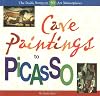
This book is an excellent introduction to art across the ages. There is a lot of information available for each piece, but the information is easily digestible. Unfamiliar terms are explained clearly, and the writing is simple and direct, but not condescending. Sayre really covered his bases, in including art from ancient to comparatively modern, and across different media and place of origin. My 18-month-old daughter loves it and points to the "horsies" and then says she wants to draw, but show more at the same time, I have learned a lot as I've looked at it with her. I think every age will find something of value. Highly highly recommended. show less
This book provides readers with a quite look at art history starting with the cave paintings in France up to more modern painters like Picasso (just as the title would suggest). Each spreak consists of a full page photo of the piece of art being discussed, and a page of text explaining the art as well as some information about the artist. These infomrational bits are interesting and well written, avoiding the monotonous tone that some might associate with art history. This book is written by show more a man who fondly remembers looking at pictures of great art as a child and hopes to provide a similalr experience for young readers today. This is a book I would gladly have in my own library! show less
This book may be a little above the fourth-graders I teach. It does match beautiful, color paintings with kid-friendly behind-the-scenes stories about the art. The art comes from all over the world and timelines along the margins help the reader see the progression of art styles through the ages. There is a lot of interesting and helpful information about the paintings, though the amount would overwhelm younger kids. I could use parts of it to help inspire and motivate young students...if I show more was very capable of teaching art. show less
Lists
Awards


You May Also Like


Associated Authors
Statistics
- Works
- 26
- Also by
- 1
- Members
- 903
- Popularity
- #28,406
- Rating
- 3.6
- Reviews
- 12
- ISBNs
- 102
- Favorited
- 1