
Kathy-jo Wargin
Author of The Legend of Sleeping Bear
About the Author
Kathy-Jo Wargin was born in Minnesota and studied Music Composition at the University of Minnesota-Duluth. She has been a professional writer for over 20 years. She is dedicated to the promotion and creation of quality literature for children. She is also the President of Book Bridge Press. In 2001 show more she won the Children's Choice award for her book, The legend of the Loon. (Bowker Author Biography) show less
Series
Works by Kathy-jo Wargin
Frank and Beans and the Scary Campout: Level 2 (I Can Read! / Frank and Beans Series) (2010) 20 copies
Frank and Beans 1 copy
Associated Works
Tagged
Common Knowledge
- Other names
- Nelson, Kathy-jo (birth name)
- Birthdate
- 1964-12-20
- Gender
- female
- Education
- University of Minnesota-Duluth (music theory and composition)
University of St. Thomas - Occupations
- author
- Organizations
- Fresh Coast Film Project
The Wargin Company (co-owner) - Agent
- Sleeping Bear Press
- Relationships
- Wargin, Ed (spouse)
- Nationality
- USA
- Birthplace
- Tower, Minnesota, USA
- Places of residence
- Tower, Minnesota, USA
Aurora, Minnesota, USA
Grand Rapids, Minnesota, USA
Michigan, USA
Duluth, Minnesota, USA
Minnetonka, Minnesota, USA (show all 7)
Petoskey, Michigan, USA - Associated Place (for map)
- Minnesota, USA
Members
Reviews
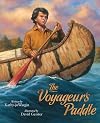
The Voyageur's Paddle is beautiful picture book which gives children a feel for the life of an early voyageur and his Metis son. Jacques, a young boy with an Ojibwa/Anishinabe mother and a French-Canadian father, longs for the day when he can travel the rivers with his father, paddling European goods and beaver pelts for a living. When Edouard, Jacques's father, is lost with other travelers in an unexpected autumn blizzard, Jacques waits by the river, repeatedly and prayerfully chanting a show more voyageur song to bring his father home. Jacques's vigil by the river proves to his father, who eventually returns, that Jacques indeed has the stuff to weather the elements and play his part in the fur trade.
There are many fine details in the illustrations, showing the melding of early French-Canadian and Aboriginal ways. Edouard wears the Metis sash, a medicine bag, and a Celtic cross. The tale acknowledges the ways in which Aboriginal people aided and instructed the early Europeans so they could survive in a harsh land. This is exactly the sort of book I was looking for to reach some young Canadian history students. Many students commented how much they enjoyed the book. show less
There are many fine details in the illustrations, showing the melding of early French-Canadian and Aboriginal ways. Edouard wears the Metis sash, a medicine bag, and a Celtic cross. The tale acknowledges the ways in which Aboriginal people aided and instructed the early Europeans so they could survive in a harsh land. This is exactly the sort of book I was looking for to reach some young Canadian history students. Many students commented how much they enjoyed the book. show less
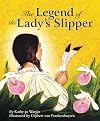
Personal Review:
I didn't think this was as good of a book as Wargin's "Legend of the Sleeping Bears," however, it is a very good story in its own right. The pictures are beautiful and compelling. The Native American female protagonist is strong and bold. I do have a bit of a problem that these books are all called, "The Legend of..." I'm not sure if that is the most appropriate way to refer to these important Native American tales passed down through the generations.
Classroom/Library uses:
I show more would like to use this story with other Native American "Legends" (again I'm not so sure about this term) and do some comparing and contrasting between the stories passed down by different tribes.
I put this book as geared to up to middle school. This book could be great with secondary curriculum. show less
I didn't think this was as good of a book as Wargin's "Legend of the Sleeping Bears," however, it is a very good story in its own right. The pictures are beautiful and compelling. The Native American female protagonist is strong and bold. I do have a bit of a problem that these books are all called, "The Legend of..." I'm not sure if that is the most appropriate way to refer to these important Native American tales passed down through the generations.
Classroom/Library uses:
I show more would like to use this story with other Native American "Legends" (again I'm not so sure about this term) and do some comparing and contrasting between the stories passed down by different tribes.
I put this book as geared to up to middle school. This book could be great with secondary curriculum. show less
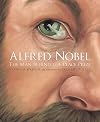
The 2009 Nobel Prize announcements are still fresh in our memories. With this year’s surprising choice of President Obama as the recipient of the Nobel Peace Prize, the time is ripe to share the history of the Peace Prize with our children. Whether taught in a social studies/current events setting or around the kitchen table at dinner, Alfred Nobel’s name is now much more closely associated with his prizes than it is with the invention of dynamite.
In January of this year, Sleeping Bear show more Press released Alfred Nobel: The Man Behind the Peace Prize to familiarize young readers with Nobel’s life: his love for literature, poetry, the sciences, and mankind, and the bequeathal that continues to finance the prizes to this day — over 100 years later.
Multi-genre children’s author Kathy-Jo Wargin turns her accomplished pen (over 30 children’s titles) to the task of relating Nobel’s life and accomplishments to primary-aged readers. Using vivid, action filled prose; Wargin deftly sculpts the emotional contours of Nobel’s life, clearly displaying his idealism, work-ethic, and loneliness despite his great wealth.
Following Nobel through his early experiments with nitroglycerin, his blasting-cap explosive model, the loss of his brother Emil and four workers in a workshop accident, the search for a safer form of explosive, the invention of dynamite, his fame, and death, children will be equipped with a solid peg upon which to hang further knowledge about Nobel’s life and the prizes as they grow.
Zachary Pullen’s rich, detailed oil paintings straddle the divide between portrait and caricature, as Nobel’s larger-than-life facial expressions dominate many of the pages. Wide-eyed-wonder, intense concentration, studious, and reflective; Nobel fills the carefully arranged pages to bursting. Pullen’s supplementary “scientific notes” illustrate the simple operation of Nobel’s nitroglycerin explosive with blasting cap, and his safer compound — dynamite.
Intended for peaceful use in the construction industry but appropriated as weaponry, the invention he hoped would prevent wars by displaying the mighty destructive power in explosives only spurred further violence. His consequent public portrayal as a man who benefited financially from war and death grieved him, and no doubt gave rise to the establishment of the Peace Prize.
After reading Alfred Nobel through with my children, my six-year-old instantly asked for a repeat reading. She also pestered me to read the complete list of Nobel Peace Prize recipients from 1901 — 2008 aloud to her. Simply presented as a list, I was surprised that those who’d received the prize so captivated her, but she insisted, swept into Nobel’s vision of a better world.
Sleeping Bear Press’ free downloadable teaching guide for this title includes activities in geography, science, math, language arts, social studies, and more, making Alfred Nobel the base for a comprehensive unit study revolving around the Peace Prizes, and issues of social responsibility.
Reviewed at quiverfullfamily.com show less
In January of this year, Sleeping Bear show more Press released Alfred Nobel: The Man Behind the Peace Prize to familiarize young readers with Nobel’s life: his love for literature, poetry, the sciences, and mankind, and the bequeathal that continues to finance the prizes to this day — over 100 years later.
Multi-genre children’s author Kathy-Jo Wargin turns her accomplished pen (over 30 children’s titles) to the task of relating Nobel’s life and accomplishments to primary-aged readers. Using vivid, action filled prose; Wargin deftly sculpts the emotional contours of Nobel’s life, clearly displaying his idealism, work-ethic, and loneliness despite his great wealth.
Following Nobel through his early experiments with nitroglycerin, his blasting-cap explosive model, the loss of his brother Emil and four workers in a workshop accident, the search for a safer form of explosive, the invention of dynamite, his fame, and death, children will be equipped with a solid peg upon which to hang further knowledge about Nobel’s life and the prizes as they grow.
Zachary Pullen’s rich, detailed oil paintings straddle the divide between portrait and caricature, as Nobel’s larger-than-life facial expressions dominate many of the pages. Wide-eyed-wonder, intense concentration, studious, and reflective; Nobel fills the carefully arranged pages to bursting. Pullen’s supplementary “scientific notes” illustrate the simple operation of Nobel’s nitroglycerin explosive with blasting cap, and his safer compound — dynamite.
Intended for peaceful use in the construction industry but appropriated as weaponry, the invention he hoped would prevent wars by displaying the mighty destructive power in explosives only spurred further violence. His consequent public portrayal as a man who benefited financially from war and death grieved him, and no doubt gave rise to the establishment of the Peace Prize.
After reading Alfred Nobel through with my children, my six-year-old instantly asked for a repeat reading. She also pestered me to read the complete list of Nobel Peace Prize recipients from 1901 — 2008 aloud to her. Simply presented as a list, I was surprised that those who’d received the prize so captivated her, but she insisted, swept into Nobel’s vision of a better world.
Sleeping Bear Press’ free downloadable teaching guide for this title includes activities in geography, science, math, language arts, social studies, and more, making Alfred Nobel the base for a comprehensive unit study revolving around the Peace Prizes, and issues of social responsibility.
Reviewed at quiverfullfamily.com show less
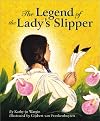
“The Legend of the Lady’s Slipper” is a re-telling of the Ojibwe legend of young Running Flower and her tale of bravery. When winter and sickness reach her village, Running Flower rushes thorugh the cold night to get medicine from a neighbouring village. Unfortunately, on the way back she becomes so sick and cold herself that she collaspes just before her village. The people cry over the death of this poor, brave girl and as they do, the sun rises and the spirit of Running Flower show more traces her steps through the forest, leaving a path of lady’s slippers behind her. The moral the author gives is that “each lady’s slipper is a gentle reminder of the beauty and courage that lives in each of us, and of the many different ways we live on in the hearts of those we love.”
I found this story very well written with plenty of references to the culture from which it stems. You can just imagine an old Inidan chief telling this tale around a fire using the same words and same imagery. The words seem to have a beat to them and even though the legend seems quite long for a picture book, the words flow together so well that it seems likea crime to shorten it at all. The painted illustrations are absoultely beautiful and really reflect the Native American culture. The illustrations of fire are my favourite as the illustrator creates a great sense of warmth and light. This book would be a great story for any classroom, especially if the children are learning about legends or Native American culture. It is also just a great story in general and I would recommend it for anyone. show less
I found this story very well written with plenty of references to the culture from which it stems. You can just imagine an old Inidan chief telling this tale around a fire using the same words and same imagery. The words seem to have a beat to them and even though the legend seems quite long for a picture book, the words flow together so well that it seems likea crime to shorten it at all. The painted illustrations are absoultely beautiful and really reflect the Native American culture. The illustrations of fire are my favourite as the illustrator creates a great sense of warmth and light. This book would be a great story for any classroom, especially if the children are learning about legends or Native American culture. It is also just a great story in general and I would recommend it for anyone. show less
Lists
Awards


You May Also Like


Associated Authors
Statistics
- Works
- 55
- Also by
- 1
- Members
- 3,272
- Popularity
- #7,821
- Rating
- 3.9
- Reviews
- 66
- ISBNs
- 160
- Languages
- 1