
Kevin Roose
Author of The Unlikely Disciple: A Sinner's Semester at America's Holiest University
About the Author
Kevin Roose is a business and technology writer for New York magazine and the Daily Intelligencer blog. He has written several books including The Unlikely Disciple: A Sinner's Semester at America's Holiest University and Young Money: Inside the Hidden World of Wall Street's Post-Crash Recruits. show more (Bowker Author Biography) show less
Image credit: Kevin Roose
Works by Kevin Roose
The Unlikely Disciple: A Sinner's Semester at America's Holiest University (2009) 1,232 copies, 84 reviews
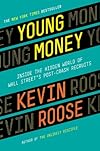
Young Money: Inside the Hidden World of Wall Street's Post-Crash Recruits (2014) 175 copies, 8 reviews
Tagged
Common Knowledge
- Other names
- Roose, Kevin Burns
- Birthdate
- 1987
- Gender
- male
- Education
- Brown University
Liberty University - Occupations
- student
journalist - Organizations
- The New York Times
- Nationality
- USA
- Places of residence
- Brooklyn, New York, USA
Oberlin, Ohio, USA - Associated Place (for map)
- USA
Members
Reviews
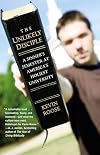
Yes, it's another of my stunt books. Roose comes by the genre honestly, as he was assistant to A.J. Jacobs of "The Year of Living Biblically" and "The Guinea Pig Diaries: My Life as an Experiment" fame.
I had my usual twists of scepticism over the premise (really? You decided to attend Jerry Fallwell's Liberty College because of a fascination with bridging the gap between evangelical Christians and secular culture, not because you're a young author who wanted something wacky to write about?), show more and the "will I ever be the same ?!?" crises, but they softened as I continued the book. Roose isn't just looking for a freakshow, and he makes a real effort to enter the community and make friends. He does experience some real changes to his outlook, and he's conflicted about it.
The difficult or touchy part is, of course, that he did this undercover. Evangelicals do sometimes have a fort mentality (reinforced by mockery from outsiders) and Roose wanted to be inside, not just a politely treated guest. This put him in some morally dicey situations, which he does acknowledge.
I think this is most interesting for the character sketches of his hallmates in residence - they vary widely in background, personality, and faith. Roose likes them, and also can't reconcile himself to their generally anti-gay, anti-feminist, salvation-only-through-Christ outlook.
This was a quick, fascinating read. Now I'd love to read a book from the female students' side - as Roose says, that would be a totally different story. show less
I had my usual twists of scepticism over the premise (really? You decided to attend Jerry Fallwell's Liberty College because of a fascination with bridging the gap between evangelical Christians and secular culture, not because you're a young author who wanted something wacky to write about?), show more and the "will I ever be the same ?!?" crises, but they softened as I continued the book. Roose isn't just looking for a freakshow, and he makes a real effort to enter the community and make friends. He does experience some real changes to his outlook, and he's conflicted about it.
The difficult or touchy part is, of course, that he did this undercover. Evangelicals do sometimes have a fort mentality (reinforced by mockery from outsiders) and Roose wanted to be inside, not just a politely treated guest. This put him in some morally dicey situations, which he does acknowledge.
I think this is most interesting for the character sketches of his hallmates in residence - they vary widely in background, personality, and faith. Roose likes them, and also can't reconcile himself to their generally anti-gay, anti-feminist, salvation-only-through-Christ outlook.
This was a quick, fascinating read. Now I'd love to read a book from the female students' side - as Roose says, that would be a totally different story. show less
How good is this author? I'm a fairly liberal Christian, a Quaker, like the author, but I come from the majority tradition in American Quakerism, that is more Christ-centered. I believe Jesus is God, that he died and rose again, but I think Moses was probably ahistorical, and I know Abraham was. Most of the beginning of the Old Testament was written by four guys named J,E,D, and P (and not for nothing that happens to spell out my name and initials). While I grew up believing that women show more should obey their husbands and evolution was false, God changed those views in me, and more recently, I've come out in favour of a Biblical mandate for homosexuality. My life is based on the Bible, but as a Quaker, it is first based on the Holy Spirit. I'm against the military, capitol punishment, the war on the poor, and abortion (again, Quaker). In short, I'm not a Jerry Falwell kind of guy. Short of Jesus himself, we have nothing in common. The guy pretty much turned my stomach.
How good is this author? He had me weeping as I read about Falwell's death.
This book was so very illuminating, even to me, having grown up as a Christian, all my life. At first I felt he was too much equivocating conservative Christianity with Christianity in general, but over time, I came to understand where Roose was coming from. I loved how very even-handed he was, treating those at Liberty U as people, and not simply caricatures. Roose goes through a transition himself on this, but he is disarmingly honest, which allows the reader to like both him and all the fellow students at LU, though both camps are so diametrically opposed. I could relate to much of what he described, as I've seen or experienced this myself with Christians and conservative Christians. And I learned a lot about the extreme conservative end of Christendom, that I had not been aware of (though it may perhaps be the Liberty experience alone), such as the regular sexual objectification of women that his classmates engaged in. This was surprising, as it's not something I've ever seen or experienced myself within Christianity, and I am indebted to Roose for revealing that aspect to me.
How good is this author? I am busy teaching six classes in high school and so have a lot of work, and I could *not put this book down*. It's non-fiction, but reads as a novel. And I think, I think, he may have helped me consider the expression of Jesus in my life in new and deeper ways. show less
How good is this author? He had me weeping as I read about Falwell's death.
This book was so very illuminating, even to me, having grown up as a Christian, all my life. At first I felt he was too much equivocating conservative Christianity with Christianity in general, but over time, I came to understand where Roose was coming from. I loved how very even-handed he was, treating those at Liberty U as people, and not simply caricatures. Roose goes through a transition himself on this, but he is disarmingly honest, which allows the reader to like both him and all the fellow students at LU, though both camps are so diametrically opposed. I could relate to much of what he described, as I've seen or experienced this myself with Christians and conservative Christians. And I learned a lot about the extreme conservative end of Christendom, that I had not been aware of (though it may perhaps be the Liberty experience alone), such as the regular sexual objectification of women that his classmates engaged in. This was surprising, as it's not something I've ever seen or experienced myself within Christianity, and I am indebted to Roose for revealing that aspect to me.
How good is this author? I am busy teaching six classes in high school and so have a lot of work, and I could *not put this book down*. It's non-fiction, but reads as a novel. And I think, I think, he may have helped me consider the expression of Jesus in my life in new and deeper ways. show less
The boys at the bottom
Young Money: Inside the Hidden World of Wall Street’s Post-Crash Recruits by Kevin Roose (Grand Central Publishing, $27).
Kevin Roose is really good at immersion journalism. A few years back, he went undercover for a semester at Liberty University (The Unlikely Disciple: A Sinner’s Semester at America’s Holiest University, Grand Central Publishing, $14), where he snagged the last interview Jerry Falwell gave before his death.
The thing that made The Unlikely show more Disciple stand out—and that works in Young Money, as well—is that Roose has a lot of empathy for his subjects, which leads him to eschew caricature and instead paint full and human portraits of the people he’s writing about.
In this case, it’s the new guys: The fresh crop of finance and economics graduates who take their place as the fresh faces in the big Wall Street firms each year.
Roose followed the first year as financial analysts of eight young men. What he discovered is that their lives pretty much sucked. Their ambition is counter-balanced by overwork, excessive drinking, and awful bosses who think being unnecessarily hard on their youngest employees will allow them to “prove themselves” able to climb the ladder.
They also become corrupted by what is, any way you slice it and obvious from Roose’s account, a truly, disturbingly sick environment. The most important part of Roose’s book is to make clear that Wall Street doesn’t just attract all the wannabe-Gordon Geckos. It recruits bright young financial minds and turns them into Gordon Gecko through a process of dehumanization that warps their perspectives and their ethics.
What’s more, the pressures on Wall Street firms since the 2008 meltdown have resulted in ramped-up stress on the lowest level of Wall Street financiers. Now, they have to prove they can both make money and fit into the club and they have to do it fast.
Roose is one of the submersion guys who’s really worth reading, and this is an intriguing book, revealing that Wall Street has the same kind of lock-step mindset he earlier found at Liberty University.
And don’t miss Roose’s undercover visit to a Wall Street party—which revealed just what they really think of the rest of us—which was adapted for this New York Magazine piece, “I Crashed a Wall Street Secret Society.” show less
Young Money: Inside the Hidden World of Wall Street’s Post-Crash Recruits by Kevin Roose (Grand Central Publishing, $27).
Kevin Roose is really good at immersion journalism. A few years back, he went undercover for a semester at Liberty University (The Unlikely Disciple: A Sinner’s Semester at America’s Holiest University, Grand Central Publishing, $14), where he snagged the last interview Jerry Falwell gave before his death.
The thing that made The Unlikely show more Disciple stand out—and that works in Young Money, as well—is that Roose has a lot of empathy for his subjects, which leads him to eschew caricature and instead paint full and human portraits of the people he’s writing about.
In this case, it’s the new guys: The fresh crop of finance and economics graduates who take their place as the fresh faces in the big Wall Street firms each year.
Roose followed the first year as financial analysts of eight young men. What he discovered is that their lives pretty much sucked. Their ambition is counter-balanced by overwork, excessive drinking, and awful bosses who think being unnecessarily hard on their youngest employees will allow them to “prove themselves” able to climb the ladder.
They also become corrupted by what is, any way you slice it and obvious from Roose’s account, a truly, disturbingly sick environment. The most important part of Roose’s book is to make clear that Wall Street doesn’t just attract all the wannabe-Gordon Geckos. It recruits bright young financial minds and turns them into Gordon Gecko through a process of dehumanization that warps their perspectives and their ethics.
What’s more, the pressures on Wall Street firms since the 2008 meltdown have resulted in ramped-up stress on the lowest level of Wall Street financiers. Now, they have to prove they can both make money and fit into the club and they have to do it fast.
Roose is one of the submersion guys who’s really worth reading, and this is an intriguing book, revealing that Wall Street has the same kind of lock-step mindset he earlier found at Liberty University.
And don’t miss Roose’s undercover visit to a Wall Street party—which revealed just what they really think of the rest of us—which was adapted for this New York Magazine piece, “I Crashed a Wall Street Secret Society.” show less

Ah, now. This is more like it. Kevin Roose, a sophomore at Brown University and the son of Quaker liberals, decides to spend a semester at the jewel in the crown of Jerry Falwell's empire: far-right, fundamentalist Liberty University. (In passing, have you EVER HEARD of such an ironic name for a school? *loves it*) He makes a conscious decision to fit in by talking the talk AND walking the walk - he stops cussing, tries mighty hard to stop masturbating, prays daily, even joins the choir and show more takes creation "science".
I admit it: I have a tiny little reader-crush on Kevin. Not only is he a talented writer (his characterizations of the Liberty students are so spot-on that the reader becomes totally enmeshed in the Liberty world), but he is also an astoundingly open-minded and mature observer of his brave new world.The Liberty University that Kevin portrays is no cartoon: it is complex, layered, nuanced. Moreover, I was genuinely impressed by Roose's sheer goodness and personal integrity: he struggles with the anti-gay rhetoric and lack of academic freedom he encounters, but avoids simplistic explanations that objectify or demonize Liberty students and professors. And he manages to build genuine relationships that are both respectful and mature. This guy is 19? Kudos. show less
I admit it: I have a tiny little reader-crush on Kevin. Not only is he a talented writer (his characterizations of the Liberty students are so spot-on that the reader becomes totally enmeshed in the Liberty world), but he is also an astoundingly open-minded and mature observer of his brave new world.The Liberty University that Kevin portrays is no cartoon: it is complex, layered, nuanced. Moreover, I was genuinely impressed by Roose's sheer goodness and personal integrity: he struggles with the anti-gay rhetoric and lack of academic freedom he encounters, but avoids simplistic explanations that objectify or demonize Liberty students and professors. And he manages to build genuine relationships that are both respectful and mature. This guy is 19? Kudos. show less
Lists
Awards


You May Also Like


Statistics
- Works
- 3
- Members
- 1,555
- Popularity
- #16,568
- Rating
- 4.0
- Reviews
- 92
- ISBNs
- 28
- Languages
- 4