
Pik-Shuen Fung
Author of Ghost Forest: A Novel
Works by Pik-Shuen Fung
Gölgeler Ormanı 1 copy
Tagged
Common Knowledge
Members
Reviews
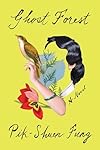
Ghost Forest is written in a series of vignettes, with a style similar to Sandra Cisnero's The House on Mango Street. It is simple - the lack of punctuation makes it feel like reading the protagonist's thoughts, hearing as she hear stories told to them about her family's hardships, their lives before she was born.
There is an emotion so heavy, so true, behind this book. The idea of knowing someone your whole life, no matter how distant, and having one opinion of them, that when suddenly they show more are sick, when they are dying, you realize that maybe you had been looking at them the wrong way the whole time - and the idea that you don't notice until they are gone and you can't go back and fix it - go back and forgive them and yourself - is such a difficult emotion to bear, but not one that is exclusive to the author.
I cried a couple times while reading this, and I will read this again, just so maybe I can feel that again. show less
There is an emotion so heavy, so true, behind this book. The idea of knowing someone your whole life, no matter how distant, and having one opinion of them, that when suddenly they show more are sick, when they are dying, you realize that maybe you had been looking at them the wrong way the whole time - and the idea that you don't notice until they are gone and you can't go back and fix it - go back and forgive them and yourself - is such a difficult emotion to bear, but not one that is exclusive to the author.
I cried a couple times while reading this, and I will read this again, just so maybe I can feel that again. show less
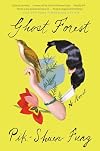
“... the artists who invented xieyi painting were scholar-amateurs, and they were not interested in depicting the physical likeness of things. They left large areas of the paper blank because they felt empty space was as important as form, that absence was as important as presence.” — Pik-Shuen Fung, “Ghost Forest”
In her first novel, “Ghost Forest” (2021), Pik-Shuen Fung gives us the literary version of the xieyi painting she describes. Absence is as important as presence. Even show more the title suggests this idea. There's a forest there, but you can't see it.
Hers is minimalist writing with short chapters, sometimes just a few sentences long. Lots of empty space. The reader can fill in the blanks. Reading it is almost like reading poetry.
Like the author herself, the narrator was born in Hong Kong, moving to Vancouver with her family as a little girl just before Hong Kong was turned over to the Chinese. Yet her father stays behind to work in Hong Kong, and she, her mother and younger sister usually see him just once a year. Her father is, for the most part, an empty space.
Most of the novel takes place after she reaches her adulthood and her father is dying of cancer. She has always had an uneasy relationship with her stern, unsmiling father. She doesn't miss him when he's gone, yet she cries whenever they must part. Now that he is dying she begins to build a relationship with him, even to the point of telling him she loves him and hearing him say "I love you" back. Such exchanges are rare in Chinese families, we are told.
Yet there is not enough time, and the novel's last pages are full of regrets and white space. Earlier Pik-Sheun defines the Chinese phrase lik bat chung sam. "It means, what your heart wants but you can't do. It is an uncomfortable feeling. It's the feeling of wanting to do something and not being able to." And those final pages describe that feeling very well. show less
In her first novel, “Ghost Forest” (2021), Pik-Shuen Fung gives us the literary version of the xieyi painting she describes. Absence is as important as presence. Even show more the title suggests this idea. There's a forest there, but you can't see it.
Hers is minimalist writing with short chapters, sometimes just a few sentences long. Lots of empty space. The reader can fill in the blanks. Reading it is almost like reading poetry.
Like the author herself, the narrator was born in Hong Kong, moving to Vancouver with her family as a little girl just before Hong Kong was turned over to the Chinese. Yet her father stays behind to work in Hong Kong, and she, her mother and younger sister usually see him just once a year. Her father is, for the most part, an empty space.
Most of the novel takes place after she reaches her adulthood and her father is dying of cancer. She has always had an uneasy relationship with her stern, unsmiling father. She doesn't miss him when he's gone, yet she cries whenever they must part. Now that he is dying she begins to build a relationship with him, even to the point of telling him she loves him and hearing him say "I love you" back. Such exchanges are rare in Chinese families, we are told.
Yet there is not enough time, and the novel's last pages are full of regrets and white space. Earlier Pik-Sheun defines the Chinese phrase lik bat chung sam. "It means, what your heart wants but you can't do. It is an uncomfortable feeling. It's the feeling of wanting to do something and not being able to." And those final pages describe that feeling very well. show less
As they say, good things come in small packages, and this short book is absolutely stunning. The main character's family (parents, grandmother, two daughters) moved from Hong Kong to Vancouver in 1997, right before the former British Colony was transferred to Chinese administration. The father missed his job and his home city and returned the following year. He is what is known as a "helicopter father," one who shuttles back and forth between two homes. Most of the story focuses on the show more father's battle with liver disease and the way in which the family deals with it. But that plot line is really just a way to open the protagonist's exploration of her family's history and dynamics. Written in short chapters, the novel reads in something like a recording of what she hears from her mother, father, and grandmother and of her own internalization of events. As her father becomes increasingly ill while awaiting a liver transplant donor, she becomes increasingly aware of the distance between them, caused not so much by his absence as by the fact that it is characteristic of Chinese, especially men, to withhold their emotions. At one point, as she visits him in the hospital, she tells her father that she loves him and asks him to say it back, but he simply cannot. She realizes that she has never heard him tell her mother that he loves her either. His initial response is that he expresses his love by taking care of them, but he comes to realize eventually that it is important to express his love directly, before leaving this world.
The novel is not all about death and sadness. It includes stories related by her mother and grandmother about growing up in Hong Kong, getting married, raising their children, enduring the war and other hardships. I learned a lot about Buddhism and Chinese culture as the author takes us with her through the customs of the marriage and funeral ceremonies, the remedies of traditional medicine, and more. But mostly this is the story of a family and of a young woman, born into one culture but living in another, to understand both and to find her place in each.
I read this book in two days; I had difficulty putting it down to attend to necessary tasks. The writing is just achingly beautiful--so simple and yet so moving. Don't miss this one. I can't recommend it highly enough. show less
The novel is not all about death and sadness. It includes stories related by her mother and grandmother about growing up in Hong Kong, getting married, raising their children, enduring the war and other hardships. I learned a lot about Buddhism and Chinese culture as the author takes us with her through the customs of the marriage and funeral ceremonies, the remedies of traditional medicine, and more. But mostly this is the story of a family and of a young woman, born into one culture but living in another, to understand both and to find her place in each.
I read this book in two days; I had difficulty putting it down to attend to necessary tasks. The writing is just achingly beautiful--so simple and yet so moving. Don't miss this one. I can't recommend it highly enough. show less

Based on the title of 'Ghost Forest', and not knowing much else about it, I was expecting fabulism or magical realism. Not at all! I was pleasantly surprised to find a narrative called "a novel" but reading it as something that could possibly be highly autobiographical. The main character emigrates to Canada as a child, when the family is not sure what will happen in Hong Kong in the late 90s. Her dad stays in Hong Kong to keep his job, traveling to Canada when he can. His death is mentioned show more on page one, so you know what's coming. The book is a lovely homage to the main character's (author's?) dad and family. Vignettes, or what I like to call snippets, short chapters, sweet yet not saccharine. Delicate but very real and heartrending about grief and realization and appreciation and family history and trying to keep that close. I would keep this on the shelf next to Rachel Khong's 'Goodbye, Vitamin'. I'm glad this isn't the fabulist book I expected it to be. This one is Just Right. I admire the honesty of this writer for sharing her heart and story, if this is anything close to autobiographical. Well done. show less
Awards


You May Also Like
Associated Authors
Statistics
- Works
- 2
- Members
- 171
- Popularity
- #124,898
- Rating
- 4.0
- Reviews
- 8
- ISBNs
- 8