

John Archambault
Author of Chicka Chicka Boom Boom
About the Author
Image credit: John Archambault, on 2018
Works by John Archambault
Chicka, Chicka, Boom, Boom...and Lots More Learning Fun [1999 film] (2002) — Author; Writer — 37 copies, 2 reviews
ABC preschool discovery pack 12 copies
A Million Starts With Me 4 copies
Turtle Song AUDIO 1 copy
Twinkle, Twinkle 1 copy
Rhythm! Rhythm! 1 copy
Associated Works
The 20th-Century Children's Book Treasury: Picture Books and Stories to Read Aloud (1998) — Contributor — 1,832 copies, 14 reviews
Tagged
Common Knowledge
- Birthdate
- 1959
- Gender
- male
- Education
- University of California, Riverside (writing and journalism)
Columbia Teachers College - Occupations
- children's book author
- Nationality
- USA
- Birthplace
- Pasadena, California, USA
- Places of residence
- Yorba Linda, California, USA
- Associated Place (for map)
- California, USA
Members
Reviews
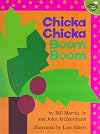
Chicka Chicka Boom Boom by Bill Martin Jr. and John Archambault is a playful children’s picture book that introduces the alphabet in a fun and engaging way. The letters are presented through rhythm and rhyme, which helps young children stay interested and makes it easier for them to memorize the alphabet.
The story follows lowercase letters as they climb a coconut tree in alphabetical order. As more letters climb, the tree begins to bend and eventually the letters fall. After this happens, show more the uppercase letters are introduced, helping children learn the difference between lowercase and uppercase letters in a simple and memorable way.
One of the main themes of the book is inclusion, shown when the uppercase letters come together to help the lowercase letters after they fall. The authors use literary elements such as rhyme, repetition, bright colors, and movement to keep children engaged throughout the story. This book creates a fun learning environment, and on a personal level, it was one of my favorite books as a child because it made learning the alphabet exciting and enjoyable. show less
The story follows lowercase letters as they climb a coconut tree in alphabetical order. As more letters climb, the tree begins to bend and eventually the letters fall. After this happens, show more the uppercase letters are introduced, helping children learn the difference between lowercase and uppercase letters in a simple and memorable way.
One of the main themes of the book is inclusion, shown when the uppercase letters come together to help the lowercase letters after they fall. The authors use literary elements such as rhyme, repetition, bright colors, and movement to keep children engaged throughout the story. This book creates a fun learning environment, and on a personal level, it was one of my favorite books as a child because it made learning the alphabet exciting and enjoyable. show less

A young boy and his sister are dispatched to the other side of town one blustery autumn night to fetch some milk in this spooky picture book from co-authors Bill Martin, Jr. and John Archambault, and illustrator Ted Rand. Hurrying through the dark night, the pair squabble about the boy's hat, which his sister insists makes him look stupid, but they are in complete accord when it comes to the Ghost-Eye tree standing at the midway point of their walk. Making their way past it going out, they show more find themselves terrified by a wailing sound they hear, when passing it on the way back, and scramble madly for safety. Once home, the boy decides he will make himself scarce, when his mother again wants milk at night...
Given the subject matter, and the striking cover image, I expected to enjoy The Ghost-Eye Tree, which I initially sought out as a Halloween read, despite the fact that it is not explicitly a Halloween story. I was not disappointed, finding the story satisfactorily spooky, as well as unexpectedly heartwarming. I appreciated the fact that while the sister begins by ridiculing her brother (not unrealistically, in a tale about siblings), she also is very determined to help him, when push comes to shove and he loses his hat. The accompanying artwork from Ted Rand was by turns deliciously creepy and beautifully expressive, and I particularly appreciated the use of light, and the range of expressions the artist captured in his human faces. The text itself had a poetic cadence, making this a good read-aloud selection, which is hardly surprising when one considers that the story was developed by the co-authors as a readers' theater piece for young people. All in all, this is one I would recommend to picture book readers and audiences in the mood for spooky read-alouds. show less
Given the subject matter, and the striking cover image, I expected to enjoy The Ghost-Eye Tree, which I initially sought out as a Halloween read, despite the fact that it is not explicitly a Halloween story. I was not disappointed, finding the story satisfactorily spooky, as well as unexpectedly heartwarming. I appreciated the fact that while the sister begins by ridiculing her brother (not unrealistically, in a tale about siblings), she also is very determined to help him, when push comes to shove and he loses his hat. The accompanying artwork from Ted Rand was by turns deliciously creepy and beautifully expressive, and I particularly appreciated the use of light, and the range of expressions the artist captured in his human faces. The text itself had a poetic cadence, making this a good read-aloud selection, which is hardly surprising when one considers that the story was developed by the co-authors as a readers' theater piece for young people. All in all, this is one I would recommend to picture book readers and audiences in the mood for spooky read-alouds. show less
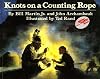
This book is age-appropriate for primary students and classrooms.
A grandfather tells his grandson the story of how he was born, a story that he has heard many times before. He then goes onto tell many more stories, about his name, his horse, and the race. The grandfather ties another knot on the counting rope, and when the rope is full, the boy will know the story by heart and won't need it to be told anymore.
I would not recommend this books for use in the classroom, because it does not show more give an accurate depiction of Native Americans. It contains bits and pieces of different tribal traditions and experiences, and mixes them together into one story. This is not accurate or beneficial. It doesn't specify a tribe, which is generalizing a population group that has a lot of diversity and variation within it. show less
A grandfather tells his grandson the story of how he was born, a story that he has heard many times before. He then goes onto tell many more stories, about his name, his horse, and the race. The grandfather ties another knot on the counting rope, and when the rope is full, the boy will know the story by heart and won't need it to be told anymore.
I would not recommend this books for use in the classroom, because it does not show more give an accurate depiction of Native Americans. It contains bits and pieces of different tribal traditions and experiences, and mixes them together into one story. This is not accurate or beneficial. It doesn't specify a tribe, which is generalizing a population group that has a lot of diversity and variation within it. show less
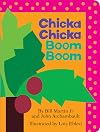
The 26 characters in this rhythmic, rhyming baby book are a lowercase alphabet with attitude. "A told b, and b told c, 'I'll meet you at the top of the coconut tree'" which probably seemed like a good idea until the other 23 members of the gang decided to follow suit. The palm tree standing straight and tall on the first page begins to groan and bend under its alphabetical burden. First the coconuts fall off, then all the letters also end up in a big heap underneath.
Lists
Awards


You May Also Like


Associated Authors
Statistics
- Works
- 66
- Also by
- 1
- Members
- 30,038
- Popularity
- #669
- Rating
- 4.2
- Reviews
- 1,070
- ISBNs
- 281
- Languages
- 3
- Favorited
- 1
