
Veronica Mang
Author of The Case of the Missing Cheetah (Secret Spy Society)
Series
Works by Veronica Mang
Associated Works
Self-Made Boys: A Great Gatsby Remix (2022) — Book & cover designer, some editions — 310 copies, 13 reviews
Destination Moon: The Remarkable and Improbable Voyage of Apollo 11 (2019) — Cover designer, some editions — 41 copies
Total Garbage: A Messy Dive into Trash, Waste, and Our World (2023) — Cover designer, some editions — 30 copies, 4 reviews
The Woman in the Moon: How Margaret Hamilton Helped Fly the First Astronauts to the Moon (2023) — Cover designer, some editions — 15 copies, 1 review
Stella Díaz Leaps to the Future (Stella Diaz, 5) (2023) — Cover designer, some editions — 15 copies, 1 review
Beyond the Board: The Untold Story of the World's Most Daring Big Wave Surfer (2025) — Cover designer, some editions — 7 copies
Tagged
Common Knowledge
- Birthdate
- 20th century
- Education
- Parsons School of Design (BFA|Illustration)
- Occupations
- graphic designer
book designer
illustrator
teacher - Agent
- Andrea Morrison (Writers House)
- Places of residence
- Perkasie, Pennsylvania, USA
New York, New York, USA - Associated Place (for map)
- USA
Members
Reviews
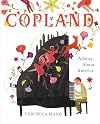
ow a child of Russian immigrants set out to write music that sounded like his new country.
“This is a story about music,” writes Mang, repeating the line often enough that it becomes a refrain. Within a subtly rhythmic account of how Aaron Copland became one of this country’s most acclaimed and successful composers, the author describes how he learned to incorporate street sounds from his Brooklyn childhood, strains of jazz heard in Harlem, symphonic techniques learned in Paris in the show more 1920s, and, later on, melodies from Appalachian and Mexican folk traditions into orchestral and ballet music that profoundly “sounds like America.” Both in the main section and the lengthy afterword, Mang beautifully captures her subject’s thinking and process: “Symphonies are decadent with layers and layers of sound. Aaron seeks something new. ‘What if we make space for new things to grow?’” Some of his “smashing, crashing” compositions did confuse many listeners, and in the backmatter, she frankly acknowledges that thanks to being Jewish, gay, and deeply engaged in leftist social causes, he sometimes ran into difficulties, particularly during the McCarthy era. Still, few American instrumental compositions are played more to this day. In her joyfully, effervescent illustrations, multiracial, multicultural groups sing, dance, and march on the way to a final display of modern young music lovers who are the most diverse of all. “What do you hear? What song will you write?” she asks them.
A triumphant fanfare for a great American composer. (suggested listening, bibliography) (Picture-book biography. 6-9)
-Kirkus Review show less
“This is a story about music,” writes Mang, repeating the line often enough that it becomes a refrain. Within a subtly rhythmic account of how Aaron Copland became one of this country’s most acclaimed and successful composers, the author describes how he learned to incorporate street sounds from his Brooklyn childhood, strains of jazz heard in Harlem, symphonic techniques learned in Paris in the show more 1920s, and, later on, melodies from Appalachian and Mexican folk traditions into orchestral and ballet music that profoundly “sounds like America.” Both in the main section and the lengthy afterword, Mang beautifully captures her subject’s thinking and process: “Symphonies are decadent with layers and layers of sound. Aaron seeks something new. ‘What if we make space for new things to grow?’” Some of his “smashing, crashing” compositions did confuse many listeners, and in the backmatter, she frankly acknowledges that thanks to being Jewish, gay, and deeply engaged in leftist social causes, he sometimes ran into difficulties, particularly during the McCarthy era. Still, few American instrumental compositions are played more to this day. In her joyfully, effervescent illustrations, multiracial, multicultural groups sing, dance, and march on the way to a final display of modern young music lovers who are the most diverse of all. “What do you hear? What song will you write?” she asks them.
A triumphant fanfare for a great American composer. (suggested listening, bibliography) (Picture-book biography. 6-9)
-Kirkus Review show less
"This is a story about music, and this is also a story about..." immigration, trying new things, who we are, struggle, change, us. Aaron Copland, child of Russian Jewish immigrants in Brooklyn, NY, grows up hearing music everywhere and soon makes his own - learning first from his sister, then from a teacher in Manhattan, and then from another teacher (a woman! not named in the text, but identified in the back matter as Nadia Boulanger) in Paris. He writes music for America, a young country; show more on one of my favorite pages, America's age (154 years) is compared to Great Britain's (394), China (3,530), Native people living in America (14,600 years), and even sea urchins (long-lived, apparently). Aaron sympathizes with people's causes such as Civil Rights and workers' rights (again, back matter notes that he was targeted by McCarthyism), and lived rather openly as a gay man with his partner.
Acrylic gouache, ink, colored pencil, cut paper, and Photoshop illustrations are textured and lively. Back matter includes "About Aaron Copland," photos, an author's note, suggested listening for kids, further reading for kids (Ballet for Martha [Graham]), and a selected bibliography.
A minor quibble about the text on the first page: "Aaron Copland's music is racing, running. / It gallops like a cowboy. It leaps like a horse." Isn't it the horse doing the galloping?
See also: Ballet for Martha; Nothing by Nicholas Day; Beautiful Noise by Lisa Rogers show less
Acrylic gouache, ink, colored pencil, cut paper, and Photoshop illustrations are textured and lively. Back matter includes "About Aaron Copland," photos, an author's note, suggested listening for kids, further reading for kids (Ballet for Martha [Graham]), and a selected bibliography.
A minor quibble about the text on the first page: "Aaron Copland's music is racing, running. / It gallops like a cowboy. It leaps like a horse." Isn't it the horse doing the galloping?
See also: Ballet for Martha; Nothing by Nicholas Day; Beautiful Noise by Lisa Rogers show less
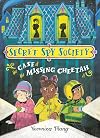
My 7yo enjoyed this, especially the illustrations and the mini-biographies of real spies. The story itself didn't always make sense to us (e.g. where are the girls' parents?) but once I told her not to expect the story to be realistic, she was content. It was a quick read.
One quibble: I don't think the Morse Code illustration in the back of this book is correct. Specifically, S is wrong.
One quibble: I don't think the Morse Code illustration in the back of this book is correct. Specifically, S is wrong.
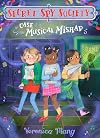
A good beginning chapter book!
Friendships, music, codes and ciphers, disappearing musical instruments, famous women scientists....there is a lot that young readers will enjoy!
Friendships, music, codes and ciphers, disappearing musical instruments, famous women scientists....there is a lot that young readers will enjoy!
You May Also Like
Associated Authors
Statistics
- Works
- 4
- Also by
- 20
- Members
- 55
- Popularity
- #295,339
- Rating
- 3.7
- Reviews
- 4
- ISBNs
- 13