
Michael Taylor (23) (1988–)
Author of Impossible Monsters: Dinosaurs, Darwin, and the Battle Between Science and Religion
For other authors named Michael Taylor, see the disambiguation page.
Works by Michael Taylor
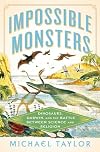
Impossible Monsters: Dinosaurs, Darwin, and the Battle Between Science and Religion (2024) 115 copies, 3 reviews
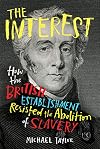
The Interest: How the British Establishment Resisted the Abolition of Slavery (2020) 61 copies, 2 reviews
Tagged
Common Knowledge
- Birthdate
- 1988
- Gender
- male
- Occupations
- historian
- Organizations
- Balliol College, Oxford
- Nationality
- UK
- Associated Place (for map)
- UK
Members
Reviews
Impossible Monsters: Dinosaurs, Darwin, and the Battle Between Science and Religion by Michael Taylor
Michael Taylor's Impossible Monsters is a real treat for people who enjoy considering the ways issues/topics can affect other issues/topics. I like reading books about dinosaurs. I also like reading books about the history of religion. This makes Impossible Monsters a two-fer: the discovery of dinos impacting accepted religious belief and religious belief influencing the ways dinosaur fossils were originally understood.
The book has occasional slow spots, but for the most part Taylor keeps show more readers engaged and ready to turn to the next page. It's the reading equivalent of a multi-course meal, with one delicious item after another.
I received a free electronic review copy of this title from the publisher via NetGalley; the opinions are my own. show less
The book has occasional slow spots, but for the most part Taylor keeps show more readers engaged and ready to turn to the next page. It's the reading equivalent of a multi-course meal, with one delicious item after another.
I received a free electronic review copy of this title from the publisher via NetGalley; the opinions are my own. show less
Impossible Monsters: Dinosaurs, Darwin, and the Battle Between Science and Religion by Michael Taylor
In Impossible Monsters, historian Michael Taylor takes us on a fascinating journey through 1800 thinking, how the interest in geology leading to the discovery of fossils including dinosaur bones, and the theory of evolution led to a war between science and religion and eventually, despite efforts to reconcile the two, to the secular age. This is a well-written, well-researched, insightful, and, best of all, accessible history of a very tumultuous and important time. I listened to the show more audiobook narrated by Michael Langdon who does an excellent job and, as I listened, I couldn’t help but compare much of the thinking as reflected in government, media, and court actions of the time to the new battles we face today with the rise in power of Christian Nationalism.
Thanks to Netgalley and HighBridge Audio for access to this audiobook in exchange for an honest review show less
Thanks to Netgalley and HighBridge Audio for access to this audiobook in exchange for an honest review show less
A meticulously researched look at the shocking story of the West Indian & British government self-interest that held up the process of emancipation for the slaves in the British colonies of the caribbean.
This is a fascinating insight into the history of abolition and despite the passage of nearly two hundred years this book left me angry and at times almost in tears of frustration as the British government and the West Indian 'Interest' resisted at every turn the freeing of the slaves.
Like show more most people in Britain I was aware of the slave trade but had no idea of the lengths that the interested parties went to to avoid the anti-slavery campaign coming to fruition.
This is a well written history that charts both the twists and turns of the politics at home as well as the stories of ill treatment and rebellion abroad.
This book fills in many gaps in my education that were ignored when at school in the 1970's and puts a number of English 'heroes' reputations in a new light.
A great read that covers a topic that is now at the forefront of everyone's minds with the Black Lives Matter campaign this summer
If you think you understand about the trials and tribulations of the abolitionists in the 19th century then I suggest you give this a try. show less
This is a fascinating insight into the history of abolition and despite the passage of nearly two hundred years this book left me angry and at times almost in tears of frustration as the British government and the West Indian 'Interest' resisted at every turn the freeing of the slaves.
Like show more most people in Britain I was aware of the slave trade but had no idea of the lengths that the interested parties went to to avoid the anti-slavery campaign coming to fruition.
This is a well written history that charts both the twists and turns of the politics at home as well as the stories of ill treatment and rebellion abroad.
This book fills in many gaps in my education that were ignored when at school in the 1970's and puts a number of English 'heroes' reputations in a new light.
A great read that covers a topic that is now at the forefront of everyone's minds with the Black Lives Matter campaign this summer
If you think you understand about the trials and tribulations of the abolitionists in the 19th century then I suggest you give this a try. show less
Impossible Monsters: Dinosaurs, Darwin, and the Battle Between Science and Religion by Michael Taylor
Darwin once speculated that the first spark of life had originated long ago, ‘perhaps millions of ages before the commencement of the history of mankind’. According to his dark Malthusian vision, the natural world resembled ‘one great slaughter-house, one universal scene of rapacity and injustice’ governed by a simple law: ‘Eat or be eaten!’ That evocative image reeks of Victorian cut-throat capitalism – but it was forged at the end of the 18th century by Erasmus Darwin. Long show more before his grandson hit the headlines, many naturalists recognised some form of evolutionary theory and agreed that the Bible did not provide an accurate guide to the age of the earth.
Charles Darwin is routinely celebrated as a British hero whose principle of natural selection mirrored society’s industrialisation, but his ideas had older roots. He studied his grandfather’s work closely, and was constantly haunted by this embarrassing ancestor. During the notorious debate at Oxford in 1860, Bishop Wilberforce supposedly taunted Thomas Huxley – Charles Darwin’s ‘bulldog’ – by asking which of his grandparents had descended from an ape, but in his written review of On the Origin of Species, it was Darwin’s own ‘ingenious grandsire’ Erasmus whom he named, shamed and blamed.
Along with many of his contemporaries, this earlier Darwin plays no part in Michael Taylor’s Impossible Monsters. As his rousing title suggests, Taylor has mapped out an exciting if idiosyncratic route through the tangle of 19th-century thought, maintaining that evolution struggled to become accepted in the face of resolute religious opposition. He ‘unapologetically’ sets his story in Britain during the Victorian era, when ‘British opinion often mattered more’ than anybody else’s, and glosses over earlier views that the biblical account of creation failed to account for the geological facts.
Read the rest of the review at HistoryToday.com.
Patricia Fara is an Emeritus Fellow of Clare College, Cambridge. show less
Charles Darwin is routinely celebrated as a British hero whose principle of natural selection mirrored society’s industrialisation, but his ideas had older roots. He studied his grandfather’s work closely, and was constantly haunted by this embarrassing ancestor. During the notorious debate at Oxford in 1860, Bishop Wilberforce supposedly taunted Thomas Huxley – Charles Darwin’s ‘bulldog’ – by asking which of his grandparents had descended from an ape, but in his written review of On the Origin of Species, it was Darwin’s own ‘ingenious grandsire’ Erasmus whom he named, shamed and blamed.
Along with many of his contemporaries, this earlier Darwin plays no part in Michael Taylor’s Impossible Monsters. As his rousing title suggests, Taylor has mapped out an exciting if idiosyncratic route through the tangle of 19th-century thought, maintaining that evolution struggled to become accepted in the face of resolute religious opposition. He ‘unapologetically’ sets his story in Britain during the Victorian era, when ‘British opinion often mattered more’ than anybody else’s, and glosses over earlier views that the biblical account of creation failed to account for the geological facts.
Read the rest of the review at HistoryToday.com.
Patricia Fara is an Emeritus Fellow of Clare College, Cambridge. show less
Lists
Awards


Statistics
- Works
- 2
- Members
- 176
- Popularity
- #121,981
- Rating
- 3.9
- Reviews
- 5
- ISBNs
- 196
- Languages
- 4