
Gloria Fossi
Author of Uffizi Gallery: Art, History, Collections
About the Author
Works by Gloria Fossi
In Search of Van Gogh: Capturing the Life of the Artist Through Photographs and Paintings (2021) 33 copies, 1 review
100 Cats in Art 1 copy
Associated Works
Guide - Vatican Museums Endizioni Musei Vaticani — some editions — 18 copies
Tagged
Common Knowledge
- Gender
- female
- Nationality
- Italy
- Birthplace
- Florence, Tuscany, Italy
- Associated Place (for map)
- Tuscany, Italy
Members
Reviews
In Search of Van Gogh: Capturing the Life of the Artist through Photographs and Paintings by Gloria Fossi
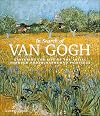
I found this book quite fascinating because it visits all (or most of) the places where Van Gogh himself had spent time. And the authors have captured views of these places, as they are today. In some cases, virtually unchanged since Van Gogh’s time...but in most cases, very different. .....It’s also accompanied by a wealth of pictures by Van Gogh..though in my Kindle version these all seem to be rather small in format. Yes one can enlarge them on screen but the detail is not there. show more Anyway, that’s a small criticism of a truly lovely book. I enjoyed reading it. I was not aware of the many works that Van Gogh did early in his life that were more traditional in style. Nor the fact that he actually had a lot of friends amongst the artistic community in Paris nor that he organised “a sort of artist consortium”. I haven’t read any psychological study of Van Gogh, though I guess there will be many but he clearly was talented even if mentally troubled. And he was able to paint in the “accepted” styles....probably well enough to make a living. But chose not to, He chose to paint in his own way. Here are a few gems from the book that caught my attention:
From the Borinage to The Hague and on to Antwerp (December 26, 1878–February 1886)
Juxtaposed the autumnal melancholy of the beech woods (of which we can see only trunks standing in a bed of dead leaves) with the graceful shape of a woman leaning against a tree. In reality, no one was there. Only later—inspired by a print by the English illustrator Perry McQuoid—did he add the image of the woman in a hat, “a girl in white leaning against a tree.”
It had struck me how firmly the saplings were rooted in the ground—I started on them with the brush, but because the ground was already impasted, brushstrokes simply vanished into it. Then I squeezed roots and trunks in from the tube and modelled them a little with the brush. Well, they are in there now, springing out of
it, standing strongly rooted in it. In a way I am glad that I never learned painting. In all probability I would have learned to ignore such effects as this.
The ride into the village was so beautiful. Enormous mossy roofs of houses, stables, covered sheepfolds, barns. The very broad-fronted houses here are set among oak trees of a superb bronze
It was November 1885, he was penniless, warm meals were scarce, and he ate nothing but bread. “Thus one becomes more of a vegetarian than is good for one,” he wrote to Theo.
Back in The Hague, he had already started to describe his painting style: “I sit with a white board before the spot that strikes me—I look at what’s before my eyes—I say to myself, this white board must become something—I come back, dissatisfied—I put it aside, and after I’ve rested a little, feeling a kind of fear, I take a look at it—
see in my work an echo of what struck me.”
On January 18, 1886, he started winter courses at the Royal Academy of Fine Arts,
he was also comfortable criticizing Rubens, saying he preferred Rembrandt, Eugène Delacroix, and Millet for their expressiveness and depth of feeling.
After lessons at the Academy ended, he attended an evening drawing course at a school on the Grote Markt, the main square in the old city center. Stress and poor (limited) nutrition landed him in the hospital, with ten teeth badly damaged:
Paris, a Modern City (Late February 1886–February 19, 1888)
In Antwerp, he hadn’t known about the impressionists. Now, he told his friend that he wasn’t “one of the club” but that he admired Degas’s nude figures and Monet’s landscapes. But Vincent hadn’t moved to Paris to join the impressionists. His three months in Antwerp had been miserable, economically and physically. He’d failed to work with live models or find women who would pose naked, so he’d settled for gypsum casts—
Antwerp had dashed Vincent’s hopes of selling his work. But in Paris (which he’d already visited in 1873 and 1875), he was exchanging paintings left and right, and becoming fast friends with new artists......He also tried to sell some of his paintings for fifty francs each, through several different dealers, but to little avail.
Above all, it was Theo’s city. In 1882, he’d been promoted to art director at the former Goupil & Cie Gallery at 19 Boulevard Montmartre......Theo welcomed him, of course. The brothers shared the apartment on Rue Laval until June,
Starting then, he painted at least 280 works of art,
Toulouse-Lautrec and Van Gogh became lifelong friends,......Toulouse-Lautrec even came to the point of challenging one detractor of Van Gogh to a duel.
He has not yet sold paintings for money but is exchanging his work for other pictures. In that way we obtain a fine collection, which, of course, also has a certain value.”.....In a letter to his sister Wil, he described Vincent as having two separate personalities: “the one marvellously gifted, fine and delicate, and the other selfish and heartless.” But Theo also recognized him as a great artist, predicting that his work “will definitely stand him in good stead later, and then it may be sublime.”
In the winter of 1888, Vincent became unwell and his “mood”—he used the English term—started to deteriorate. When Gauguin left for Pont-Aven, in Brittany, Van Gogh felt compelled to leave, too.
He chose Provence......I had plenty of canvases and Tanguy was very good to me. In fact he still is, but his old witch of a wife realized what was going on and complained. So I gave Tanguy’s wife a piece of my mind [. . .]. Old man Tanguy is sensible enough to keep quiet, and will do whatever I want anyway.
“There is no such thing as a true portrait; they are all delusions; and I never saw any two alike,” Nathaniel Hawthorne wrote defiantly in 1850 in The American Notebooks. Renaissance thinkers believed that portraits approached divinity because of their many expressive varieties.........Van Gogh was certainly not the first artist to paint dozens of self-portraits—even within a few days of each other and never in the same exact way.
Provence, Studio of the South (February 20, 1888–May 16, 1890)
He had done well in Paris. He’d organized a sort of artist consortium, promoted art exchanges, pushed Theo toward impressionism, and engaged with galleries and exhibitions.
By now, he was seeing Japan in everything—an idealized Japan. He painted himself as a Buddhist monk and started to use a two-dimensional, almost graphic style intentionally devoid of the linear perspective of the humanistic tradition.
His outlines looked like they were drawn in pen, even as he filled them with powerful brushstrokes of color.
In Arles,.....His studies were entirely focused on chromatic tonalities—he was convinced that the painter of the future would have to be “a colorist such as there hasn’t been before.” He compared Provence to his home country; it seemed identical to Holland “in character.” The difference was in the intensity of color. Here, brown tones gave way to “sulfur everywhere where the sun beats down.”
His palette—had changed. He regretted his former use of so many dark colors and marked the names of colors in French above each detail in his sketches.
He spoke and wrote fluent French, even though he struggled with the Provence accent
Van Gogh described it to his painter friend John Russell as “a view of the river with a greenish yellow sky.”......Vincent was visualizing Provence in outlines and clearly defined spaces, often with human subjects in the foreground, as in Japanese xylography. The result was a “funny thing,” different from his Parisian work.
The loose, free brushstrokes of the Paris days were gone, replaced by “colors like stained glass, and a design of solid outlines.”
even work right in the middle of the day, in the full sun, with no shade at all, out in the wheat fields, and lo and behold, I am as happy as a cicada.
God, if only I had known this country at 25 instead of coming here at 35! At that time I was fascinated by gray, or rather lack of color.
Gauguin arrived at the train station in Arles at 4: 00 a.m. on October 23, 1888, after traveling for two days from Pont-Aven in Brittany. Theo had persuaded him to go—he’d sent Gauguin the train fare and enough money to cover the debts he’d racked up in Brittany (he’d managed to sell some of Gauguin’s paintings in Paris). Theo was hoping that a friendly face would raise his brother’s increasingly miserable spirits.
Even so, Paul stayed in Arles for only nine and a half weeks, unable to put up with Vincent’s crises.
December 23, 1888. In December 1888, Vincent suffered a nervous breakdown and cut off part of his ear with a razor blade. He and Gauguin had gotten into yet another argument, and Gauguin had decided to leave.
knew well enough that one could fracture one’s legs and arms and recover afterward,” he observed, “but I did not know that you could fracture the brain in your head and recover from that too.” (Arles, January 28, 1889. To Theo.)
However, the unbearable hallucinations have ceased, and are now getting reduced to a simple nightmare, in consequence of my taking bromide of potassium, I think
after some highs and lows and some hospitalizations and releases in Arles—he was committed to Saint-Rémy, a psychiatric hospital in the beautiful medieval monastery of Saint-Paul de Mausole, run by Dr. Théophile Peyron.
Vincent’s stay was lengthy, but he was the only patient allowed to leave and walk around outdoors to paint. He completed some 150 paintings and 100 drawings in twelve months.
He was finally released on May 16, 1890, and a day later he was in Paris with Theo. Meanwhile, Theo had married and had a son.
Thanks to the scientists, we can deduce, for example, that Starry Night over the Rhône was painted in Arles at about 10: 30 p.m., between September 20 and 30, 1888.
The magazines from 1888 to 1890 (the years in which Van Gogh painted his most famous starry skies) contain all the information he might have used to depict the placement of the stars with almost scientific accuracy.
Eighty Paintings in Sixty-Eight Days (May 20–July 29, 1890)
By late spring of 1890, Vincent’s mental state seemed hopeless.
And almost every day he wrote to his family—
he always showed remarkable clarity of thought about painting—on contrasts, chromatic harmonies, and compositional approach.
Vincent and Gauguin managed to stay on friendly terms even after the incident in Arles and Gauguin’s hasty departure from Provence. They continued to write to each other.
Parisian artists—including Monet, Toulouse-Lautrec, and others less well known—recognized his uncommon talent. Even critics, notably the young George-Albert Aurier, noticed him and wrote about him
the time, Gachet was sixty-two years old. He was a scholar of mental pathologies, a homeopath, and a lover of fortune-telling. He had a dark and melancholic personality with a strong tendency toward depression, so much so that he published an essay on the subject Gachet,
The eyebrows are always tense and seem to hide the eye, making the socket appear deeper.” Suffice to say, this sounds like the description of his portrait.
Vincent died on July 29, 1890, after sustaining injuries from one or maybe two gunshots. Most scholars agree that he probably shot himself two days earlier.
What’s my overall take on the book? I really liked it. Five stars from me. show less
From the Borinage to The Hague and on to Antwerp (December 26, 1878–February 1886)
Juxtaposed the autumnal melancholy of the beech woods (of which we can see only trunks standing in a bed of dead leaves) with the graceful shape of a woman leaning against a tree. In reality, no one was there. Only later—inspired by a print by the English illustrator Perry McQuoid—did he add the image of the woman in a hat, “a girl in white leaning against a tree.”
It had struck me how firmly the saplings were rooted in the ground—I started on them with the brush, but because the ground was already impasted, brushstrokes simply vanished into it. Then I squeezed roots and trunks in from the tube and modelled them a little with the brush. Well, they are in there now, springing out of
it, standing strongly rooted in it. In a way I am glad that I never learned painting. In all probability I would have learned to ignore such effects as this.
The ride into the village was so beautiful. Enormous mossy roofs of houses, stables, covered sheepfolds, barns. The very broad-fronted houses here are set among oak trees of a superb bronze
It was November 1885, he was penniless, warm meals were scarce, and he ate nothing but bread. “Thus one becomes more of a vegetarian than is good for one,” he wrote to Theo.
Back in The Hague, he had already started to describe his painting style: “I sit with a white board before the spot that strikes me—I look at what’s before my eyes—I say to myself, this white board must become something—I come back, dissatisfied—I put it aside, and after I’ve rested a little, feeling a kind of fear, I take a look at it—
see in my work an echo of what struck me.”
On January 18, 1886, he started winter courses at the Royal Academy of Fine Arts,
he was also comfortable criticizing Rubens, saying he preferred Rembrandt, Eugène Delacroix, and Millet for their expressiveness and depth of feeling.
After lessons at the Academy ended, he attended an evening drawing course at a school on the Grote Markt, the main square in the old city center. Stress and poor (limited) nutrition landed him in the hospital, with ten teeth badly damaged:
Paris, a Modern City (Late February 1886–February 19, 1888)
In Antwerp, he hadn’t known about the impressionists. Now, he told his friend that he wasn’t “one of the club” but that he admired Degas’s nude figures and Monet’s landscapes. But Vincent hadn’t moved to Paris to join the impressionists. His three months in Antwerp had been miserable, economically and physically. He’d failed to work with live models or find women who would pose naked, so he’d settled for gypsum casts—
Antwerp had dashed Vincent’s hopes of selling his work. But in Paris (which he’d already visited in 1873 and 1875), he was exchanging paintings left and right, and becoming fast friends with new artists......He also tried to sell some of his paintings for fifty francs each, through several different dealers, but to little avail.
Above all, it was Theo’s city. In 1882, he’d been promoted to art director at the former Goupil & Cie Gallery at 19 Boulevard Montmartre......Theo welcomed him, of course. The brothers shared the apartment on Rue Laval until June,
Starting then, he painted at least 280 works of art,
Toulouse-Lautrec and Van Gogh became lifelong friends,......Toulouse-Lautrec even came to the point of challenging one detractor of Van Gogh to a duel.
He has not yet sold paintings for money but is exchanging his work for other pictures. In that way we obtain a fine collection, which, of course, also has a certain value.”.....In a letter to his sister Wil, he described Vincent as having two separate personalities: “the one marvellously gifted, fine and delicate, and the other selfish and heartless.” But Theo also recognized him as a great artist, predicting that his work “will definitely stand him in good stead later, and then it may be sublime.”
In the winter of 1888, Vincent became unwell and his “mood”—he used the English term—started to deteriorate. When Gauguin left for Pont-Aven, in Brittany, Van Gogh felt compelled to leave, too.
He chose Provence......I had plenty of canvases and Tanguy was very good to me. In fact he still is, but his old witch of a wife realized what was going on and complained. So I gave Tanguy’s wife a piece of my mind [. . .]. Old man Tanguy is sensible enough to keep quiet, and will do whatever I want anyway.
“There is no such thing as a true portrait; they are all delusions; and I never saw any two alike,” Nathaniel Hawthorne wrote defiantly in 1850 in The American Notebooks. Renaissance thinkers believed that portraits approached divinity because of their many expressive varieties.........Van Gogh was certainly not the first artist to paint dozens of self-portraits—even within a few days of each other and never in the same exact way.
Provence, Studio of the South (February 20, 1888–May 16, 1890)
He had done well in Paris. He’d organized a sort of artist consortium, promoted art exchanges, pushed Theo toward impressionism, and engaged with galleries and exhibitions.
By now, he was seeing Japan in everything—an idealized Japan. He painted himself as a Buddhist monk and started to use a two-dimensional, almost graphic style intentionally devoid of the linear perspective of the humanistic tradition.
His outlines looked like they were drawn in pen, even as he filled them with powerful brushstrokes of color.
In Arles,.....His studies were entirely focused on chromatic tonalities—he was convinced that the painter of the future would have to be “a colorist such as there hasn’t been before.” He compared Provence to his home country; it seemed identical to Holland “in character.” The difference was in the intensity of color. Here, brown tones gave way to “sulfur everywhere where the sun beats down.”
His palette—had changed. He regretted his former use of so many dark colors and marked the names of colors in French above each detail in his sketches.
He spoke and wrote fluent French, even though he struggled with the Provence accent
Van Gogh described it to his painter friend John Russell as “a view of the river with a greenish yellow sky.”......Vincent was visualizing Provence in outlines and clearly defined spaces, often with human subjects in the foreground, as in Japanese xylography. The result was a “funny thing,” different from his Parisian work.
The loose, free brushstrokes of the Paris days were gone, replaced by “colors like stained glass, and a design of solid outlines.”
even work right in the middle of the day, in the full sun, with no shade at all, out in the wheat fields, and lo and behold, I am as happy as a cicada.
God, if only I had known this country at 25 instead of coming here at 35! At that time I was fascinated by gray, or rather lack of color.
Gauguin arrived at the train station in Arles at 4: 00 a.m. on October 23, 1888, after traveling for two days from Pont-Aven in Brittany. Theo had persuaded him to go—he’d sent Gauguin the train fare and enough money to cover the debts he’d racked up in Brittany (he’d managed to sell some of Gauguin’s paintings in Paris). Theo was hoping that a friendly face would raise his brother’s increasingly miserable spirits.
Even so, Paul stayed in Arles for only nine and a half weeks, unable to put up with Vincent’s crises.
December 23, 1888. In December 1888, Vincent suffered a nervous breakdown and cut off part of his ear with a razor blade. He and Gauguin had gotten into yet another argument, and Gauguin had decided to leave.
knew well enough that one could fracture one’s legs and arms and recover afterward,” he observed, “but I did not know that you could fracture the brain in your head and recover from that too.” (Arles, January 28, 1889. To Theo.)
However, the unbearable hallucinations have ceased, and are now getting reduced to a simple nightmare, in consequence of my taking bromide of potassium, I think
after some highs and lows and some hospitalizations and releases in Arles—he was committed to Saint-Rémy, a psychiatric hospital in the beautiful medieval monastery of Saint-Paul de Mausole, run by Dr. Théophile Peyron.
Vincent’s stay was lengthy, but he was the only patient allowed to leave and walk around outdoors to paint. He completed some 150 paintings and 100 drawings in twelve months.
He was finally released on May 16, 1890, and a day later he was in Paris with Theo. Meanwhile, Theo had married and had a son.
Thanks to the scientists, we can deduce, for example, that Starry Night over the Rhône was painted in Arles at about 10: 30 p.m., between September 20 and 30, 1888.
The magazines from 1888 to 1890 (the years in which Van Gogh painted his most famous starry skies) contain all the information he might have used to depict the placement of the stars with almost scientific accuracy.
Eighty Paintings in Sixty-Eight Days (May 20–July 29, 1890)
By late spring of 1890, Vincent’s mental state seemed hopeless.
And almost every day he wrote to his family—
he always showed remarkable clarity of thought about painting—on contrasts, chromatic harmonies, and compositional approach.
Vincent and Gauguin managed to stay on friendly terms even after the incident in Arles and Gauguin’s hasty departure from Provence. They continued to write to each other.
Parisian artists—including Monet, Toulouse-Lautrec, and others less well known—recognized his uncommon talent. Even critics, notably the young George-Albert Aurier, noticed him and wrote about him
the time, Gachet was sixty-two years old. He was a scholar of mental pathologies, a homeopath, and a lover of fortune-telling. He had a dark and melancholic personality with a strong tendency toward depression, so much so that he published an essay on the subject Gachet,
The eyebrows are always tense and seem to hide the eye, making the socket appear deeper.” Suffice to say, this sounds like the description of his portrait.
Vincent died on July 29, 1890, after sustaining injuries from one or maybe two gunshots. Most scholars agree that he probably shot himself two days earlier.
What’s my overall take on the book? I really liked it. Five stars from me. show less
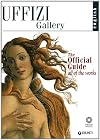
This beautiful catalogue / guide would be ideal (except for slightly large size) to carry through the museum. It is arranged room-by-room, showing exactly where every picture is in the room, and providing expanded discussions of the most important / beautiful works. It also is a wonderful keepsake of this astounding gallery, perhaps the greatest collection of Renaissance painting in the world. The Uffizi is manageable enough to be seen in one visit, but this book makes one long to do a show more systematic inventory, a few rooms per day, for however long it takes to bask in and digest the glory of its collection. (P.S.: When visiting the Uffizi, telephone in advance to get a reservation; this saves lots of time and the tedium of a long line.) show less
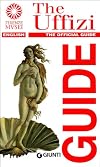
Solid guide to the Uffizi in Florence. Very useful when going around the museum itself, and well-illustrated enough that it's worth keeping afterwards.

The main idea of this book is to inform readers about the famous Statue of David and its creater, Michelangelo.
I think this was a good book. The story was told in the point of view of the marble the statue was made of, but it was all true information that was given. Then, all the informational portion of the book was given at the end. The point of view allows readers to make personal connections and become engrossed in the history of the masterpiece.
I think this was a good book. The story was told in the point of view of the marble the statue was made of, but it was all true information that was given. Then, all the informational portion of the book was given at the end. The point of view allows readers to make personal connections and become engrossed in the history of the masterpiece.
You May Also Like


Associated Authors
Statistics
- Works
- 41
- Also by
- 2
- Members
- 1,182
- Popularity
- #21,745
- Rating
- 3.9
- Reviews
- 16
- ISBNs
- 92
- Languages
- 6