

John Broderick (1) (1924–1989)
Author of The Pilgrimage
For other authors named John Broderick, see the disambiguation page.
Works by John Broderick
Associated Works
Tagged
Common Knowledge
Members
Reviews
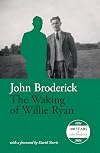
In the Irish Midlands in the 1950s, Willie Ryan—long ostracised by his family and sent off to a local asylum for decades, not because of mental illness but because of his queerness—returns home to die. As Willie prepares for death, his quiet presence upsets both his family and the priest whom he knew so many years before.
I'm of two minds about this one. I can see why it caused such a stir on its first publication in 1960s Ireland. It is clear (if still somewhat coy) that it is about a show more man who is not straight. (I'm using that phrasing deliberately here.) John Broderick is deft at skewering the pretensions and hypocrisies of small town Ireland at the time, and there are lovely, vivid descriptions. But at times the prose clunks instead of sings, and there's an unpleasant strain to how Broderick frames women (and especially how he talks about female bodies). I appreciated this for how audacious it must have been to put this forward for publication at the time, but I'm not sure I'll hunt out any more of Broderick's work. show less
I'm of two minds about this one. I can see why it caused such a stir on its first publication in 1960s Ireland. It is clear (if still somewhat coy) that it is about a show more man who is not straight. (I'm using that phrasing deliberately here.) John Broderick is deft at skewering the pretensions and hypocrisies of small town Ireland at the time, and there are lovely, vivid descriptions. But at times the prose clunks instead of sings, and there's an unpleasant strain to how Broderick frames women (and especially how he talks about female bodies). I appreciated this for how audacious it must have been to put this forward for publication at the time, but I'm not sure I'll hunt out any more of Broderick's work. show less
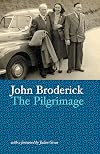
I’m going to start this review by saying: READ THIS BOOK.
The Pilgrimage by John Broderick is a riveting soap opera of a story about a wealthy couple living in a midcentury Irish town. The story is told from the perspective of the wife, Julia, who begins the novel having an affair with Jim, her husband’s nephew (and doctor). Her husband, Michael, is a closeted (natch) gay man who is also disabled and spends all his time in bed being tended to by a handsome servant named Stephen.
Michael, show more despite his ‘nature’ is devoted to the church. He is determined to go on a pilgrimage to Lourdes, in the hopes that he will be healed from his affliction. Julia, believing this to be a fool’s errand, nevertheless supports the idea and assists in the planning. The two of them decide that Jim and Stephen should accompany them on their journey, and they obtain their consent.
The entire novel spans several weeks and months as they prepare for their spiritual journey. A plot centering on Julia’s relationships, first with Jim and then with Stephen, begins to unfold. Julia is the sole woman among this cast of male characters, and she defies the ‘idealized’ Catholic wife stereotype. She is practical, sleeping with other men as a way to satisfy her physical desires, uninterested in forming any real attachment to them. Throughout the book, she views events and people clinically with an almost utilitarian outlook. She has no faith and very little interest in pretending otherwise.
When anonymous letters begin to arrive, threatening to uncover her secret affair with Jim, Julia becomes preoccupied with trying to find the source. This leads to her (correct) suspicion that Stephen is the author of the letters. Stephen, in turn, is confused about his own sexuality and attaches himself to Julia, claiming to be in love with her. He is less interested in sex than in other forms of intimacy, which Julia finds extremely discomforting.
As I said, this is all very soap-y… but in a good way! A surface-level reading of the book makes it a fun diversion. A deeper reading, however, allows us to encounter so many of the social and religious factors that confronted the author, himself a gay Irishman, during his lifetime. In The Pilgrimage, we discover a world of black-and-white ideology built upon a multi-colored rainbow of human experience. It is an insistent and rebellious telling of the reality of life under the heavy hand of a conservative, even oppressive environment that defines each of the characters’ motives while undermining their identities.
The Pilgrimage was banned in Ireland after it was published, which is a perfectly good reason in and of itself to read it. But it’s also a powerful, unflinching look at how human beings construct ideals that fail to take into consideration the reality of who we are – and the (sometimes hilarious, sometimes tragic) folly that results.
Again: READ IT. show less
The Pilgrimage by John Broderick is a riveting soap opera of a story about a wealthy couple living in a midcentury Irish town. The story is told from the perspective of the wife, Julia, who begins the novel having an affair with Jim, her husband’s nephew (and doctor). Her husband, Michael, is a closeted (natch) gay man who is also disabled and spends all his time in bed being tended to by a handsome servant named Stephen.
Michael, show more despite his ‘nature’ is devoted to the church. He is determined to go on a pilgrimage to Lourdes, in the hopes that he will be healed from his affliction. Julia, believing this to be a fool’s errand, nevertheless supports the idea and assists in the planning. The two of them decide that Jim and Stephen should accompany them on their journey, and they obtain their consent.
The entire novel spans several weeks and months as they prepare for their spiritual journey. A plot centering on Julia’s relationships, first with Jim and then with Stephen, begins to unfold. Julia is the sole woman among this cast of male characters, and she defies the ‘idealized’ Catholic wife stereotype. She is practical, sleeping with other men as a way to satisfy her physical desires, uninterested in forming any real attachment to them. Throughout the book, she views events and people clinically with an almost utilitarian outlook. She has no faith and very little interest in pretending otherwise.
When anonymous letters begin to arrive, threatening to uncover her secret affair with Jim, Julia becomes preoccupied with trying to find the source. This leads to her (correct) suspicion that Stephen is the author of the letters. Stephen, in turn, is confused about his own sexuality and attaches himself to Julia, claiming to be in love with her. He is less interested in sex than in other forms of intimacy, which Julia finds extremely discomforting.
As I said, this is all very soap-y… but in a good way! A surface-level reading of the book makes it a fun diversion. A deeper reading, however, allows us to encounter so many of the social and religious factors that confronted the author, himself a gay Irishman, during his lifetime. In The Pilgrimage, we discover a world of black-and-white ideology built upon a multi-colored rainbow of human experience. It is an insistent and rebellious telling of the reality of life under the heavy hand of a conservative, even oppressive environment that defines each of the characters’ motives while undermining their identities.
The Pilgrimage was banned in Ireland after it was published, which is a perfectly good reason in and of itself to read it. But it’s also a powerful, unflinching look at how human beings construct ideals that fail to take into consideration the reality of who we are – and the (sometimes hilarious, sometimes tragic) folly that results.
Again: READ IT. show less

The title makes it sound as if this is going to be a case of the Abbé Mourets (or, given when this came out, maybe we should say "Thornbirds"?), but it turns out to be something quite different, a kind of Iris Murdoch scenario about a disgruntled ex-priest, author of a controversial book, whose fellow tenants in a rambling old Dublin Georgian house are a middle-aged gay couple, Eddie and Maurice, and the gorgeously over-the-top retired prima donna Maria Keeley.
We're in the mid-seventies, show more and bourgeois Dublin is a lot less strait-laced than it pretends to be (as long as you're reasonably discreet about whatever you're doing), so being gay is not much of an issue, but being in open conflict with the church is still a serious problem.
I enjoyed the social observation and the clever characterisation here, but I got a bit lost in all the intricacies of Broderick's sin-and-redemption plot, which didn't really seem to amount to all that much, but needed the awkward introduction from nowhere of a complicated crime-story in the last couple of chapters to bring it to some kind of resolution. A bit patchy, but an interesting period piece. show less
We're in the mid-seventies, show more and bourgeois Dublin is a lot less strait-laced than it pretends to be (as long as you're reasonably discreet about whatever you're doing), so being gay is not much of an issue, but being in open conflict with the church is still a serious problem.
I enjoyed the social observation and the clever characterisation here, but I got a bit lost in all the intricacies of Broderick's sin-and-redemption plot, which didn't really seem to amount to all that much, but needed the awkward introduction from nowhere of a complicated crime-story in the last couple of chapters to bring it to some kind of resolution. A bit patchy, but an interesting period piece. show less
You May Also Like
Associated Authors
Statistics
- Works
- 13
- Also by
- 1
- Members
- 145
- Popularity
- #142,478
- Rating
- 3.5
- Reviews
- 4
- ISBNs
- 26
- Languages
- 1