
Evan Dahm
Author of Rice Boy
About the Author
Series
Works by Evan Dahm
Vattu: The Tower & The Shadow 13 copies
Order of Tales: The Hand of Stone 5 copies
Vattu: The River 5 copies
Order of Tales: The City of Shells 5 copies
Order of Tales: The Tower of Smoke 4 copies
Mere Vibration 2 copies
Lacunæ & Aftermath 2 copies
3rd Voice, 1st Passage 1 copy
Bird 1 copy
Benign Kingdom: Evan Dahm 1 copy
Moby-Dick. 1 copy
Cyclops 1 copy
Making Rice Boy 1 copy
Order of Tales Vol. 1 1 copy
Associated Works
Beyond II The Queer Post-Apocalyptic & Urban Fantasy Comic Anthology (2018) — Contributor — 44 copies
Tagged
Common Knowledge
- Birthdate
- 1987
- Gender
- male
- Nationality
- USA
- Birthplace
- North Carolina, USA
- Places of residence
- Ashville, North Carolina, USA
Brooklyn, New York, USA - Associated Place (for map)
- North Carolina, USA
Members
Reviews
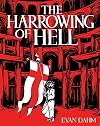
A horror comic about Jesus?? Yes! I saw this on a list of recommended horror comics last year and took note of it. I considered dismissing it because I didn't think I'd connect with it as a godless heathen, but I'm glad I didn't, because it's really good! "Drawing on sources in Christian and Jewish scripture and apocrypha," Evan Dahm sees Jesus' descent into hell following his crucifixion—the Harrowing—as a literal story, which has been disavowed in most traditions. When I picked it up, show more I questioned whether it'd really be a horror book, but the images speak for themselves.
https://i.imgur.com/rJ4M3WP.jpg
The use of red in this comic is greatly impactful. Whether it's the cloth of Pontius Pilate's men, the blood on Jesus' hands, or just fucking everything in hell, it doesn't lose its edge. I loved the art from its use of coloring as allegory to just the clean linework throughout. The shading is also impeccable as cities or structures within hell have such a foreboding presence. It looks deceptively simple at first, but the environments are drawn with such detail and care upon closer inspection. The demons in hell look truly disturbing (especially one who looks like a soldier that was probably a reference that went over my head), and I love how some of them look when hiding in the shadows. I also loved the facial expressions which worked so well tonally and told you everything about a character within a single panel.
Enthralling even for this atheiest and a pretty short read, so it's easy to recommend if you're open to it. I didn't feel like it proselytized at all thanks to its tone, which I did worry about before I started. I think I may reread this one, too! show less
https://i.imgur.com/rJ4M3WP.jpg
The use of red in this comic is greatly impactful. Whether it's the cloth of Pontius Pilate's men, the blood on Jesus' hands, or just fucking everything in hell, it doesn't lose its edge. I loved the art from its use of coloring as allegory to just the clean linework throughout. The shading is also impeccable as cities or structures within hell have such a foreboding presence. It looks deceptively simple at first, but the environments are drawn with such detail and care upon closer inspection. The demons in hell look truly disturbing (especially one who looks like a soldier that was probably a reference that went over my head), and I love how some of them look when hiding in the shadows. I also loved the facial expressions which worked so well tonally and told you everything about a character within a single panel.
Enthralling even for this atheiest and a pretty short read, so it's easy to recommend if you're open to it. I didn't feel like it proselytized at all thanks to its tone, which I did worry about before I started. I think I may reread this one, too! show less

he descended into hell;
on the third day he rose again from the dead.
-- Apostles' Creed (variant)
Various particulars of the Creed are disputed. I am persuaded the Creed was not written by the Apostles but as a refutation of Gnosticism and other heresies to the Early Church, centuries after the death of the Apostles. The first line quoted above, in fact, was widely elided from modern Christian recitation, whether in the Catholic, Anglican, Epistolic, or other Protestant Church. Not only is the show more Creed not a fixed entity, preserved unchanged from its beginning, like any example of language it evolves even today.
The Harrowing of Hell relays an account of those three days in Hell. Text is minimal and as obscure (or as transparent, if that is your reading of Biblical passages) as scripture. What text is used, seemingly quotes or closely paraphrases from Old Testament and apocryphal sources. Almost all text is dialogue, the few exceptions taking the form of inscriptions legible in the images, whether as backdrop to Pilate's tribunal, or the placard affixed to Jesus's crucifix. Section headings are labeled with the location in which events take place, e.g. "Galilee", "Bethsaida".
Throughout Dahm's adaptation, a clear statement is repeated by Jesus, indeed in the face of pointed efforts by various others to get him to change this statement, though he never wavers: "I do not tell you by what authority I do these things." [82-83, note the double-spread] Not: "I am keeping a secret!" But: "I make no claim, always it is another who makes any claim regarding my authority." In the end, Dahm's Jesus appears very alike another Socrates, a gadfly, forcing others to face their own decisions and behavior, with any discomfort not of Jesus's making, but their own.
The design is stark, black and white prevailing with spot color in red. Effective and suited to the story, though not as striking as Carroll's similar approach in her Through The Woods.
//
A brief but very useful authorial note summarises the history of the Decensus Christi ad Inferos, and some of the critical literature which helped inspire Dahm's adaptation. I resonate with his comment: "I can't keep up with the dense intertextuality that inaugurated Christianity, but it has been productive to try." [126] show less
on the third day he rose again from the dead.
-- Apostles' Creed (variant)
Various particulars of the Creed are disputed. I am persuaded the Creed was not written by the Apostles but as a refutation of Gnosticism and other heresies to the Early Church, centuries after the death of the Apostles. The first line quoted above, in fact, was widely elided from modern Christian recitation, whether in the Catholic, Anglican, Epistolic, or other Protestant Church. Not only is the show more Creed not a fixed entity, preserved unchanged from its beginning, like any example of language it evolves even today.
The Harrowing of Hell relays an account of those three days in Hell. Text is minimal and as obscure (or as transparent, if that is your reading of Biblical passages) as scripture. What text is used, seemingly quotes or closely paraphrases from Old Testament and apocryphal sources. Almost all text is dialogue, the few exceptions taking the form of inscriptions legible in the images, whether as backdrop to Pilate's tribunal, or the placard affixed to Jesus's crucifix. Section headings are labeled with the location in which events take place, e.g. "Galilee", "Bethsaida".
Throughout Dahm's adaptation, a clear statement is repeated by Jesus, indeed in the face of pointed efforts by various others to get him to change this statement, though he never wavers: "I do not tell you by what authority I do these things." [82-83, note the double-spread] Not: "I am keeping a secret!" But: "I make no claim, always it is another who makes any claim regarding my authority." In the end, Dahm's Jesus appears very alike another Socrates, a gadfly, forcing others to face their own decisions and behavior, with any discomfort not of Jesus's making, but their own.
The design is stark, black and white prevailing with spot color in red. Effective and suited to the story, though not as striking as Carroll's similar approach in her Through The Woods.
//
A brief but very useful authorial note summarises the history of the Decensus Christi ad Inferos, and some of the critical literature which helped inspire Dahm's adaptation. I resonate with his comment: "I can't keep up with the dense intertextuality that inaugurated Christianity, but it has been productive to try." [126] show less

Someone left this book out on a table at the library and I'm so glad I was tidying up because I'd forgotten how much I love Evan Dahm. [b:Rice Boy|6115136|Rice Boy|Evan Dahm|https://d.gr-assets.com/books/1232402666s/6115136.jpg|6293208] is still one of my favourite things ever, and I was following Vattu on the website until I lost track of what was happening and decided to come back to it when more was finished, and then forgot, because I forget everything. So thanks, stranger who decided show more not to check out this book although you really should have because it's really cool!
First and obviously, Dahm's illustrations are so so so good, that's just a fact that will be true forever. I wrote two so's at first and went back to add a third because I love them that much. The landscapes are so beautiful and real, the characters are equally adorable and terrifying, and I am endlessly fascinated by how well he can get them to express emotions with just their eyes.
Second...the story isn't over yet but I love Vattu and her place in this tale. Nothing is ever going to be the same for her or her people, but I can't wait to see how the world continues to change and what will become of the grand colonial powers and the civilizations they raze. show less
First and obviously, Dahm's illustrations are so so so good, that's just a fact that will be true forever. I wrote two so's at first and went back to add a third because I love them that much. The landscapes are so beautiful and real, the characters are equally adorable and terrifying, and I am endlessly fascinated by how well he can get them to express emotions with just their eyes.
Second...the story isn't over yet but I love Vattu and her place in this tale. Nothing is ever going to be the same for her or her people, but I can't wait to see how the world continues to change and what will become of the grand colonial powers and the civilizations they raze. show less

If you haven't heard of this book, go read the webcomic NOW. Evan Dahm has created such an ethereal, melancholy world. Plus, quests for meaning, fate, and the best assortment of amazing and terrifying creatures you'll find anywhere. If Dahm and Guillermo Del Toro teamed up, magical horrible things would happen.
So here we follow the story of Rice Boy, a simple creature who collects fruit and has a friend named Rosemary, until a tall robot named T.O.E. (that's The One Electronic) comes along show more and changes his little existence. Rice Boy is told that he's the new fulfiller, the one who will make the centuries old prophecy true - only all the past fulfillers have turned out to be fakes, so it's hard for Rice Boy to take T.O.E. seriously, and T.O.E. himself has been having doubts about his divine mission. Of course, Rice Boy decides to at least go on a journey, and we get to follow him as the prophecy unfolds (or not). show less
So here we follow the story of Rice Boy, a simple creature who collects fruit and has a friend named Rosemary, until a tall robot named T.O.E. (that's The One Electronic) comes along show more and changes his little existence. Rice Boy is told that he's the new fulfiller, the one who will make the centuries old prophecy true - only all the past fulfillers have turned out to be fakes, so it's hard for Rice Boy to take T.O.E. seriously, and T.O.E. himself has been having doubts about his divine mission. Of course, Rice Boy decides to at least go on a journey, and we get to follow him as the prophecy unfolds (or not). show less
Lists
Awards


You May Also Like


Associated Authors
Statistics
- Works
- 29
- Also by
- 13
- Members
- 445
- Popularity
- #55,081
- Rating
- 4.0
- Reviews
- 26
- ISBNs
- 13
- Languages
- 1
- Favorited
- 1